


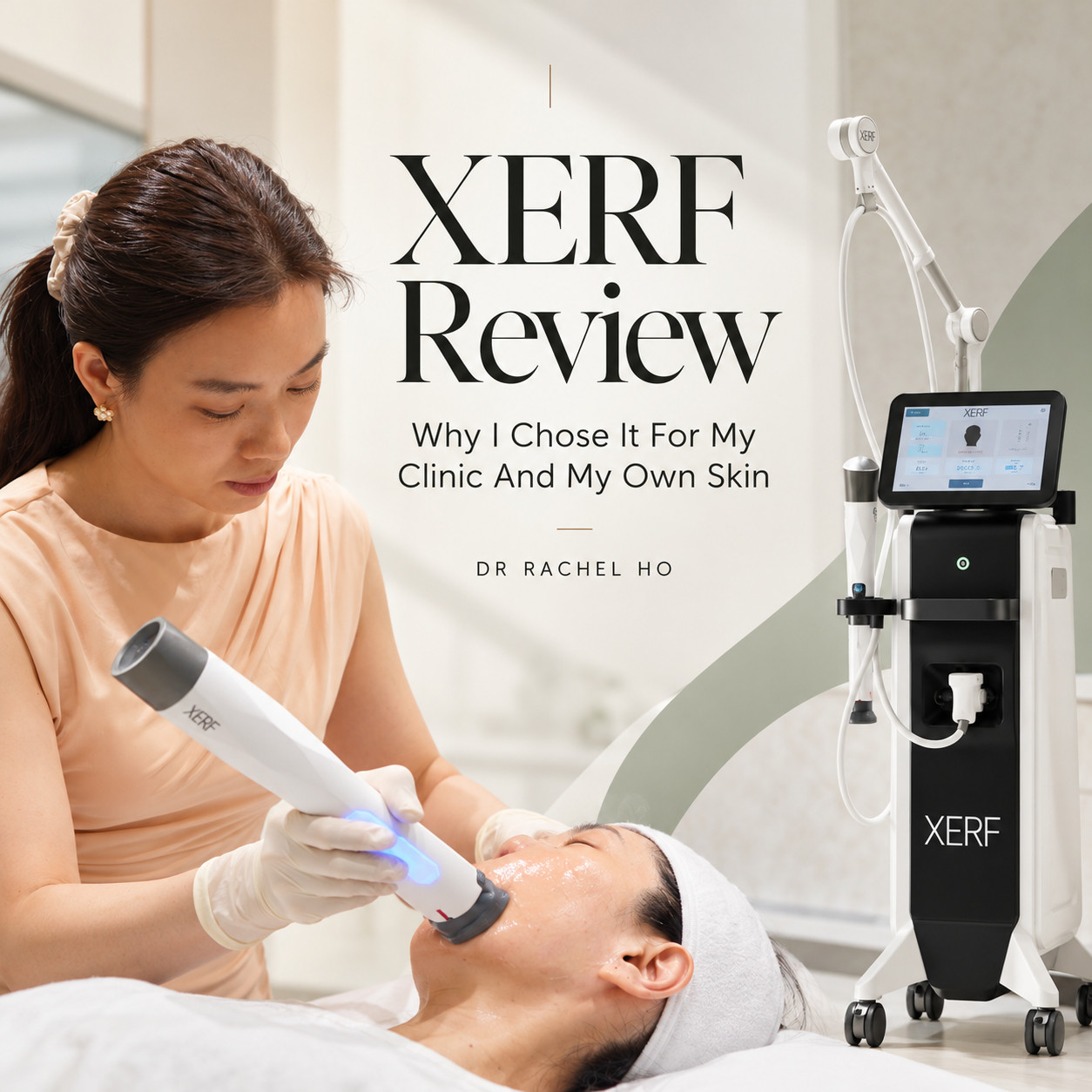
30 Oct My XERF Review: Why I Chose It for My Clinic and Myself
My XERF Review: Why I Chose It for My Clinic and Myself
By Dr Rachel Ho
MBBS (NUS), MMed (Otolaryngology)
Aesthetic doctor and founder of The Skin Longevity Clinic, Singapore
Disclosure: I am the founder of The Skin Longevity Clinic, where XERF treatments are offered. My professional perspective and personal experience having received the treatment are reflected throughout this review.
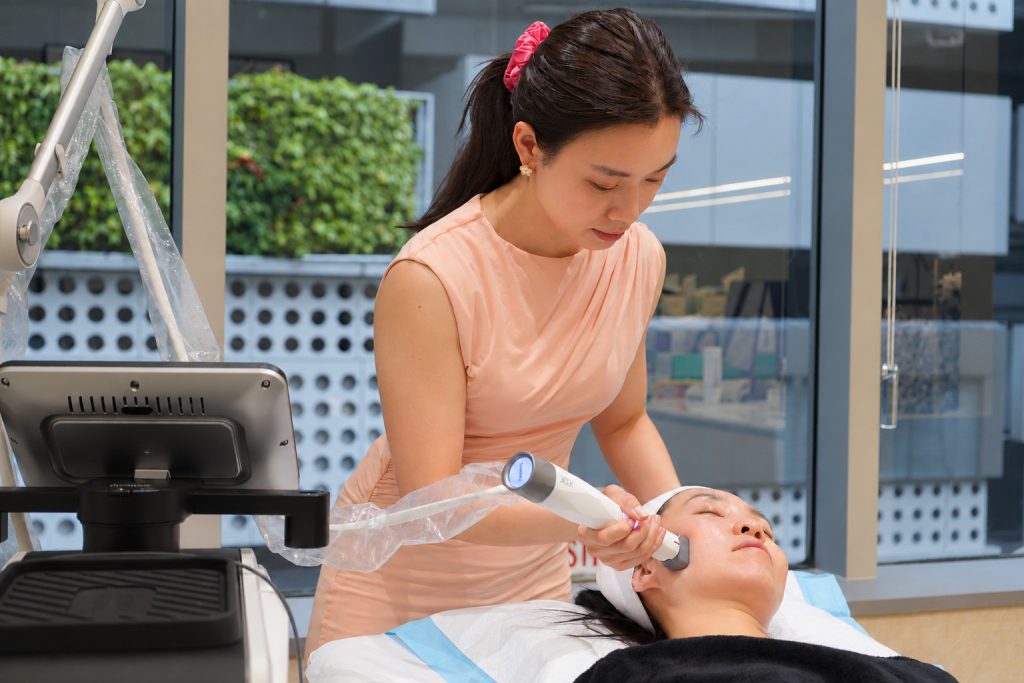
Performing XERF for my patient in The Skin Longevity Clinic
There is a lot of hype around XERF, the radiofrequency lifting and skin tightening treatment from Korea, that is gaining popularity in Singapore and the US, especially among celebrities right now, with its popularity soaring in Korea and the US as a red-carpet favourite among celebrities. Having practiced aesthetic medicine for nearly two decades, I’ve seen my share of viral devices come and fade. When establishing my new clinic, I had to curate our treatment devices, and compared XERF against other well known devices in Singapore. In my evaluation for genuine clinical efficacy, patient safety, and comfort, all three triangulate directly into XERF as the clear choice for my patients and myself. In this review, I share my reasons for selecting XERF for my patients and myself, what the evidence shows and my personal experience and results with XERF.
Related blogpost:
What Is Skin Longevity? A Doctor’s Guide to Healthier Skin Aging
Are You A Sagger or Sinker?
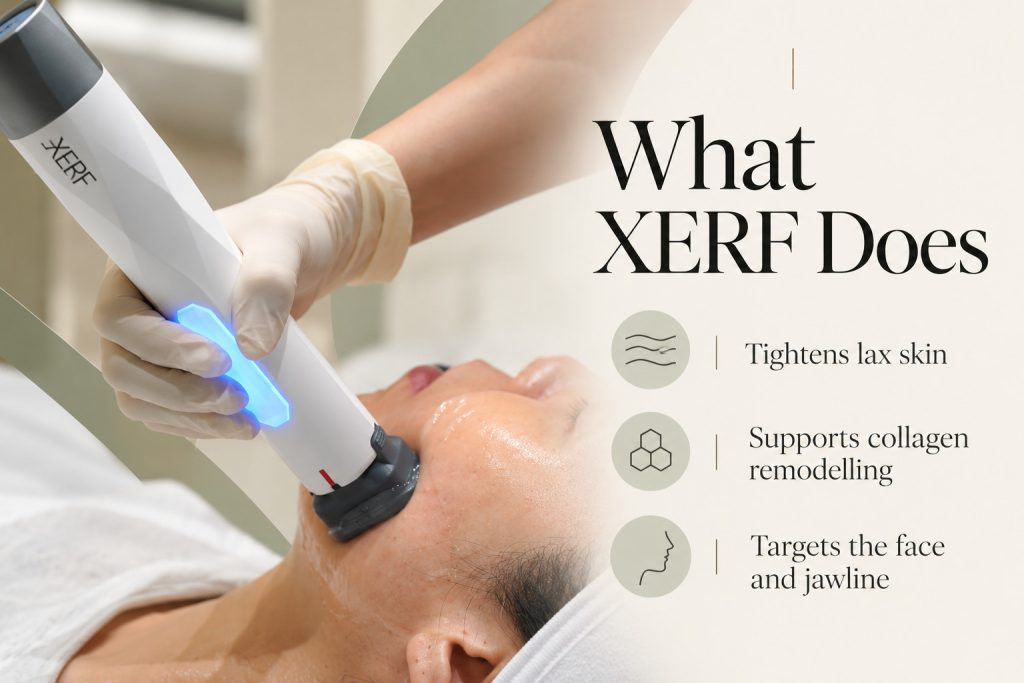
Benefits of XERF treatment
What Is XERF?
XERF is a non-invasive monopolar radiofrequency (RF) device designed for structural skin tightening by triggering collagen remodelling and collagen synthesis¹,⁶. For XERF, RF energy of two distinct frequencies, 6.78 MHz and 2 MHz, is delivered deep into the dermal and subdermal layers via a treatment tip applied to the skin surface¹,⁴,⁷. Unlike collagen biostimulators, no injections are required¹.
Related blogposts:
Do Collagen Supplements Work?
Collagen Skincare Science Explained
Skin Boosters vs Collagen Biostimulators
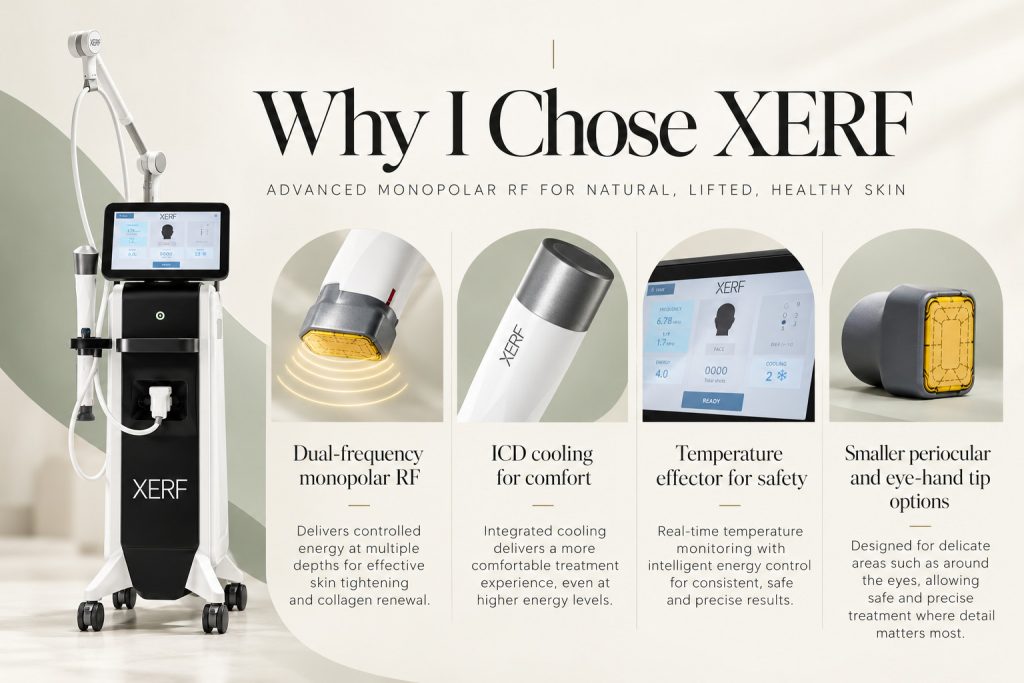
Cooling, temperature feedback and adjustable energy delivery were among the features I considered when choosing XERF for my clinic.
Why I chose XERF for my clinic
Because I personalise treatment parameters for my patients depending on their skin types and conditions, I wanted a skin tightening device that allowed close monitoring and control of the RF energy delivery to the patient’s skin for safety and optimal results. There were 3 features in XERF that made me more assured about the safety and effectiveness of its technology:
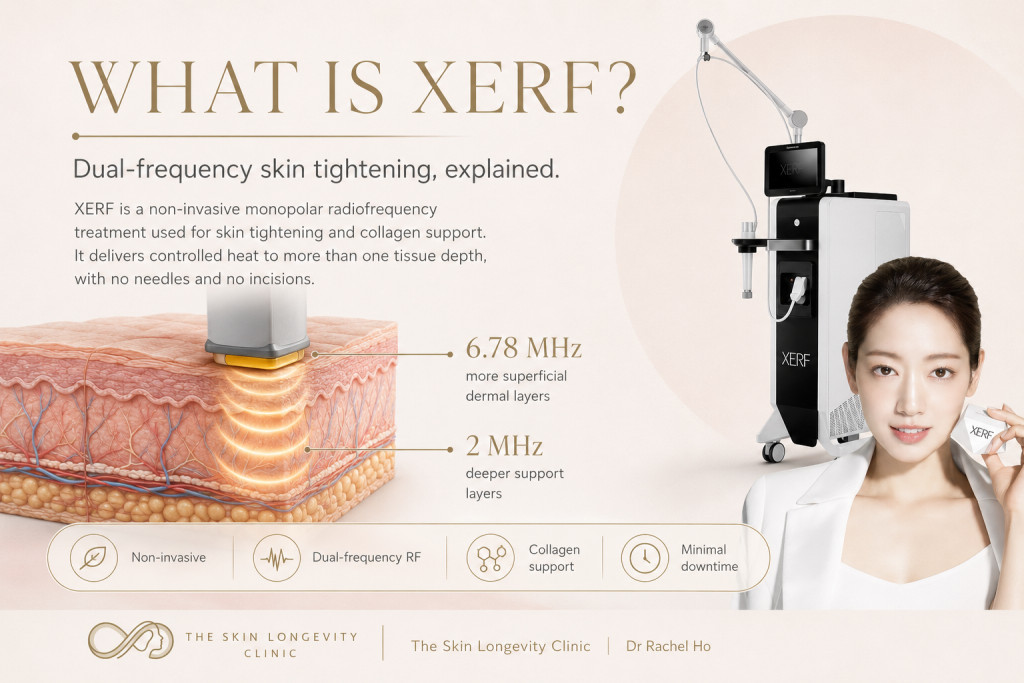
Xerf’d dual frequency RF technology explained. Image from The Skin Longevity Clinic’s post on XERF.
1. Dual-frequency energy and impedance feedback
Besides the ability to vary the depth and RF energy transfer to the patient’s skin, XERF has an in-built real-time tissue impedance feedback that measures electrical resistance in the skin¹. This impedance feedback allows for energy adjustment to optimise pulse strength, frequency, and energy output to match individual tissue variations such as differences in thickness, density, or hydration.
2. Integrated cryogen cooling (ICD)
The feature that I found to be most interesting about XERF was its Integrated Cryogen Delivery that sprays a cooling agent onto the epidermis before, during, and after each RF pulse. This cooling protects the epidermis against burns while keeping the treatment manageable⁴,⁵. Having evaluated different lifting and skin tightening devices that also utilised RF and high intensity focused ultrasound (HIFU), I can attest that the energy deliverable can be uncomfortable and painful for some patients- so much so that they request for the sedation during the procedures. I personally find XERF to be tolerable even without numbing cream; and this experience also holds for the majority of my patients.
3. Effector temperature safeguards
The treatment tip, also called the effector, contains a temperature sensor that monitors the skin’s surface temperature real time²,⁴. If surface temperatures exceed 43°C, the device automatically pauses energy output²,⁴. This feature also reduces the risks of thermal injury for patients⁴,⁶.
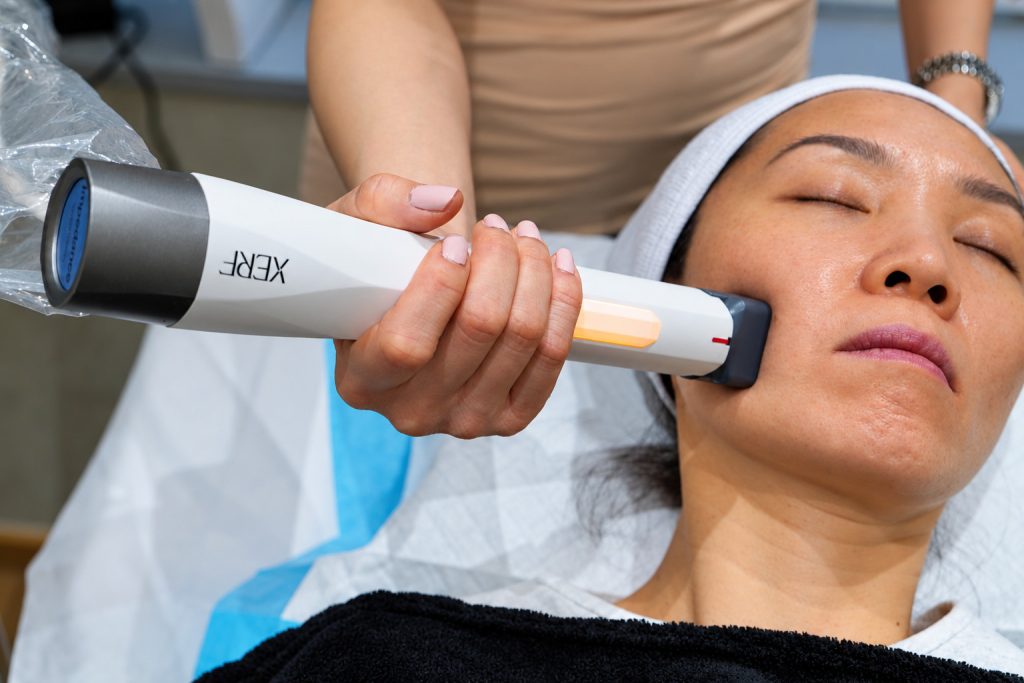
Performing XERF on a patient in The Skin Longevity Clinic
XERF and Asian skin
No procedure is truly risk free. Energy based lifting devices causing burns, fat melting and post inflammatory hyperpigmentation have been reported⁹,¹⁰. Asian patients and patients with melasma also have a higher risk of developing hyperpigmentation with raised temperatures, so I wanted a technology where safety and patient experience could be prioritised with effectiveness. In my opinion as a doctor, these features safeguard the patients against these complications of RF and HIFU and possible worsening of dark spots.
Related blogposts:
Treating Hyperpigmentation: Doctor’s PoV
Skincare for Hyperpigmentation: Ingredients and Evidence
Tranexamic Acid for Melasma: Topical and Oral Evidence
What the research on XERF shows: human and tissue studies
The results of XERF’s human studies are promising, but the limitations of these studies mean that more robust double blinded, human clinical trials with controls are still required for more definitive data²,³,⁴.
Overview of XERF clinical studies
| Study Overview | Primary Findings | Limitations |
|---|---|---|
| Multi-Center Trial (39 subjects, 2 sessions 4 weeks apart)² | At 90 days post-treatment, investigators rated 92.3% of subjects as showing clinical improvement². | No control group². Assessing physicians were not blinded². |
| Retrospective Study (16 women, 1 session³ | 3D imaging and surveys documented improvements in facial contours and fine lines over 3 months³. | Retrospective record review without a control group³. Volumetric changes used as indirect markers for tightening³. |
| Clinical Study (20 Korean women, Skin Types III–IV, 1 session)⁴ | At 12 weeks, independent assessors correctly identified post-treatment photos in 80% of cases⁴. | Small, uncontrolled study⁴. Study based on image identification does not equate to correlation with clinical changes. |
Tissue & animal studies for XERF
While clinical trials track visible outcomes on the skin, laboratory research explores how monopolar RF affects collagen remodeling at a cellular level²,⁶,⁸. These are some of the published studies on XERF in animal and tissues.
- Porcine tissue study (2024): Demonstrated increased collagen density following controlled RF heating without inducing epidermal thermal injury under studied protocols⁶.
- Dual-frequency computational model (2025): Showed that combining 6.78 MHz and 2 MHz produced distinct thermal patterns that stimulated collagen and elastin remodeling in deep tissue layers⁷.
- Bioprinted human skin model (2026): A laboratory study using 3D bioprinted human skin cells observed elevated fibroblast activity, increased Type I collagen synthesis, and a denser extracellular matrix following treatment⁸. (Note: This study was manufacturer-sponsored and conducted on laboratory models rather than live human subjects)⁸.
Who is an ideal candidate for XERF?
XERF as a non-invasive skin tightening and lifting treatment is appropriate for adults noticing mild-to-moderate skin laxity, laugh lines, jowls, and loss of jawline definition²,³,⁴. The Korean clinical study, for example, focused specifically on women displaying mild-to-moderate facial photoaging⁴.
View this post on Instagram
Are you a sagger or sinker? Learn about the predominant patterns of ageing in this reel.
For patients with significant volume loss or marked tissue sagging is the main concern, combination or alternative approaches such as collagen biostimulators or dermal fillers are more appropriate.
Related blogposts:
Laugh Lines: Nasolabial Filler, Results and Alternatives
How to Treat Sagging Skin Without Surgery
XERF results, timeline, recovery, side effects
Some patients may notice an immediate lift after their XERF treatments due to heat-induced collagen contraction which tightens and lifts³,⁶. Over the next 1-2 months as new collagen fibres are laid down, you can see more noticeable lifting, firming and tightening.
Across published pilot studies, no serious or long-term complications were reported during follow-up periods²,³,⁴. However, these trial sample sizes were small, so rare or delayed side effects require ongoing real-world monitoring²,³.
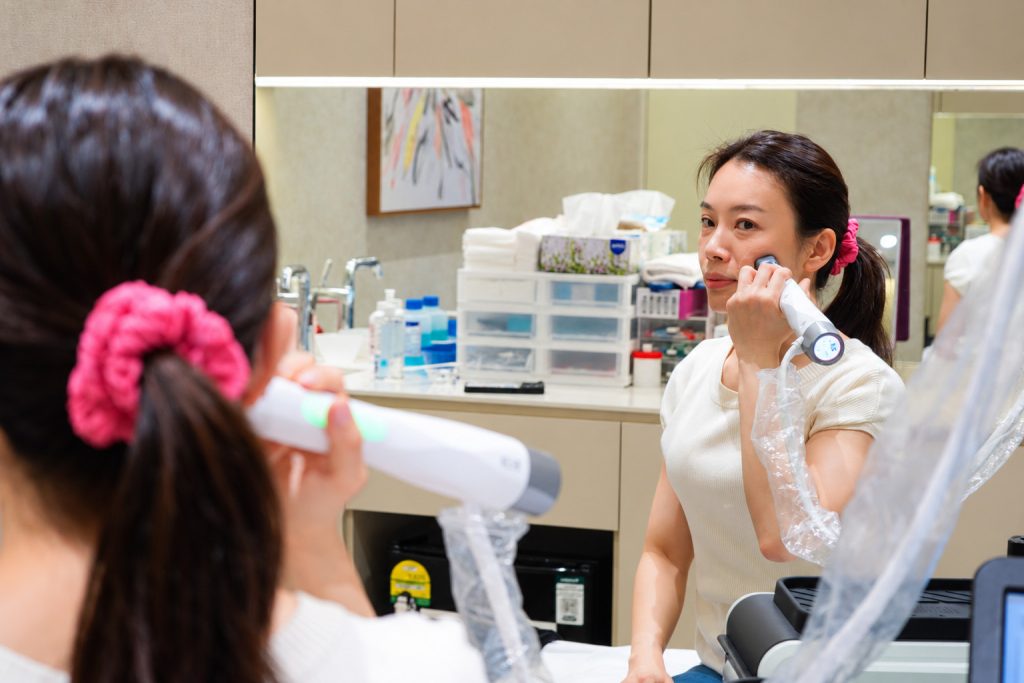
Performing XERF on myself to lift my jawline and laugh lines
My personal experience with XERF as a doctor and patient
Having administered XERF to patients, I’ve found this treatment to have a high satisfaction rate in my clinic. I think this can be attributed to my selection criteria for patients (if you’re a surgical candidate, I would decline this treatment), personalised treatment parameters with real time monitoring of patient safety and XERF’s cooling technology that quickly dissipates epidermal heat. XERF has come to be a valuable device in my clinic for treating laugh lines, jowls, sagging and loose skin as a standalone treatment or in combination with collagen biostimulators and wrinkle treatments.
From a patient’s perspective, also having administered XERF on myself, I find the discomfort of XERF to be manageable, even without numbing cream or painkillers. I will admit that some parts of my face, like my bony prominences, felt more warmth. The integrated cryogen cooling was a great help in quickly dissipating the surface heat to reduce discomfort and my fear of melasma recurrence.
Immediately after XERF, my skin had a barely noticeable pink color over small areas that resolved in a few hours. I could resume my usual skin care routine, makeup and daily activities without any inconveniences.
I could see a slight but still visible lift of my jawline and marionette lines immediately after my XERF treatment. When compared against my untreated half of the face, the treated side of my face was a bit more lifted and smaller. Over the last 2 months, I have seen a continuous and gradual improvement in lower-face definition.
Dr Rachel Ho’s takeaway and conclusion
I’ll admit that this review of XERF is biased because I chose XERF for my patients and myself. I’m a personal fan of XERF both as a patient and doctor after all, but for the reasons where its dual-frequency delivery, real-time feedback, and safety cooling features offer a safer, effective and comfortable treatment option for sagging and loose skin. As doctors, we all have our biases and preferences for treatment devices and it only makes sense for me to offer a treatment that I would personally believe in. In 2027, patients in Singapore can look forward to a smaller XERF treatment tip for delicate facial contours such brows and periorbital area. I’m following updates of lifting and skin tightening technologies, and will share more newsworthy developments as they come along. For more information and FAQ about XERF, please refer to my clinic’s guide to XERF treatments in Singapore.
About the author and this review
Dr Rachel Ho is an aesthetic doctor and founder of The Skin Longevity Clinic in Singapore. She holds an MBBS from the National University of Singapore (NUS) and a Master of Medicine in Otolaryngology¹¹. She will be embarking on her Master in Healthy Longevity with the NUS Yong Long Lin School of Medicine in 2027.
This review article combines her personal treatment experience and clinical observations with published research and manufacturer technical information. Personal observations are distinct from controlled clinical evidence and do not predict another patient’s results. Her professional interest in providing XERF is disclosed above.
References checked: 29 October 2026. This article provides general information for education and does not replace an individual medical assessment.
References
- Cynosure Lutronic, XERF: Structural Skin Tightening, official product information. Accessed: Oct. 29, 2026.
- R. A. Weiss, J. Wang, B. DiBernardo, and A. C. Bhatia, Clinical Outcomes Following Dual-Frequency Noninvasive Monopolar Radiofrequency Treatment for Facial Laxity and Lower Face Lifting: A Prospective Multicenter Study, Cureus, vol. 18, no. 3, Art. no. e104546, 2026, doi: 10.7759/cureus.104546.
- G. Erlich, E. Dahan, and Y. Wolf, Objective and subjective retrospective evaluation of XERF, a novel single-shot dual-frequency non-invasive monopolar radiofrequency, Lasers in Medical Science, vol. 41, Art. no. 194, 2026, doi: 10.1007/s10103-026-04996-0.
- J. K. Hwang, Evaluation of the clinical safety and efficacy of a noninvasive dual-frequency monopolar radiofrequency device in the treatment of facial photoaging sequelae in Republic of Korea: a clinical study, Medical Lasers, vol. 14, no. 1, pp. 23–30, 2025, doi: 10.25289/ML.24.035.
- Cynosure Lutronic, Cynosure Lutronic’s XERF Worldwide Adoption Accelerates — Now 3x Faster, manufacturer announcement, Jun. 11, 2026. Accessed: Oct. 29, 2026.
- C. Park et al., Monopolar radiofrequency for dermal temperature regulation and remodeling: A porcine model study, Journal of Cosmetic Dermatology, vol. 23, no. 12, pp. 3955–3960, 2024, doi: 10.1111/jocd.16495.
- K. Ko et al., Computational modeling and histologic analysis of 6.78- and 2-MHz monopolar radiofrequency-induced thermal reactions, Lasers in Medical Science, vol. 40, Art. no. 501, 2025, doi: 10.1007/s10103-025-04746-8.
- H. G. Ryu et al., Bioprinted human skin equivalent for evaluating non-invasive monopolar radiofrequency treatment: a novel approach, Lasers in Medical Science, vol. 41, Art. no. 111, 2026, doi: 10.1007/s10103-026-04908-2.
- J. Y. Chung and J. H. Lee, Adverse Events after Noninvasive Radiofrequency Treatment for Cosmetic Uses, Medical Lasers, vol. 4, no. 1, pp. 16–19, 2015, doi: 10.25289/ML.2015.4.1.16.
- D. P. Friedmann, G. P. Bourgeois, H. H. L. Chan, A. C. Zedlitz, and K. J. Butterwick, Complications from microfocused transcutaneous ultrasound: Case series and review of the literature, Lasers in Surgery and Medicine, vol. 50, no. 1, pp. 13–19, 2018, doi: 10.1002/lsm.22768.
- The Skin Longevity Clinic, Wrinkle Treatment in Singapore, About the author section: Dr Rachel Ho. Accessed: Oct. 29, 2026.

No Comments