


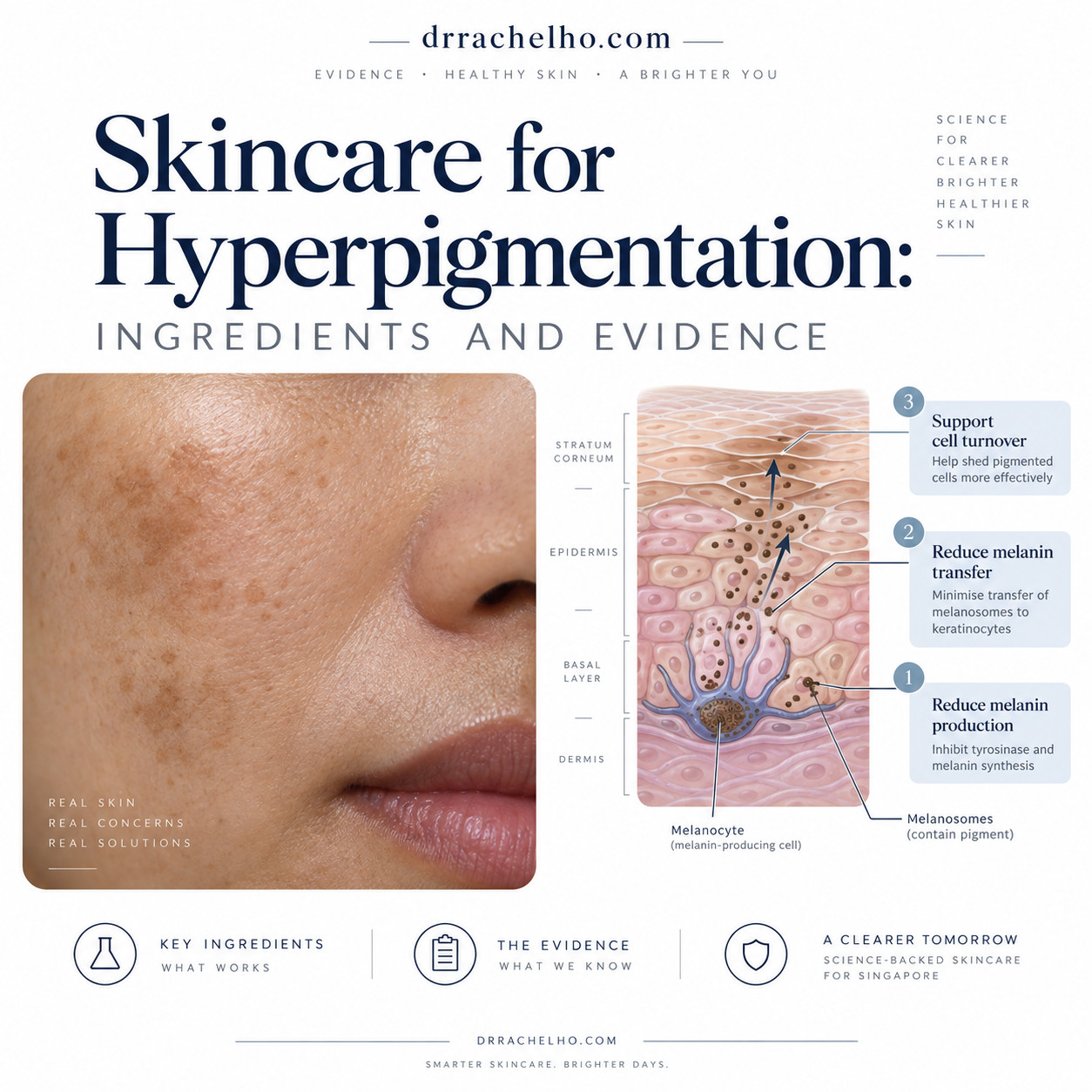
22 Jun Skincare for Hyperpigmentation: Ingredients and Evidence
Skincare for Hyperpigmentation: Ingredients and Latest Evidence
By Dr Rachel Ho
MBBS, National University of Singapore · Master of Medicine
Aesthetic doctor and founder of The Skin Longevity Clinic, Singapore
Updated September 2026
Dealing with hyperpigmentation can feel frustrating when progress is slow or if you’re dealing with recurrences. If you’re trying to lighten dark spots or manage melasma, it helps to understand that hyperpigmentation lightening skincare or treatments work at different stages of the pigment’s formation, which includes reducing its initial production, blocking its transfer to surrounding skin cells, and helping the melanin containing epidermis shed faster⁶,⁸,²¹. Because hyperpigment behaves in these distinct ways, an effective treatment plan for lightening unwanted dark spots often requires more than one approach²¹.
When choosing skincare for treating dark spots, I always emphasise on targeting the specific type of pigmentation you have, what the clinical evidence says about a formulation, and how this active ingredient can be integrated into your skincare routine. While my guide to What I Look For Before Treating Hyperpigmentation focuses on getting the right diagnosis, this article takes a closer look at the actual skincare ingredients and how they work on your skin.
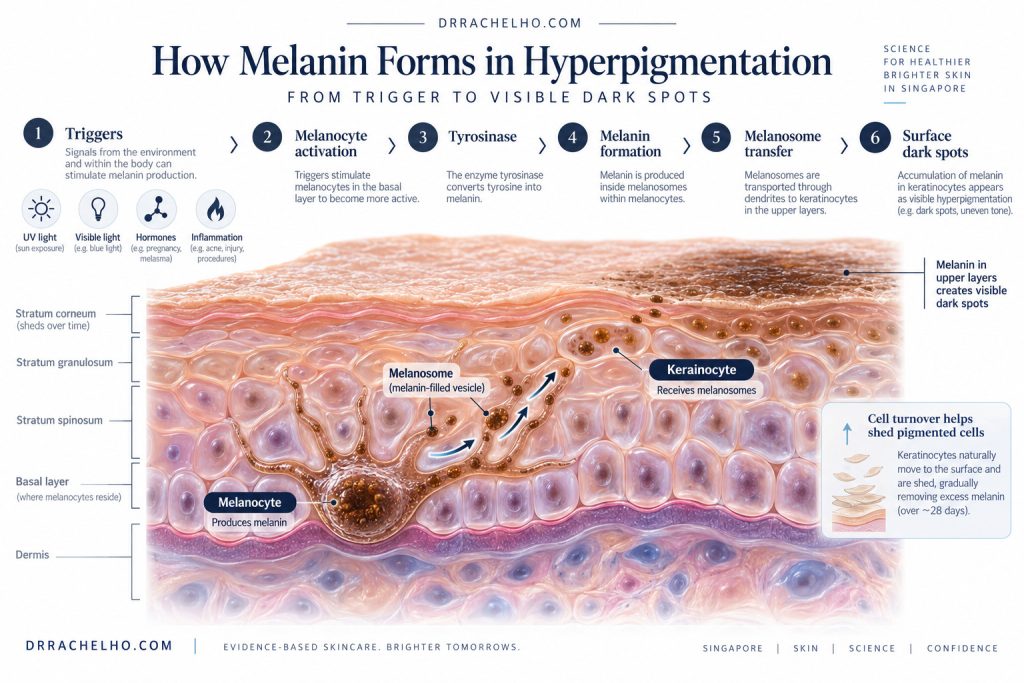
Sunlight, hormonal influences and inflammation can stimulate pigmentation through different pathways. Melanin forms within melanocytes and passes to surrounding keratinocytes, while epidermal renewal gradually sheds pigmented cells.
How are dark spots or melanin formed in the skin?
Melanin (the pigment that gives our skin its colour) is made by specialised cells called melanocytes, which sit right at the base of your epidermis². Inside these cells, the pigment is actually manufactured and packaged into tiny structures known as melanosomes². Think of melanocytes as the factories, and melanosomes as the shipping containers.
What activates melanocytes?
Our pigment factories don’t just work on their own. Instead, melanocytes respond to triggers. Sun exposure is a major trigger for dark spots in Singapore. When ultraviolet (UV) light hits your skin, it triggers surrounding skin cells to release a hormone called alpha-MSH³.
This hormone binds to a receptor (MC1R) on your melanocytes, activating a pathway involving a protein called MITF, which regulates pigment-related genes,including an essential enzyme called tyrosinase². This is just one of several pathways your skin uses to increase melanin production².
Other triggers matter such as pregnancy, certain hormonal medications, and genetics can worsen melasma. For patients with dark skin, visible light can also stimulate hyperpigmentation⁴. Also common among my patients from Singapore is inflammation from acne, eczema, or even skincare irritation increasing pigment production and transfer, leaving behind post-inflammatory hyperpigmentation (PIH)⁵.
Tyrosinase: the rate limiting enzyme in melanin formation
Tyrosinase is a copper-containing enzyme that kicks off the early steps of melanin synthesis². Tyrosinase converts an amino acid called tyrosine into L-DOPA, and then into dopaquinone, which eventually forms melanin².
When we use “tyrosinase inhibitors” in skincare, we are targeting this exact production stage to stop new pigment from forming¹. However, any pigment that has already been made still needs to be naturally processed or cleared by your skin, which is why lightening serums take time to exhibit results¹.
How does melanin reach other skin cells?
Melanocytes have long, branching “arms” that connect with neighbouring keratinocytes (the most common cells in your epidermis)². The pigment containers (melanosomes) are passed through these arms into the surrounding cells, which is what gives your skin its visible colour⁶.
As your skin cells naturally mature and move toward the surface, these pigmented cells are eventually shed¹. Therefore, effective treatments can either stop new pigment from reaching these cells, or speed up the clearance of the pigment that’s already there¹.
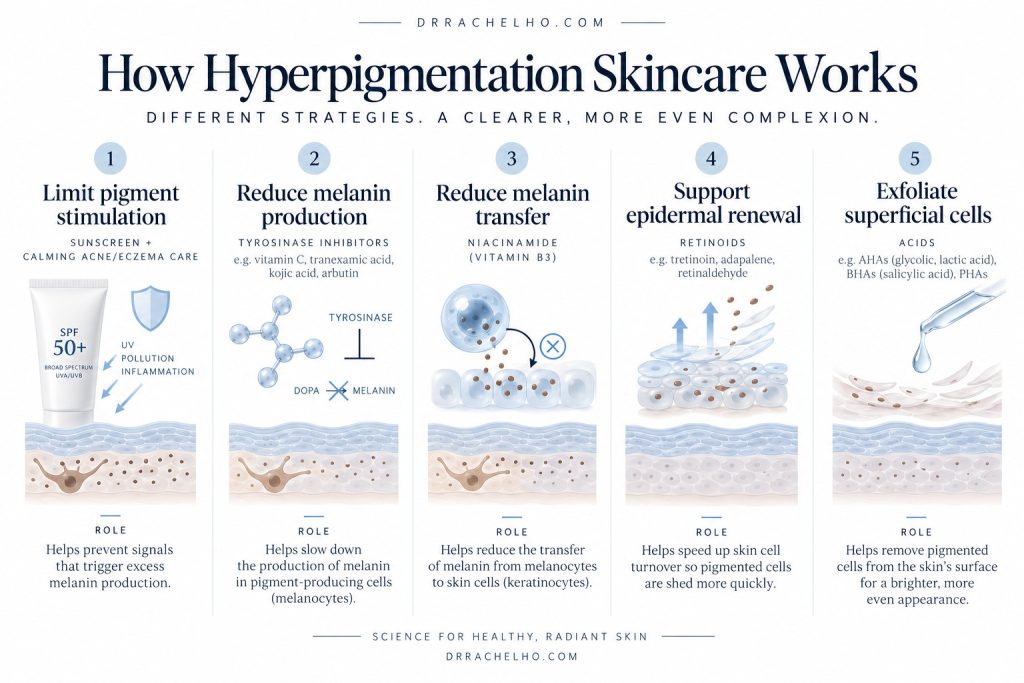
Hyperpigmentation skincare can act at several stages, from limiting pigment stimulation to reducing production, transfer and the accumulation of pigmented surface cells. These different roles help explain why photoprotection and carefully selected ingredients may be combined.
How does hyperpigmentation skincare work?
To make sense of the endless products on the market, I find it helpful to categorise the main approaches used in pigmentation skincare²¹. While a biological explanation is helpful, we ultimately rely on clinical studies to prove whether a formulation actually improves pigmentation in real life⁷.
Treatment strategies of hyperpigmentation
| Treatment approach | Main role | Examples |
|---|---|---|
| Limit pigment stimulation | Reduce exposure to relevant triggers and calm ongoing inflammation. | Photoprotection and treating active acne or eczema⁴,⁵. |
| Reduce melanin production | Interfere with tyrosinase activity or related pigment synthesis. | Hydroquinone, azelaic acid, kojic acid, arbutin, and thiamidol⁷,²¹. |
| Reduce melanin transfer | Block pigment from moving from melanocytes to surrounding skin cells. | Niacinamide⁶. |
| Support epidermal renewal | Influence skin cell maturation, turnover, and pigment distribution. | Retinoids⁵. |
| Exfoliate superficial cells | Loosen the "glue" between outer skin cells so they shed more readily. | Glycolic acid and other alpha-hydroxy acids (AHAs)⁸. |
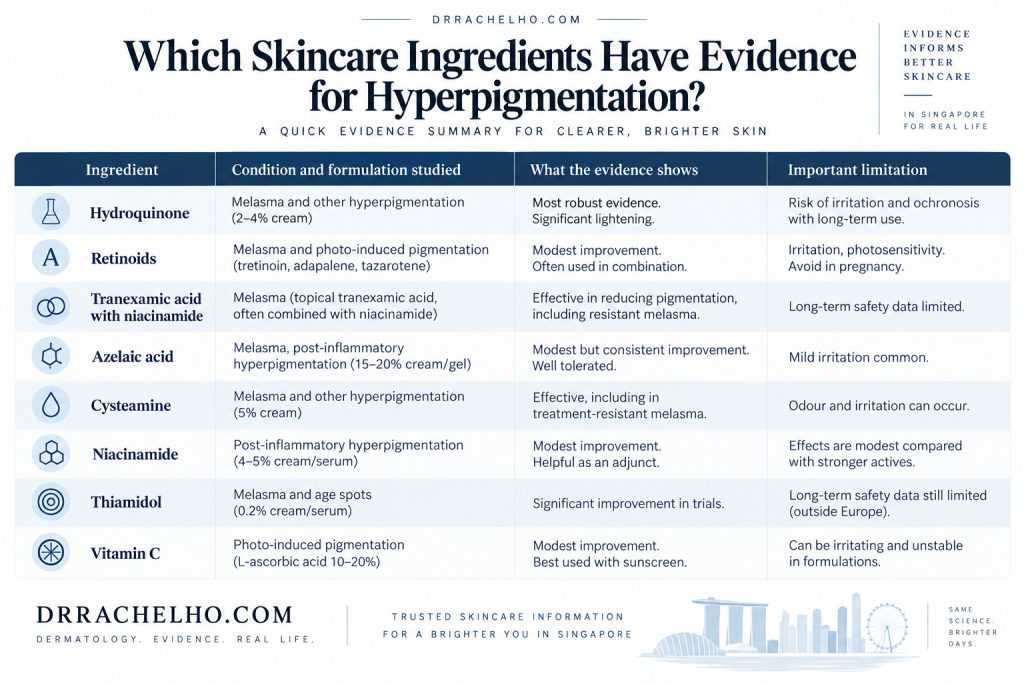
Evidence for hyperpigmentation skincare depends on the condition, formulation and outcome studied. Read each finding alongside its limitations rather than treating this comparison as a universal ranking of ingredients.
Which skincare ingredients have the best evidence?
The clinical evidence for an ingredient depends heavily on the specific condition being treated, the formulation used in the study, and the ingredient itself⁹,²¹. I’ve summarised the key findings and their limitations of these common ingredients for lightenign dark spots in the table below⁹,²¹.
Evidence for hyperpigmentation lightening skincare
| Active Ingredient | Condition and formulation studied | What the evidence shows | Important limitation |
|---|---|---|---|
| Hydroquinone | Melasma; commonly 2% to 4%, alone or in prescription combinations. | Established pigment reduction; hydroquinone-based triple combination cream remains a gold standard treatment⁹,¹⁰. | Requires medical supervision; risk of irritation and prolonged inappropriate use⁹. |
| Retinoids | Pigmentation linked to facial photoageing; tretinoin, retinol, and tazarotene. | A 2025 analysis found the strongest pigmentation result with tretinoin²⁷. | Photoageing findings don't establish a ranking for every pigmentation disorder (like melasma)²⁷. |
| Tranexamic acid + Niacinamide | Melasma; two combination creams compared with 4% hydroquinone. | All groups improved in a 2025 trial, without a significant difference in the main pigmentation outcomes¹⁵. | The findings apply to specific creams and had a short follow-up period¹⁵. |
| Azelaic acid | Melasma; 20% cream compared with 2% hydroquinone. | Greater improvement with azelaic acid in a 155-participant trial¹². | This comparison does not prove it is superior to 4% hydroquinone¹². |
| Cysteamine | Melasma; stabilised cysteamine cream compared with hydroquinone. | Both groups improved in a small randomised trial¹⁷. | Few participants completed the treatment; hydroquinone was actually better tolerated in this study¹⁷. |
| Niacinamide | Facial pigmentation; laboratory and clinical research. | Reduces transfer of pigment-containing melanosomes to surrounding skin cells⁶. | Evidence for the ingredient is not representative of every skincare product⁶,²¹. |
| Thiamidol | Melasma; 0.2% compared with 4% hydroquinone. | Both improved melasma in a 50-participant trial²⁸. | No significant difference between the two treatments; contact allergy occurred in some participants²⁸. |
| Vitamin C | Melasma; 5% ascorbic acid compared with 4% hydroquinone. | Improvement observed, with better tolerability for vitamin C in a small trial¹⁸. | The study was very small (16 women) and cannot represent every vitamin C derivative on the market¹⁸. |
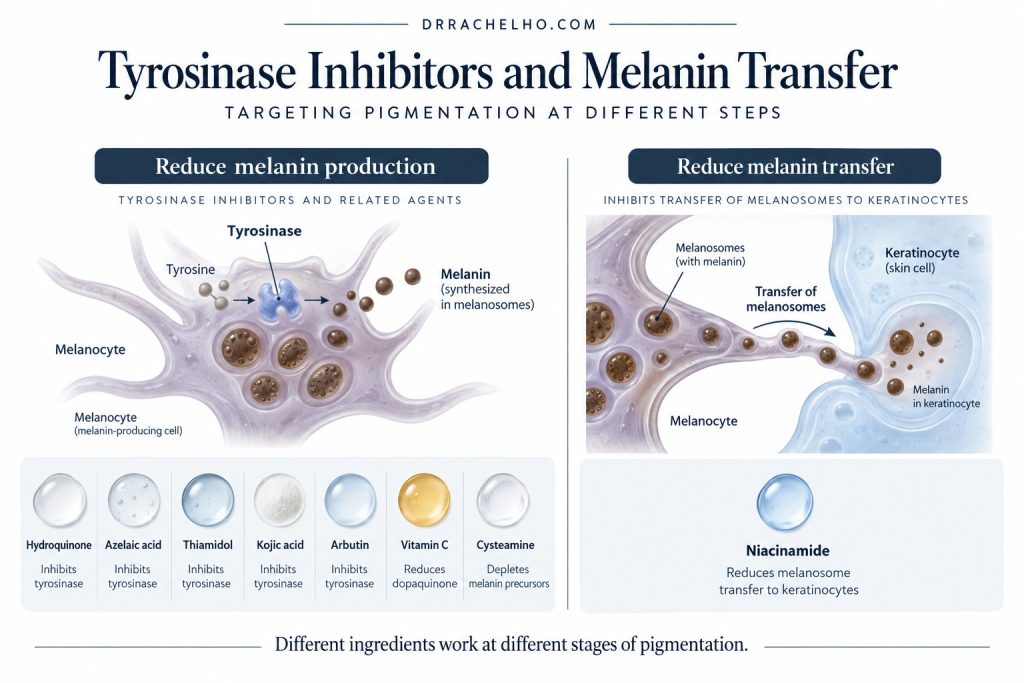
Tyrosinase inhibitors act on pigment production, while niacinamide reduces the transfer of melanosomes to surrounding keratinocytes.
Tyrosinase inhibitors: Stopping melanin formation at the source
Tyrosinase inhibitors vary greatly in how they affect enzymes, how they are formulated, and how well the skin tolerates them⁷,²¹. Interestingly, a lot of laboratory results depend on whether researchers test human tyrosinase or mushroom tyrosinase, so a lab result doesn’t necessarily translate to better results for my patients⁷.
Hydroquinone cream and medical supervision in Singapore
Hydroquinone is one of our most established tyrosinase inhibitors, commonly used at concentrations of 2% to 4%⁹. In fact, hydroquinone-based “triple combination cream” remains an established standard treatment for melasma according to the 2026 international consensus¹⁰.
This triple combination usually contains 4% hydroquinone, 0.05% tretinoin, and 0.01% fluocinolone acetonide. It brings together a pigment reducer, a retinoid for cell turnover, and an anti-inflammatory component⁹. Because of its potency and risk of side effects, the dosing of this medication must be medically supervised with your prescribing doctor¹⁰.
For my readers in Singapore, it is important to know that the Health Sciences Authority (HSA) identifies hydroquinone as a prescription-only medicine. It is strictly prohibited in over-the-counter cosmetic skincare and must be used under medical supervision¹¹. Without guidance, it can cause severe irritation, contact dermatitis, and a persistent, paradoxical form of pigmentation called exogenous ochronosis with prolonged use⁹.
Azelaic acid for pigmentation and acne marks
Azelaic acid is a multi-tasking active ingredient that lightens dark spots, reduces inflammation and has anti-oxidant benefits. Topical azelaic acid reduces pigment production and also treats acne, making it a choice for patients with acne and sensitive skin to treat pimples and post-inflammatory hyperpigmentation ⁵.
The evidence for azelaic acid in melasma includes a 24-week trial of 155 participants comparing a 20% azelaic acid cream with 2% hydroquinone¹². Researchers reported good to excellent results in 73% of the azelaic acid group compared to just 19% of the hydroquinone group¹². However, keep in mind this compares it to a lower dose (2%) of hydroquinone, so it doesn’t establish superiority over the standard 4%, nor does it mean a 10% cosmetic azelaic acid serum will give you the same clinical result¹².
My azelaic acid guide explains more about the science and looks at the ingredient lists of popular azelaic acid serums.
Thiamidol: The newer evidence
Thiamidol is another skincare ingredient that is interesting. The 50-participant trial mentioned in the table compared 0.2% thiamidol with 4% hydroquinone for melasma²⁸. Both groups showed improvement with no statistically significant difference between them, though two participants using thiamidol did develop allergic contact dermatitis²⁸.
Thiamidol lightens pigmentation by inhibiting tyrosinase. A 2026 randomised trial compared a 0.2% thiamidol cream with a plain vehicle cream in 200 adults⁷,¹³. After 12 weeks, the melasma severity score dropped by 36.1% with thiamidol, compared to 16.1% with the vehicle¹³. Note that this trial was supported by the manufacturer¹³.
While these numbers are encouraging, they describe a drop in a severity score, which doesn’t mean 36% of the dark spots vanished completely¹³. Furthermore, patient ratings and digital colour analysis didn’t show significant differences between the groups, and researchers found no major advantage for freckles or sun spots for thiamidol¹³.
Kojic acid and arbutin
Kojic acid inhibits tyrosinase partly by interacting with the copper at the enzyme’s active site, while arbutin derivatives also reduce tyrosinase activity¹. You’ll often spot them in brightening serums alongside other ingredients, and their clinical results depend heavily on the overall formulation¹,⁹.
Niacinamide: Reducing melanin transfer
Niacinamide acts differently from direct tyrosinase inhibitors. Instead of stopping production, it reduces the transfer of pigment to the surrounding skin cells⁶.
Laboratory studies show it successfully reduces melanosome transfer without directly inhibiting melanin production in isolated melanocytes⁶. This same research programme found clinical improvement in facial hyperpigmentation when participants used a niacinamide formulation⁶.
Before buying a dedicated niacinamide serum, check your existing moisturiser because niacinamide is already formulated into many of the products you likely use daily! My guide to niacinamide in skincare explains how to select a niacinamide skincare product in mor details.
Where does tranexamic acid fit?
Tranexamic acid (TXA) is an active ingredient that influences communication between your skin cells (keratinocytes) and your pigment factories (melanocytes)¹⁴. Lab research suggests it works via the plasminogen and plasmin system, rather than just acting as a standard tyrosinase inhibitor¹⁴.
A 2025 trial compared two TXA/niacinamide creams with 4% hydroquinone over three months¹⁵. All groups improved, with no statistically significant difference in the main pigmentation outcomes, and fewer adverse reactions in the TXA groups¹⁵. However, the formulations mattered: one used 2% TXA with 2% niacinamide encapsulated in niosomes, while the other used 5% TXA with 4% niacinamide¹⁵.
My tranexamic acid article discusses the different treatment routes between oral and topical tranexamic acid.
How do cell turnover and exfoliation lighten dark spots?
While production inhibitors like tyrosinase inhibitors stop new pigment from forming, epidermal renewal helps sweep away the pigment that is already trapped in your skin cells¹,¹⁶. These two actions complement each other pigmentation lightening, especially when the pigment is superficial²⁶.
Retinoids and skin cell renewal
Retinoids influence how your skin cells divide, mature, and shed, which greatly improves pigment clearance⁵. A randomised trial found that topical tretinoin lightened post-inflammatory hyperpigmentation (PIH) better than a placebo in Black participants, though irritation was a substantial hurdle¹⁶.
A recent 2025 network meta-analysis looking at pigmentation related to facial photoageing across 2,907 participants found the strongest results with tretinoin²⁷. Keep in mind, this applies specifically to sun damage (photoageing), so it doesn’t automatically mean tretinoin is the number one choice for melasma or PIH²⁷. If you’re new to retinoids, please read my guide to retinol which shares how to select and use a retinol for your skin. If you’d like to advance your retinoids, please see my guide Retinol vs Retinal vs Tretinoin: Which Should You Use?
Exfoliating acids and superficial pigmentation
Alpha-hydroxy acids (AHAs), like glycolic acid, gently dissolve the bonds between cells in your outer skin layer, helping them shed⁸. Exfoliating acids are effective for treating superficial pigmentation, but it won’t do much for deeper dermal pigmentation¹,⁵. My guide to exfoliating acid in skincare shares more about the different types of exfoliating acids and their respective advantages and disadvantages.
Cysteamine and Vitamin C: Other pathways
Cysteamine and vitamin C influence pigmentation biochemistry in multiple ways, largely tied to their antioxidant properties⁹. But again, clinical outcomes depend on the actual formulation of the skincare product, not just the ingredient’s theoretical antioxidant power⁹.
Cyspera and cysteamine
Stabilised cysteamine creams (like Cyspera) are often studied as alternatives to hydroquinone for melasma¹⁷. In a small 14-person trial, both cysteamine and hydroquinone improved melasma scores evenly¹⁷. However, hydroquinone was actually better tolerated by the patients in that study, which reminds us that “non-hydroquinone” doesn’t automatically mean “gentler”¹⁷. If you are using Cyspera, I advise you to follow the specific contact-time instructions and monitor for irritation.
Vitamin C
Vitamin C’s antioxidant activity can influence the oxidation reactions involved in pigment formation⁹. One small trial comparing 5% ascorbic acid with 4% hydroquinone found that while both worked, patients felt hydroquinone was more effective, though vitamin C was better tolerated¹⁸. Because vitamin C is notoriously unstable, the specific derivative and delivery system of your serum matter immensely⁹. Learn how to choose a vitamin C skincare in my guide on topical vitamin C.
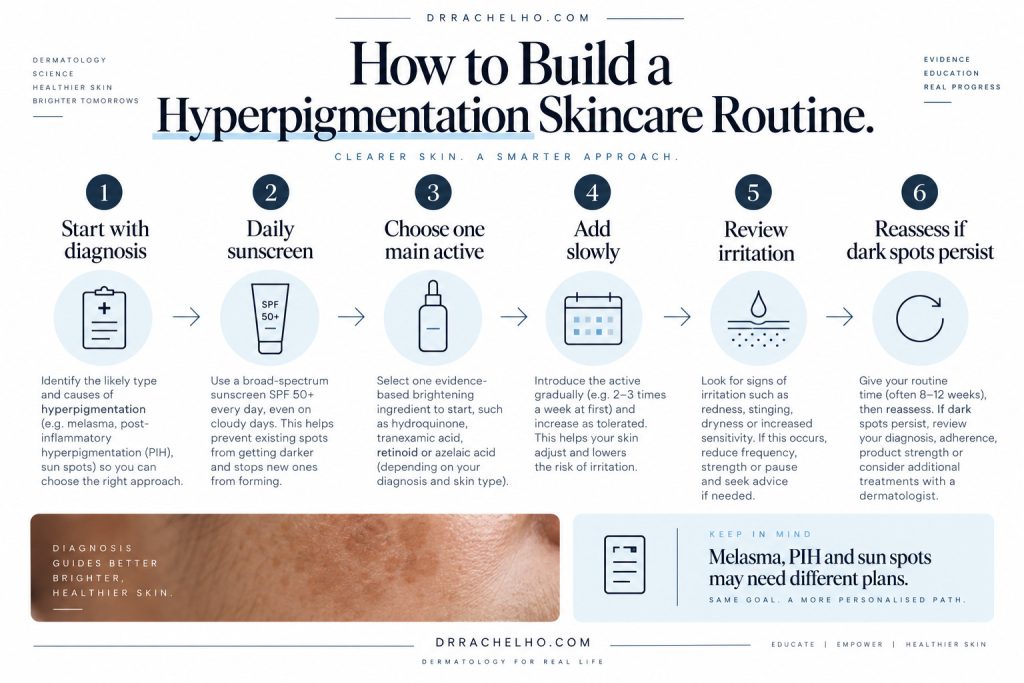
A hyperpigmentation skincare routine should account for the diagnosis, photoprotection and tolerance to treatment.
How should you choose a hyperpigmentation skincare routine?
1. Identify the type of pigmentation and treat the root cause
If you have melasma, daily photoprotection and supervised topical treatments are your foundation¹⁰. If you are dealing with post inflammatory hyperpigmentation, treating the active acne is just as important as treating the pigment²⁶.
2. Protect the skin against triggers
Broad-spectrum sunscreen reduces UV exposure which is a known trigger for almost all types of hyperpigmentation. However if you have melasma, you need protection against visible light, too. This is where tinted sunscreens containing iron oxides come in¹⁹. In one trial, patients using hydroquinone saw much better melasma improvement when they used a sunscreen that blocked both UV and visible light, compared to UV alone¹⁹.
3. Introduce active ingredients or treatments one at a time
Pro tip for your skin barrier- introduce one active ingredient at a time. Layering multiple active ingredients can increase your risk of irritant contact dermatitis. If you experience persistent burning, redness, or peeling, stop and reassess—treatment-related inflammation will only worsen your pigmentation²⁶.
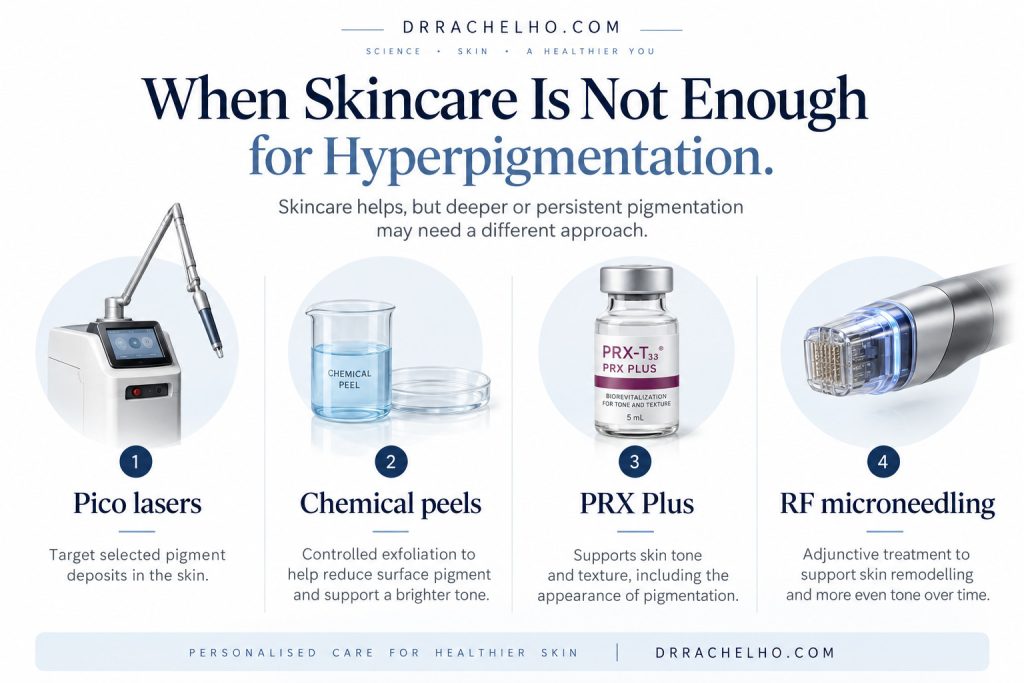
Pico lasers, chemical peels, PRX Plus and radiofrequency microneedling have different roles and evidence, with important limitations in the research on newer approaches.
When should you combine skincare with clinic treatments?
Skincare can be useful for managing epidermal pigmentation, but deeper, stubborn pigment usually requires in-clinic procedures²³. With a medical assessment, your doctor should be able to determine if you have melasma, solar lentigines, PIH, or a deeper dermal hyperpigmentation like Hori’s naevus²³. These are some of hyperpigmentation treatments available in Singapore
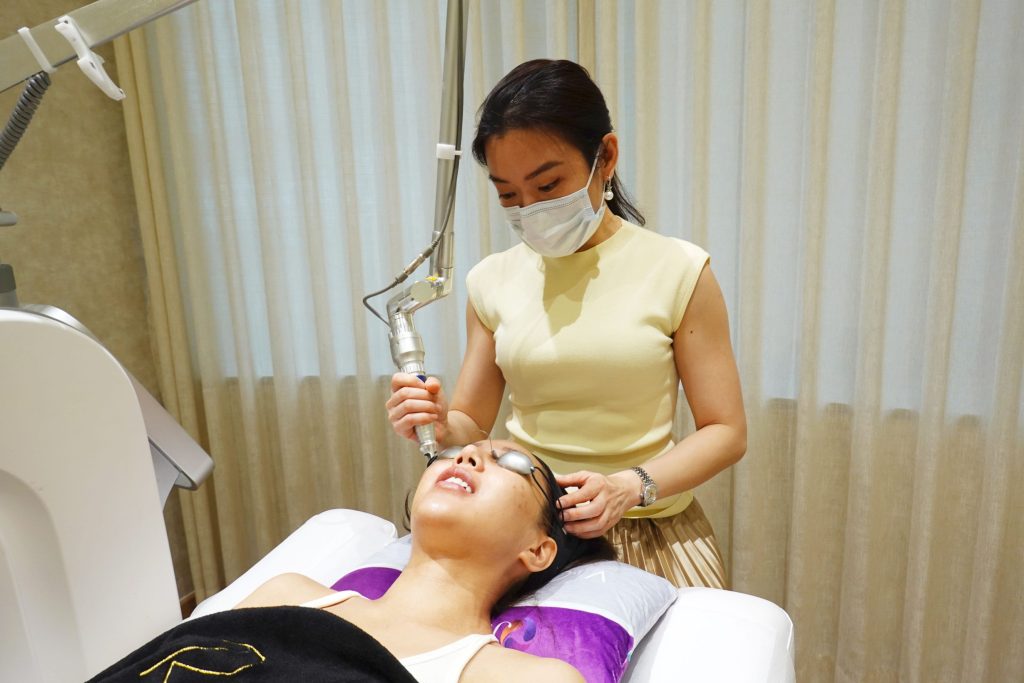
Administering pico laser for my patient in The Skin Longevity Clinic
Pico lasers
Pico laser treatments deliver acoustic energy to shatter targeted pigment deposits²³. I’ve shared my review on pico laser treatments on this blog.
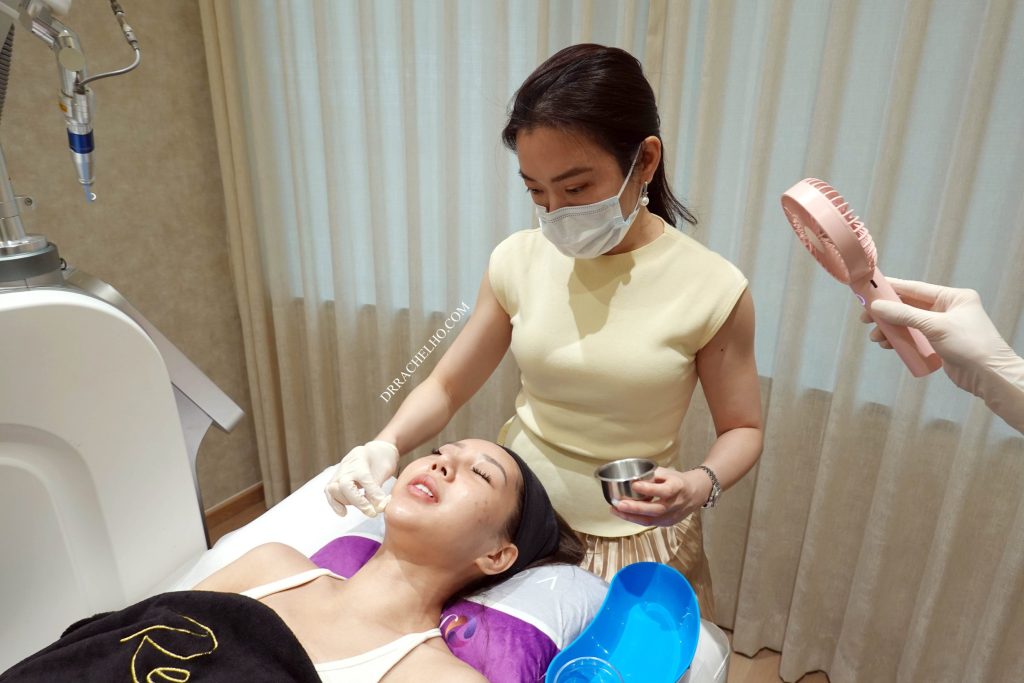
Administering a chemical peel for my patient in The Skin Longevity Clinic.
Chemical peels
In-clinic chemical peels utilise controlled exfoliation of hyperpigmentation that is much potent than your everyday AHA serum²⁶. A more in-depth read of chemical peels and how they work in my guide to chemical peels.
PRX Plus
PRX Plus is a newer biostimulator peel showing promise for photoaged skin²⁴. A 2026 study of 25 women showed improvements, but because there was no control group and all participants had light skin types, we can’t definitively say it treats melasma effectively in darker skin types just yet²⁴.
Radiofrequency microneedling
RF microneedling is increasingly being used alongside other treatments for melasma²⁵. While a 2026 review noted improvements across various studies, it should be viewed as an add-on therapy tailored to the individual, not a replacement for standard skincare and sun protection¹⁰,²⁵.
Ultimately, the best approach is one that stops new pigment from forming while gently clearing the pigment you already have. Whether that means a streamlined home routine or a combination of prescription creams and clinic treatments, your diagnosis and skin tolerance should always guide the way.
About Dr Rachel Ho
Dr Rachel Ho is an aesthetic doctor and founder of The Skin Longevity Clinic in Singapore, with more than 16 years of clinical experience. She holds an MBBS from the National University of Singapore and a Master of Medicine.
Her clinical approach considers pigmentation, skin barrier health and individual treatment planning. In this article, she examines the evidence and precautions for different types of skincare ingredients for lightening dark spots and brightening skin.
References
- Nautiyal A, Wairkar S. Management of hyperpigmentation: Current treatments and emerging therapies. Pigment Cell & Melanoma Research. 2021;34(6):1000 to 1014. DOI: 10.1111/pcmr.12986. PubMed.
- D’Mello SAN, Finlay GJ, Baguley BC, Askarian Amiri ME. Signaling Pathways in Melanogenesis. International Journal of Molecular Sciences. 2016;17(7):1144. DOI: 10.3390/ijms17071144. Journal.
- Cui R, Widlund HR, Feige E, et al. Central role of p53 in the suntan response and pathologic hyperpigmentation. Cell. 2007;128(5):853 to 864. DOI: 10.1016/j.cell.2006.12.045. PubMed.
- Espósito ACC, et al. Update on Melasma, Part I: Pathogenesis. Dermatology and Therapy. 2022;12(9):1967 to 1988. DOI: 10.1007/s13555-022-00779-x. Journal.
- Davis EC, Callender VD. Postinflammatory hyperpigmentation: A review of the epidemiology, clinical features, and treatment options in skin of color. Journal of Clinical and Aesthetic Dermatology. 2010;3(7):20 to 31. Journal.
- Hakozaki T, Minwalla L, Zhuang J, et al. The effect of niacinamide on reducing cutaneous pigmentation and suppression of melanosome transfer. British Journal of Dermatology. 2002;147(1):20 to 31. DOI: 10.1046/j.1365-2133.2002.04834.x. PubMed.
- Mann T, Gerwat W, Batzer J, et al. Inhibition of Human Tyrosinase Requires Molecular Motifs Distinctively Different from Mushroom Tyrosinase. Journal of Investigative Dermatology. 2018;138(7):1601 to 1608. DOI: 10.1016/j.jid.2018.01.019. PubMed.
- Van Scott EJ, Yu RJ. Hyperkeratinization, corneocyte cohesion, and alpha hydroxy acids. Journal of the American Academy of Dermatology. 1984;11(5 Part 1):867 to 879. DOI: 10.1016/S0190-9622(84)80466-1. PubMed.
- Gan C, Rodrigues M. An Update on New and Existing Treatments for the Management of Melasma. American Journal of Clinical Dermatology. 2024;25(5):717 to 733. DOI: 10.1007/s40257-024-00863-2. Springer
- Sarkar R, Desai SR, Sinha S, et al. Delphi consensus on melasma management by international experts and pigmentary disorders society. Journal of the European Academy of Dermatology and Venereology. 2026;40(4):680 to 692. DOI: 10.1111/jdv.70066. PubMed.
- Health Sciences Authority, Singapore. HSA Alerts Public to Six Han’s Skin Care Cosmetic Products Purchased Online That Were Found to Contain Undeclared Potent Ingredients. 7 February 2014. Official regulatory information rather than a clinical study. HSA.
- Verallo Rowell VM, Verallo V, Graupe K, Lopez Villafuerte L, Garcia Lopez M. Double blind comparison of azelaic acid and hydroquinone in the treatment of melasma. Acta Dermato Venereologica Supplementum. 1989;143:58 to 61. DOI: 10.2340/000155551435861. PubMed
- Lekhavat C, Rojanamatin J, Suphannaphong M, Kolbe L. Efficacy and Tolerability of 0.2% Thiamidol Cream for Facial Hyperpigmentation: A Randomized, Double Blind, and Vehicle Controlled Study. Dermatology and Therapy. 2026;16:1551 to 1565. DOI: 10.1007/s13555-025-01649-y. Springer
- Maeda K, Tomita Y. Mechanism of the Inhibitory Effect of Tranexamic Acid on Melanogenesis in Cultured Human Melanocytes in the Presence of Keratinocyte Conditioned Medium. Journal of Health Science. 2007;53(4):389 to 396. DOI: 10.1248/jhs.53.389. Laboratory research. Journal.
- Ghasemiyeh P, Haghighi NF, Dastgheib L, Ranjbar S, Mohammadi Samani S. Safety and efficacy of niosomal and conventional tranexamic acid/niacinamide vs. hydroquinone creams in melasma: A randomized, double blind, case controlled clinical trial. Scientific Reports. 2025;15:42739. DOI: 10.1038/s41598-025-26693-8. Journal.
- Bulengo Ransby SM, Griffiths CEM, Kimbrough Green CK, et al. Topical tretinoin (retinoic acid) therapy for hyperpigmented lesions caused by inflammation of the skin in black patients. New England Journal of Medicine. 1993;328:1438 to 1443. DOI: 10.1056/NEJM199305203282002. Journal.
- Nguyen J, Remyn L, Chung IY, et al. Evaluation of the efficacy of cysteamine cream compared to hydroquinone in the treatment of melasma: A randomised, double blinded trial. Australasian Journal of Dermatology. 2021;62(1):e41 to e46. DOI: 10.1111/ajd.13432. PubMed.
- Espinal Perez LE, Moncada B, Castanedo Cazares JP. A double blind randomized trial of 5% ascorbic acid vs. 4% hydroquinone in melasma. International Journal of Dermatology. 2004;43(8):604 to 607. DOI: 10.1111/j.1365-4632.2004.02134.x. Journal.
- Castanedo Cazares JP, Hernandez Blanco D, Carlos Ortega B, Fuentes Ahumada C, Torres Álvarez B. Near visible light and UV photoprotection in the treatment of melasma: a double blind randomized trial. Photodermatology, Photoimmunology & Photomedicine. 2014;30(1):35 to 42. DOI: 10.1111/phpp.12086. PubMed.
- Bozzo P, Chua Gocheco A, Einarson A. Safety of skin care products during pregnancy. Canadian Family Physician. 2011;57(6):665 to 667. Full text.
- de Freitas ACP, Rigon RB, Bagatin E, Leonardi GR. Perspectives of topical formulations for melasma. International Journal of Dermatology. 2023;62(2):260 to 268. DOI: 10.1111/ijd.16421. PubMed.
- Anua. Niacinamide 10 TXA 4 Serum. Manufacturer information used to verify the labelled formulation rather than independent clinical efficacy. Accessed 27 September 2026. Anua US
- Passeron T, Genedy R, Salah L, et al. Laser treatment of hyperpigmented lesions: position statement of the European Society of Laser in Dermatology. Journal of the European Academy of Dermatology and Venereology. 2019;33(6):987 to 1005. DOI: 10.1111/jdv.15497. PubMed.
- Deda A, Duda P, Wcisło Dziadecka D, Maszczyk A, Wilczyński S. Instrumental Assessment of a Chemical Skin Biostimulator Combining Ammonium Trichloroacetate and Homocysteic Acid in Photoaged Mature Skin: A Single Arm Prospective Study. Molecules. 2026;31(17):3038. DOI: 10.3390/molecules31173038. Journal.
- Kumar N, Lin S, Luthra A, Patel T, Bhatia AC. The Efficacy and Safety of Radiofrequency Microneedling for Melasma: A Systematic Review and Qualitative Evidence Synthesis. Aesthetic Surgery Journal Open Forum. 2026;8:ojag075. DOI: 10.1093/asjof/ojag075. OUP Academic
- Moolla S, Miller Monthrope Y. Dermatology: how to manage facial hyperpigmentation in skin of colour. Drugs in Context. 2022;11:2021-11-2. DOI: 10.7573/dic.2021-11-2. Journal.
- Lin L, Chen X, Liu C, et al. Comparative efficacy of topical interventions for facial photoaging: a network meta analysis. Scientific Reports. 2025;15:26889. DOI: 10.1038/s41598-025-12597-0. PubMed
- Lima PB, Dias JAF, Cassiano DP, et al. Efficacy and safety of topical isobutylamido thiazolyl resorcinol (Thiamidol) vs. 4% hydroquinone cream for facial melasma: an evaluator blinded, randomized controlled trial. Journal of the European Academy of Dermatology and Venereology. 2021;35(9):1881 to 1887. DOI: 10.1111/jdv.17344. Journal.

Limclinicandsurgery
Posted at 14:08h, 11 DecemberThis review on pigmentation lightening and Cyspera in Singapore offers insightful, honest feedback on treating dark spots and uneven skin tone. It explains how the product works, shares personal results, and highlights key benefits and considerations. A useful read for anyone exploring effective pigmentation-reducing skincare options.
foodresearchlab
Posted at 13:02h, 22 SeptemberGreat post by Dr. Rachel Ho — very insightful review of pigmentation lightening ingredients like cysteamine (Cyspera) and glutathione. At Food Research Lab (FRL), we contribute by researching potency, safety, and delivery systems for emerging actives. Our formulation science ensures that novel elements like cysteamine are stabilized, tolerable, and effective in real-world skin types. We help cosmeceutical businesses solve this at FRL. Happy to connect!