


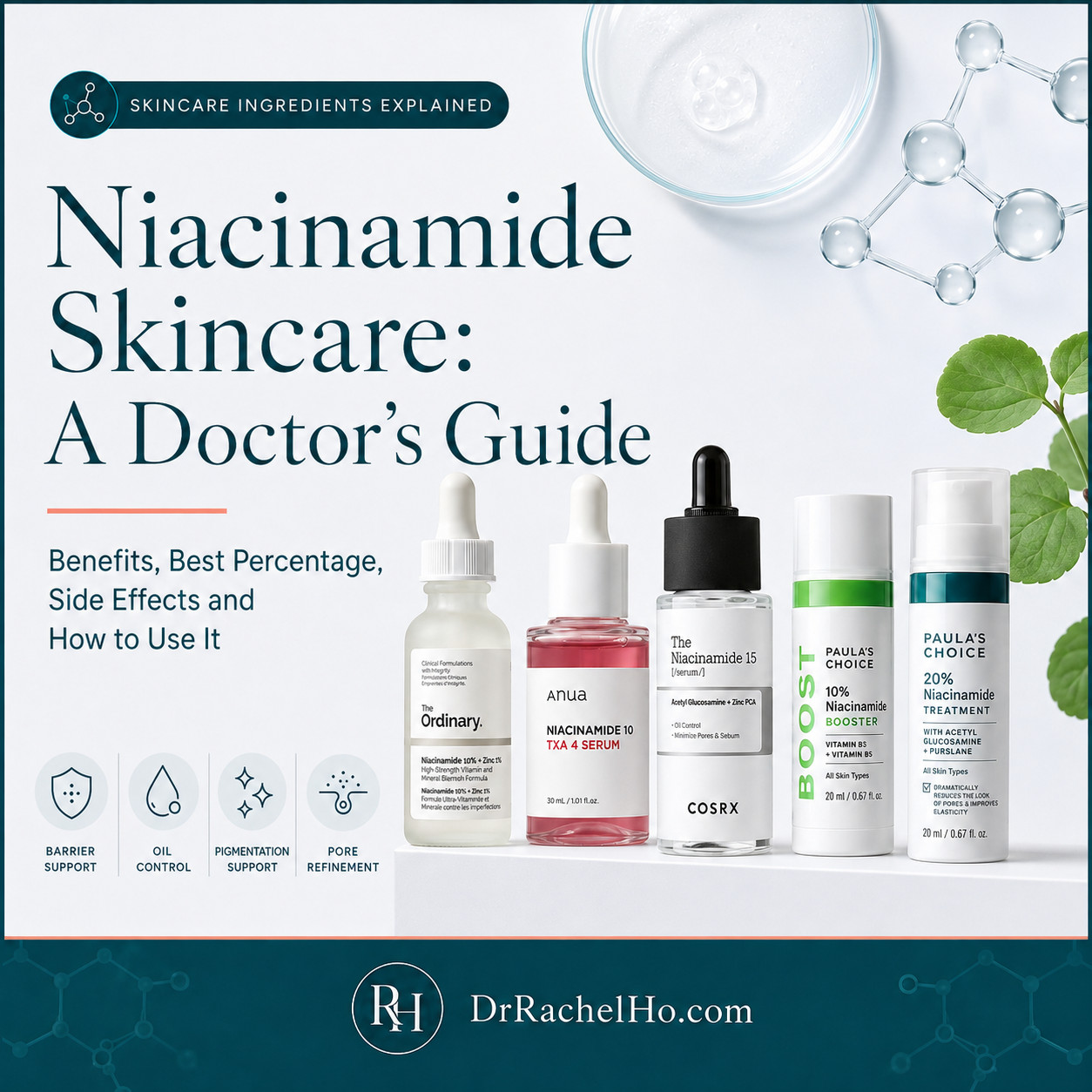
27 Nov Niacinamide for Skin: Benefits, Best Percentage, Side Effects and How to Use It
Updated August 2026
Niacinamide is a water soluble form of vitamin B3, also known as nicotinamide. It is one of the most versatile ingredients in modern skincare because it can support the skin barrier, reduce surface oil, improve uneven pigmentation and soften visible redness.¹,²,⁵,⁶.
Given its popularity, it’s not surprising that niacinamide is one of the most popular and ubiquitous skincare ingredients. Niacinamide now appears in cleansers, toners, serums, moisturisers and sunscreens. In my clinic in Singapore, I am seeing an increasing number of patients who have sensitivity due to irritant contact dermtatiis from using high concentrations of active ingredients as well as multiple active ingredients.
Related blogposts:
What are Active Ingredients in Skincare?
How to Layer Skincare in the Correct Order
How to Repair Your Skin Barrier
Niacinamide at a glance
| Question about niacinamide | Evidence based answer |
|---|---|
| What does niacinamide do? | Niacinamide supports barrier function, reduce surface oil, improve uneven tone and modestly improve some early signs of skin ageing. |
| What percentage is best? | Around 2% to 5% is enough for many people. A 10% or 20% serum is not automatically more effective and may trigger irritation for some. |
| Does niacinamide cause purging? | Usually no. Burning, redness or many similar bumps are more suggestive of irritation or a reaction to the complete formula. |
| Can it be used every day? | Yes, if the skin tolerates it. Sensitive skin may do better with alternate day use. |
| Can it be used with vitamin C or retinoids? | Yes and no; it depends on the exact formulatgions of the products. For example, niacinamide can generally complement retinoids; but the pH of L-ascorbic acid (active vitamin C) is not the optimum pH for niacinamide |
| Can it remove acne scars? | Niacinamide can lighten post inflammatory hyperpigmentation i.e. e brown post acne marks. It cannot resurface atrophic acne scars. |
What is niacinamide and how does it work?
Niacinamide is involved in cellular energy metabolism and helps support several processes within the epidermis. Topical niacinamide has been shown to increase the production of ceramides and other lipids in the stratum corneum, while reducing transepidermal water loss in dry skin¹. Niacinamide also influences inflammation, sebum regulation and the transfer of melanin containing structures between skin cells⁵,⁷.
For these reasons, niacinamide is often used in formulations to suppor the skin barrier as well as skincare for acne, sensitivity, and hyperpigmentation.
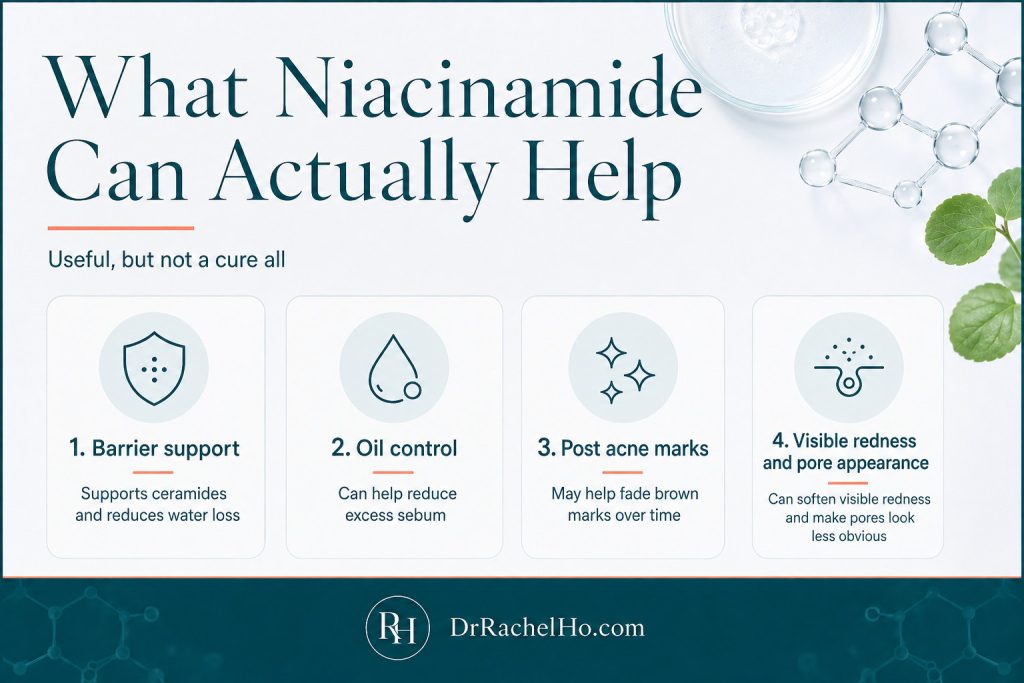
Niacinamide may support ceramide production, reduce excess surface oil, gradually improve brown post-acne marks and make redness or pores appear less noticeable. Dr Rachel Ho explains why it is best regarded as a supportive skincare ingredient rather than a cure-all.
What are the benefits of niacinamide for the skin?
1. Niacinamide can support the skin barrier
A healthier barrier retains water more effectively and is less vulnerable to irritants. Niacinamide can complement a moisturiser containing ceramides, glycerin or petrolatum in enhancing the skin’s moisture barrier function¹.
Niacinamide skincare can be useful in Singapore, where air conditioning, frequent cleansing, acne treatment and retinoids may leave the skin feeling tight or sensitive. Do note that a moisturiser with a modest amount of niacinamide is often easier to tolerate than a separate high strength serum.
Related blogposts:
5 Skincare Ingredients for Acne and Oily Skin
How does Retinol Work? Retinoids Explained Simply
2. Niacinamide reduces oiliness and supports acne care
A study of 2% niacinamide found reductions in measures of facial sebum production². An older randomised trial also found that 4% nicotinamide gel improved inflammatory acne over eight weeks, although later reviews concluded that the acne evidence remains limited and should not displace treatments with stronger clinical support³,⁴.
Niacinamide is therefore best viewed as a supporting ingredient for mild oiliness or acne prone skin. Moderate, severe, painful or scarring acne needs medical assessment rather than skincare.
Related blogposts:
Cycle Sync Skincare for Menstrual Acne
3. Niacinamide can reduce hyperpigmentation
Niacinamide can reduce the transfer of melanosomes from melanocytes to surrounding keratinocytes. In a controlled study, topical niacinamide reduced hyperpigmentation and increased skin lightness after four weeks compared with the inactive vehicle⁵.
This property makes niacinamide useful for treating post inflammatory marks after acne, a common concern in Asian skin. Do note that hyperpigmentation should also be diagnosed correctly because redness, brown pigment and true acne scars are frequently confused¹¹. Hyperpigmentation also involves pathways such melanin formation, and so niacinamide alone is often insufficient to treat dark spots
4. Niacinamide may modestly improve fine lines and texture
A 12 week study using 5% niacinamide reported improvements in fine lines, hyperpigmentation, red blotchiness and sallowness⁶. These findings support its use as a gentle multipurpose ingredient, but they do not make niacinamide equivalent to a retinoid, botulinum toxin or collagen resurfacing treatments like radiofrequency microneedling and ECM skinboosters.
Niacinamide may make pores look less noticeable by reducing oiliness and improving the surrounding skin. However, pores cannot be closed because these are the openings of the pilosebaceous units.
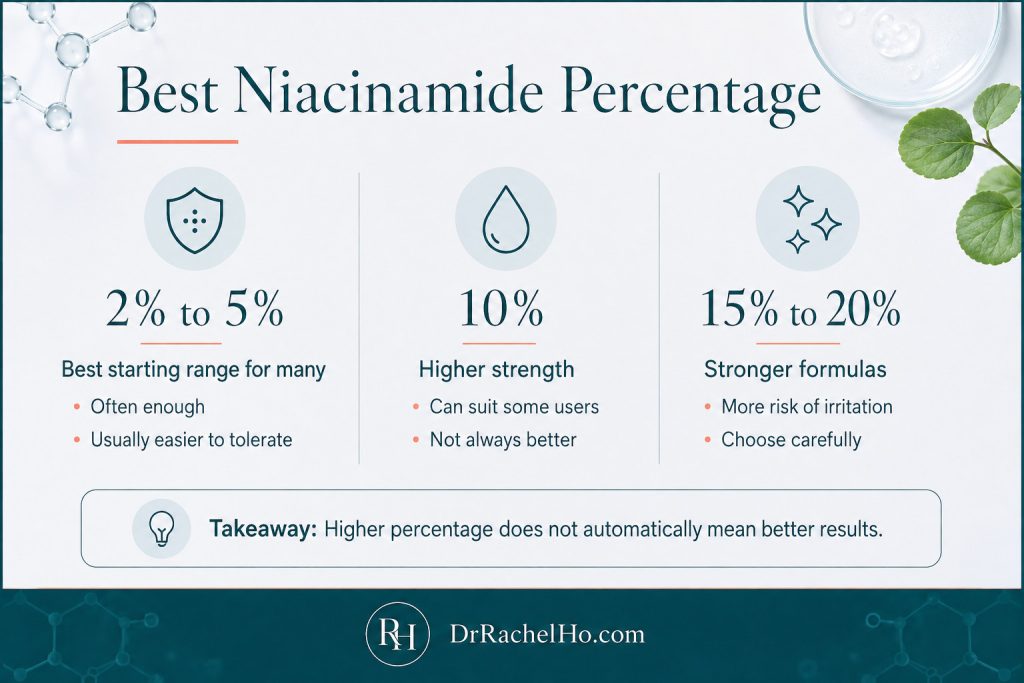
Most established niacinamide studies used concentrations of approximately 2% to 5%. Higher-strength 10% to 20% products may suit selected users, but a higher percentage does not automatically produce better skincare results.
What is the best niacinamide percentage in skincare?
Most of the established clinical evidence involves concentrations between 2% and 5%. Products containing 10%, 15% and 20% are widely sold, but there is no convincing evidence that every user gets better results as the percentage rises. Results also depend on the formulation, delivery system and other ingredients in the product²,³,⁵-⁷.
Current high strength examples include The Ordinary Niacinamide 10% + Zinc 1%, Anua Niacinamide 10 TXA 4 Serum, COSRX The Niacinamide 15 Serum, Paula’s Choice 10% Niacinamide Booster and Paula’s Choice 20% Niacinamide Treatment. These examples illustrate the current market and are not personal endorsements.
For most beginners and people with sensitive skin, I recommend starting around 2% to 5%. A well formulated moisturiser may be enough, especially when niacinamide is already present in other steps of the routine.
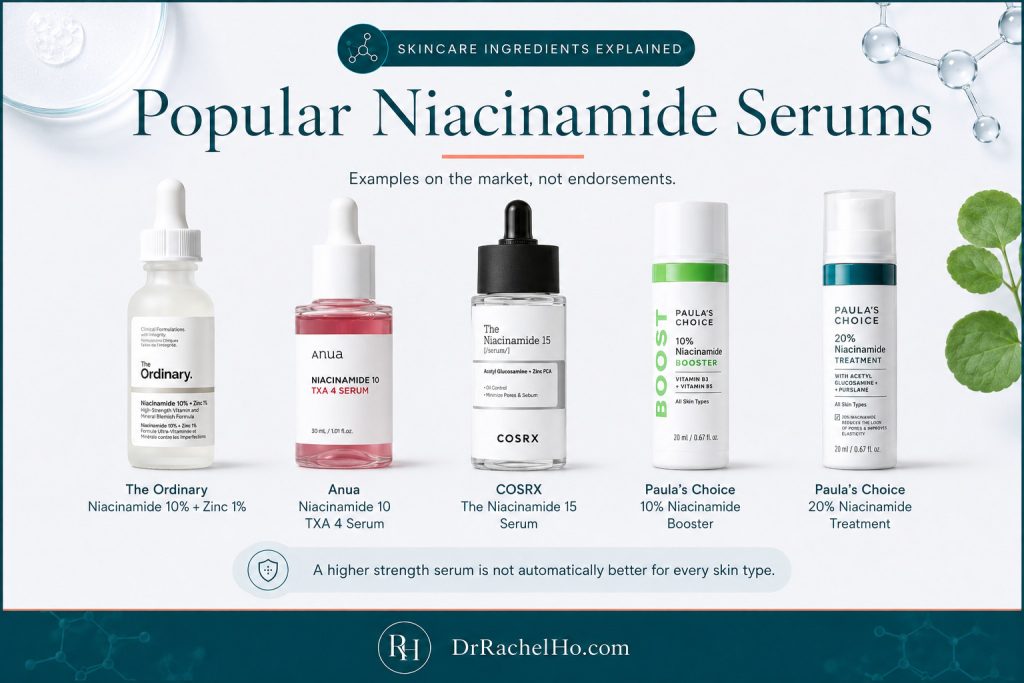
Popular niacinamide serum examples include The Ordinary Niacinamide 10% + Zinc 1%, Anua Niacinamide 10 TXA 4 Serum, COSRX The Niacinamide 15 Serum, Paula’s Choice 10% Niacinamide Booster and Paula’s Choice 20% Niacinamide Treatment. Their inclusion is illustrative and does not represent an endorsement by Dr Rachel Ho.
How should niacinamide skincare be used?
Apply niacinamide after cleansing and before moisturiser, either in the morning or at night. Begin once daily or on alternate days, then increase only if the skin remains comfortable.
Niacinamide can generally be used in the same routine as vitamin C, retinoids, hyaluronic acid, salicylic acid and azelaic acid. There is no established medical rule requiring niacinamide and vitamin C to be separated. However, combining active ingredients may result in cumulative irritation.
Can niacinamide be used during pregnancy?
Niacinamide is not a retinoid, and cosmetic safety assessments have found it to be generally well tolerated at commonly used topical concentrations. Direct studies specifically involving pregnant users are limited, so the complete ingredient list should still be reviewed rather than judging a product by niacinamide alone¹⁴.
Some combination products may contain retinoids or other ingredients that are unsuitable during pregnancy. Pregnant patients who are uncertain about a product should check with their obstetrician or doctor, especially when treating acne or melasma.
Related blogpost:
Pregnancy Skincare Guide: What’s Safe and What to Avoid
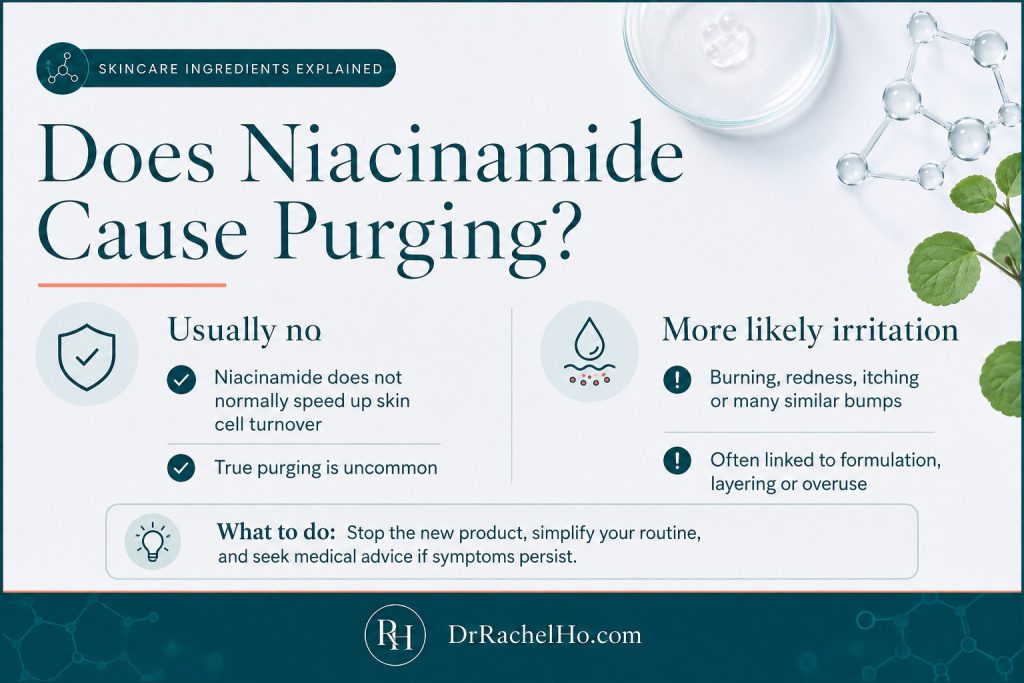
Niacinamide does not normally accelerate cell turnover in the way that retinoids and exfoliating acids can. Burning, itching, redness or many similar bumps after starting a new product are more suggestive of irritation, excessive layering or a reaction to the complete formulation.
Does niacinamide cause purging?
Niacinamide does not normally accelerate skin cell turnover in the way that retinoids or exfoliating acids can. A sudden crop of similar bumps, burning, itching or redness is therefore more likely to reflect irritation, excessive layering or a reaction to another ingredient in the formula.
Related blogpost:
Is Your Skin Purging or Breaking Out?
Hype vs evidence: Which niacinamide claims are overhyped?
Niacinamide cannot cure acne, erase indented scars, permanently shrink pores, remove eye bags or lift loose skin. It can lighten hyperpigmentation to some extent, but hyperpigmentation such as melasma often require a combination of actives and treatments as pico laser treatments, chemical peels, PRX Plus, tranexamic acid therapy and radiofrequency microneedling.
Claims about skin cancer prevention with niacinamide also need context. Research involving oral nicotinamide in selected patients at increased risk of skin cancer cannot be transferred directly to an over the counter facial serum⁸. Topical niacinamide should never be presented as a replacement for sunscreen, medical skin assesssments or bopsies.
Finally, a higher concentration of active ingreidnet does not necessarily equate to better results. Applying a 20% serum on top of niacinamide in a toner, moisturiser and sunscreen may add irritation without providing a visible additional benefit.
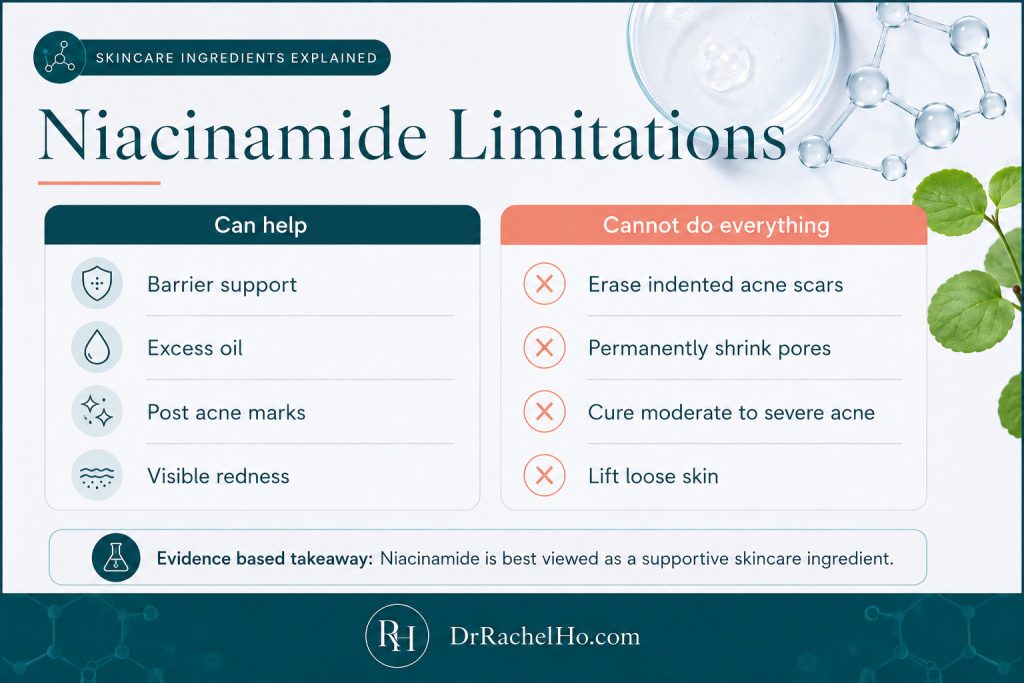
Niacinamide may support barrier function, excess oil, post-acne marks and visible redness. It cannot erase indented acne scars, permanently shrink pores, cure moderate-to-severe acne or lift loose skin.
Who should not use niacinamide skincare?
Cosmetic safety assessments have found niacinamide to be generally well tolerated, although any complete formulation can still cause irritation in an individual user¹⁴. However, anyone who has developed a reaction to niacinamide or to a particular niacinamide product should avoid reapplying it until the cause is clear. User with with active dermatitis, burning skin or a recently disrupted barrier should also pause nonessential active ingredients while the skin barrier recovers.
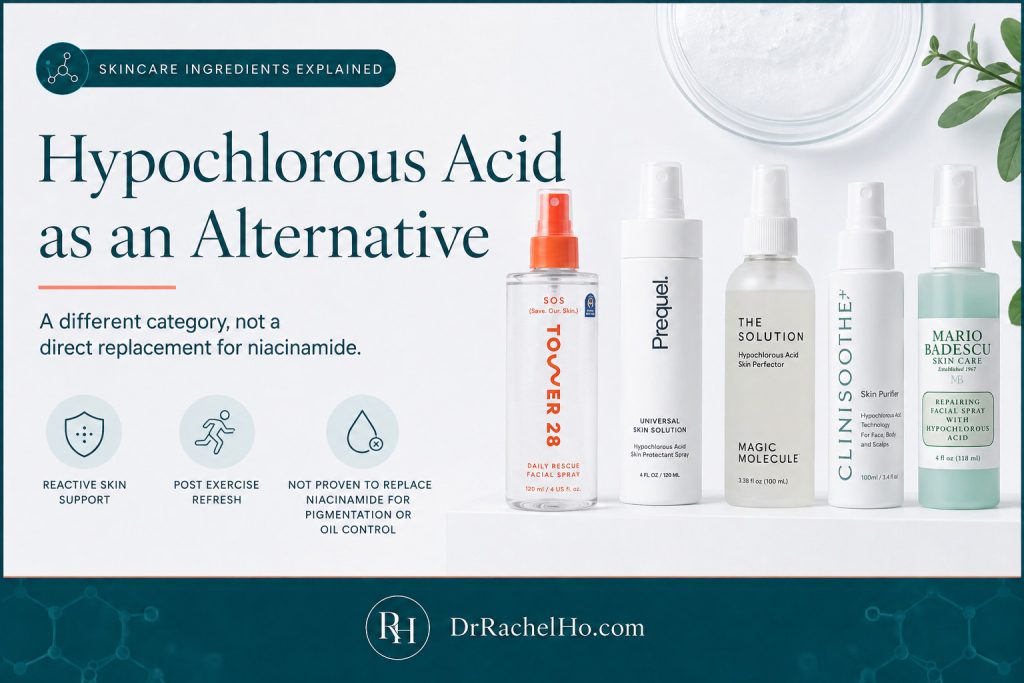
Hypochlorous acid sprays may support reactive or post-exercise skin, but they are not direct substitutes for niacinamide’s roles in barrier support, oil regulation or pigmentation. Examples shown include Tower 28, Prequel, Magic Molecule, Clinisoothe+ and Mario Badescu
Is hypochlorous acid an alternative to niacinamide?
Hypochlorous acid has become popular in facial sprays for reactive, acne prone and post exercise skin. It is an antimicrobial molecule involved in the innate immune response, and stabilised topical formulations may assist with surface cleansing, irritation and selected inflammatory skin conditions. A recent clinical review found promising applications across dermatology, while also noting inconsistent findings and the need for better controlled research⁹.
Popular current examples include Tower 28 SOS Daily Rescue Facial Spray, Prequel Universal Skin Solution, Magic Molecule The Solution, Clinisoothe+ Skin Purifier and Mario Badescu Repairing Facial Spray with Hypochlorous Acid.
Hypochlorous acid is not a direct replacement for niacinamide. It does not have the same evidence for ceramide production, sebum regulation or pigmentation, and it should not be expected to control acne on its own. Use a stabilised product formulated for skin and never apply household disinfectants or homemade chlorine mixtures to the face.
Alternatives to niacinamide skincare
| Main concern | Skincare alternatives | Medical or in clinic options |
|---|---|---|
| Dryness or barrier weakness | Ceramides, glycerin, petrolatum, squalane and panthenol | Assessment for eczema or contact dermatitis, followed by barrier directed treatment |
| Acne, congestion and oily skin | Salicylic acid, benzoyl peroxide, retinoids and azelaic acid | Prescription acne treatment, chemical peels, LED light and radiofrequency microneedling |
| Hyperpigmentation including sun spots, melasma, post inflammatory hyperpigmentation | Broad spectrum sunscreen, vitamin C, azelaic acid, retinoids and topical tranexamic acid | Pico laser or chemical peels after the diagnosis is established |
| Redness and sensitivity | Azelaic acid, panthenol or colloidal oatmeal | Assessment for rosacea, eczema or allergy, with vascular laser where appropriate |
| Fine lines and rough texture | Sunscreen, retinoids and selected exfoliating acids | Fractional laser, radiofrequency microneedling or collagen biostimulators including ECM skinboosters |
| Depressed/ atrophic acne scars | Skincare cannot rebuild lost dermal structure | Subcision, radiofrequency microneedling, fractional laser and collagen biostimulators according to scar type |
Alternatives to niacinamide skincare
Current acne guidelines give stronger recommendations to treatments such as benzoyl peroxide, topical retinoids and appropriate combination therapy than to cosmetic niacinamide alone¹⁰. Persistent acne should be treated early because continuing inflammation increases the risk of hyperpigmentation and scarring.
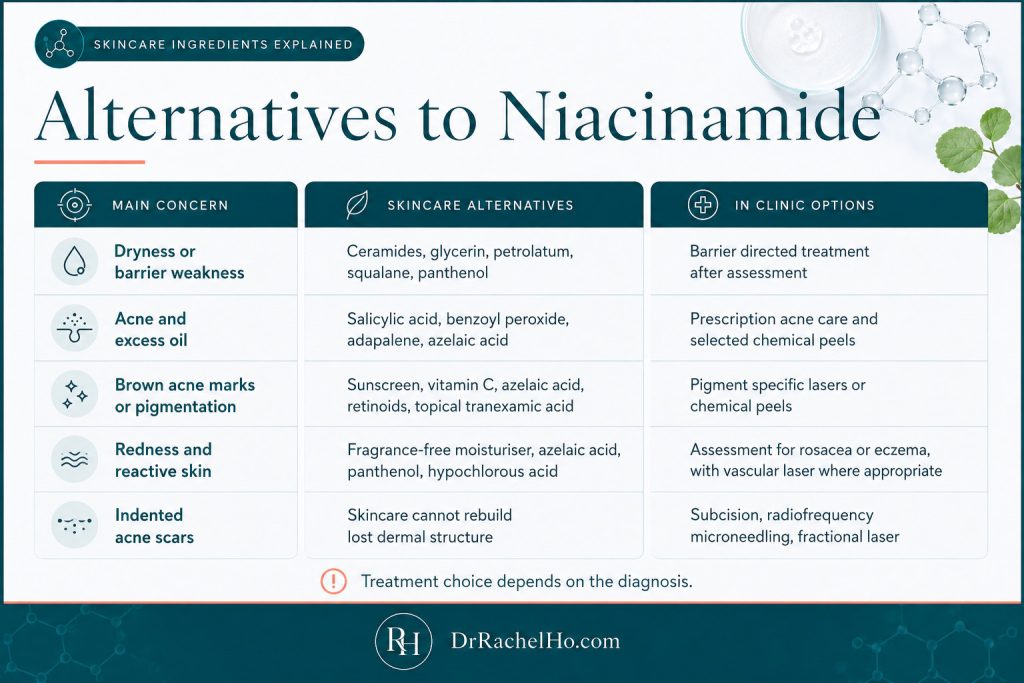
Comparison of niacinamide alternatives for dryness, acne, pigmentation, redness and indented acne scars.
For post inflammatory pigmentation in skin of colour, treatment should begin with an accurate diagnosis and control of the underlying inflammation. Lasers and chemical peels can improve hyperpigmentation, especially for dark spots that are not improving with skincare¹¹.
For depressed acne scars, radiofrequency microneedling, collagen biostimulators and fractional CO2 laser address dermal resurfacing and tethered scars in ways that skincare cannot¹²,¹³.
How long does niacinamide skincare take to work?
Oil control and pigmentation studies have reported changes from around four weeks with niacinamide skincare, while fine line and texture studies commonly assessed results over eight to twelve weeks²,⁵,⁶.
Dr Rachel Ho’s takeaway: For many people, a well-formulated niacinamide product in the 2% to 5% range is a sensible starting point. Consistent use without irritation is more important than choosing the strongest serum available.
Dr Rachel Ho’s takeaway on Niacinamide skincare
Niacinamide is a useful supporting ingredient in skincare, particularly when oiliness, post acne pigmentation and barrier sensitivity overlap. It earns its place in many routines, but it is not essential for every person and it should not be judged by concentration alone.
For most people, a well formulated product containing 2% to 5% niacinamide is a sensible starting point. The aim is consistent use without irritation, rather than choosing the strongest serum available.
References
- Tanno O et al. British Journal of Dermatology. 2000. PMID 10971324.
- Draelos ZD et al. Journal of Cosmetic and Laser Therapy. 2006. PMID 16766489.
- Shalita AR et al. International Journal of Dermatology. 1995. PMID 7657446.
- Walocko FM et al. Dermatologic Therapy. 2017. PMID 28220628.
- Hakozaki T et al. British Journal of Dermatology. 2002. PMID 12100180.
- Bissett DL et al. Dermatologic Surgery. 2005. PMID 16029679.
- Wohlrab J and Kreft D. Skin Pharmacology and Physiology. 2014. PMID 24993939.
- Snaidr VA et al. Experimental Dermatology. 2019. PMID 30698874.
- Haralović V et al. Biomedicines. 2025. PMID 41462936.
- Reynolds RV et al. Journal of the American Academy of Dermatology. 2024. PMID 38300170.
- Mar K et al. Journal of Cutaneous Medicine and Surgery. 2024. PMID 39075672.
- Niaz G et al. Clinical, Cosmetic and Investigational Dermatology. 2025. PMID 39781098.
- Argobi Y et al. Meta analysis of fractional carbon dioxide laser and radiofrequency microneedling. 2026. PMID 41821146.
- Cosmetic Ingredient Review Expert Panel. International Journal of Toxicology. 2005. PMID 16596767.

No Comments