


08 Apr Hyaluronic Acid Skincare: Benefits and How to Use It | Dr Rachel Ho
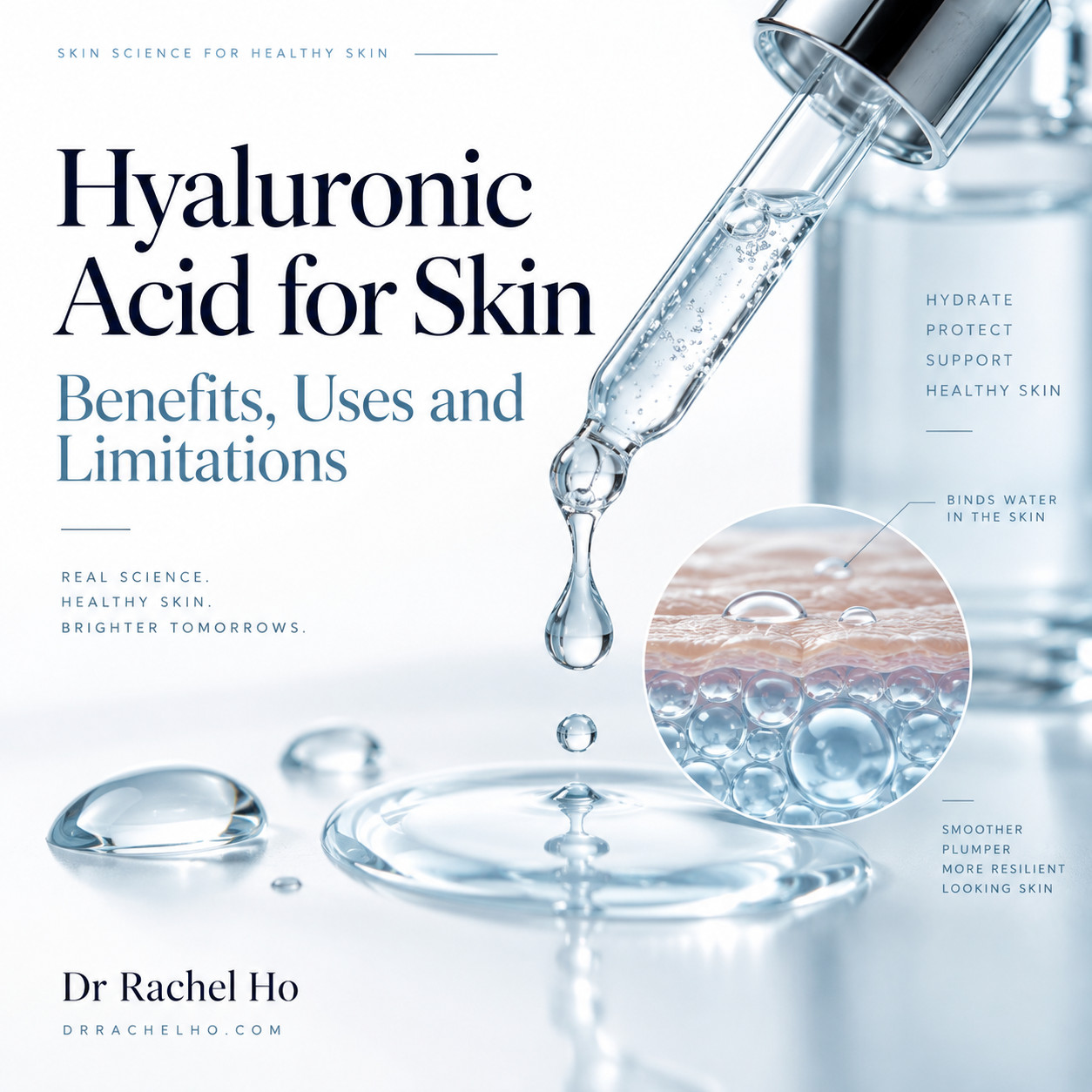
Hyaluronic Acid for Skin: Benefits, Uses and Limitations
By Dr Rachel Ho | Updated October 2026
Hyaluronic acid is a skincare ingredient that functions as a humectant. Essentially, hyaluronic acid helps the skin retain water. In topical skincare, the primary benefits are improved hydration and a smoother surface texture, with clinical studies also noting improvements in fine lines for specific formulations¹.
You will encounter hyaluronic acid in serums, moisturisers, injectable skinboosters, dermal fillers, and oral supplements. These products differ significantly in their mechanism of action, the clinical results they achieve, and the scientific evidence supporting them¹˒⁹˒¹⁰˒¹².
What is hyaluronic acid?
Hyaluronic acid, or hyaluronan, is a glycosaminoglycan naturally present in our skin. It contributes to tissue hydration and the structural integrity of the extracellular matrix, which is the network surrounding our skin cells². This unique capacity to bind and hold water accounts for its primary function as a humectant in skincare.
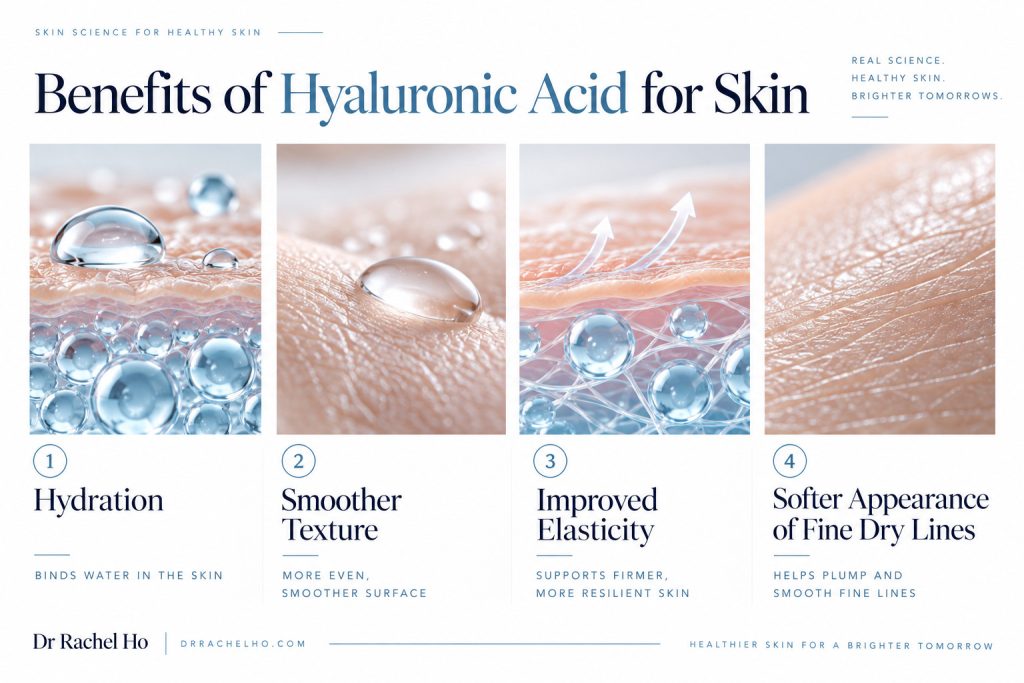
The best-supported benefit of topical hyaluronic acid is improved skin hydration. Specific formulations have also been associated with improvements in surface smoothness, elasticity and the appearance of fine wrinkles.
What are the benefits of hyaluronic acid for skin?
Topical hyaluronic acid acts as a humectant, drawing moisture to help the outer skin layers retain water. Studies evaluating specific formulations of hyaluronic acid skincare report measurable improvements in hydration, elasticity, and the appearance of fine wrinkles¹˒⁴.
The benefits or results of hyaluronic acid skincare depend heavily on the overall formulation. For instance, a study assessing creams formulated with 0.1% hyaluronic acid observed improved hydration and elasticity, noting that smaller molecular weight variations additionally reduced wrinkle depth⁴.
If you’re considering incorporating a hyaluronic acid serum or moisturiser into your skincare routine, the most evidence-based benefit would be to improve skin hydration. Although there are inflated claims from beauty claims that hyaluronic acid skincare can lift saggy skin or restore facial volume, evidence or these anti-aging claims beyond hydration and skin plumping is still lacking¹˒¹⁰.
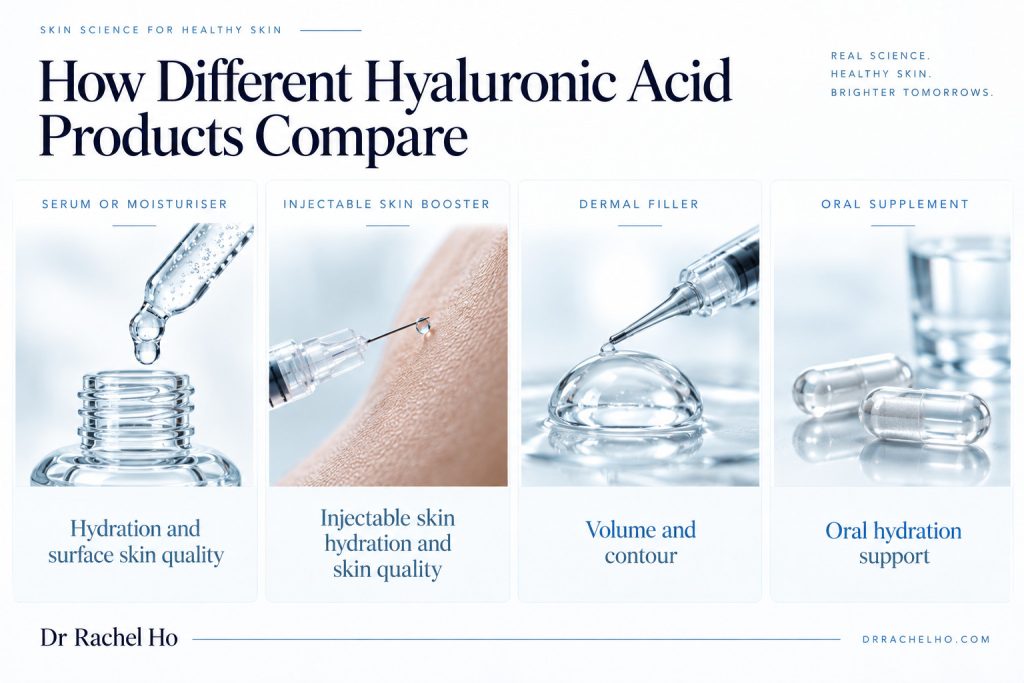
Hyaluronic acid products are not interchangeable. Topical skincare primarily supports surface hydration, injectable skin boosters target skin quality, dermal fillers provide volume or contour, and oral supplements have a separate evidence base.
How do the different types of hyaluronic acid products compare?
Hyaluronic acid can be applied topically into the skin or used in aesthetic treatments like skin boosters, injectable moisturisers and dermal fillers for sustained skin hydration and contour restoration.
Types of hyaluronic acid products
| Hyaluronic acid product | Benefits |
|---|---|
| Serum or moisturiser | Improve skin hydration and surface appearance |
| Hyaluronic acid skinbooster | Improve skin quality through injections |
| Hyaluronic acid dermal filler | Add volume or alter facial contours |
| Oral supplement | Support hydration through supplementation |
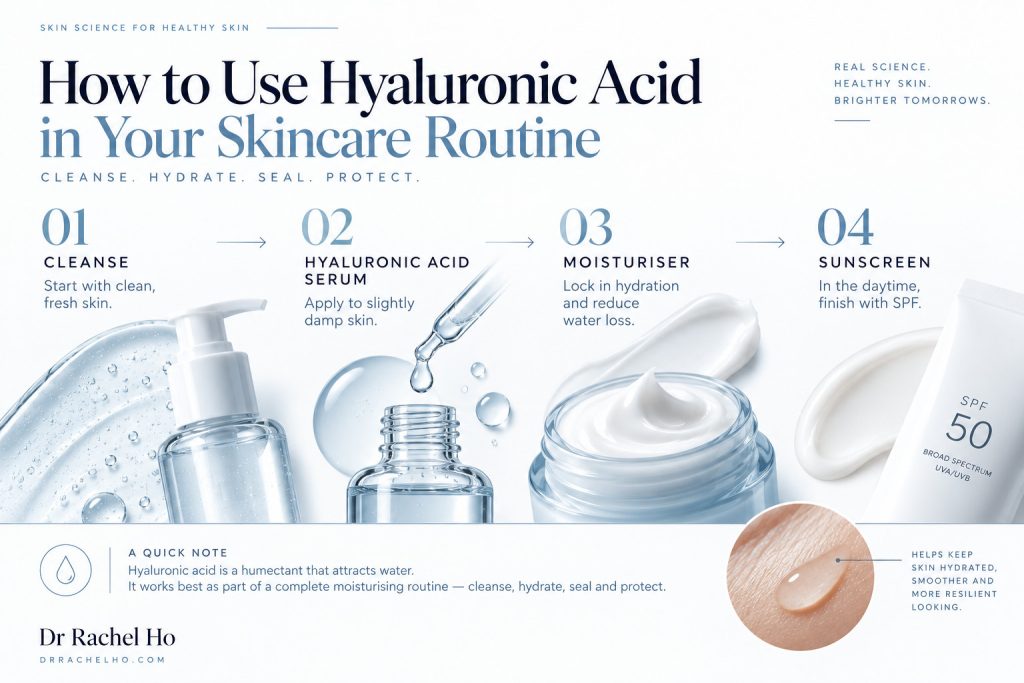
Hyaluronic acid works as a humectant, so it is most useful within a complete moisturising routine. Pairing it with emollient or occlusive ingredients can help reduce transepidermal water loss and maintain hydration.
How to use hyaluronic acid in your skincare routine
Hyaluronic acid functions as a humectant that retains moisture in the skin. Using hyaluronic acid skincare as a standalone can improve hydration in the skin. However, I recommend a more complete moisturising routine that combines humectants with emollient or occlusive ingredients that soften the skin and reduce trans-epidermal water loss. This complete approach to moisturising the skin gives moisture barrier protection for more sustained skin hydration.
Hyaluronic acid is a very commonly used active ingredient and widely used in products like serums and moisturisers and can be layered with most active ingredients. For further guidance on active ingredients and layering skincare, please refer to What are Active Ingredients in Skincare and How to Layer Skincare Correctly.
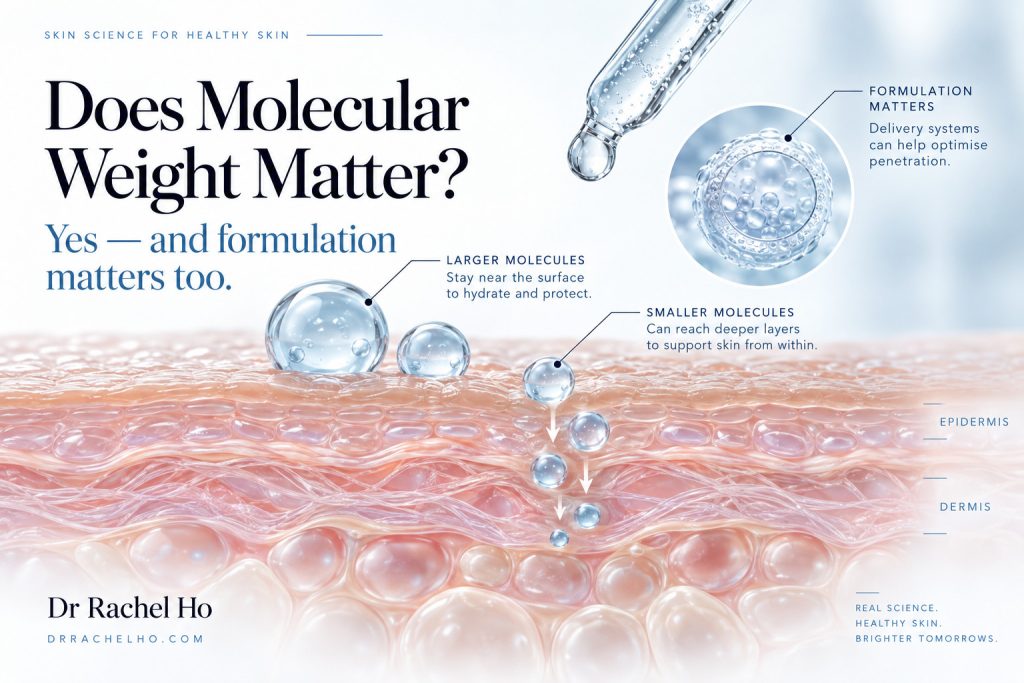
Hyaluronic acid molecular weight influences how it behaves on the skin. Larger molecules generally remain nearer the surface, while smaller forms may penetrate further; the finished formulation and delivery system also influence performance
Do the molecular weights of hyaluronic acid matter?
Molecular weight refers to the size of the hyaluronic acid molecule. Generally, larger molecules remain near the skin’s surface, whereas smaller molecules penetrate deeper, contingent on the specific formulation and the experimental conditions studied². Laboratory data has demonstrated smaller forms reaching deeper skin layers².
But molecular sizes of hyaluronic acid are only one variable of a skincare’s performance. Formulation chemistry can also alter how larger molecules behave. For example, one study demonstrated that adding magnesium chloride improved the delivery of high molecular weight hyaluronic acid into the stratum corneum, the skin’s outermost layer⁵.
Is sodium hyaluronate different from hyaluronic acid?
Sodium hyaluronate is the sodium salt form of hyaluronic acid, frequently utilised in cosmetic formulations.
Is a higher percentage of hyaluronic acid better in skincare?
The percentage of active ingredients in a skincare product is not truly reflective of its benefits and clinical efficacy. Measurable improvements have been documented with hyaluronic acid 0.1% formulations, although the concentration of hyaluronic acid should be evaluated alongside the overall formulation and its evidence base⁴.
What does research for hyaluronic acid show beyond hydration?
Early research on hyaluronic acid fragments have shown that intermediate sized fragments stimulated keratinocyte activity in experimental models and increased skin thickness in a small cohort of patients presenting with skin atrophy⁶.
Another clinical study evaluated a formulation combining niacinamide and hyaluronic acid molecules of approximately 120 kDa. This study documented improvements in signs of skin ageing and changes in cellular senescence markers, though this study looked at the combination of these ingredients rather than hyaluronic acid in isolation⁷. For more about niacinamide, please refer to my guide to niacinamide skincare.
A separate trial monitored patients for 24 weeks post-botulinum toxin treatment, assessing a serum formulated with hyaluronic acid, a vitamin C derivative, and peptides. The data supports the evaluation of topical skincare adjuncts alongside clinical procedures, though the specific contribution of each serum ingredient was not determined¹. My guides to vitamin C skincare and peptide skincare also evaluates these respective ingredients.
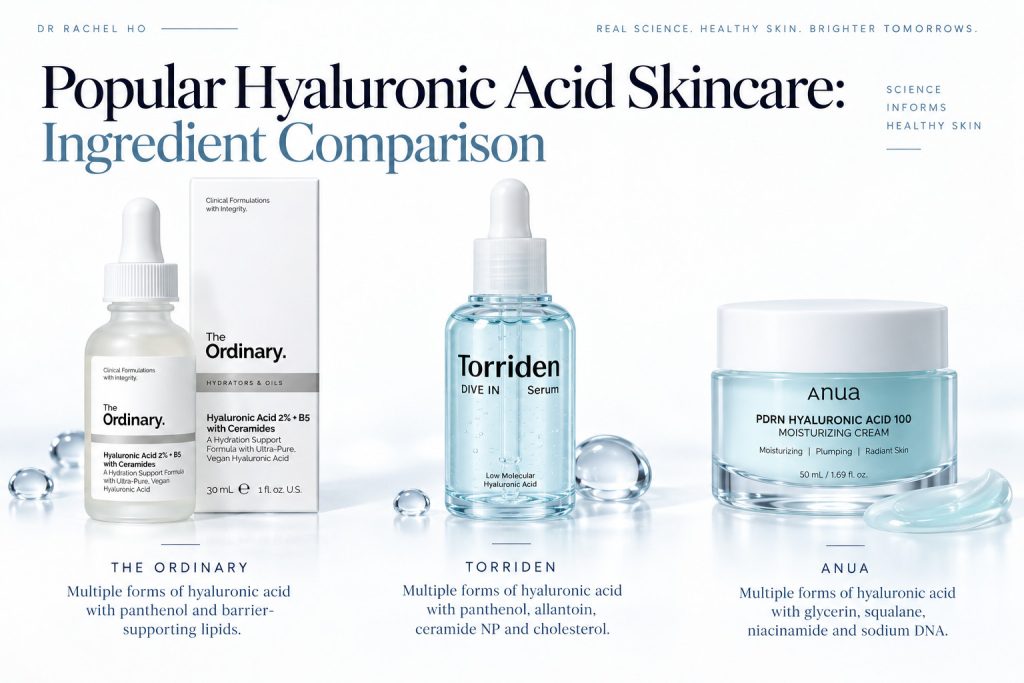
Hyaluronic acid skincare should be assessed by the complete formulation rather than HA percentage alone. These examples combine different forms of HA with ingredients such as panthenol, glycerin, barrier lipids, squalane, niacinamide and sodium DNA. Pasted markdown
Popular hyaluronic acid skincare: an ingredient comparison
Hyaluronic acid skincare spans from lightweight serums to rich moisturising creams. I’ve decoded the ingredient lists of popular hyaluronic acid skincare in the table below.
Popular hyaluronic acid skincare at a glance
| Hyaluronic acid skincare product | Notable ingredients | How to interpret the formula |
|---|---|---|
| The Ordinary Hyaluronic Acid 2% + B5 with Ceramides | Several forms of HA, panthenol, glycerin, phospholipids and sphingolipids | A serum combining humectants with added lipids that fortify the skin barrier. |
| Torriden DIVE IN Serum | Several forms of HA, glycerin, panthenol, betaine, trehalose, allantoin, ceramide NP and cholesterol | A serum with several ingredients that contribute to hydration and moisture barrier. |
| Anua PDRN Hyaluronic Acid 100 Moisturizing Cream | Several forms of HA, glycerin, squalane, niacinamide, hydrolysed collagen and sodium DNA | A cream combining humectants with emollients. |
I’ve also shared my review of hyaluronic acid skincare products in 5 Cult Favourite Hyaluronic Acid Serums and Moisturisers Reviewed.
How to choose hyaluronic acid skincare
Before buying any skincare, the first step is to identify your skin concerns and the role of skincare in addressing these concerns. Humectants like HA and glycerin retain water, while emollient and occlusive ingredients soften the skin and limit moisture loss¹.
For dry skin, consider formulations beyond pure hyaluronic acid. Moisturisers formulating humectants alongside ceramides, dimethicone, or petrolatum address multiple mechanisms of dryness more comprehensively than humectants alone¹. You can read my detailed explanation of how ceramides support the skin barrier for tips for skin barrier health for more about skincare to support your skin barrier.
For readers who have oily skin experiencing dehydration, this is a common concern among my patients in Singapore. Hyaluronic acid is a helpful addition to your skincare routine as it can improve hydration without contributing to oiliness. My clinic’s guide to distinguishing dry versus dehydrated skin shares more about the science and targeted clinical approaches for dry and dehydrated skin.
Persistent dry skin and medical evaluation
If you still experience dry skin and signs like redness, flaking and itch despite loading up on moisturisers and barrier creams, I recommend a medical assessment of your skin barrier and evaluation for dermatitis that can present this way. Medical conditions like eczema and other forms of dermatitis require medical intervention on top of supportive moisturising skincare.
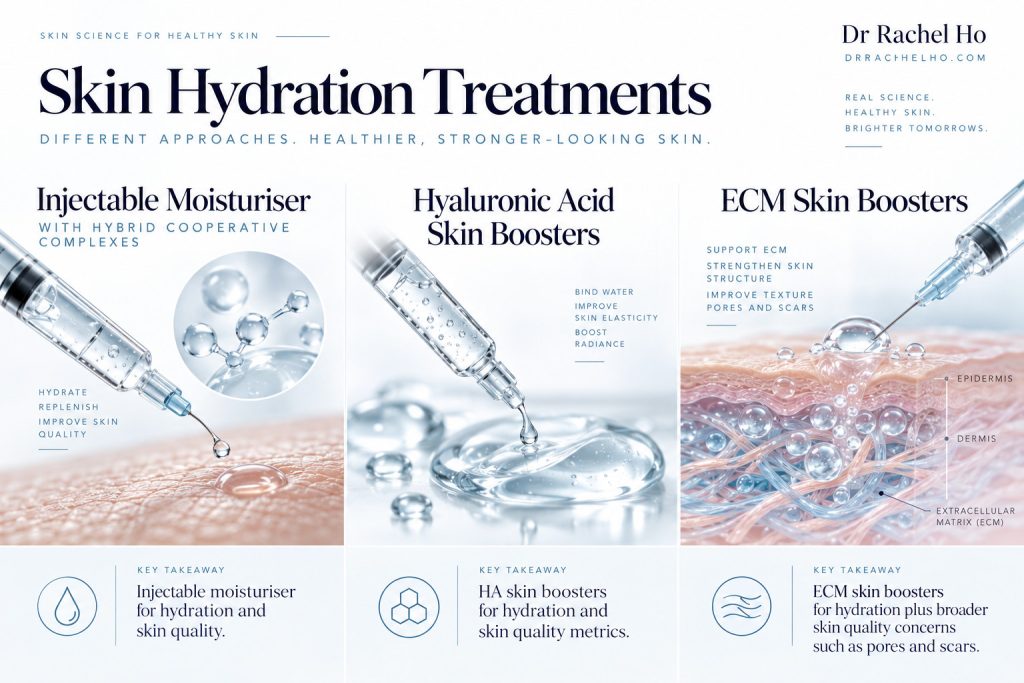
Injectable treatments address different skin-quality goals. Hyaluronic acid skin boosters and hybrid cooperative complex injectables are primarily discussed for hydration and skin quality, while ECM preparations represent a separate matrix-based approach with broader emerging skin-quality research.
Skin hydration treatments in Singapore
For patients where medical conditions have been excluded or treated; and wish to address hydration, texture, or fine line concerns, some of the skin hydration treatments available in Singapore include hyaluronic acid skin boosters, hybrid cooperative complex injectable moisturiser and ECM skin boosters.
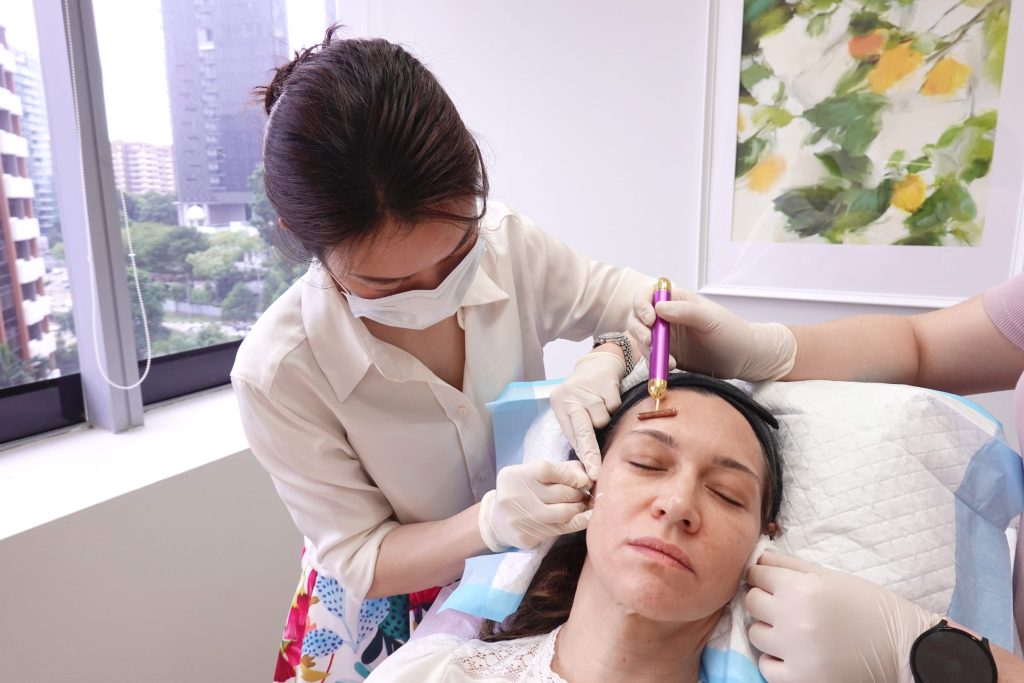
Hybrid cooperative complex injectable moisturiser
Hybrid cooperative complex injectable moisturiser, formulates high and low molecular weight hyaluronic acid². Published literature reports improvements in skin hydration and specific parameters of elasticity and skin quality². My guide to hybrid cooperative complex injectable moisturisers discusses the science and patient experience with this treatment.

Hyaluronic acid skin boosters
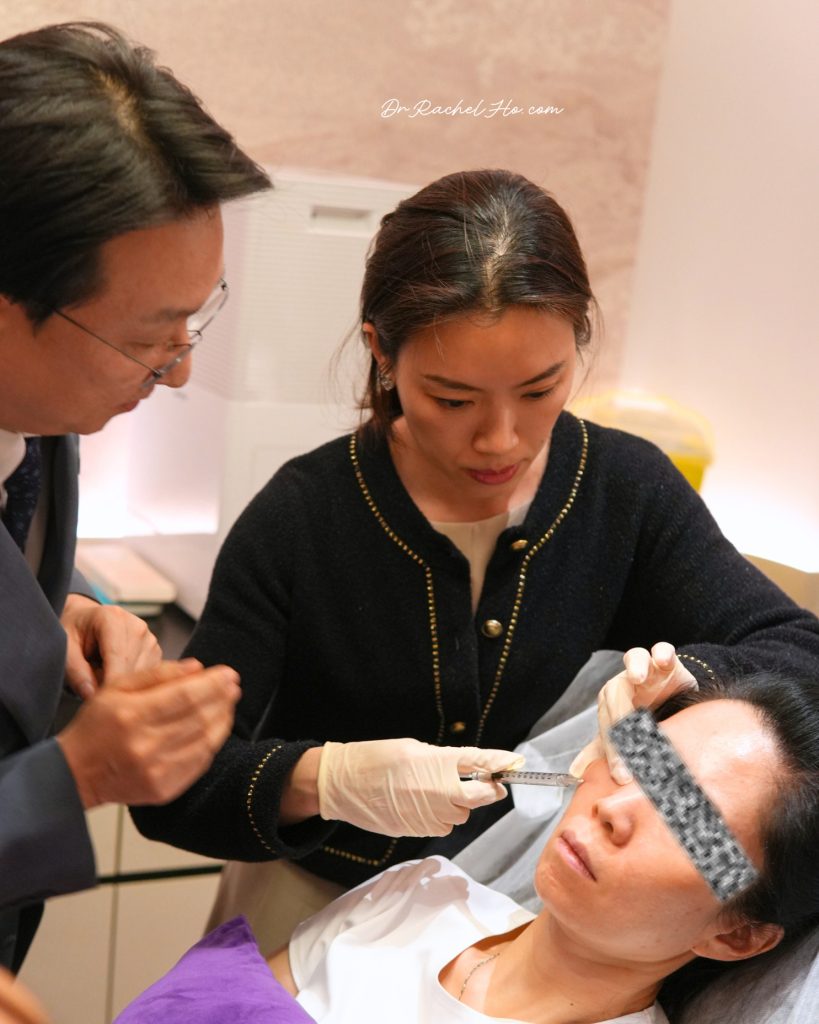
Hyaluronic acid skin boosters involve the intradermal injection of hyaluronic acid formulations to target specific skin quality parameters. A randomised trial with 420 participants documented improvements in dryness, hydration, and related skin quality metrics following treatment with a specific sodium hyaluronate gel³. Hyaluronic acid skin boosters have also been covered in detail in my guide to skin boosters.
ECM skin boosters
ECM skin boosters utilise processed human acellular dermal matrix, introducing structural extracellular matrix components rather than isolated HA⁴. For patients wanting to address enlarged pores, skin quality and scars along with hydration, ECM skin boosters would be my recommendation.
A 2026 study of 20 adults compared an injectable acellular dermal matrix with HA on contralateral sides of the face over a 20-week period⁴. The authors reported improvements in hydration and various skin quality indices, although the small sample size and limited follow-up period leave unresolved questions regarding longevity and broader patient suitability⁴. I’ve also shared my take on the emerging science of ECM skin boosters in my guide to ECM skin boosters.
What are the possible side effects of hyaluronic acid ?
Topical hyaluronic acid skincare is generally well-tolerated; however, any cosmetic formulation has the potential to induce irritation or allergic contact dermatitis¹˒⁸. For injectable hyaluronic acid, common transient side effects include bruising, swelling, and tenderness¹¹.
Conclusion and Dr Rachel Ho’s takeaway on hyaluronic acid skincare
As a humectant, hyaluronic acid is a reliable and economical ingredient for improving skin hydration and temporarily smoothing fine lines caused by dehydration. When evaluating your skincare routine, remember that the overall formulation matters far more than assessing percentages of active ingredients alone. How hyaluronic acid is combined with ceramides, emollients, and occlusives determines whether the product will actually prevent moisture loss, on top of retaining hydration in the skin.
For more structural improvements in skin quality, texture, and deep dermal hydration, injectable treatments such as hyaluronic acid skinboosters or hybrid cooperative complex injectable moisturisers directly supplement hyaluronic acid into the dermis for sustained skin hydration.
About the author and clinic affiliation
Dr Rachel Ho is an aesthetic doctor in Singapore and the founder of The Skin Longevity Clinic. Her clinical work includes skin quality treatments, injectables and facial rejuvenation.
The Skin Longevity Clinic provides aesthetic treatments, including hyaluronic acid skinboosters and dermal fillers.
References
- Bravo B, et al. Benefits of topical hyaluronic acid for skin quality and signs of skin aging: From literature review to clinical evidence. Dermatologic Therapy. 2022;35.
- Zanchetta C, Scandolera A, Reynaud R. Hyaluronic Acid in Topical Applications: The Various Forms and Biological Effects of a Hero Molecule in the Cosmetics Industry. Biomolecules. 2025;15:1656.
- Mitura S, Sionkowska A, Jaiswal A. Biopolymers for hydrogels in cosmetics: review. Journal of Materials Science: Materials in Medicine. 2020;31:50.
- Pavicic T, et al. Efficacy of cream based novel formulations of hyaluronic acid of different molecular weights in antiwrinkle treatment. Journal of Drugs in Dermatology. 2011;10:990 to 1000.
- Fujii MY, et al. Biocompatible topical delivery system of high molecular weight hyaluronan into human stratum corneum using magnesium chloride. Scientific Reports. 2023;13:10782.
- Kaya G, et al. Hyaluronate fragments reverse skin atrophy by a CD44 dependent mechanism. PLOS Medicine. 2006;3.
- Bogdanowicz P, et al. Senomorphic activity of a combination of niacinamide and hyaluronic acid: correlation with clinical improvement of skin aging. Scientific Reports. 2024;14:16321.
- Purnamawati S, et al. The Role of Moisturizers in Addressing Various Kinds of Dermatitis: A Review. Clinical Medicine & Research. 2017;15:75 to 87.
- Liao Z, et al. Efficacy and Safety of Sodium Hyaluronate Gel for Facial Skin Rejuvenation. Dermatologic Surgery. 2026;52:776 to 782.
- Wu GT, Kam J, Bloom JD. Hyaluronic Acid Basics and Rheology. Clinics in Plastic Surgery. 2023;50:391 to 398.
- Liu J, et al. Facial Injectable Fillers in Aesthetic Medicine: Clinical Applications and Safety Strategies. Medical Science Monitor. 2025;31.

No Comments