


29 Apr What Is Skin Longevity? A Doctor’s Guide to Healthier Skin Aging
Most people are familiar with anti-aging. It is a term that has dominated skincare marketing, aesthetic medicine, and dermatology for decades. But over the past five years, the conversation in medicine has shifted in a meaningful direction. Researchers and clinicians are asking a different question: not how to reverse the signs of aging after they appear, but how to preserve the biological health of skin for as long as possible. This is the principle behind skin longevity, and it represents a substantively different framework for understanding and caring for skin. This article explains what skin longevity means in dermatological science, how it differs from conventional anti-aging, what factors determine it, how it is measured, and why the distinction matters from both a clinical and functional perspective.
What Does Skin Longevity Mean in Dermatology?
In dermatology, skin longevity refers to maintaining the skin’s structural integrity, biological resilience, and functional capacity for as long as possible1,2. This functional concept of skin longevity is closely aligned with the idea of skinspan, which was formally introduced in a 2025 review in the Journal of Cosmetic Dermatology, which described skinspan as the period during which skin maintains a youthful, healthy appearance and function, and proposed it as a meaningful clinical tool for the cosmetic consultation1,3. In simple terms, you can think of skin longevity or skin span as how well the skin continues to perform its physiological roles with age. This includes preserving barrier function, limiting chronic inflammation, supporting repair, and reducing the accumulation of biological damage linked to ageing.
As our skin ages, it loses structural proteins, its immune competence declines, its barrier becomes less efficient, and its capacity for repair diminishes1,2. Skin longevity medicine is concerned with all of these dimensions, not only the visible signs of aging.
Anti aging vs skin longevity
Anti-ageing
Skin longevity
Corrects visible signs
Preserves biological function
Appearance-led
Healthspan-led
Chronological age
Biological age
Wrinkles, tone, volume
Barrier, collagen, repair, inflammation
Weeks to months
Years-long prevention
| Anti-ageing | Skin longevity |
|---|---|
| Corrects visible signs | Preserves biological function |
| Appearance-led | Healthspan-led |
| Chronological age | Biological age |
| Wrinkles, tone, volume | Barrier, collagen, repair, inflammation |
| Weeks to months | Years-long prevention |
How skin longevity differs from anti- aging
Anti aging has traditionally been used to describe efforts to reduce or correct visible signs of ageing. In practice, that often means targeting wrinkles, uneven tone, texture changes, laxity, and volume loss. The concept is familiar and still relevant in the clinic. However, it tends to be more appearance led.
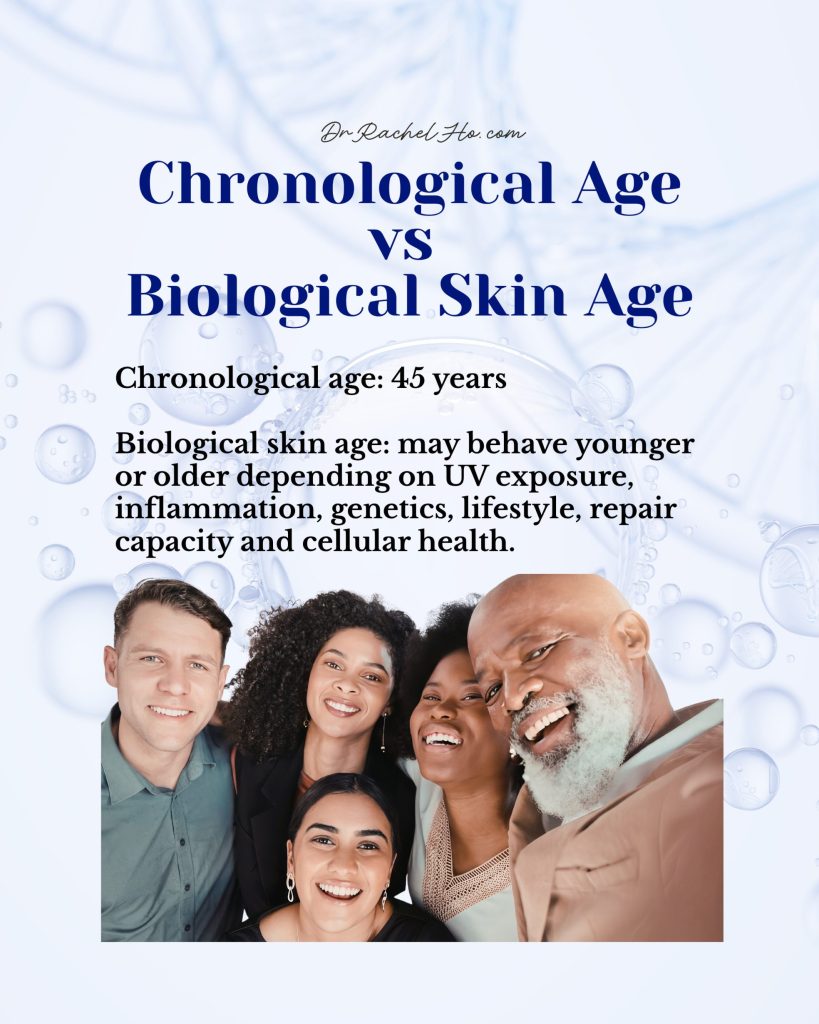
Two people of the same chronological age may have different biological skin ages depending on cumulative damage, repair capacity and skin health.
Skin longevity is different from anti-aging in several ways.
First, skin longevity takes a more preventive and proactive approach to long term skin health. Skin longevity focuses on preserving function and slowing biological deterioration rather than reacting only after visible changes become established1,2,4.
Second, skin longevity takes a more mechanistic approach to biology. A 2022 review in the International Journal of Cosmetic Science by Zargaran and colleagues, examining the relationship between the hallmarks of systemic aging and their cutaneous manifestations, provided an important framework for this distinction5. The hallmarks of aging described by Lopez-Otin and colleagues in Cell in 2023, including genomic instability, telomere attrition, epigenetic alterations, loss of proteostasis, mitochondrial dysfunction, cellular senescence, and chronic inflammation, all manifest in the skin and drive its deterioration6. Skin longevity medicine addresses the upstream hallmarks, whereas anti-aging medicine addresses the downstream manifestations i.e. signs of aging.
Third, skin longevity has a more holistic, systems based approach. Treating from a skin longevity lens requires the recognition that skin ageing reflects both local factors and broader systemic ageing biology and intervenes at those processes before visible deterioration occurs7. That means the skin can be viewed as both a target organ and a visible window into biological ageing.
Another distinction lies in the measurement of skin longevity vs anti-aging. Anti-aging outcomes are assessed against chronological age. For example, how old does this patient look relative to their years? Skin longevity is assessed against biological age. Skin longevity employs a nuanced look at skin function and aging with epigenetic clocks, including the Horvath clock and GrimAge algorithm. Tools such as these assess biological age at a molecular level and offer insights into aging processes that chronological age alone does not capture. A patient may be 45 years old chronologically and have skin that is biologically 38 or 55, depending on the cumulative influence of genetics, lifestyle, ultraviolet exposure, and cellular health.
How is Skin Longevity Measured?
Marker
Measure
Barrier
TEWL
Hydration
Corneometry
Elasticity
Cutometry/ Elastometry
Structure
Collagen density
Cellular aging
Telomere length, DNA methylation clocks
Microenvironment
Inflammation, Microbiome, Oxidative stress
| Marker | Measure |
|---|---|
| Barrier | TEWL |
| Hydration | Corneometry |
| Elasticity | Cutometry/ Elastometry |
| Structure | Collagen density |
| Cellular aging | Telomere length, DNA methylation clocks |
| Microenvironment | Inflammation, Microbiome, Oxidative stress |
How Is Skin Longevity Measured?
At the clinical level, skin ageing has long been assessed through phenotypes such as wrinkling, pigmentation, laxity, dryness, and texture. These remain useful because they reflect cumulative damage and function. However, skin longevity is increasingly being measured through biomarkers rather than visible appearance alone.
At the moleular level, newer tools aim to measure biological skin age more directly. Some of biomarkers for skin longevity include:
Epigenetic Clocks
One category is epigenetic biomarkers, particularly DNA methylation based clocks8. These are designed to estimate biological age rather than chronological age and may help identify accelerated skin ageing based on algorithms that use DNA methylation patterns at specific genomic loci to estimate biological age8. The Horvath clock and the GrimAge algorithm, which are typically used to predict mortality and age-related disease risk more accurately than chronological age. When applied to the skin, these clocks provide a molecular estimate of how rapidly the skin is aging relative to its chronological baseline.
Structural and Functional Biomarkers
Several structural and functional parameters provide meaningful data on skin longevity status. These include collagen density assessed by reflectance confocal microscopy, transepidermal water loss as an indicator of barrier integrity, cutometry and elastometry measurements of skin firmness and elasticity, telomere length in skin-derived cells as a marker of replicative capacity, and corneometry for surface hydration assessment2,9-11. Together, these measurements build a picture of the biological age of the skin that complements, and often diverges from, its chronological age.
Cellular biomarkers and skin microbiome profiling
Other skin biomarkers for assessing skin longevity include mitochondrial and metabolic markers, extracellular matrix related markers, and skin microbiome profiling9-11. Recent reviews in longevity dermatology describe these as promising tools for assessing cutaneous and systemic ageing, though they are still evolving and not a routine measurement in standard clinical practice.
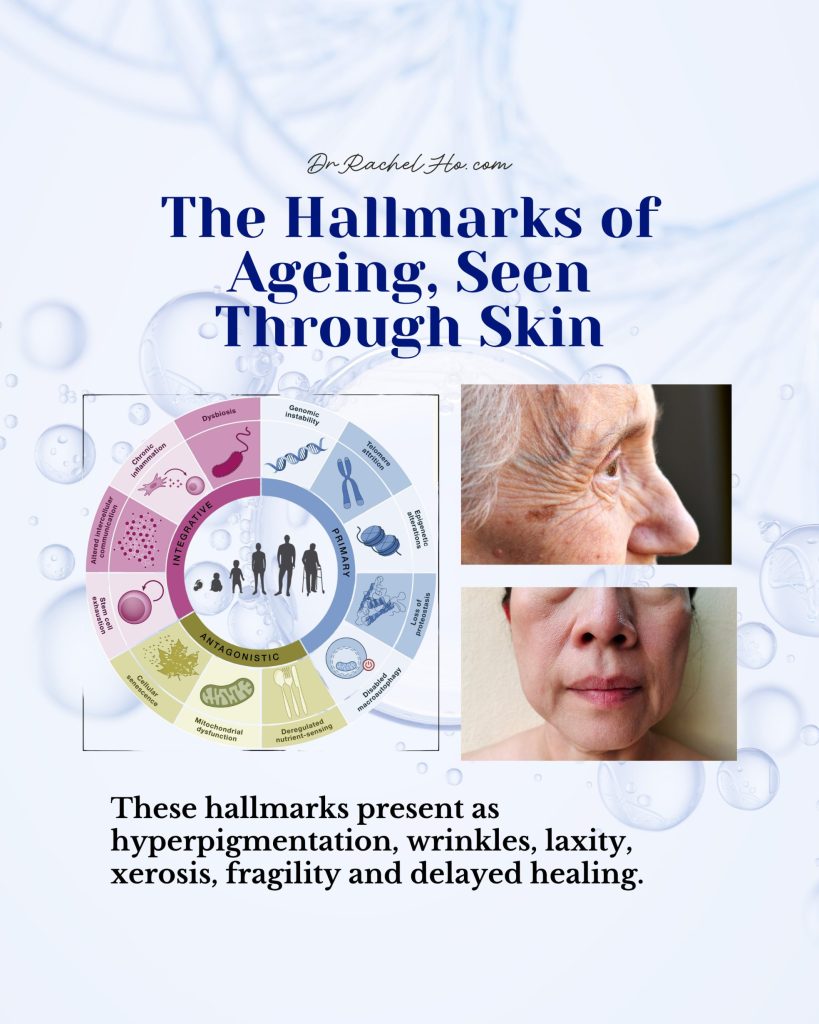
The Hallmarks of Ageing, Seen Through Skin
Why Skin Longevity Matters More Than Anti Aging
From a medical and functional perspective skin longevity is more important than anti aging for several reasons.
Healthy skin provides barrier protection, reduces transepidermal water loss, participates in immune surveillance, supports wound healing, and helps regulate body temperature and sensation. Age related decline affects not only appearance but also structural stability and functional integrity. That can translate into dryness, fragility, slower healing, impaired repair, and greater vulnerability to damage.
A purely appearance based anti aging approach can miss that broader clinical picture. Smoother looking skin does not automatically mean healthier or more resilient skin. By contrast, skin longevity encourages patients and doctors to think about prevention, barrier maintenance, recovery, inflammation control, and the biological drivers of skin decline1,4. This framework is therefore more aligned with long term skin health and with the wider movement toward healthy longevity in medicine1.
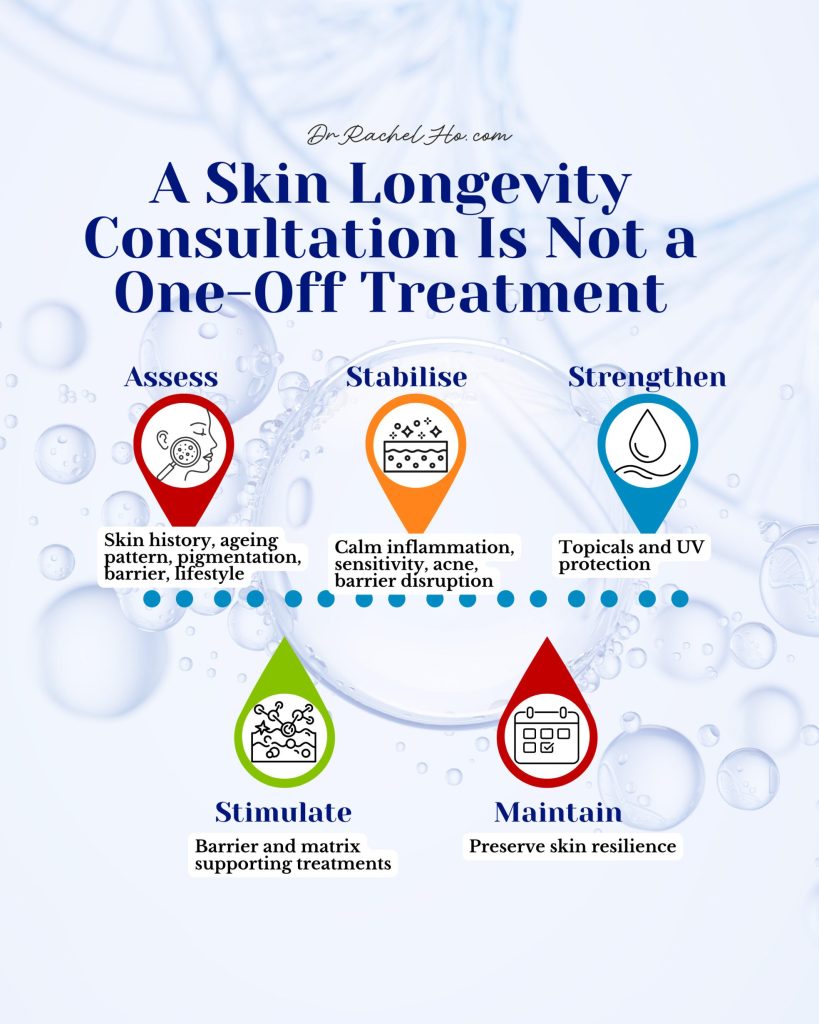
Skin longevity is a long term plan, not a procedure
Doctor’s takeaway on skin longevity
Focusing on longevity ensures that the skin remains capable of self repair. An anti aging approach that only masks symptoms may ignore the underlying tissue atrophying. By prioritising longevity we ensure the skin remains resilient and functional. This functional health reduces the risk of chronic skin conditions and ensures that the skin can withstand medical procedures and environmental challenges later in life.
Ultimately skin longevity is an investment in the biological future of the organ. It is about maintaining a high quality of life and healthspan rather than just a youthful facade.
References:
1. SkinspanTM: A Healthy Longevity Framework for Skin Aging. Wyles et al. Mayo Clin Proc. 2025 Nov;100(11):1976-1991.
2. Transitioning from Anti-aging to Skin Activation: Limiting Cellular Fatigue and Senescence for Skin Longevity. Widgerow et al. J Drugs Dermatol. 2026 Mar 1;25(3):268-272.
3. Skinspan: A Holistic Roadmap for Extending Skin Longevity With Evidence‐Based Interventions. Kream et al. J Cosmet Dermatol. 2025 Sep; 24(9):e70432.
4. The Pathobiology of Skin Aging: New Insights into an Old Dilemma. Russel-Goldman et al. Am J Pathol. 2020 Jul;190(7):1356-1369.
5. Facial skin ageing: Key concepts and overview of processes. Zargaran et al. Int J Cosmet Sci. 2022 Aug;44(4):414-420.
6. Hallmarks of aging: An expanding universe. López-Otín et al. Cell. 2023 Jan 19;186(2):243-278.
7. Translating Geroscience Into Clinical Longevity Dermatology: From Mechanisms of Aging to Skin‐Centered Interventions. Haykal. J Cosmet Dermatol. 2025 Dec 24;25(1):e70616
8. Unlocking Longevity in Aesthetic Dermatology: Epigenetics, Aging, and Personalized Care. Haykal et al. Int J Dermatol. 2025 Dec;64(12):2204-2214.
9. Hallmarks and Biomarkers of Skin Senescence: An Updated Review of Skin Senotherapeutics. Bulbiankova et al. Antioxidants (Basel). 2023 Feb 10;12(2):444.
10. Senescence as a molecular target in skin aging and disease. Thau et al. Ageing Res Rev. 2025 Mar:105:102686.
11. Skin senescence-from basic research to clinical practice. Dorf and Maciejczyk. Front Med (Lausanne). 2024 Oct 18:11:1484345.

No Comments