


17 Nov LDM Facials and At-Home LDM Devices: Science, Evidence & My Review
LDM Facials and At-Home LDM Devices: Benefits, Evidence and My Review
By Dr Rachel Ho
Aesthetic doctor and founder of The Skin Longevity Clinic, Singapore
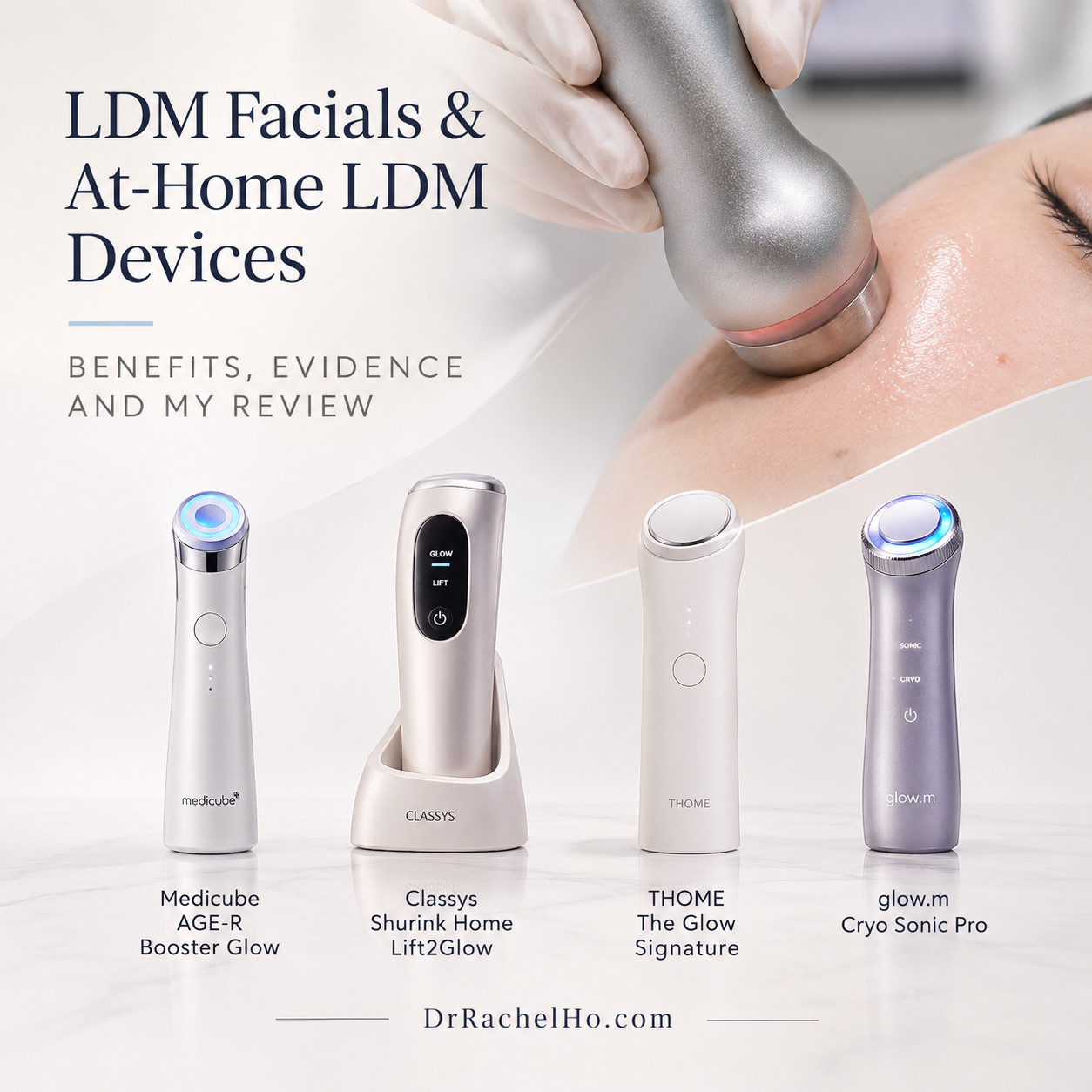
LDM facials have become increasingly popular in aesthetic clinics, especially in Singapore and Korea for their benefits in recovery after aesthetic treatments and calming sensitive skin. More recently, Korean beauty brands like Medicube, Classys, THOME and glow.m have also launched home beauty devices claiming LDM like benefits⁷⁻¹⁰. With the increasing popularity of LDM treatments and home LDM devices in Singapore, I wanted to share the science and research behind this technology, and whether these home beauty devices can replicate professional in-clinic treatments.
What is LDM?
LDM stands for Local Dynamic Micromassage, and is a non-invasive ultrasound treatment originally from Germany¹⁵. LDM delivers two or three high frequency ultrasound waves, rapidly alternating between 100 and 1,000 times per second¹⁵. As a result of this rapid oscillation of ultrasound frequencies, a mechanical effect is produced within the skin¹⁵. LDM is used both in clinics and increasingly, as home devices for skin rejuvenation and anti-aging purposes⁷⁻¹⁰.
“Micromassage” describes the microscopic mechanical effects of ultrasound rather than the physical pressure of a conventional facial massage¹⁵. Depending on the device and treatment protocol, LDM has been investigated for facial redness, skin barrier dysfunction, inflammatory acne and postoperative recovery¹⁻⁴. In Korea, LDM is also marketed as water-drop ultrasound, due to the hydrated appearance associated with this treatment⁷.
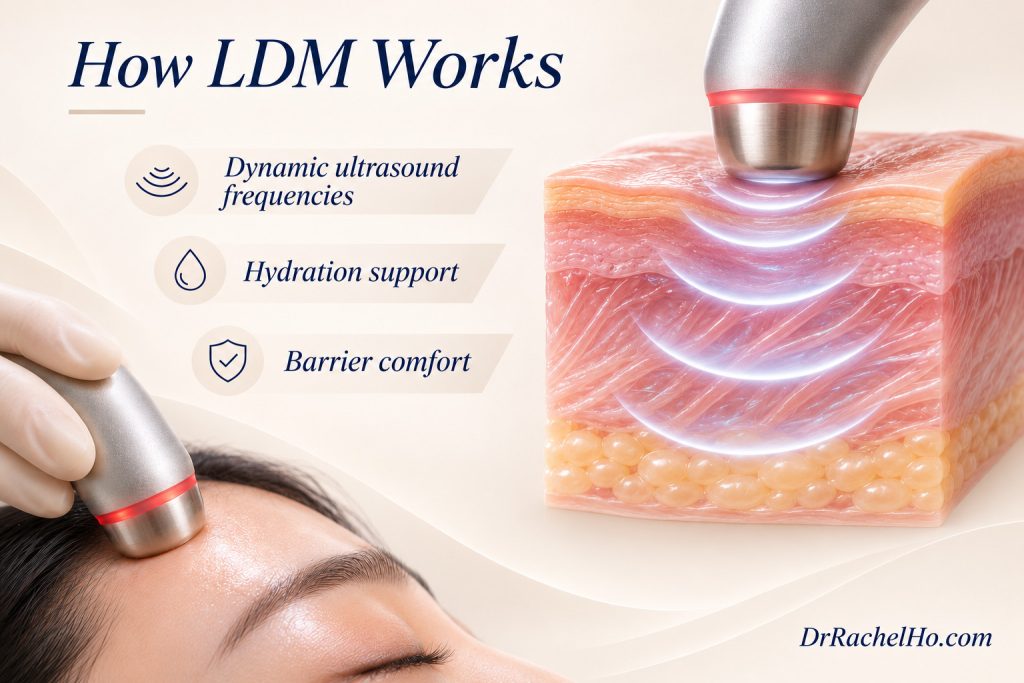
LDM uses rapidly alternating ultrasound frequencies to produce mechanical stimulation within the skin. The biological effects depend on ultrasound frequency, acoustic intensity, treatment duration and device design. Clinical studies have investigated its potential role in skin hydration and barrier support.
How does LDM ultrasound work?
Ultrasound consists of mechanical pressure waves travelling through tissue, with its biological effects depending on several factors, including frequency, intensity, exposure time and how the energy is delivered¹,⁶,¹³. LDM devices use ultrasound at different frequencies to produce rapidly changing mechanical stimulation¹⁵.
In ultrasound physics, the frequency of ultrasound is inversely proportional to penetration depth¹³.
What do 1 MHz, 3 MHz and 10 MHz mean in LDM devices?
LDM ultrasound frequency characteristics explained
| Frequency | General physical characteristic |
|---|---|
| 1 MHz | Lower frequency with relatively greater penetration into soft tissue |
| 3 MHz | Intermediate frequency used in various therapeutic ultrasound applications |
| 10 MHz | Higher frequency with more superficial energy absorption¹³,¹⁵ |
MHz describes the frequency of ultrasound oscillations. One MHz represents one million oscillations per second.
Contrary to popular belief, more frequencies do not necessarily mean better clinical results. Device factors such as acoustic intensity, treatment duration, frequency switching and transducer design can influence the device outcomes¹³,¹⁵.
Biological effects of LDM Facials
The mechanical stimulation of LDM influences these biological pathways in the skin:
Modulation of matrix metalloproteinases (MMPs)
MMPs are enzymes that break down collagen and extracellular matrix proteins. In inflammatory skin conditions such as acne, rosacea and eczema, MMP levels are raised. In a 2024 study, a device that combined ultrasound, radiofrequency, microcurrent and light reduced MMP-1 expression, although the study did not isolate the effect of ultrasound alone on MMP levels⁵.
Upregulation of heat shock proteins (HSPs)
A cell study involving HL-60 leukaemia cells found that rapid mechanical oscillation at selected frequencies stimulates the production of HSPs which protect cells against oxidative stress and assist in proper collagen folding and tissue resilience¹².
Sonophoresis
Additionally, low-frequency ultrasound waves at 20 kHz can temporarily increase in cell membrane and stratum corneum permeability (sonophoresis) to enhance the transdermal delivery of water-soluble topical ingredients applied during treatment⁶,¹³.
What Are the Benefits of LDM for Skin?
1. Skin hydration and barrier support
One of the most relevant clinical studies examined dual-frequency ultrasound in 26 Korean patients with facial redness associated with rosacea or acne¹. In this study, participants received weekly treatments over four weeks¹. At the six-week assessment, investigators reported reductions in facial redness and transepidermal water loss, or TEWL, a measurement used to assess how effectively the skin retains water¹.
These findings suggest that ultrasound may have a role in supporting skin barrier function, particularly when redness and irritation accompany increased water loss¹. However, the study was small and did not include a separate untreated control group¹.
2. Facial redness and inflammation
A retrospective study involving 42 patients with difficult-to-treat rosacea also reported improvements in redness, TEWL and patient-reported symptoms following dual-frequency ultrasound².
The results are relevant to LDM’s potential role in managing reactive skin, although rosacea remains a chronic inflammatory condition requiring appropriate diagnosis and medical treatment¹,². For more information about the causes and medical management of facial redness, read my guide to rosacea symptoms and treatments.
3. Acne-prone skin
A retrospective two-centre study investigated triple-frequency LDM ultrasound in 22 patients with mild to severe acne³. Investigators reported improvements in acne severity after a course of treatment, with some patients showing continued improvement during follow-up³. However, the study was limited by a lack of controls and included an author affiliated with an ultrasound equipment company³.
In my practice, I use LDM for selected acne patients as an adjunct when dryness, irritation or sensitivity complicates their treatment. My clinic’s guide to LDM for acne and sensitive skin discusses this supportive role in greater detail.
4. Skin recovery following aesthetic treatments
LDM has also been studied for postoperative swelling and bruising⁴. A 2024 retrospective, multicentre blinded study compared 24 patients receiving dual-frequency ultrasound after rhinoseptoplasty with 24 patients receiving conventional ice packs⁴. Patients in the ultrasound group experienced shorter reported durations of swelling and bruising⁴.
5. Eczema and sensitive skin
Patients with eczema often experience dryness, itching and impaired skin barrier function¹⁴. Supporting the barrier and controlling inflammation remain important components of medical management of eczema¹⁴.
LDM may be considered as supportive care in selected patients to improve skin hydration and reduce inflammation although direct clinical evidence establishing LDM as an effective eczema treatment is limited.
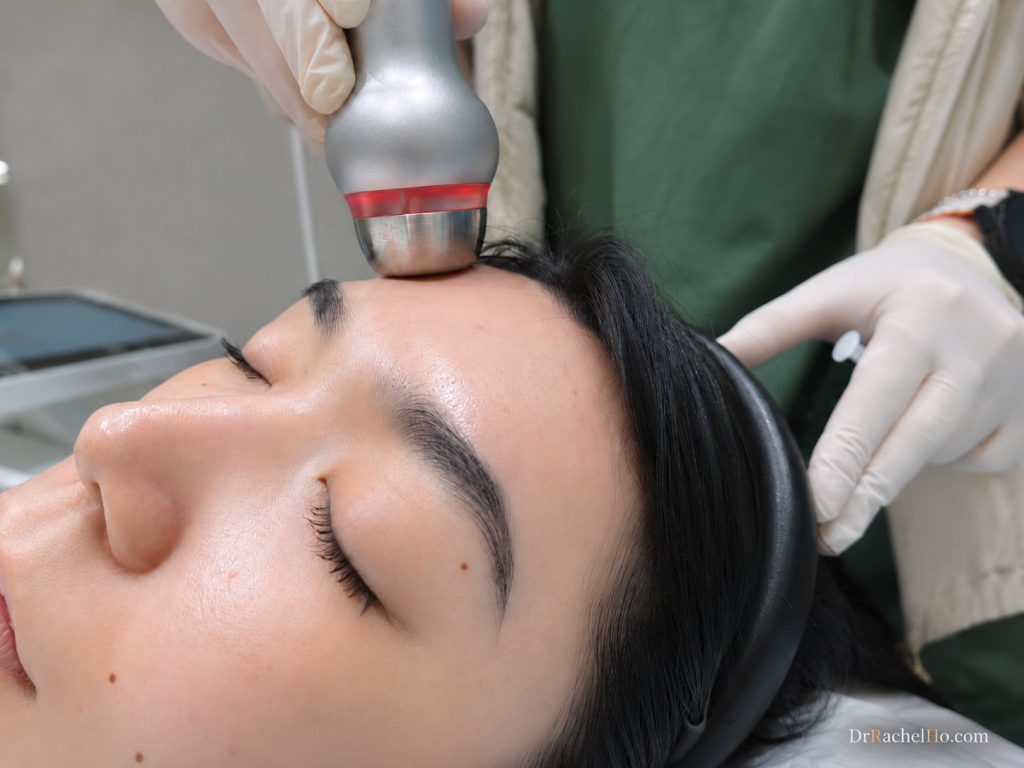
Bellasonic LDM treatment in The Skin Longevity Clinic
My clinical experience with Bellasonic LDM as a doctor
My professional experience with LDM stems mainly from incorporating LDM as a recovery or adjunct to medical treatments rather than a standalone LDM facial.
In my practice, The Skin Longevity Clinic, I use Bellasonic LDM for these indications:
Dehydrated skin
For patients with dry and dehydrated skin, I find LDM paired with hydrating active ingredients like hyaluronic acid can improve these symptoms.
Eczema or sensitive skin
For patients experiencing irritation from haze, travel or eczema flares, I find LDM, when paired with ingredients like PDRN and niacinamide, can also improve their symptoms.
Related blogposts:
PDRN Skincare Benefits Explained
Niacinamide Skincare: Benefits, Best Percentage, Side Effects and How to Use It
Singapore Haze and Skin: Acne, Eczema and Irritation
Acne
LDM is used alongside medical acne treatment when the skin has become dry or irritated, which is not uncommon with acne medications like isotretinoin.
Related blogposts:
Adult Female Acne: Hormones, Causes and Treatment
Isotretinoin for Acne: Benefits, Side Effects and Safety
What TikTok Gets Right and Wrong about Acne Medications
Post-treatment recovery
Sometimes, I incorporate LDM as part of my recovery protocol after selected aesthetic treatments to reduce downtime and improve patient comfort.
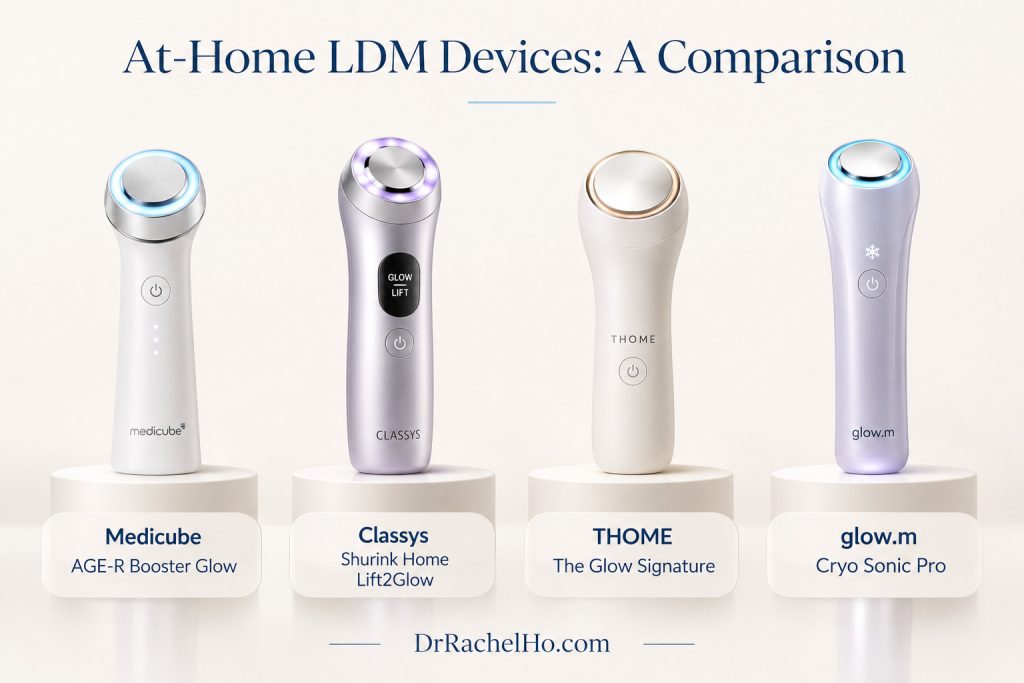
Home ultrasound beauty devices differ in their operating frequencies, treatment modes and additional technologies. This comparison features Medicube AGE-R Booster Glow, Classys Shurink Home Lift2Glow, THOME The Glow Signature and glow.m Cryo Sonic Pro.
At-home LDM devices: Medicube, Classys, THOME and glow.m
Several Korean beauty brands now offer home ultrasound devices using different frequency combinations similar to those advertised for professional LDM facials⁷⁻¹⁰. These home LDM devices differ in frequency, treatment modes and additional technologies⁷⁻¹⁰. Below is a comparison of popular home LDM facial devices for 2026.
Comparison of popular home LDM devices
Popular home LDM devices compared
| Device | Ultrasound technology | Main distinguishing feature |
|---|---|---|
| Medicube AGE-R Booster Glow | 1, 3 and 10 MHz | Triple-frequency water-drop ultrasound with several operating modes⁷ |
| Classys Shurink Home Lift2Glow | Glow: 3 and 10 MHz. Lift: separate 7 MHz focused ultrasound | Combines LDM-type ultrasound with a separate focused-ultrasound cartridge⁸,¹¹ |
| THOME The Glow Signature | 3 and 10 MHz | Dual-frequency ultrasound with three treatment modes⁹ |
| glow.m Cryo Sonic Pro | 1, 3, 10 and 19 MHz | Multi-frequency ultrasound combined with a cooling function¹⁰ |
Specifications are based on manufacturers’ or distributors’ published information available in November 2026. These are not independent measurements of acoustic output.
What does research show about home LDM devices?
A 2024 study published in Lasers in Medical Science investigated a handheld home device combining low-level light, low-dose radiofrequency, microcurrent and low-intensity ultrasound⁵. This study was a randomised, split-face trial involving 36 Korean women⁵. After eight weeks, investigators reported improvements in skin hydration, elasticity, roughness, pore size and eye wrinkle measurements compared with baseline and the untreated side⁵. The researchers also examined skin tissue from participants and found increased collagen type I expression, reduced matrix metalloproteinase 1 expression and increases in the epidermal barrier proteins loricrin and involucrin⁵.
While the findings of this study seem promising, this study involved a device that combined several technologies such as ultrasound with radiofrequency, light and microcurrent, so the effects of ultrasound in isolation cannot be determined⁵.
Can home LDM devices replicate medical LDM treatments?
Home devices may share frequency ranges with professional systems, but the effects of LDM treatments are also influenced by factors such as acoustic intensity, frequency switching, pulse characteristics, transducer design, treatment time and the tissue being treated⁶,¹³,¹⁵. These parameters can differ across devices, and so the results and clinical findings of medical LDM devices cannot be generalised or apply to home LDM devices. Because of the variations across different devices, reviews and study findings can only apply to the specific device being evaluated.
Are home LDM devices safe?
The available clinical studies of selected ultrasound and home multi-energy devices have generally reported good short-term tolerability, with few serious adverse events observed¹⁻⁵.
However, many studies involve small groups and relatively short treatment periods¹⁻⁵. I advise that users should follow the manufacturer’s instructions concerning treatment duration, intensity, coupling gel and areas to avoid for safety¹⁵.
For patients with infections, active inflammation (e.g. eczema and rosacea flares) and recent aesthetic skin treatments, I advise seeking a medical assessment for suitability of using home LDM devices first.
Combining LDM devices with skincare at home
For patients receiving LDM, I generally recommend pairing LDM technology with a water-based conductive medium to improve ultrasound delivery into the skin¹⁵. These can be in the form of gels with hydrating, soothing, and barrier-repairing formulas. Ideal ingredients include hyaluronic acid, panthenol, beta glucan and niacinamide. For an in-depth read of these individual skincare ingredients, please read my skincare guides to hyaluronic acid, beta glucan and niacinamide.
I would not recommend using scrubs or exfoliating acids together with LDM, due to the risks of damaging the skin barrier. If you’d like to know how to use exfoliating acids and scrubs, please refer to my skincare guides on exfoliating acids and spicules.
Dr Rachel Ho’s takeaways and conclusions on LDM facials and home LDM Devices
I find LDM treatments to be a supportive treatment within a broader approach to skin health and reducing inflammation. In my clinic, I mainly incorporate Bellasonic LDM for patients that require hydration, calming or recovery support alongside appropriate medical or aesthetic treatment.
The newer home ultrasound devices are interesting because they offer a different way for patients to incorporate gentle device-based care into their routines. However, the technology is developing faster than the independent clinical evidence for many individual products.
For patients interested in skin longevity, I continue to place greater emphasis on daily sun protection, appropriate skincare and medical management of inflammatory skin conditions.
About the author and this article
Dr Rachel Ho is a Singapore-based aesthetic doctor and founder of The Skin Longevity Clinic. She holds an MBBS from the National University of Singapore and a Master of Medicine in Otolaryngology.
Her clinical practice includes medical aesthetics, skin health and the management of selected inflammatory and sensitive skin conditions, with particular attention to Asian skin and long-term skin quality.
This article combines Dr Ho’s clinical perspective on Bellasonic LDM with a review of published research on ultrasound, mechanical stimulation and home energy-based skincare devices.
The comparison of Medicube, Classys, THOME and glow.m is based on publicly available manufacturer and retailer information. Dr Ho’s clinical observations are distinguished from findings established in published studies.
Medical Evidence and Editorial Standards
The article draws on peer-reviewed clinical trials, observational studies, laboratory research and manufacturer documentation.
Evidence from mechanical massage and multi-energy devices is discussed separately from professional LDM ultrasound studies. Product specifications are distinguished from independently established clinical benefits.
The information is intended for patient education and should be interpreted alongside individual medical assessment where appropriate.
References
- Kim YJ, Moon IJ, Lee HW, et al. The Efficacy and Safety of Dual-Frequency Ultrasound for Improving Skin Hydration and Erythema in Patients with Rosacea and Acne. Journal of Clinical Medicine. 2021;10(4):834. PMID: 33670631. DOI: 10.3390/jcm10040834.
- Park JY, Ahn MK, Cho EB, Park EJ, Kim KH. Dual-Frequency Ultrasound as a New Treatment Modality for Refractory Rosacea: A Retrospective Study. Dermatologic Surgery. 2018;44(9):1209–1215. PMID: 29746429. DOI: 10.1097/DSS.0000000000001552.
- Chervinskaya IG, Gaidash NV, Kruglikov IL. A Retrospective Pragmatic Two-Center Clinical Study to Evaluate the Clinical Outcome of Triple-Frequency Ultrasound in the Treatment of Mild-to-Severe Acne Vulgaris. Journal of Cosmetic Dermatology. 2025;24(2). PMID: 39552138. DOI: 10.1111/jocd.16672.
- Ahn TH, Lee JS, Kim SY, et al. Application of Dual-Frequency Ultrasound for Reduction of Perilesional Edema and Ecchymosis After Rhinoseptoplasty. Journal of Cosmetic Dermatology. 2024;23(3):830–838. PMID: 37877460. DOI: 10.1111/jocd.16040.
- Choi S, Kim J, Lee YI, et al. Efficacy and Safety of a Home-Use Handheld Multi-Energy-Based Device for Skin Rejuvenation: Clinical, Ex Vivo, and Histological Studies. Lasers in Medical Science. 2024;39:38. PMID: 38236440. DOI: 10.1007/s10103-024-03982-8.
- Mitragotri S, Blankschtein D, Langer R. Transdermal Drug Delivery Using Low-Frequency Sonophoresis. Pharmaceutical Research. 1996;13(3):411–420. PMID: 8692734. DOI: 10.1023/A:1016096626810.
- APR Corporation. Medicube AGE-R Booster Glow product announcement and technical specifications. Reported by ChosunBiz, 30 April 2026.
- Classys Inc. Shurink Home Lift2Glow product information. Classys Annual Report 2025, published 2026.
- THOME Skin. The Glow Signature product information, device FAQ and manufacturer-reported clinical testing. Accessed November 2026.
- glow.m. Cryo Sonic Pro product specifications, treatment modes and usage instructions. Accessed November 2026.
- Ksisters Singapore. Shurink Home Lift2Glow product listing and usage information. Accessed November 2026.
- Sontag W, Kruglikov IL. Expression of Heat Shock Proteins After Ultrasound Exposure in HL-60 Cells. Ultrasound in Medicine & Biology. 2009;35(6):1032–1041. PMID: 19285782. DOI: 10.1016/j.ultrasmedbio.2008.12.011.
- Oberli MA, Schoellhammer CM, Langer R, Blankschtein D. Ultrasound-Enhanced Transdermal Delivery: Recent Advances and Future Challenges. Therapeutic Delivery. 2014;5(7):843–857. PMID: 25287389. DOI: 10.4155/tde.14.32.
- Sidbury R, Alikhan A, Bercovitch L, et al. Executive Summary: American Academy of Dermatology Guidelines of Care for the Management of Atopic Dermatitis in Adults With Topical Therapies. Journal of the American Academy of Dermatology. 2023;89(1):128–129. PMID: 36623556. DOI: 10.1016/j.jaad.2022.08.068.
- IONTO Health & Beauty GmbH. IONTO-SONO Effect Operating Instructions. 2018. Sections on ultrasound frequencies, LDM technology and coupling media.

No Comments