


20 Jan Isotretinoin Singapore: Benefits, Side Effects and Safety
Is Isotretinoin Dangerous? Benefits, Side Effects and Who It Is For
By Dr Rachel Ho | Updated August 2026
Few acne medicines inspire as much fear as isotretinoin. It is also the most effective systemic treatment available for severe, scarring and treatment resistant acne, and for the right patient it can change the course of the disease rather than simply suppressing it while treatment continues1,2.
In Singapore, there are four brands of isotretinoin approved by the Health Science Authority (HSA): Acnotin, Nimegen, Oratane and Roaccutane. These contain the same active medicine, but capsule strength and formulation can differ3.
Isotretinoin has a favourable benefit and risk profile when it is prescribed for an appropriate indication and dosed under medical supervision to reduce side effects and relapses after cessation of isotretinoin course. Dryness is the most common side effect of tretinoin, and consumption during pregnancy can result in fetal abnormalities.
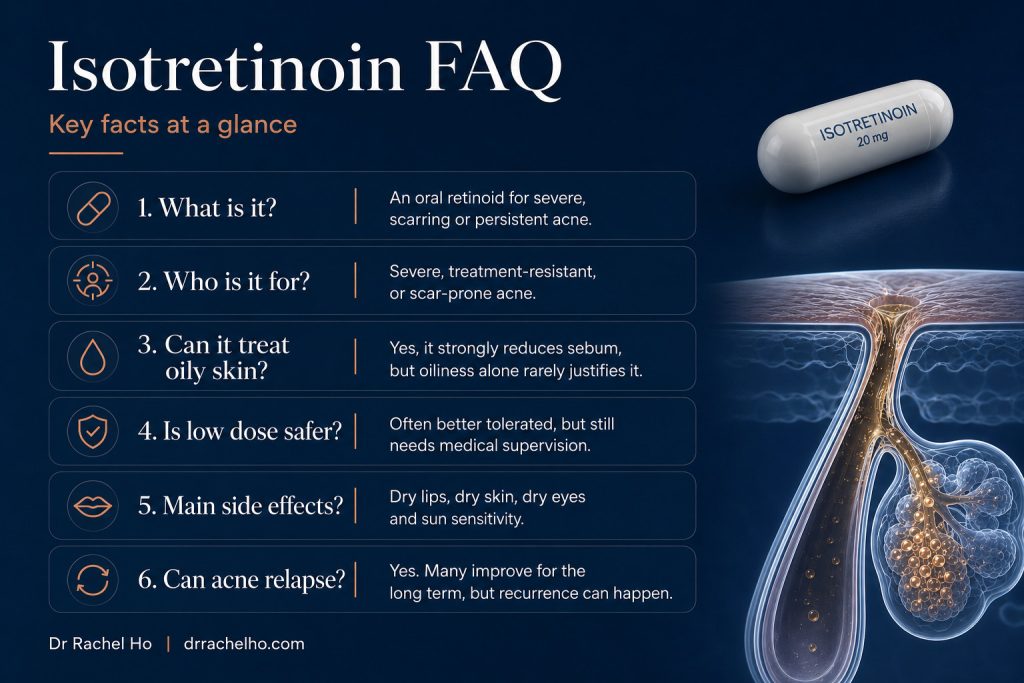
What should patients know about isotretinoin? It is an oral retinoid used for severe, scar-prone or persistent acne. It strongly reduces sebum, but lower dosing still requires medical supervision and acne can recur after treatment.
Isotretinoin FAQ at a glance
FAQ on isotretinoin
| Question about isotretinoin | Evidence based answer |
|---|---|
| What is isotretinoin? | A systemic retinoid, also called 13 cis retinoic acid, used for severe, scarring or persistent acne |
| Is isotretinoin the best acne treatment? | It is the an effective oral treatment for severe and treatment resistant acne, but milder or hormonal acne can have more proportionate options |
| Can isotretinoin treat oily skin? | It strongly suppresses sebum, although oiliness alone rarely justifies systemic treatment. Alternative topical treatments like topical retinoids, chemical peels and Q-switched laser are often preferred |
| Does isotretinoin treat hormonal acne? | Isotretinoin can clear hormonal acne, but persistent androgenic drivers can contribute to recurrence after treatment |
| Is low dose isotretinoin safer? | Lower doses of isotretinoin generally improve tolerability, but pregnancy risk and the need for medical supervision remain |
| Is acne permanently cured with isotretinoin? | Many patients achieve prolonged remission after completing a course of isotretinoin, although relapse remains possible |
| What monitoring is needed for isotretinoin? | Pregnancy precautions i.e. contraceptives, symptom reviews and selected liver enzyme and triglyceride tests |
| Can procedures replace isotretinoin? | In-clinic procedures that ablate or reduce the active sebaceous glands are medical alternatives to isotretinoin for patients. Milder cases of acne can be well-treated with localised treatments and topical medications. |
What is isotretinoin?
Isotretinoin is an oral systemic retinoid derived from vitamin A. Inside cells, it is converted into active retinoid metabolites that influence nuclear retinoic acid receptors and change gene activity within sebocytes and follicular skin cells.
Unlike a topical retinoid, oral isotretinoin acts throughout the body and has a particularly strong effect on the sebaceous glands. It is the only commonly used acne medicine that can produce a prolonged drug free remission after a finite treatment course, although that remission is not guaranteed for every patient1,4.
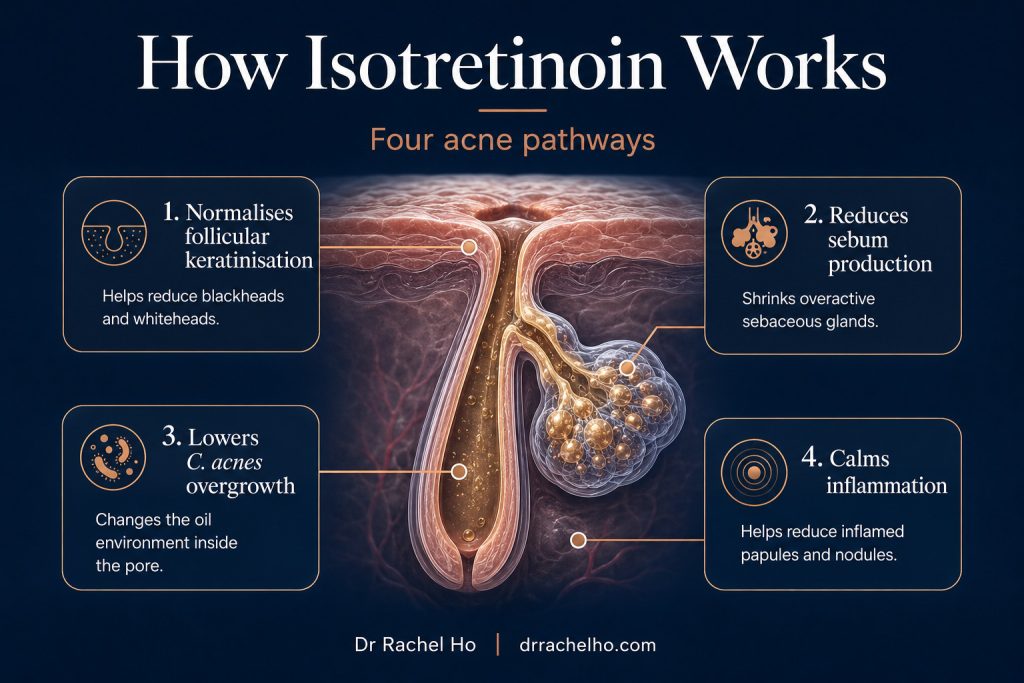
How does isotretinoin treat acne? It acts across the four major acne pathways by normalising follicular keratinisation, suppressing sebum, changing the environment that supports Cutibacterium acnes and reducing inflammation.
How does isotretinoin treat acne?
Acne develops through four interacting processes. Follicular cells become sticky and block the pore, sebaceous glands produce excess oil, Cutibacterium acnes thrives within the oil rich follicle, and inflammation creates papules, pustules, nodules and cysts.
Isotretinoin acts across all four pathways:
- It normalises follicular keratinisation, reducing blackheads and whiteheads.
- It shrinks sebaceous glands and markedly lowers sebum production.
- It indirectly reduces C. acnes by changing the amount and composition of sebum.
- It reduces inflammatory signalling within the pilosebaceous untit1,4.
At a cellular level, isotretinoin promotes sebocyte apoptosis. Human sebaceous gland research has also identified changes in FoxO1 and FoxO3 signalling during treatment, which helps explain its powerful sebum suppressing effect4.
Is isotretinoin the best acne treatment?
For severe nodulocystic acne, acne that is producing scars, or acne that has failed appropriate topical and oral treatment, isotretinoin is usually the strongest option among medications. Current acne guidelines also support isotretinoin prescription when acne creates a major psychological burden for patients1.
A network meta analysis of 221 randomised trials ranked oral isotretinoin as the most effective pharmacological acne treatment for reducing total, inflammatory and non inflammatory types of acne. Combination treatments involving a topical retinoid, benzoyl peroxide and an antibiotic followed behind it2.
That does not necessarily make isotretinoin the best first treatment for every type and severity of acne. Comedonal acne (i.e. blackheads and whiteheads, occasional inflammatory acne and cyclical jawline breakouts can often be treated with a more proportionate combination of topical medication or selected hormonal treatment.
Related blogposts:
Adult Female Acne: A Doctor Explains
5 Skincare Ingredients for Acne & Acne Prone Skin
Cycle Sync Skincare for Menstrual Acne
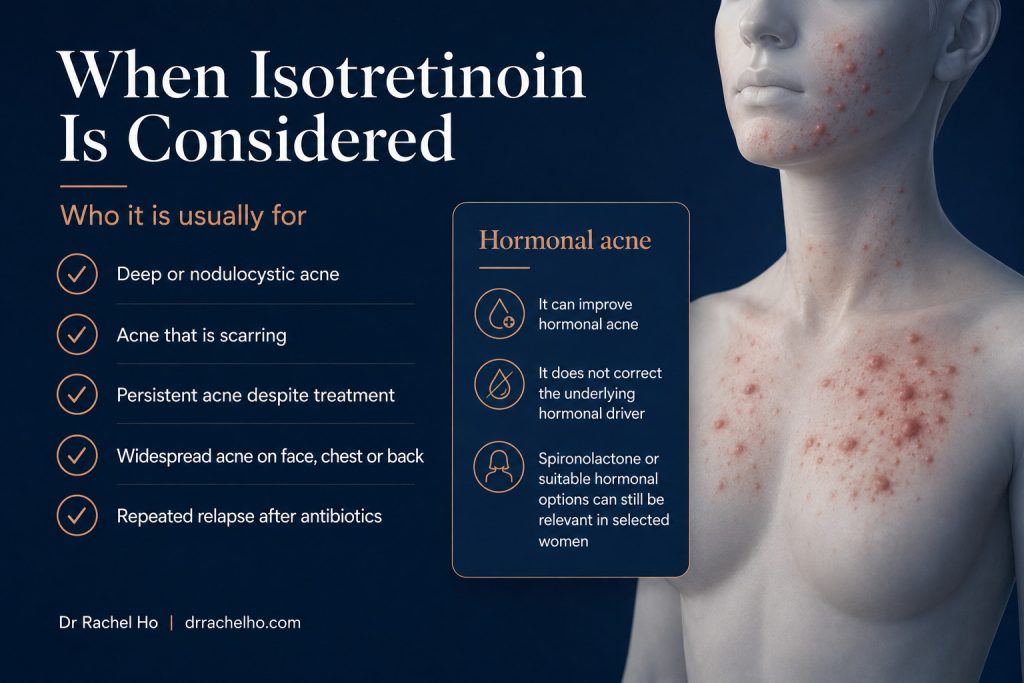
Who is isotretinoin usually prescribed for? It is commonly considered for deep, scarring, widespread or treatment-resistant acne. Hormonal acne can improve, although the underlying androgenic driver can remain and require a separate treatment strategy.
When is isotretinoin prescribed for patients?
Isotretinoin is considered when acne is:
- Deep, painful or nodulocystic
- Producing permanent scars
- Widespread across the face, chest or back
- Continuing despite appropriate topical and oral treatment
- Relapsing repeatedly after antibiotics
- Causing substantial distress or affecting daily life
Mild- moderate acne severity can also justify isotretinoin when it is persistent, or resulting in scar and not responding to other medical treatments
Can isotretinoin treat hormonal acne?
Hormonal acne commonly produces recurrent lower face, chin and jawline breakouts in women, often worsening around the menstrual cycle, typically during the luteal phase. Isotretinoin can prevent hormonal acne because it suppresses sebaceous glands and the other major acne pathways, although it does not address the hormonal component behind the acne flares.
Hormonal treatments for hormonal acne include spironolactone or a combined oral contraceptive for female patients who are medically suitable for hormonal treatment. The SAFA randomised trial found that spironolactone improved persistent facial acne in women, with the difference becoming clearer by 24 weeks5.
Underlying androgenic drivers can remain after isotretinoin ends. This is one reason hormonal acne can recur despite an initially excellent response, and why menstrual pattern, excess facial hair, irregular periods and scalp hair thinning deserve attention during assessment.
Read Adult Female Acne: A Doctor Explains for the wider hormonal and life stage context.
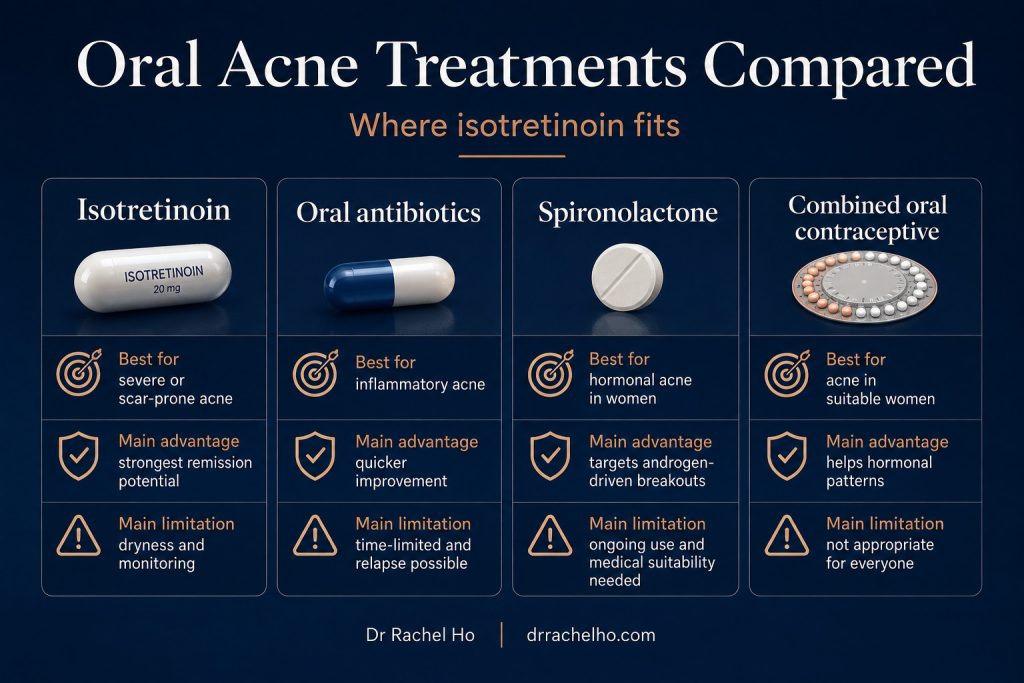
Which oral acne treatment is best? Isotretinoin has the strongest remission potential for severe or scar-prone acne. Oral antibiotics can provide short-term control of widespread inflammation, while spironolactone or a suitable combined oral contraceptive can help selected women with hormonal acne.
How does isotretinoin compare with other oral acne medications?
Oral medications for acne
| Oral treatment | Best suited to | Main advantage | Main limitation |
|---|---|---|---|
| Isotretinoin | Severe, scarring, recurrent or treatment resistant acne | Acts across all four major acne pathways and can produce prolonged remission | Dryness, pregnancy precautions, monitoring and possible relapse |
| Doxycycline or another acne appropriate antibiotic | Widespread inflammatory acne | Can reduce inflammation relatively quickly | Should be time limited, requires accompanying topical treatment and does not usually create durable remission |
| Spironolactone | Hormonal acne in suitable female patients | Targets androgen driven sebaceous activity and avoids antibiotic resistance | Often requires longer term use and is unsuitable during pregnancy |
| Combined oral contraceptive | Acne in women who also want suitable contraception | Can reduce circulating androgen effects and improve inflammatory and comedonal acne | Suitability depends on clotting risk, migraine history, smoking and other medical factors |
In a randomised trial involving severe nodular acne, doxycycline combined with adapalene and benzoyl peroxide produced a faster early reduction in lesions. Isotretinoin achieved greater reductions in nodules, inflammatory lesions and total lesions by week 20, while the antibiotic combination produced fewer treatment related adverse events6.
This comparison illustrates why oral antibiotics remain useful. They can be an effective bridge for inflammatory acne, but isotretinoin provides stronger suppression when the disease is severe or scar forming.
Dose and duration of isotretinoin and low dose isotretinoin (aka microdosing)
A conventional daily dose commonly falls around 0.5 to 1.0 mg per kg of body weight. The final dose and course length are adjusted according to acne severity, side effects, response and total exposure.Many clinicians use a cumulative exposure of approximately 120 to 150 mg per kg as a benchmark.
Low dose isotretinoin or microdosing usually refers to continuous treatment at 0.5 mg per kg per day or less. A 2026 systematic review of four randomised trials found comparable acne improvement at 24 weeks between low and conventional daily doses, with better tolerability and patient satisfaction at lower doses. The evidence mainly involved moderate acne, and certainty for efficacy was low, so the results should not be extrapolated to patients with severe nodulocystic acne7.
What are the common side effects of isotretinoin?
Dry lips are the most common side effect of isotretinoin. Dry or peeling skin, dry eyes, nasal dryness, nosebleeds and greater sun sensitivity are also common, while muscle discomfort, temporary hair shedding and an early acne flare can occur in some patients8.
Focusing on your skin barrier with active ingredients that fortify the skin barrier make isotretinoin treatment more tolerable. I recommend using moisturisers and lip balms containing ceramides, beta glucan, niacinamide, hyaluronic acid and natural moisturising factors. I usually advise a gentle cleanser, lip balm, plain moisturiser, artificial tears where needed and daily broad spectrum sunscreen, while scrubs, frequent peels and unnecessary active ingredients are reduced.
Related blogposts:
How to Repair Your Skin Barrier
Niacinamide for Skin: Benefits, Side Effects and How to Use It
Beta Glucan Skincare: New Hero for the Skin Barrier?
Severe headache with nausea or visual change, marked mood changes, persistent abdominal symptoms, jaundice or a serious allergic reaction require prompt medical review8.
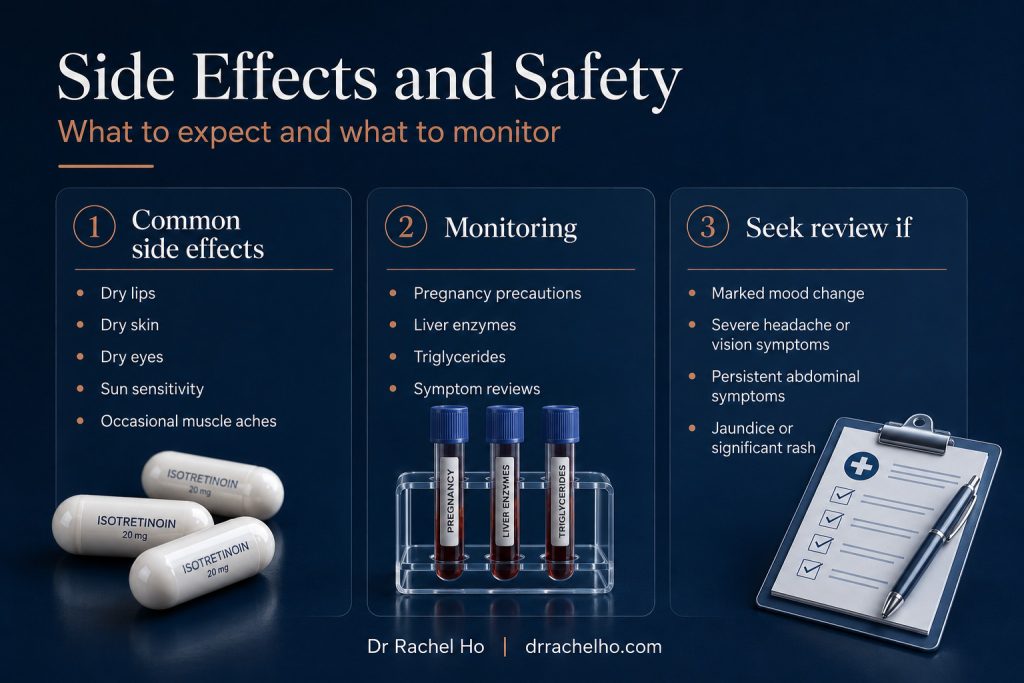
What are the main isotretinoin side effects? Dry lips, dry skin, dry eyes and sun sensitivity are common. Pregnancy precautions, symptom reviews and selected liver enzyme and triglyceride testing support safer treatment.
Pregnancy and teratogenicity: the most worrying risk of isotretinoin
Isotretinoin can cause serious fetal harm and must not be used during pregnancy. In Singapore, female patients are to use contraceptives and exercise birth control for at least one month before treatment, throughout treatment and for at least one month after stopping, together with pregnancy testing and counselling directed by the prescribing doctor8.
Isotretinoin is also contraindicated for breastfeeding patients.
Which blood tests are needed before isotretinoin treatment?
Isotretinoin can raise triglycerides and liver enzymes. Hence, blood tests for cholesterol or triglycerides and liver function are recommended before starting isotretinoin treatment8.
An international Delphi consensus supported checking liver enzymes and triglycerides shortly before treatment and again around the peak dose in generally healthy patients. The panel did not support routine monthly testing or routine complete blood counts for everyone9.
That said, testing still needs to be individualised. Patients with diabetes, pre existing lipid abnormalities, liver disease, alcohol intake, medication interactions and symptoms can justify closer monitoring.
Does isotretinoin cause depression?
Mood changes, depression and suicidal thoughts have been reported, and patients should be counselled to report changes promptly. Severe acne itself is also associated with psychological distress, which makes causality difficult to establish.
A 2024 meta analysis involving more than 1.6 million participants found no increased population level risk of suicide or psychiatric disorders among isotretinoin users. This result is reassuring. Nonetheless, patients with acne and on isotretinoin should be supported emotionally10.
Can acne return after isotretinoin?
Acne relapses or recurrences are possible. A 2025 cohort involving 19,907 patients found that 22.5 percent required further acne treatment after isotretinoin with 8.2 percent undergoing another isotretinoin course12.
Risk factors for acne relapses after isotretinoin
Higher cumulative exposure was associated with lower relapse and odds of another course of isotretinoin. Increasing the daily dose did not appear to add the same protection once a sufficient total exposure had been reached, which supports individualising the daily dose for tolerability12.
Younger age, severe baseline acne, macrocomedones and remnant acne lesions at the end of treatment have also been linked with recurrence in observational research13.
Maintenance treatment after isotretinoin can include a topical retinoid, benzoyl peroxide or azelaic acid according to the skin. Women with recurrent hormonal acne can also require a hormonal strategy after treatment ends.
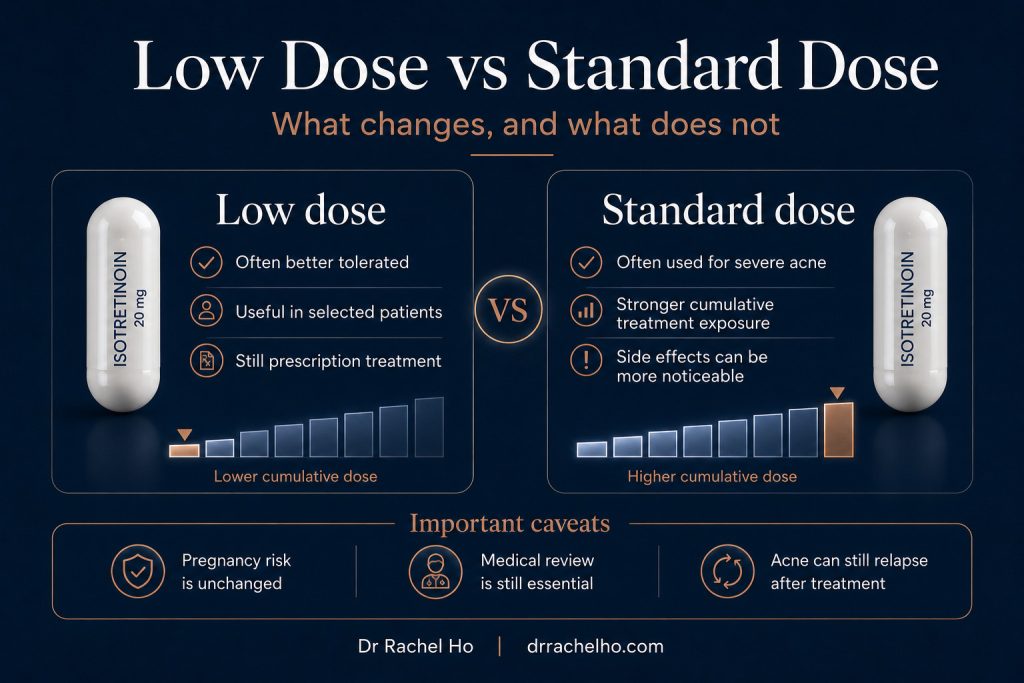
Is low-dose isotretinoin safer? A lower daily dose is often better tolerated, but it does not remove pregnancy risk or the need for medical review. Treatment duration, total exposure and the possibility of acne relapse still require individual assessment.
What are the Accutane glow up, Accutane nose and microdosing trends?
The Accutane glow up is a term on TikTok that describes clearer acne, reduced surface oil and smoother looking skin during successful treatment. The change comes mainly from acne clearance and sebum reduction rather than a separate glow producing mechanism.
View this post on Instagram
Accutane nose refers to reports that the nose looks smaller after oil gland suppression. Studies around rhinoplasty have found changes in nasal skin and soft tissue in selected patients, but isotretinoin does not reshape cartilage or bone14.
Microdosing generally refers to continuous low dose of isotretinoin. Lower doses can improve tolerability, but they do not remove pregnancy precautions, monitoring or the possibility of recurrence.
Read Accutane Glow Up: What TikTok Gets Right and Wrong for a detailed review of these trends.
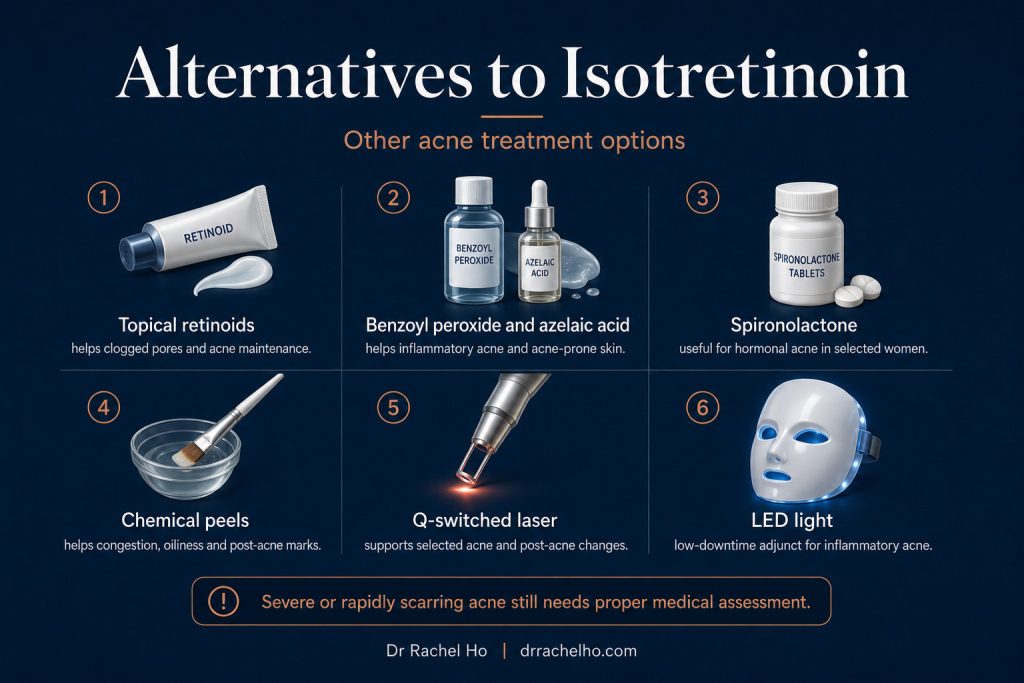
What are the alternatives to isotretinoin in Singapore? Depending on acne type and severity, options can include topical retinoids, benzoyl peroxide, azelaic acid, hormonal treatment, chemical peels, selected Q-switched laser protocols and LED. Targeted sebaceous-gland radiofrequency can also be considered for suitable recurrent inflammatory lesions.
What are the alternatives to isotretinoin in Singapore?
Alternative treatments to isotretinoin
| Option | Where it can fit | Limitation |
|---|---|---|
| Topical retinoids, benzoyl peroxide and azelaic acid | Mild to moderate comedonal or inflammatory acne | Irritation and adherence affect results |
| Oral antibiotics with topical treatment | Widespread inflammatory acne | Should be time limited and recurrence can occur |
| Spironolactone or suitable contraception | Hormonal acne in selected women | Requires medical assessment and continued use |
| Selective sebaceous gland ablation RF | Recurrent inflammatory lesions arising from identifiable follicles | Treats selected glands |
| Chemical peels | Congestion, comedones, surface oil and post acne marks | Evidence and results vary by type of chemical peel and acne pattern |
| Q switched 1064 nm Nd:YAG laser | Selected inflammatory acne and oil control protocols | Studies are relatively small and protocols vary |
| Blue and red LED | Low downtime support for selected inflammatory acne | Better used as an adjunct than as sole treatment |
Alternative treatments to isotretinoin depend on the type and severity of acne.
A prospective randomised study involving 63 patients found significant improvement in inflammatory acne after three sessions of selective sebaceous gland electrothermolysis. The evidence remains smaller than that supporting established medication, and the technique is best reserved for selected recurrent follicles within a comprehensive acne plan15.
For more details about these acne treatments, please refer to these pages at my clinic, The Skin Longevity Clinic:
- Selective Sebaceous Gland RF Treatment
- Q Switched Nd:YAG 1064 nm Laser
- Chemical Peels
- LED Light Treatments
- Acne Treatment in Singapore
Dr Rachel Ho’s clinical perspective on isotretinoin treatment for acne
Isotretinoin is a powerful medication for acne, especially for patients with severe, nodulocystic acne. However, isotretinoin is not without its side effects; and for patients to have the best results with lowest risks of relapses, they need to be dosed appropriately. For patients who are looking for alternatives medical treatments to isotretinoin, options include sebaceous gland ablation or lasers that suppress sebaceous gland activity.
Frequently asked questions about isotretinoin
Is isotretinoin safe?
Isotretinoin has a favourable benefit and risk profile when prescribed for an appropriate indication and monitored correctly. Pregnancy exposure is the most serious established danger, while dryness is the most common side effect.
Is isotretinoin the best treatment for hormonal acne?
Isotretinoin can clear hormonal acne, particularly when it is severe or scar forming. Spironolactone or a suitable combined oral contraceptive can be more proportionate for selected women with persistent cyclical jawline acne.
Can isotretinoin be used for oily skin alone?
Marked oiliness can improve dramatically, but cosmetic sebum reduction alone rarely justifies systemic treatment. Topical retinoids, niacinamide, salicylic acid or selected sebaceous gland procedures can be considered first.
Does isotretinoin permanently cure acne?
Many patients achieve prolonged remission, although relapse remains possible. A 2025 cohort found further acne treatment in approximately one in five patients and another isotretinoin course in fewer than one in ten12.
Is low dose isotretinoin safer?
Lower daily doses generally cause fewer dose related side effects and can improve tolerability. Pregnancy risk remains unchanged, and evidence in severe acne and long term recurrence is less complete.
Can I have laser or chemical peels while taking isotretinoin?
Procedure timing requires individual review because isotretinoin alters skin dryness, sensitivity and healing. HealthHub advises discussing laser, dermabrasion, peels and hair removal with the prescribing doctor and provides conservative waiting guidance8.
Related reading on DrRachelHo.com
- Accutane Glow Up: What TikTok Gets Right and Wrong
- Adult Female Acne: A Doctor Explains
- Acne: Types, Causes and Treatments
- Retinol vs Retinal vs Tretinoin
- Is Your Skin Purging or Breaking Out?
References
- Reynolds RV, Yeung H, Cheng CE, et al. Guidelines of Care for the Management of Acne Vulgaris. Journal of the American Academy of Dermatology. 2024. PMID 38300170.
- Huang CY, Chang IJ, Bolick N, et al. Comparative Efficacy of Pharmacological Treatments for Acne Vulgaris: A Network Meta Analysis of 221 Randomised Controlled Trials. Annals of Family Medicine. 2023. PMID 37487721.
- Health Sciences Authority Singapore. Isotretinoin and Risk of Psychiatric Disorders and Sexual Dysfunction. 2023.
- Agamia NF, Hussein OM, Abdelmaksoud RE, et al. Effect of Oral Isotretinoin on the Nucleo Cytoplasmic Distribution of FoxO1 and FoxO3 Proteins in Sebaceous Glands of Patients With Acne Vulgaris. Experimental Dermatology. 2018. PMID 30240097.
- Santer M, Lawrence M, Renz S, et al. Effectiveness of Spironolactone for Women With Acne Vulgaris. BMJ. 2023. PMID 37192767.
- Tan J, Humphrey S, Vender R, et al. Adapalene and Benzoyl Peroxide Plus Doxycycline Versus Oral Isotretinoin for Severe Nodular Acne. British Journal of Dermatology. 2014. PMID 24934963.
- Zou J, Li Y, Wang L, et al. Individualizing Isotretinoin Dosing in Acne: Comparable 24 Week Efficacy and Better Tolerability at Lower Daily Doses. Frontiers in Medicine. 2026. PMID 41877774.
- HealthHub Singapore. Isotretinoin. Updated 2026.
- Xia E, Han J, Faletsky A, et al. Isotretinoin Laboratory Monitoring in Acne Treatment: A Delphi Consensus Study. JAMA Dermatology. 2022. PMID 35704293.
- Tan NKW, Tang A, Gooderham M, et al. Risk of Suicide and Psychiatric Disorders Among Isotretinoin Users: A Meta Analysis. JAMA Dermatology. 2024. PMID 38019562.
- Yu CL, Chou PY, Liang CS, et al. Isotretinoin Exposure and Risk of Inflammatory Bowel Disease: A Systematic Review With Meta Analysis and Trial Sequential Analysis. American Journal of Clinical Dermatology. 2023. PMID 37010780.
- Lai J, Barbieri JS. Acne Relapse and Isotretinoin Retrial in Patients With Acne. JAMA Dermatology. 2025. PMID 39813053.
- Demirci Saadet E. Investigation of Relapse Rate and Factors Affecting Relapse After Oral Isotretinoin Treatment. Dermatologic Therapy. 2021. PMID 34431590.
- Fanning JE, et al. Clarifying the Role of Isotretinoin in Rhinoplasty: A Systematic Review and Analysis of an Emerging Social Media Trend. Aesthetic Plastic Surgery. 2026. PMID 41184659.
- Ahn GR, Kim JM, Park SJ, et al. Selective Sebaceous Gland Electrothermolysis Using a Single Microneedle Radiofrequency Device for Acne Patients. Lasers in Surgery and Medicine. 2020. PMID 31502662.
- Mavranezouli I, Daly CH, Welton NJ, et al. A Systematic Review and Network Meta Analysis of Topical, Oral, Physical and Combined Treatments for Acne Vulgaris. British Journal of Dermatology. 2022. PMID 35789996.

No Comments