


16 Sep Singapore Haze and Skin: Acne, Eczema and Irritation
Singapore Haze and Skin: Acne, Eczema and Irritation
If you’ve noticed itching, irritation, or acne outbreaks when the haze rolls into Singapore, you’re not alone. In my practice, I tend to get an increase in patients complaining of symptoms of barrier compromise and worsening of inflammatory conditions such as acne and eczema.
We know that air pollution directly impacts the skin barrier and is closely associated with inflammatory dermatological conditions, including acne and eczema¹,³. Research in Singapore has demonstrated an association between particulate pollution and increased clinical consultations for atopic dermatitis, although it is important to remember these population-level trends don’t pinpoint the exact trigger for any individual’s flare⁴.
The approach to managing haze or pollution related skin woes boils down to supporting and repairing your skin barrier while systematically treating active breakouts or eczema. In this review, I’ll take you through what the scientific literature, including data from Singapore, tells us, and how lifestyle adjustments, skincare, and selected in-clinic treatments can treat haze related dermatological symptoms.
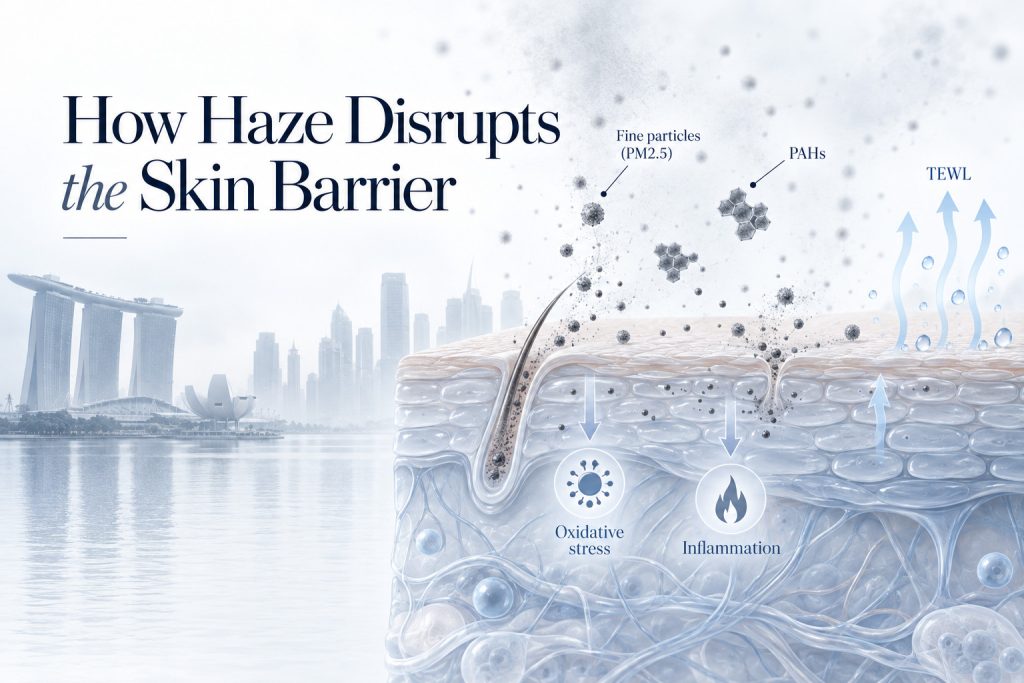
Experimental studies link particulate exposure with changes in skin barrier proteins and increased transepidermal water loss, meaning moisture escaping through the skin³. This diagram illustrates the mechanisms discussed in the article rather than showing particle movement in a patient.
How does haze affect the skin?
To understand why hazy weather causes such skin irritation and flares, we have to first understand the skin barrier. Think of the skin barrier, which is the outermost layer of your skin, as your body’s primary shield. The skin barrier seals essential moisture inside while keeping external irritants, allergens, and environmental toxins out³.
Microscopic airborne particles in haze frequently carry toxic chemicals known as polycyclic aromatic hydrocarbons (PAHs)¹,².These tiny pollutant particles penetrate and interact with skin cells, triggering inflammatory cascades and degrading the structural proteins responsible for keeping your barrier intact¹,²,³.
Oxidative stress and inflammation
When these pollutants land on the skin, they activate a specific cellular sensor called the aryl hydrocarbon receptor (AhR)². This activation sets off a domino effect, triggering an overproduction of reactive oxygen species (ROS) and inflammatory signaling molecules that disrupt normal skin function².
You’ve likely heard the term “oxidative stress” thrown around in conversations around antioxidant skincare. Oxidative stress describes an internal biochemical imbalance between destructive reactive molecules and your skin’s natural defensive antioxidant systems and it can cause a dull or tired complexion².
Compromise in skin barrier function
Experimental models also show that exposure to particulate matter directly reduces crucial barrier-building proteins like filaggrin and loricrin, leading to a marked spike in transepidermal water loss (TEWL)³. This explains why your skin can feel tight, raw, or unusually sensitive during hazy periods³.
That said, while laboratory and animal models confirm barrier compromise³, exaggerated claims that all fine pollution particles effortlessly pass straight through healthy, intact human skin into the bloodstream go far beyond what current scientific evidence actually supports¹.
For a deeper dive into how this protective shield operates—and how everyday habits can inadvertently make an inflamed skin barrier worse—you can read my comprehensive guide to repairing the skin barrier.
What have Singapore studies found about pollution and eczema?
A major study in Singapore in 2024 analysed 1,440,844 consultations at the National Skin Centre, Singapore recorded between 2009 and 2019 alongside detailed weather and air pollution metrics⁴. The researchers discovered that elevated levels of ambient PM2.5 and PM10 were significantly associated with an increase in patient visits for atopic dermatitis (eczema)⁴. Note that this Singapore study shows an association between ambient air pollution and eczema flare, but does not demonstrate causation.
My takeaway as a doctor is that environmental exposure is definitely a contribution to evaluating a flareup. However, we still need to examine your skin in entirety with consideration of pre-existing conditions, your current medical therapies, and any recent skincare additions.
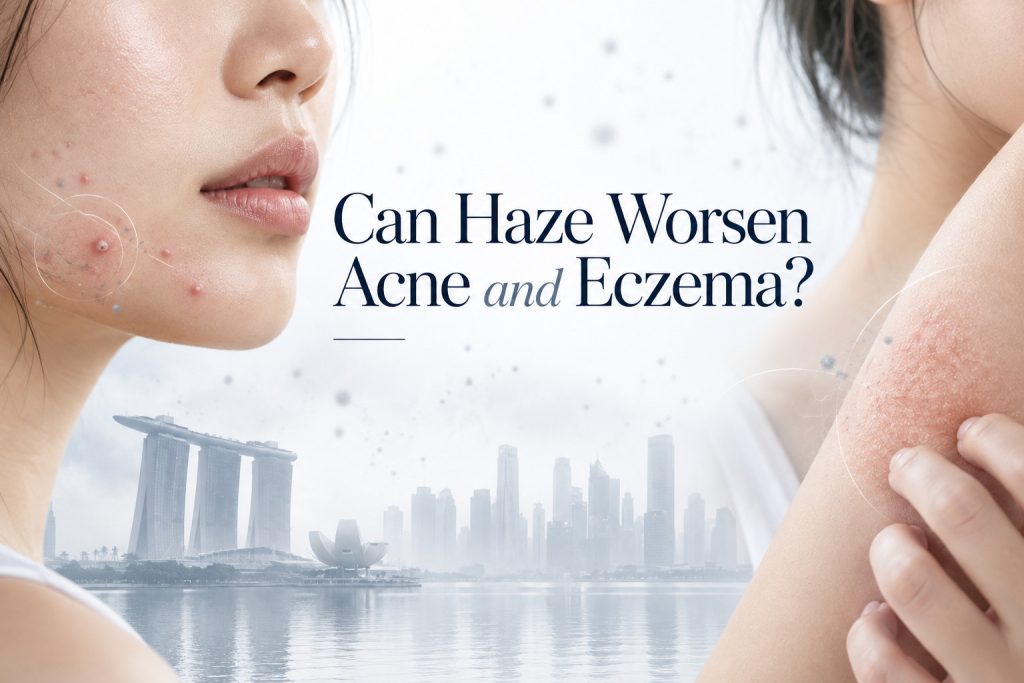
Singapore research has associated higher particulate pollution with increased eczema consultations, while laboratory research suggests that particulate matter can amplify acne related inflammation⁴,⁷. These findings do not establish that haze caused every individual flare.
Can haze worsen eczema and itchy skin?
Yes, airborne pollution can certainly aggravate atopic dermatitis in susceptible individuals¹,⁶. Research demonstrates a compounding effect with haze and air pollution. The pollution particles disrupt the physical barrier while simultaneously igniting inflammatory pathways, resulting in eczema flares during the haze⁶.
Eczema flares typically present with intense itching, red inflamed patches, flaking, and skin tenderness⁶,¹¹. If you notice a worsening of your symptoms, It’s important to be compliant with your prescribed eczema treatments from your doctor. You can learn more about managing this condition in my dedicated eczema guide. If you are dealing with symptoms that disrupt your daily activities and sleep, it’s time for clinical attention rather than conservative management with cosmetic moisturisers.
Can haze cause acne or make breakouts worse?
Air pollution is increasingly linked to acne flares, and laboratory research confirms that particulate matter can amplify inflammatory pathways in the skin¹,⁷. In one key study, exposure to particulate matter significantly heightened the inflammatory response of human keratinocyte cells when exposed to Cutibacterium acnes (the primary bacteria implicated in acne)⁷. However, this study was based on isolated cells in a lab rather than human skin in Singapore’s climate⁷.This study also does not prove that haze particles directly “clog pores”⁷.
Nevertheless, acne is a complex, chronic inflammatory skin condition affected by many factors. In my clinic, I still evaluate all these factors for patients who present with an acne flare during the haze in Singapore. The timing and exposure to the hazematters, but so do your underlying hormonal factors, skincare, makeup and diet in contributing to acne.
For patients battling persistent or recurring breakouts, my adult female acne guide explores the other causes of acne with lifestyle and skincare tips to support acne treatments.
Why does skin feel dry, tight or sensitive during haze?
As established in experimental skin models, exposure to particulate matter elevates transepidermal water loss³. When moisture escapes at an accelerated rate, the skin rapidly loses its elasticity, which is why barrier reinforcement is central to treating pollution-induced dryness³.
Often, care in treating skin barrier compromise and related symptoms involve a streamlined, simplified routine. For an irritated, sensitive face, the priority is to stabilise skin barrier function through skincare, medications and in-clinic treatments like LED light and LDM if necessary.
Does haze contribute to pigmentation and skin ageing?
Long-term epidemiological studies on chronic pollution exposure show strong associations with premature skin aging and the formation of dark spots (pigmentation)²,⁸. Emerging research indicates that ambient pollution and ultraviolet (UV) radiation work synergistically, accelerating oxidative stress and hyperactive melanin production²,⁸.
However, these findings reflect chronic, multi-year exposure to urban pollution. They do not mean that a few hazy days in Singapore will suddenly cause permanent wrinkles or severe pigmentation overnight²,⁸.
My advice is to keep your daily sun protection rock-solid and address persistent pigmentation as a separate clinical concern.
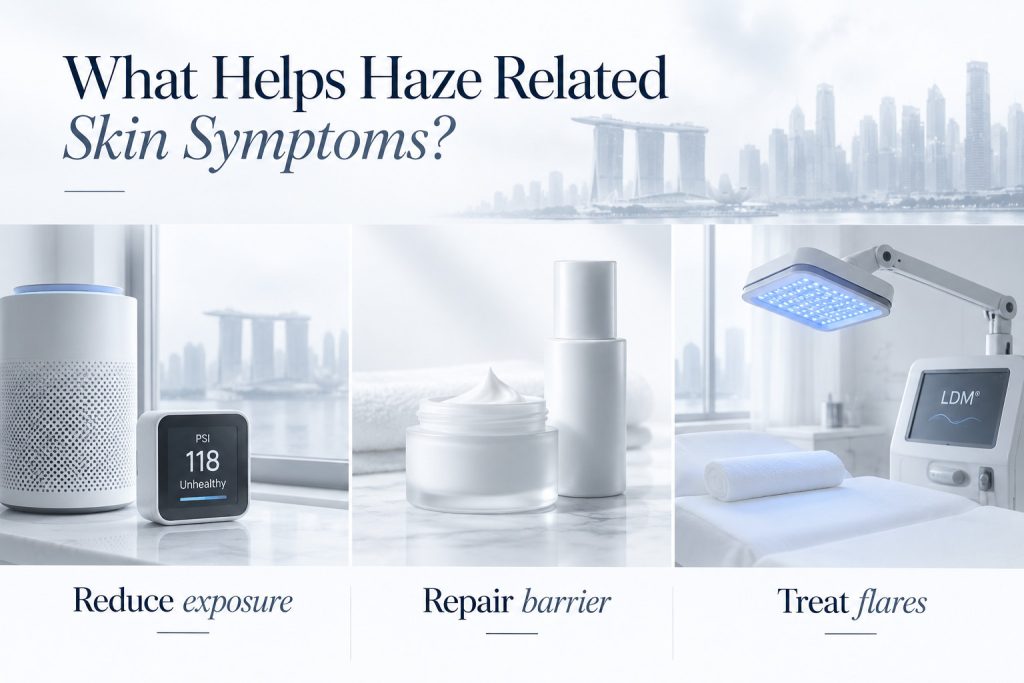
Managing skin symptoms during haze involves reducing exposure, supporting the barrier and treating the condition present. Persistent acne or eczema may require medical treatment, with any clinic procedure selected for a specific indication.
How can I reduce haze exposure in Singapore?
Check official readings
Refer to the National Environment Agency (NEA) haze portal to monitor real-time air quality and official health advisories before scheduling outdoor exercise or activities⁹. Pay attention to both the 1-hour PM2.5 concentrations and 24-hour PSI readings, following the specific health guidance attached to them⁹.
Keep indoor air cleaner
Singapore’s official public health guidelines advise keeping windows and doors closed when outdoor pollution spikes, reopening them once the ambient air clears¹⁰. Indoors,opt for wet mopping or damp wiping to trap settled dust without stirring particles back into the air¹⁰.
Using a high-efficiency portable air purifier can significantly lower indoor particle counts¹⁰. Just keep in mind that air purifiers serve as environmental risk reducers but they don’t replace targeted medical treatments for active acne or eczema.
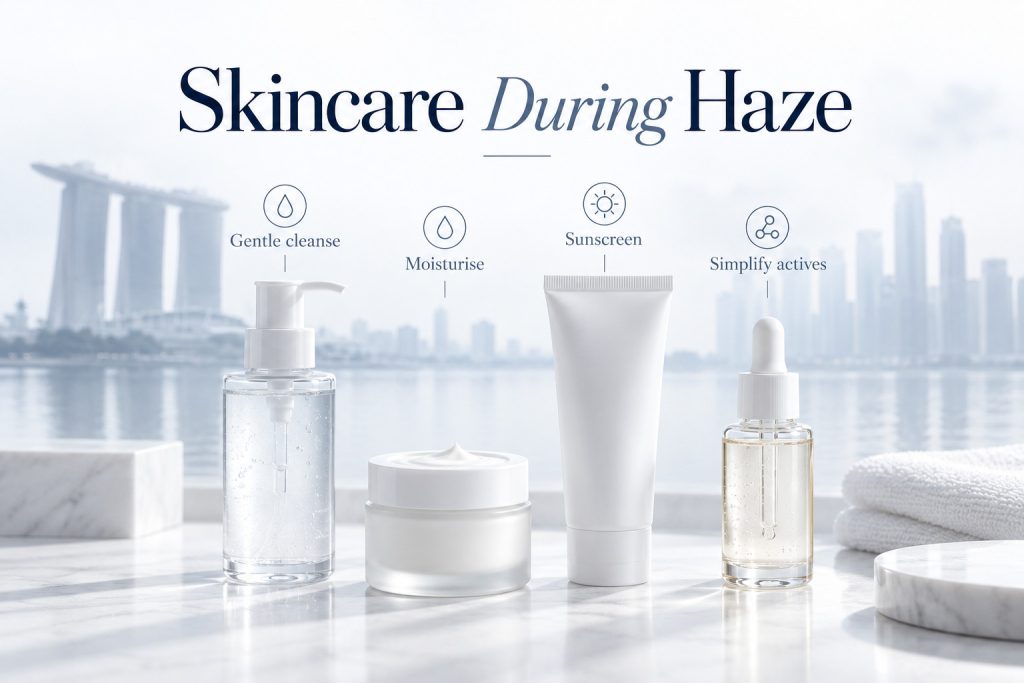
During haze, keep skincare focused on gentle cleansing, moisturising and sun protection. Review cosmetic products that sting, and discuss adjustments to prescribed treatment with your doctor rather than stopping medicines on your own.
What skincare should I use during haze?
During the haze, the aim is to fortify your skin barrier by keeping your skincare routine lean, gentle, and consistent. A gentle cleanser, a barrier-supportive moisturizer, daily sunscreen, and your prescribed medical topicals will suffice
It is tempting to wash your face multiple times a day when the air feels heavy and dirty. However, over-cleansing strips away essential natural lipids that are a component of your skin barrier.
Consistent moisturisation is an absolute cornerstone of eczema and barrier care¹¹. I highly recommend barrier supporting active ingredients such as ceramides, hyaluronic acid and niacinamide for these indications. For a deep dive into these specific skincare ingredients, please check out these dedicated guides:
Ceramide Skincare for Sensitive Skin
Niacinamide Skincare: Benefits, Best Percentage, and How to Choose
Everything You Need to Know about Hyaluronic Acid
A active serum or exfoliant that your skin tolerated effortlessly last week might start stinging or burning when your barrier is compromised by environmental stress. Simplify your routine by stepping back from non-essential exfoliants (like AHAs, BHA) or retinoids. If you suspect your prescribed medical topicals are causing excessive irritation, discuss a modified application schedule with your doctor rather than stopping your medication entirely.
Is an antioxidant serum needed during the haze in Singapore?
Antioxidants have a very logical, plausible mechanism when it comes to neutralising environmental oxidative damage¹⁴. A 2025 laboratory study tested a popular topical antioxidant blend (containing vitamins C, E, and ferulic acid) on donated human skin explants exposed to a combination of diesel exhaust fumes and UV radiation¹⁴.
The antioxidant combination successfully reduced several key biomarkers of cellular damage under those specific laboratory conditions¹⁴. However, these results were obtained from isolated skin tissue studied ex vivo in a lab setting, which is not the gold standard clinical trial of a double blinded randomised clinical trial that would demonstrate applying the serum prevents real-world acne or eczema flares during the haze in Singapore¹⁴.
I consider a well-formulated antioxidant serum an optional upgrade if your skin tolerates. But if your skin is currently stinging, reactive, or inflamed, my priority is calming the irritation first.
If you are curious about choosing the right formula, my vitamin C skincare guide breaks down the key differences between various vitamin C derivatives and concentrations. Just remember that research findings on one specific, patented antioxidant blend cannot be broadly applied to every product on the shelf claiming antioxidant properties due to differences in formulations¹⁴.
What treatments help acne and eczema that flare during haze?
When treating an acne or eczema flareup, my clinical focus is squarely on the underlying dermatological condition itself. Standardised, evidence-based medical guidelines for acne and eczema are more consistent and reliable than prioritising specialised “anti-pollution” skincare¹¹,¹⁵.
Treating active acne during the haze
Depending on your specific acne subtype and severity, evidence-based options include benzoyl peroxide, topical retinoids, azelaic acid, and tailored prescription combination therapies¹⁵. Moderate-to-severe, painful, or scarring acne may require oral medications, with systemic antibiotics utilised selectively and monitored carefully¹⁵.
If your skin is experiencing concurrent dryness or sensitivity, I always review how well you are tolerating your active treatments. Often, adjusting the frequency of application or tweaking the product vehicle works wonders without sacrificing therapeutic power.
My clinic’s acne assessment and treatment guide explains how I grade acne severity and map out individualised care plans.
Treating an eczema flare during the haze
While emollients maintain and repair the physical barrier, active skin inflammation usually requires prescription anti-inflammatory therapy¹¹. Topical corticosteroids and topical calcineurin inhibitors (TCIs) are gold-standard medical options, selected carefully based on the affected body area, severity, and your medical history¹¹.
Can LED light, ultrasound or chemical peels help irritation or acne and eczema flares during the haze?
In-clinic treatments have their roles in improving acne, inflammation and irritation, especially for patients who find their symptoms persisting with conservative management¹⁶,¹⁷,¹⁸.
Blue and red LED light
A 2025 systematic review analyzing six clinical trials (comprising 216 patients) demonstrated noticeable improvements in mild-to-moderate acne using selected home or clinical blue and red LED light protocols compared to control groups¹⁶. Note that while this research supports incorporating LED light therapy as a supportive modality for selected acne cases, we cannot extrapolate these findings to every commercial LED light device as a treatment for eczema flares. For more about in-clinic LED light treatments in Singapore, please refer to my clinic’s guide to LED light therapy.
LDM (Local Dynamic Micro-massage)
LDM (Local Dynamic Micro-massage) or multifrequency ultrasound has also been explored as an adjunctive treatment for acne, including a retrospective study evaluating 22 patients¹⁷. In my clinic, LDM treatments have an important role in reducing inflammation and recovery in patients with acne and other inflammatory skin conditions. For a more in-depth look at the science and procedure for LDM, please refer to my clinic guide to LDM treatments.
When should I see a doctor for haze related skin symptoms?
If your skin itching or irritation itching is severe enough to disrupt your sleep or daily activities and do not improve with skincare and lifestyle tips or if your acne becomes deep and painful, and if you notice early signs of scarring- it’s about time to seek a consultation with your doctor ¹¹,¹⁵.
To help us get the most out of your consultation, bring along a brief timeline of when your symptoms started, a list of any recent skincare changes, and your current prescription medications. This allows your doctor to evaluate both your clinical presentation and any external environmental triggers effectively.
My takeaway on Singapore haze and skin
When dealing with skin changes during hazy weather, I always advocate for a back-to-basics routine paired with an accurate medical diagnosis. Dryness, eczema flares, and inflamed acne frequently overlap during haze and air pollution but the management of these causes are different
Research from Singapore gives us reasons to take pollution-related skin changes seriously⁴,⁵. Our primary goal of treatments during the haze is to keep your skin barrier stable and your underlying conditions well-controlled, introducing aesthetic procedures only when they serve a genuine, evidence-based purpose.
References
- Chao L, Feng B, Liang H, Zhao X, Song J. Particulate Matter and Inflammatory Skin Diseases: From Epidemiological and Mechanistic Studies. Science of the Total Environment. 2023;905:167111.
- Hartung F, Krutmann J, Haarmann-Stemmann T. Evidence That the Aryl Hydrocarbon Receptor Orchestrates Oxinflammatory Responses and Contributes to Airborne Particulate Matter-Induced Skin Aging. Free Radical Biology and Medicine. 2025;233:264-278.
- Kim BE, Kim J, Goleva E, et al. Particulate Matter Causes Skin Barrier Dysfunction. JCI Insight. 2021;6(5):e145185.
- Mailepessov D, Ong J, Nasir MZM, et al. Association Between Exposure to Ambient Air Pollution, Meteorological Factors and Atopic Dermatitis Consultations in Singapore: A Stratified Nationwide Time Series Analysis. Scientific Reports. 2024;14:10320.
- Yeo B, Liew CF, Oon HH. Clinical Experience and Impact of a Community-Led Volunteer Atmospheric Haze Clinic in Singapore. Southeast Asian Journal of Tropical Medicine and Public Health. 2014;45(6):1448-1453.
- Pan Z, Dai Y, Akar Ghibril N, et al. Impact of Air Pollution on Atopic Dermatitis: A Comprehensive Review. Clinical Reviews in Allergy and Immunology. 2023;65(2):121-135.
- Noh HH, Shin SH, Roh YJ, Moon NJ, Seo SJ, Park KY. Particulate Matter Increases Cutibacterium acnes-Induced Inflammation in Human Epidermal Keratinocytes via the TLR4/NF-κB Pathway. PLoS One. 2022;17(8):e0268595.
- Khunger N, Dash A. Impact of Air Pollution on Skin Pigmentation: Mechanisms and Protective Strategies. International Journal of Dermatology. 2025;64(10):1788-1801.
- National Environment Agency, Singapore. Haze Information, Readings and Advisories. Official public guidance.
- Ministry of Health, Singapore. How to Protect Yourself Against the Haze. HealthHub. Official public guidance.
- Sidbury R, Alikhan A, Bercovitch L, et al. Guidelines of Care for the Management of Atopic Dermatitis in Adults With Topical Therapies. Journal of the American Academy of Dermatology. 2023;89(1):e1-e20.
- American Academy of Dermatology. Home Remedies: What Can Relieve Itchy Eczema?. Patient guidance.
- Kaltchenko MV, Chien AL. Photoaging: Current Concepts on Molecular Mechanisms, Prevention, and Treatment. American Journal of Clinical Dermatology. 2025;26(3):321-344.
- Ivarsson J, Pecorelli A, Guiotto A, et al. Comparing UV and Diesel Cutaneous Damage and Evaluating the Protective Role of a Topical Antioxidant Mixture Containing Vitamin C, E and Ferulic Acid. Experimental Dermatology. 2025;34(3):e70069.
- Reynolds RV, Yeung H, Cheng CE, et al. Guidelines of Care for the Management of Acne Vulgaris. Journal of the American Academy of Dermatology. 2024;90(5):1006.e1-1006.e30.
- Ershadi S, Barbieri JS. At-Home LED Devices for the Treatment of Acne Vulgaris: A Systematic Review and Meta-Analysis. JAMA Dermatology. 2025;161(5):552-555.
- Chervinskaya IG, Gaidash NV, Kruglikov IL. A Retrospective Pragmatic Two-Center Clinical Study to Evaluate the Clinical Outcome of Triple-Frequency Ultrasound in the Treatment of Mild to Severe Acne Vulgaris. Journal of Cosmetic Dermatology. 2025;24(2):e16672.
- Chen X, Wang S, Yang M, Li L. Chemical Peels for Acne Vulgaris: A Systematic Review of Randomised Controlled Trials. BMJ Open. 2018;8(4):e019607.

No Comments