


06 May What Skin Longevity Means to Me as an Aesthetic Doctor in Singapore
Most patients in Singapore do not walk into a clinic asking specifically, for skin longevity. They usually come with something more specific, such as dark spots that are persistent despite diligent skincare use, pores that look more obvious, wrinkles that make them look angry, dullness that makeup no longer hides, or skin that seems to recover more slowly than it used to.
The patients I’ve met in my clinic are usually very well informed of aesthetic technologies, trends and skincare. I respect and value this. But at the same, this barrage of information and marketing buzz can be difficult to discern for patients. A lot of patients I meet are also misinformed about trending treatments; and feel enticed (or should I say, pressured?) by trends, which can add to the confusion they sometimes face.
This is where skin longevity becomes very useful and practical for treatment planning for my patients. Fundamentally, prioritising skin longevity is how I help patients prioritise and optimise their treatment outcomes.
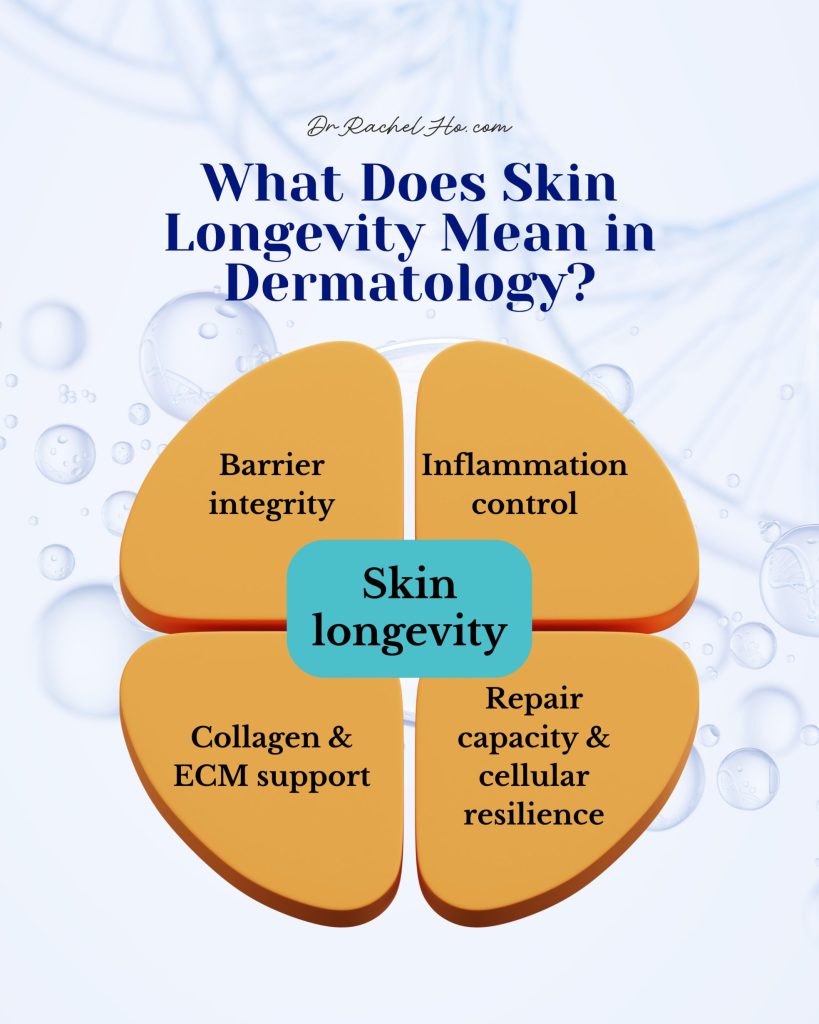
I’ve written separately about the science of skin longevity in What Is Skin Longevity? A Doctor’s Guide to Healthier Skin Aging. This article is more personal and reflects a more practical, clinical guide for my patients and readers. It is about what skin longevity means in my consultations, for my patients, and for anyone who wants to care for their skin in a more intelligent manner.
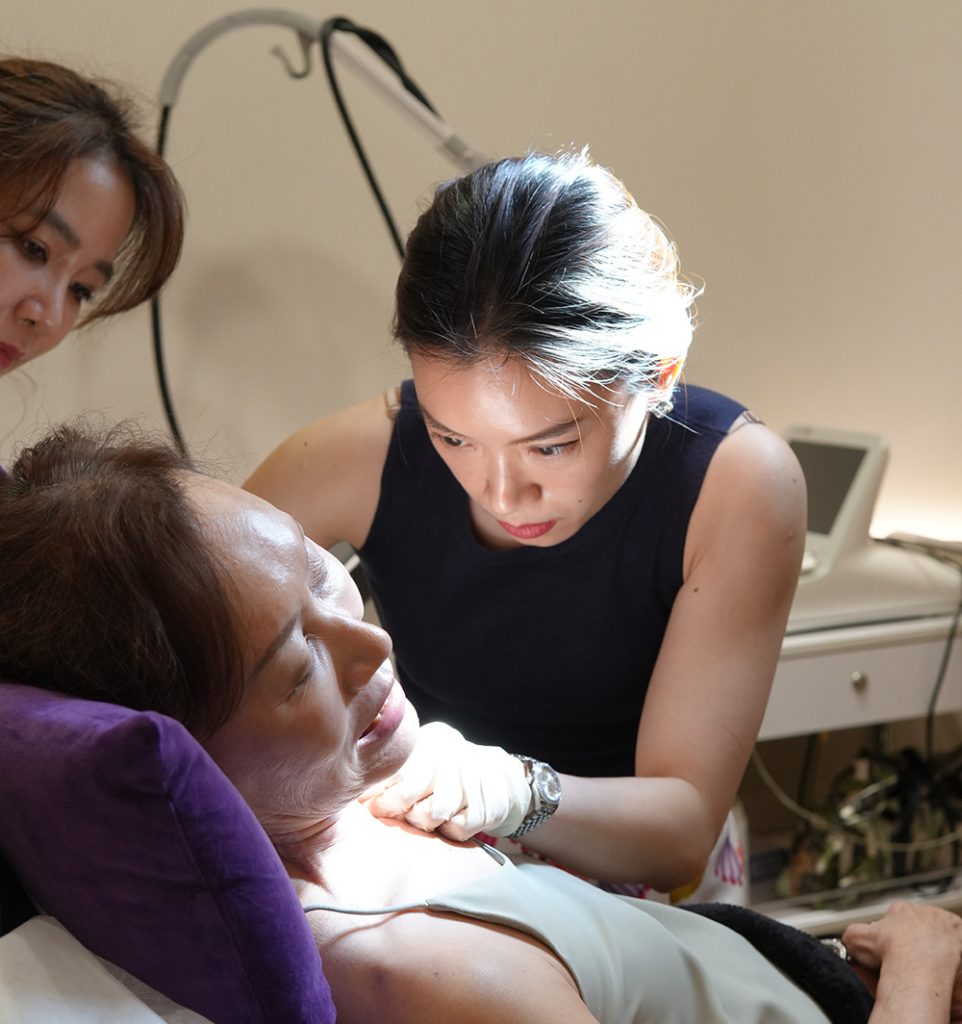
Skin longevity: For sense and safety
Ageing in the face and neck often involves more than a single layer due to their composite nature. The skin, fat compartments, ligaments, muscles and underlying bone all change with time, and this explains why concerns such as sagging or deepening laugh lines can rarely be explained by skin laxity alone. Other anatomical factors such as repositioning of the fat pads, volume changes and reduced skeletal support contribute to the final appearance.
For this reason, some patients may benefit from more than one type of intervention to optimise their results. The key, however, lies in the staging and spacing of the treatments they require. This is because certain combinations of treatments can work well together while others may increase the risk of complications such as burns, irritation or post inflammatory hyperpigmentation.
When a patient is assessed with a perspective on skin longevity, we can plan and stage for treatments in a safe, sustainable manner.
Skin longevity helps guide the order, intensity and timing of aesthetic treatments.
| Skin longevity focus | Why it matters | What it changes in treatment planning |
|---|---|---|
| Barrier strength | A healthy barrier reduces irritation and water loss | Repair first before stronger procedures |
| Inflammation control | Active inflammation can worsen recovery and pigmentation | Calm acne, rosacea, eczema or sensitivity first |
| Pigment stability | Pigment prone skin may darken after irritation | Choose safer settings and control triggers |
| Collagen remodelling | Collagen treatments need skin recovery capacity | Space treatments and allow time for response |
| Recovery capacity | Downtime affects confidence and work schedules | Match treatment intensity to lifestyle |
More predictable results
Predictability matters in medicine. It’s how we counsel patients about results and possible side effects. For patients who have a strong, functioning skin barrier, results are more predictable. For example, a patient with an intact skin barrier who undergoes skin hydrating treatments like hyaluronic acid skinboosters or hybrid cooperative complexes is more likely to experience more significant skin hydration, firmness and luminosity compared to a patient who may have ongoing eczema or disruption of the skin barrier that increases transepidermal water loss.
Related blogposts:
Skinboosters/水光针: All You Need to Know About It
Is Skinbooster by Juvederm Better than Hybrid Cooperative Complex?
Is Hybrid Cooperative Complex Injectable Moisturiser the Injectable Skincare of the Future?
When the skin is calm, stable and free from active inflammation, it is in a better position to respond to treatment. A good example is with collagen biostimulators or lasers. We want the the skin to direct its energy towards collagen remodelling, repair and visible improvement, rather than spending that recovery period trying to settle irritation. This is why I often prioritise barrier repair, pigment stability and inflammation control before embarking on specific aesthetic treatments.
Treatment Sequencing Examples
| Clinical goal | Often better to address first | Treatment options that may follow |
|---|---|---|
| Pigmentation | Sunscreen, pigment control, barrier repair | Pico laser, pigment laser, peels |
| Acne scars | Active acne control | RF microneedling, fractional laser, collagen stimulation |
| Dull dehydrated skin | Barrier repair and hydration | Skinboosters, gentle lasers, collagen treatments |
| Sagging | Identify skin laxity vs volume loss | HIFU, radiofrequency lifting, fillers, collagen biostimulators |
| Sensitive skin | Reduce irritation and simplify routine | Gentle procedures after skin stabilisation |
Faster recovery, less side effects.
Skin that is more stable tolerates skincare and treatments better and recovers faster and more smoothly after procedures. This is especially important for patients with melasma, adult acne, rosacea, eczema, sensitive skin or a long history of aesthetic treatments. In these patients, the recovery can be prolonged. Hence protecting their skin function and stability is an integral part of their treatment journey.
Recovering from downtime affects the commitments and the confidence to return to a demanding schedule for my patients. Hence, we also have to plan around the patient’s skin tolerance and life schedule. Sometime this means choosing a different intervention (e.g. collagen biostimulators or PDRN skinboosters instead of fractional CO2 laser to resurface acne scars).
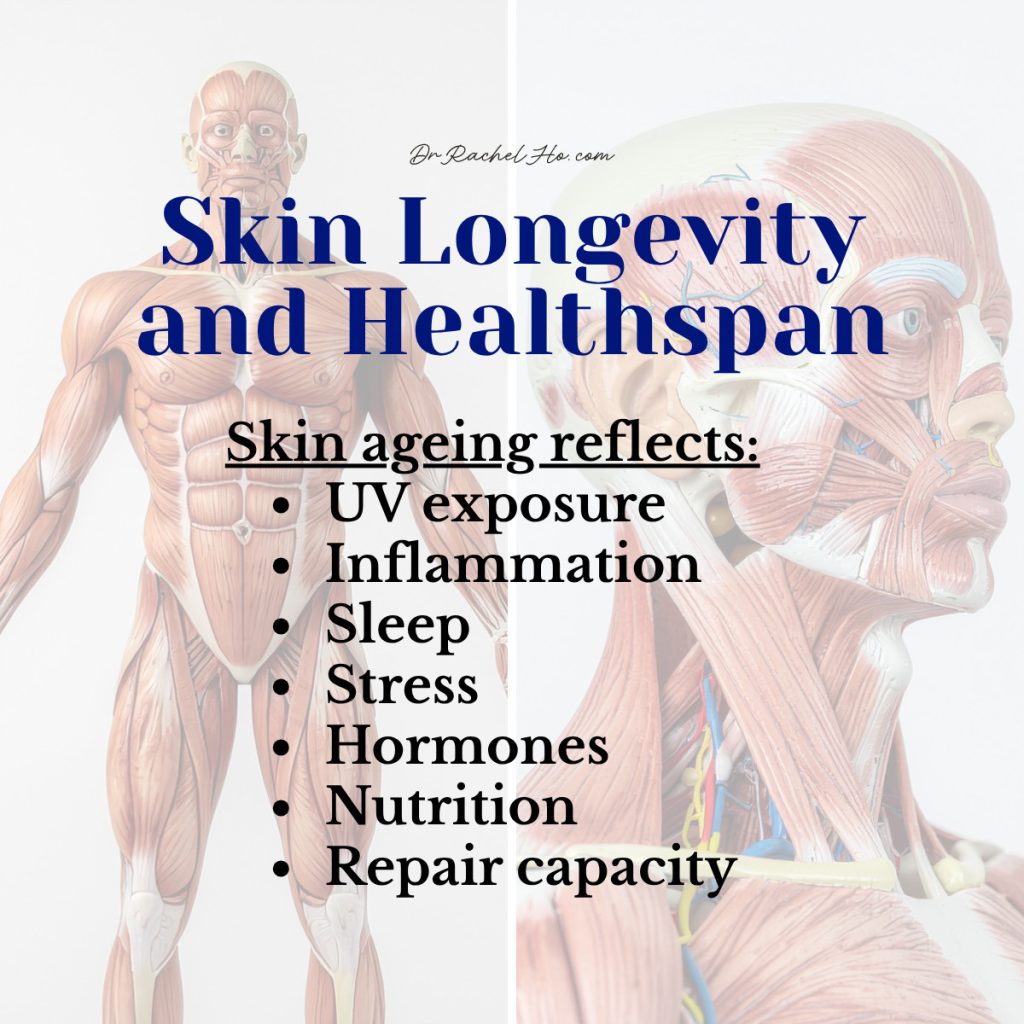
Skin longevity connects aesthetic medicine with the wider idea of healthy ageing.
Why skin longevity feels personal to me
My interest in skin longevity also comes from my belief in healthy ageing and healthspan. Medicine has become much more interested in how people can live longer with better function, rather than simply adding more years. Skin longevity is an extension of this philosophy for my patients and I.
Our skin is part of the body, and the way it ages reflects ultraviolet exposure, inflammation, sleep, stress, hormones, nutrition, habits and repair capacity. Skin longevity is one part of caring for the body with more intention.
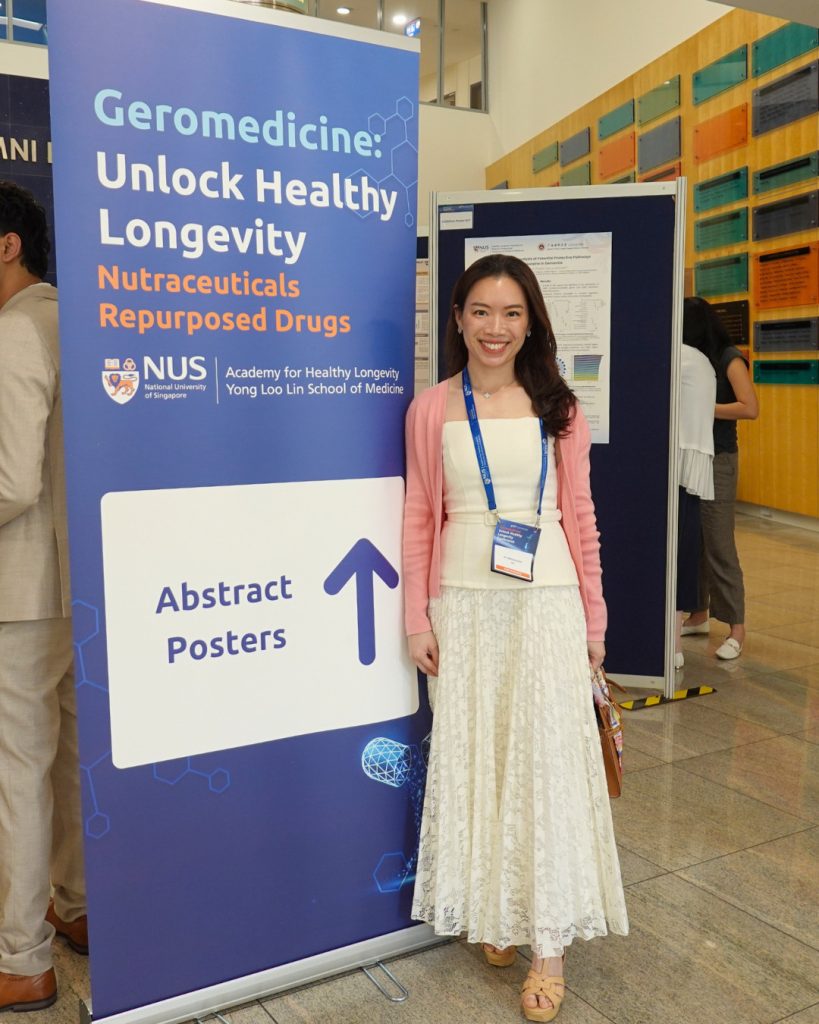
Dr Rachel Ho at NUS Geromedicine Longevity Conference 2026
Dr Rachel’s takeaway on skin longevity on a professional and personal front
Skin longevity, to me, represents a safer and more effective way to practise aesthetic medicine. It helps with planning treatments with safer sequencing, setting more realistic expectations and respecting the skin’s recovery capacity.
Personally, skin longevity is an extension of my belief in healthy ageing and healthspan. Our skin is part of our body, and caring for it well should feel like an extension of healthspan and overall longevity. Do you agree?

No Comments