


19 Jul Is Vegan or Plant PDRN as effective as Salmon PDRN?
Vegan aka phyto PDRN skincare science explained
Polydeoxyribonucleotides or PDRN, are having their moment in the field of dermatology, and it’s not a surprise that PDRN has also spun off skincare trends. Traditionally sourced from salmon sperm, PDRN skincare is hyped for its regenerative and skin healing benefits. Brands have latched on this hype with salmon PDRN products; and products like Rejuall, Rejuvenex and Medicube PDRN Pink Peptide Serum have gone viral on social media.
Related blogposts:
PDRN Skinbooster: What You Should Know Before Getting It
Salmon Sperm Facials and PDRN Skincare Explained
Rejuall VS Rejuvenex PDRN Creams Review

Examples of phyto or vegan PDRN skincare products: Ginseng e.g VT PDRN Essence; Rose e.g Lancome Absolue Longevity The Soft Cream; Green Tea e.g. Innisfree Retinol Green Tea PDRN Firming Serum; Rice e.g make p:rem Glutathione PDRN Glow Cream
A rising player in the PDRN skincare industry is vegan PDRN aka phyto PDRN. Derived from plant sources like roses, ginseng and green tea, vegan PDRN has been touted to be an alternative to salmon PDRN and without the controversies of animal harvested PDRN.
Related blogposts:
An Expert’s Guide to Trending Korean Skincare Ingredients
Viral Korean Pharmacy Skincare Review
K-beauty Skincare Trends for 2024
Best Korean Beauty Stores & Experiences in Seoul 2024
If you’re intrigued, this review on vegan PDRN discusses the science behind PDRN and whether vegan PDRN is as effective as salmon PDRN.

More about PDRN treatments in dermatology in PDRN Skinbooster: What You Should Know Before Getting It
FIRST, A RECAP: WHAT IS PDRN?
Polydeoxyribonucleotides are essentially DNA fragments. PDRN are typically obtained from the sperm of salmon or trout; and have been used to treat diabetic foot ulcers, autoimmune conditions, pigmentation, skin graft,and hair loss1-6. In aesthetic dermatology, PDRN injections treat conditions such as signs of ageing (e.g wrinkles, enlarged pores, skin texture) and scars7-12. PDRN injections (or PDRN Skinboosters) are popular in countries like Singapore and South Korea.
Related blogposts:
Are You a Sagger, Sinker or Wrinkler?
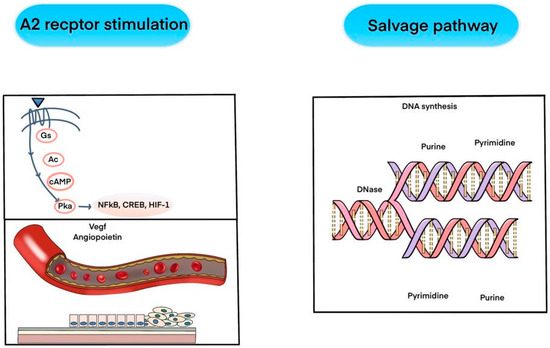
PDRN biological pathways. Image credit: Polynucleotides in Aesthetic Medicine: A Review of Current Practices and Perceived Effectiveness. Lee et al. Int J Mol Sci. 2024 Jul 27;25(15):8224.
HOW DOES PDRN WORK?
PDRN stimulates skin regeneration through two main mechanisms. The first mechanism is the stimulation of A2A receptors in fibroblasts, which reside mainly in the dermis13-15. The second mechanism of PDRN skin regeneration is the salvage pathway, which facilitates the recycling of DNA bases for a more energy-efficient way for cells to synthesize new DNA16.
As a result of these mechanisms, a cascade of events leading to reduction in inflammation, growth of new blood vessels, cell migration and growth, and tissue remodelling results17-25. Important to note that these studies were conducted with salmon derived PDRN; and injections to administer the polydeoxyribonucleotides.
View this post on Instagram
POPULARITY OF PDRN SKINCARE
The popularity of PDRN treatments has resulted in buzz and traction for PDRN as a skincare ingredient. This transition of PDRN from in-clinic to topical skincare is a natural progression of beauty trends; although the effects may differ greatly.
Skincare containing salmon PDRN has been consistently popular in the last few years in the cosmeceutical industry. Concerns about sustainability, cruelty and choices for vegan users has led to the introduction of plant sourced or phyto PDRN as alternatives to salmon PDRN in skincare
What is vegan PDRN?
WHAT IS VEGAN PDRN?
Vegan PDRN refers to DNA fragments from plants (known as phyto PDRN) or microorganisms (also referred to as L-PDRN); and aim to mimic the therapeutic and regenerative benefits of salmon PDRN.
Examples of Vegan PDRN used in skincare products
- Ginseng e.g VT PDRN Essence
- Papaya e.g Coscell Green Papaya PDRN Pore Ampoule
- Rice e.g make p:rem Glutathione PDRN Glow Cream
- Green Tea e.g. Innisfree Retinol Green Tea PDRN Firming Serum
- Rose e.g Lancome Absolue Longevity The Soft Cream
- Lactobacillus
PDRN WHAT ARE THE BENEFITS OF VEGAN PDRN
Vegan PDRN has been championed to deliver an array of benefits, similar to salmon PDRN skincare. Some of the supposed benefits of vegan PDRN include skin rejuvenation and repair for younger looking skin, enhanced skin barrier function, and reduction in inflammation for calming benefits. Vegan PDRN also avoids some of the controversies surrounding animal derived- DNA such as animal welfare and environmental sustainability.
Sounds good, but what does the evidence for vegan PDRN skincare show?
WHAT IS THE EVIDENCE FOR VEGAN PDRN SKINCARE?
The bulk of evidence for PDRN’s benefits to the skin (referenced above) come from studies involving salmon PDRN injected into the skin. Evidence for topical salmon PDRN on the skin in peer reviewed journals is much less. For vegan PDRN skincare, evidence is even more scarce and variable in quality; with different studies examining different sources of plant derived PDRN.
Here are some of the recent studies on vegan PDRN that I managed to locate:
- PDRN from Korean ginseng roots (Panax PDRN) seemed to activate the A2A receptor and cell proliferation in cell studies26. The same study on artificial 3D skin models showed that Panax PDRN application increased re-epithelialisation compared to controls26.
- PDRN extracted from Lactobacillus rhamnosus isolated from soybean (L-PDRN) was found to be smaller in size compared to salmon PDRN and (less than 100 bp vs 200 to 800bp)27; which MAY offer improved skin absorption. In the same study, L-PDRN was found to also exhibit A2A receptor activation and scavenging of DPPH, with antioxidant potential27.
THE PROBLEMS WITH VEGAN/ PHYTO PDRN: CURRENT STATE
Evidence for plant and microbial PDRN is mainly extrapolated from preclinical studies i.e. in vitro and ex vivo studies. As of July 2025, there are no published clinical trials on topical vegan PDRN in humans.
While certain types of PDRN from plants and micro-organisms like ginseng and Lactobacillus may mimic the cellular pathways of salmon PDRN, generalisations DO NOT apply to other plant sources of PDRN (PSA to skincare brands trying to ride on the PDRN trend!). Other issues like safety, dosing of vegan PDRN are still unclear, and more studies will be required to ascertain our understanding of phyto and L-PDRN.
Ultimately, as with any active ingredient and skincare, the effectiveness of vegan PDRN depends on the formula of the product. Factors such as concentration and stability can influence product performance.

More about trending K-beauty ingredients in this blogpost!
HOW DOES VEGAN PDRN COMPARE TO SALMON PDRN?
To answer the million dollar question: is Vegan/ Phyto PDRN as effective or superior to salmon PDRN skincare?
For now, there are no published trials that compared one versus the other, so the jury is still out there. There are a plethora of options for plant derived PDRN ingredients- from ginseng, Lactobacillus, cica, rice and green tea, especially from Korean skincare brands. However, evidence for plant PDRN for their supposed skincare benefits is still in its nascent stages.
I do think plant/ vegan PDRN is promising in the field of dermatology, but more research will be needed to solidify the hype and claims behind plant derived PDRN. What are your thoughts on this? Let me know in the comments!
References:
1. Polydeoxyribonucleotide Improves Peripheral Tissue Oxygenation and Accelerates Angiogenesis in Diabetic Foot Ulcers. Kim et al. Arch Plast Surg. 2017 Nov;44(6):482-489. doi: 10.5999/aps.2017.00801.
2. Polydeoxyribonucleotide Dermal Infiltration in Male Genital Lichen Sclerosus: Adjuvant Effects during Topical Therapy. Laino L, Suetti S, Sperduti I. Dermatol Res Pract. 2013;2013:654079. doi: 10.1155/2013/654079.
3. Novel Anti-Melanogenesis Properties of Polydeoxyribonucleotide, a Popular Wound Healing Booster. Noh TK, Chung BY, Kim SY, Lee MH, Kim MJ, Youn CS, Lee MW, Chang SE. Int J Mol Sci. 2016 Sep 1;17(9). pii: E1448. doi: 10.3390/ijms17091448.
4. Clinical evaluation of the trophic effect of polydeoxyribonucleotide (PDRN) in patients undergoing skin explants. A Pilot Study. Rubegni P, De Aloe G, Mazzatenta C, Cattarini L, Fimiani M. Curr Med Res Opin. 2001;17(2):128-31.
5. Evaluation of the efficacy of polydeoxyribonucleotides in the healing process of autologous skin graft donor sites: a pilot study. Valdatta L, Thione A, Mortarino C, Buoro M, Tuinder S. Curr Med Res Opin. 2004 Mar;20(3):403-8.
6. Therapeutic efficacy of autologous platelet-rich plasma and polydeoxyribonucleotide on female pattern hair loss. Lee SH, Zheng Z, Kang JS, Kim DY, Oh SH, Cho SB.Wound Repair Regen. 2015 Jan-Feb;23(1):30-6. doi: 10.1111/wrr.12250.
7. A Phase III, Randomized, Double‐Blind, Matched‐Pairs, Active‐Controlled Clinical Trial and Preclinical Animal Study to Compare the Durability, Efficacy and Safety Between Polynucleotide Filler and Hyaluronic Acid Filler in the Correction of Crow’s Feet: A New Concept of Regenerative Filler. Pak et al. Journal of Korean Medical Science 29, no. Suppl 3 (2014): S201–S209
8. Long‐Chain Polynucleotide Filler for Skin Rejuvenation: Efficacy and Complications in Five Patients. Park et al. Dermatologic Therapy 29, no. 1 (2016): 37–40.
9. A Randomized, Patient/Evaluator‐Blinded, Split‐Face Study to Compare the Efficacy and Safety of Polycaprolactone and Polynucleotide Fillers in the Correction of Crow’s Feet: The Latest Biostimulatory Dermal Filler for Crow’s Feet. Jeong et al. Journal of Cosmetic Dermatology 19 (2020): 1593–1599
10. Preliminary Prospective and Randomized Study of Highly Purified Polynucleotide vs Placebo in Treatment of Moderate to Severe Acne Scars. Araco and Araco. Aesthetic Surgery Journal 41, no. 7 (2021): NP866–NP874
11. Clinical Efficacy and Safety of Polynucleotides Highly Purified Technology (PN‐HPT®) and Cross‐Linked Hyaluronic Acid for Moderate to Severe Nasolabial Folds: A Prospective, Randomized, Exploratory Study. Araco eet al. Journal of Cosmetic Dermatology 22, no. 1 (2023): 146–155.
12. Effects of Polynucleotide Dermal Filler in the Correction of Crow’s Feet Using an Antera Three‐Dimensional Camera. Kim et al. Aesthetic Plastic Surgery 46, no. 4 (2022): 1902–1909
13. Hwang K.H., Kim J.H., Park E.Y., Cha S.K. An effective range of polydeoxyribonucleotides is critical for wound healing quality. Mol. Med. Rep. 2018;18:5166–5172.
14. Veronesi F., Dallari D., Sabbioni G., Carubbi C., Martini L., Fini M. Polydeoxyribonucleotides (PDRNs) From Skin to Musculoskeletal Tissue Regeneration via Adenosine A(2A) Receptor Involvement. J. Cell Physiol. 2017;232:2299–2307.
15. Thellung S., Florio T., Maragliano A., Cattarini G., Schettini G. Polydeoxyribonucleotides enhance the proliferation of human skin fibroblasts: Involvement of A2 purinergic receptor subtypes. Life Sci. 1999;64:1661–1674.
16. Effect of polydeoxyribonucleotides on human fibroblasts in primary culture. Sini et al. Cell Biochem. Funct. 1999;17:107–114.
17. The Effects of Polydeoxyribonucleotide on Wound Healing and Tissue Regeneration: A Systematic Review of the Literature. Colangelo et al. Regen. Med. 2020;15:1801–1821.
18. Wound Healing Is Accelerated by Agonists of Adenosine A2 (Gαs-Linked) Receptors. Montesinos et al. J. Exp. Med. 1997;186:1615–1620.
19. Polydeoxyribonucleotides Enhance the Proliferation of Human Skin Fibroblasts: Involvement of A2 Purinergic Receptor Subtypes. Thellung et al. Life Sci. 1999;64:1661–1674.
20. PCL/Gelatin Nanofibers Incorporated with Starfish Polydeoxyribonucleotides for Potential Wound Healing Applications. Kim et al. Mat. Design. 2023;229:111912
21. Current Practices and Perceived Effectiveness of Polynucleotides for Treatment of Facial Erythema by Cosmetic Physicians. Lee et al. Skin Res. Technol. 2023;29:e13466.
22. Polydeoxyribonucleotides (PDRNs) From Skin to Musculoskeletal Tissue Regeneration via Adenosine A2A Receptor Involvement. Veronesi et al. J. Cell. Physiol. 2017;232:2299–2307.
23. Adenosine A2A Receptor (A2AR) Is a Fine-Tune Regulator of the Collagen1:Collagen3 Balance. Perez-Aso et al. Purin. Signal. 2013;9:573–583.
24. Polydeoxyribonucleotide Exerts Opposing Effects on ERK Activity in Human Skin Keratinocytes and Fibroblasts. Shin et al. Mol. Med. Rep. 2023;28:148.
25. Polydeoxyribonucleotide Improves Tendon Healing Following Achilles Tendon Injury in Rats. Kang et al. J. Orthop. Res. 2018;36:1767–1776.
26. Analysis of Skin Regeneration and Barrier-Improvement Efficacy of Polydeoxyribonucleotide Isolated from Panax Ginseng (C.A. Mey.) Adventitious Root. Lee et al. Molecules. 2023 Oct 24;28(21):7240.
27. First Report on Microbial-Derived Polydeoxyribonucleotide: A Sustainable and Enhanced Alternative to Salmon-Based Polydeoxyribonucleotide. Chae et al. Curr Issues Mol Biol. 2025 Jan 9;47(1):41

Molly
Posted at 16:43h, 10 AugustThanks for giving us unbiased and scientific forward views. It helps declutter from the millions of influencer-led posts.
Frances Black
Posted at 09:41h, 10 AugustIm in to know more about your views on skin care