


17 Jan PDRN Skinboosters: What You Should Know Before Getting It
Rejuran is a family of injectable polynucleotide (PN) treatments designed to optimize tissue quality rather than alter facial structure. While human studies demonstrate measurable improvements in fine lines, skin texture, hydration, and elasticity, Rejuran is not a universal remedy for all the signs of skin ageing. Concerns such as structural hollowing, advanced skin laxity, heavy pigmentation, and true eye bags require fundamentally different clinical approaches2,4,5,7.
Although Rejuran skin boosters and skincare have been hugely popular, the published clinical literature on polynucleotides is actually fairly limited. A 2025 systematic review of 9 aesthetic studies (involving 219 patients) graded the available evidence as low-to-moderate quality, noting that variations in product formulation, injection technique, and outcome measurements can limit how doctors can apply the findings2.
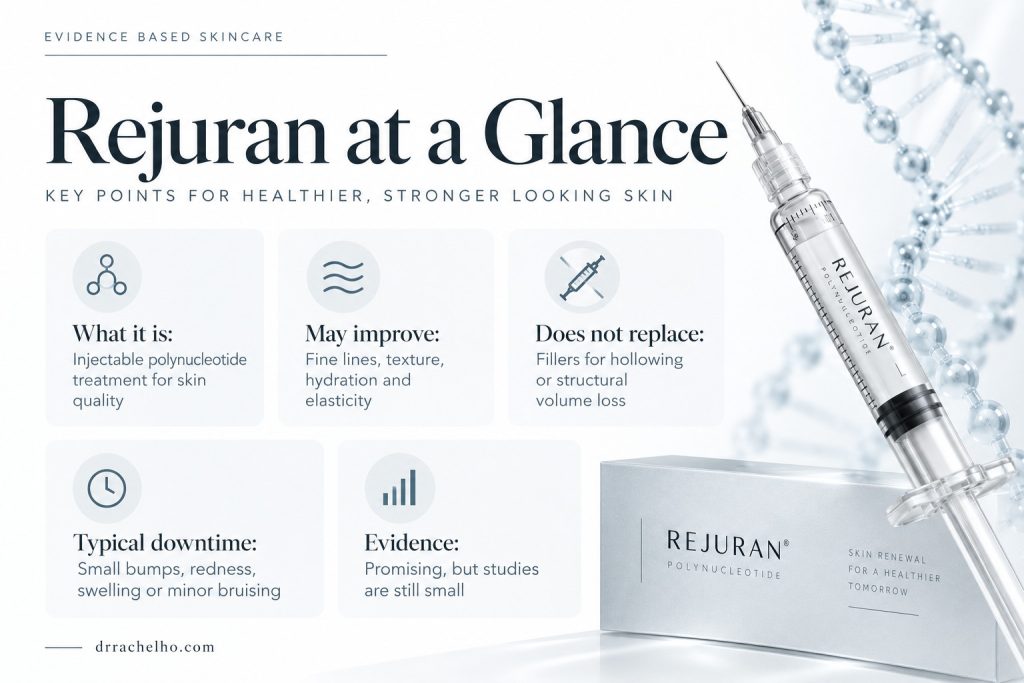
Rejuran is a family of injectable polynucleotide treatments studied for aspects of skin quality. This overview summarises potential benefits, expected injection reactions and the limitations of the available evidence.
Rejuran at a Glance
FAQ about Rejuran skin boosters
| FAQ about Rejuran skin boosters | Evidence-Based Answer |
|---|---|
| What is Rejuran? | A brand family of injectable polynucleotide (PN) preparations used for skin quality and tissue repair. |
| Is Rejuran PN or PDRN? | Rejuran is a PN. While PN and PDRN are both DNA-derived polymers, they differ primarily in molecular weight. |
| What does it treat? | Clinically studied for fine lines, skin texture, hydration, elasticity, and specific superficial periorbital concerns2,4,5. |
| Does it restore volume? | No. Rejuran improves tissue health. Structural hollowing or contour loss requires dermal fillers or biostimulators7. |
| What is the downtime? | Transient localized swelling (raised injection bumps), erythema (redness), tenderness, or minor bruising2,3,5,8. |
| How strong is the evidence? | Findings are promising for skin quality, but current studies are generally small with varying methodologies2. |
What is Rejuran?
Rejuran is a specific brand name for injectable polynucleotides—highly purified, DNA-derived polymers typically extracted from salmon or trout germ cells¹.
While “salmon DNA injections” is a popular search term, it lacks scientific precision. Often marketed generally as a “skin booster,” Rejuran is best understood by evaluating the exact formulation, molecular weight, and targeted facial area of the injection.
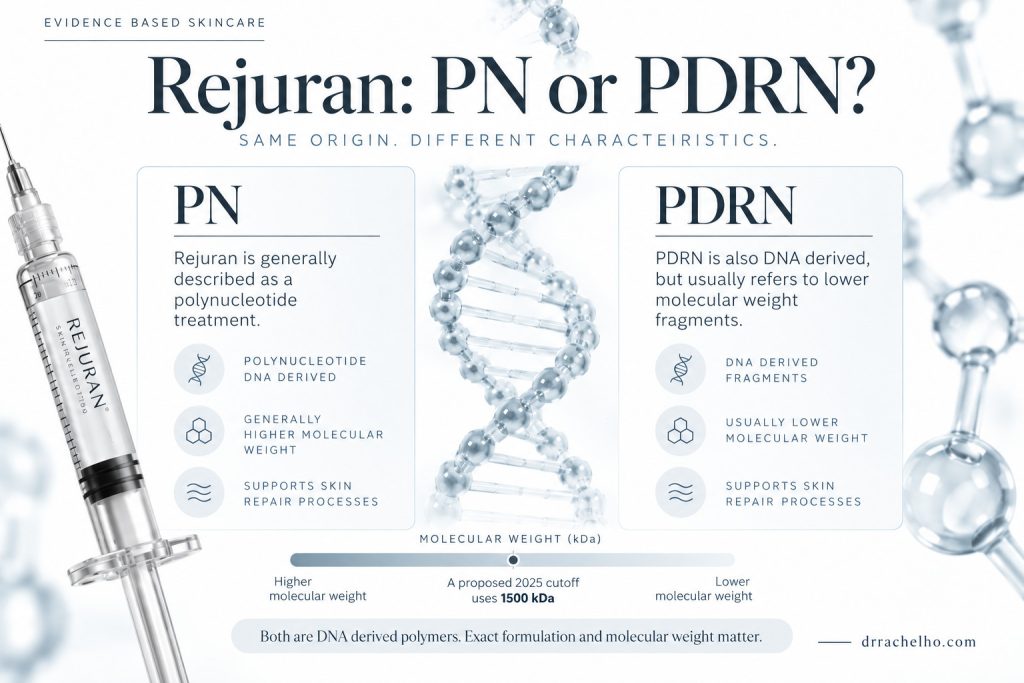
Rejuran is described as a PN injectable, while PDRN generally refers to lower molecular weight DNA fragments. The 1500 kDa boundary shown is a proposed naming convention rather than a regulatory standard.
Is Rejuran the Same as PDRN?
Polynucleotide (PN) and polydeoxyribonucleotide (PDRN) are frequently, and incorrectly, used interchangeably in both commercial marketing and scientific literature. This overlap explains why “Rejuran PDRN” remains a highly searched term¹.
To standardise terminology, a 2025 clinical review proposed the “Marques Cutoff,” classifying DNA polymers below 1500 kDa as PDRN, and those at or above 1500 kDa as PN¹. Because this is a proposed naming convention rather than a strict regulatory standard, patients should always ask their doctor exactly which formulation and molecular weight is being injected.
How Does Rejuran Work?
At a cellular level, PN and PDRN influence tissue repair and extracellular matrix production through two primary biological pathways: nucleotide recycling (the “salvage pathway”) and adenosine A2A receptor signaling¹.
However, laboratory mechanisms in a petri dish do not perfectly predict visible results on a human face. Clinical studies evaluating the exact finished formulation are essential to determine the real-world aesthetic benefit, ideal dosing, and longevity of the treatment¹,².
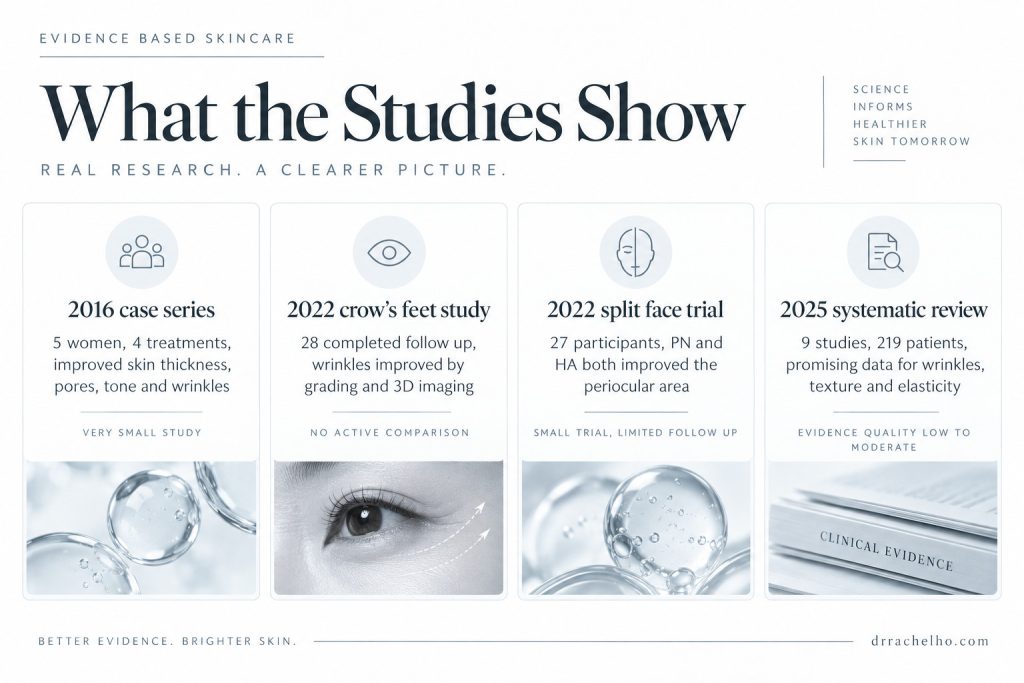
The clinical evidence discussed in this Rejuran review includes small PN studies and a systematic review involving 219 patients. Findings suggest potential skin quality benefits, although differences in formulations, study design and outcome measurements limit how broadly the results can be applied.
Does Rejuran Work? What Do the Studies on Polynucleotides Show?
Studies on polynucleotides
| Clinical Study | Primary Finding | Important Limitation |
|---|---|---|
| 2016 Case Series | Five women received four long-chain PN treatments spaced two weeks apart, showing improvements in skin thickness, pores, tone, and wrinkles³. | Extremely small sample size (n=5); no control group. |
| 2022 Crow’s Feet Study | 28 participants completed follow-up. Wrinkle grading and 3D camera measurements showed improvement 18 weeks post-treatment⁴. | No active comparison arm. Measured melanin (pigment) levels did not change significantly. |
| 2022 Split-Face Trial | 27 participants received PN on one side and non-crosslinked HA on the other. Both showed similar overall improvement, though PN performed slightly better in specific elasticity and pore volume metrics⁵. | Small sample size; restricted to the periocular area; limited follow-up period. |
| 2025 Systematic Review | 9 studies (219 patients) reported promising data for wrinkles, texture, and elasticity². | Included studies were of low/moderate quality with inconsistent products and techniques. |
Note: A frequently cited 2014 PN trial was retracted in 2016 due to undisclosed sponsor funding and conflicts of interest⁹. I have excluded it from this review to maintain evidence-based integrity.
Current literature supports cautious optimism for specific skin quality improvements. However, confidence in the magnitude and consistency of these benefits remains limited until larger, better-controlled trials are published².
What Results Are Realistic After Rejuran?
Rejuran is primarily studied for refining fine lines, minimizing pore appearance, and improving skin texture, hydration, and elasticity²,⁴,⁵.
It is crucial to understand what Rejuran cannot do:
- Pigmentation: The 2022 crow’s feet study confirmed no significant change in measured melanin⁴. Smoother skin texture should not be confused with active pigment clearance. Pigmentation requires targeted lasers or chemical peels.
- Facial Hollows: A 2026 review explicitly separates the structural volume replacement provided by hyaluronic acid (HA) fillers from the superficial skin quality improvements provided by PN⁷.
Rejuran Before and After Results
In clinical studies, results are assessed over weeks to months. The crow’s feet study measured its primary endpoints at 18 weeks, while the split-face trial evaluated outcomes after a complete three-session course⁴,⁵. In my clinic, patients are reviewed with standardised photography at 4-6 weeks apart after their Rejuran skin boosters to review their results.
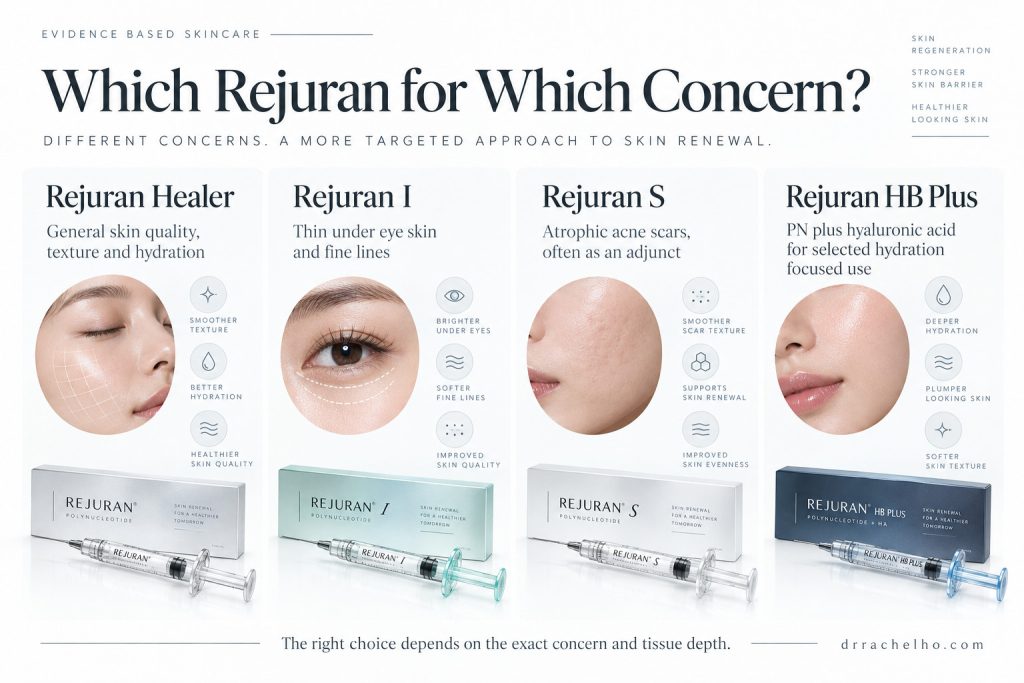
Rejuran Healer, Rejuran I, Rejuran S and Rejuran HB Plus are discussed in relation to different treatment concerns. The review outlines questions to ask about the formulation, treatment area and whether other procedures may be needed. Product illustrations are not manufacturer photographs.
Rejuran Healer, Rejuran I, Rejuran S, and Rejuran HB Plus
Rejuran skin boosters compared
| Rejuran Product | Question to Ask Your Doctor |
|---|---|
| Rejuran Healer | Which specific skin concern (e.g., global texture, hydration) is being targeted? |
| Rejuran I | Are my under-eye concerns caused by fine lines (treatable) or structural hollowing/pigment (untreatable with PN)? |
| Rejuran S | What type of acne scar is this targeting, and will I also need subcision or laser resurfacing? |
| Rejuran HB Plus | Why has this specific HA/PN blend been selected for my skin type? |
The Rejuran portfolio includes specialised formulations designed for different inidications, tissue depths and viscosities.
Rejuran for Dark Eye Circles and Under Eyes
Periorbital concerns are highly complex, often resulting from a combination of thin crepey skin, structural tear trough hollowing, true dermal pigment, and vascular pooling.
While Rejuran I is highly effective for thickening fragile periorbital skin and softening fine lines, it will not restore volume to a deep tear trough or erase melanin⁵,⁷. If your primary concern is shadowing or established eye bags, review my clinic’s guide to dark eye circles and under eye treatment to ensure you receive an accurate anatomical diagnosis before proceeding with injections.
Rejuran for Acne Scars
Rejuran S is a highly viscous formulation frequently discussed for atrophic acne scarring. However, published evidence for PN as a standalone scar treatment is limited².
Different scar architectures—rolling, boxcar, and ice pick—demand different interventions. Rejuran S is best utilized as an adjunct to physically release tethered tissue. My clinic’s scar treatment guide explains how we integrate injectables with subcision and energy-based resurfacing for optimal scar revision.
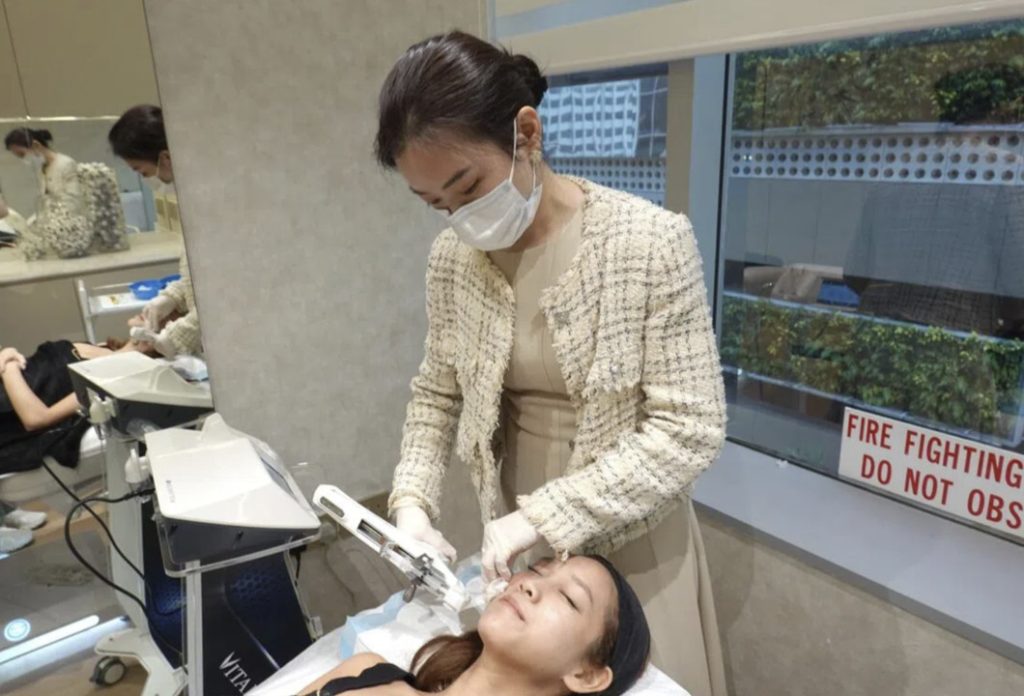
What Happens During a Rejuran Skin Booster Treatment?
In my clinic, Rejuran skin boosters are delivered via multiple, highly superficial intradermal micro-injections. Because the product is placed precisely within the dermis, it typically leaves small, visible raised bumps (papules) resembling mosquito bites immediately following the procedure³,⁶. For more about Rejuran skin booster including other polynucleotide treatments at The Skin Longevity Clinic, please refer to Polynucleotide Skin Boosters in Singapore.
Comfort levels vary depending on the specific formulation and facial area, but thorough topical numbing and meticulous injection techniques make the process highly tolerable.
Side Effects, Risks, and Downtime of Rejuran Skin Boosters
Expected transient reactions include localized injection bumps, mild erythema (redness), swelling, and occasional bruising from the micro injections of Rejuran skin boosters²,³,⁵,⁸. For a daily recovery timeline after Rejuran skin boosters, please see my clinic’s PN and PDRN skin booster recovery guide.
While small trials report no serious adverse events, procedural safety relies entirely on sterile preparation, accurate anatomical knowledge, and disciplined injection technique⁸.
How Many Sessions Are Needed?
Protocols vary across the clinical literature. The initial case series utilized four sessions spaced two weeks apart, while the randomized periocular trial used three³.
A survey of 235 Korean dermatologists noted that three sessions spaced four weeks apart is the most common practice pattern⁶. I recommend establishing a clear, multi-session treatment plan with a designated clinical review point to objectively measure progress before committing to further maintenance.
How Long Does Rejuran Last?
The aesthetic longevity of Rejuran depends entirely on the patient’s baseline skin biology, ongoing UV exposure, and chronological aging rate². Because PN stimulates the body’s native repair mechanisms rather than depositing a static filler material, the results are integrated into your skin’s natural lifecycle. Maintenance sessions are typically assessed and recommended at the six- to twelve-month mark.
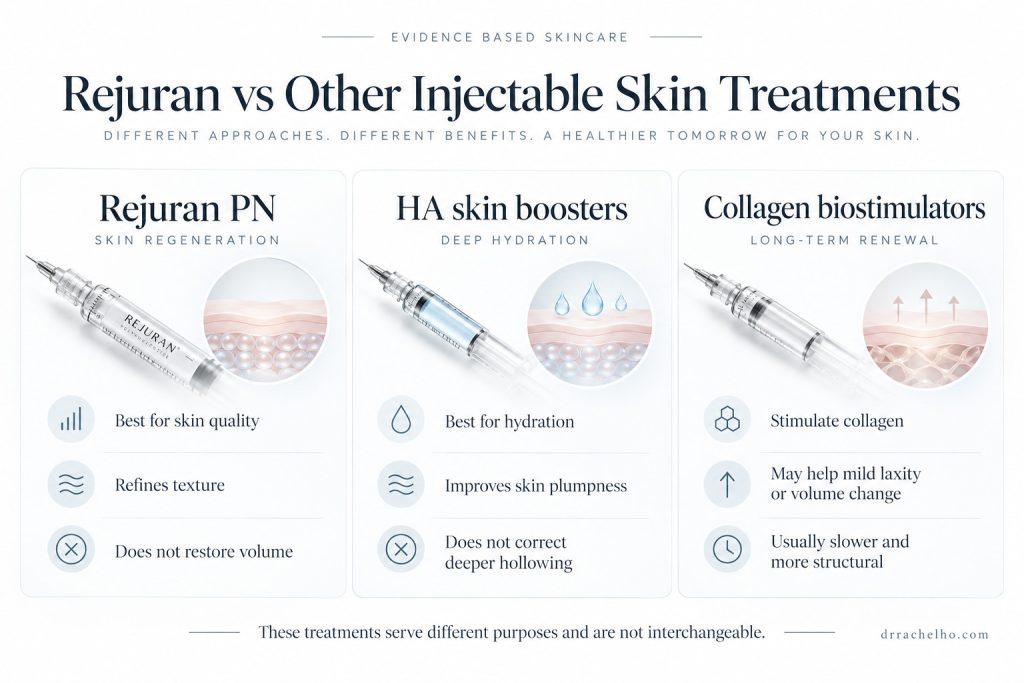
This comparison places Rejuran PN alongside hyaluronic acid skin boosters and collagen biostimulators. The article explains their different treatment goals and why these injectable categories should not be treated as interchangeable.
Rejuran vs. HA Skin Boosters and Collagen Biostimulators
These injectable categories serve fundamentally different biological purposes:
- Rejuran (PN): Optimises cellular health, refines texture, and repairs damaged tissue.
- Hyaluronic Acid (HA) Skin Boosters: Act as internal moisturizers to deeply hydrate the epidermis and dermis.
- Collagen Biostimulators (e.g., PDLLA): Induce robust collagen synthesis to gradually correct mild volume loss and skin laxity.
For a comprehensive breakdown of these modalities, review The Skin Longevity Clinic’s comparison of ECM, hyaluronic acid, PDRN, and collagen biostimulators, alongside our specific guides to HA skin boosters and PDLLA skin boosters.
Injectable Rejuran vs. Topical PDRN Skincare
Injectable PN physically bypasses the skin barrier to deposit regenerative molecules directly into the dermis. Topical PDRN serums, creams, and “needleless facials” rely on vastly different delivery mechanisms and tissue exposures. Clinical evidence supporting injectable PN cannot be used to validate the efficacy of a topical cosmetic cream¹,².
To explore the clinical data on topical formulations, read my guide to PDRN skincare and needleless Rejuran, as well as my analysis of vegan and plant PDRN.
My View on Rejuran Skin Boosters
In my experience, Rejuran skin boostsers are an effective treatment for skin ageing, enlarged pores, scars and dry skin. Salmon PN and PDRN have highly plausible biological rationale, although clinical research is somewhat limited. Most of the current research on PN and PDRN are categorised as low-to-moderate quality , highlighting the need for larger, highly standardized trials².
The key to best results from Rejuran skin boosters is dependent on diagnostic accuracy and patient selection- PDRN and PN is effective for skin quality treatment, but it does not treat structural hollowing, heavy pigmentation, and severe laxity.
References
- Marques C, et al. From Polydeoxyribonucleotides (PDRNs) to Polynucleotides (PNs): Bridging the Gap Between Scientific Definitions, Molecular Insights, and Clinical Applications of Multifunctional Biomolecules. Biomolecules. 2025;15(1):148.
- Lampridou S, et al. The Effectiveness of Polynucleotides in Esthetic Medicine: A Systematic Review. Journal of Cosmetic Dermatology. 2025;24(2):e16721.
- Park KY, et al. Long Chain Polynucleotide Filler for Skin Rejuvenation: Efficacy and Complications in Five Patients. Dermatologic Therapy. 2016;29(1):37-40.
- Kim JH, et al. Effects of Polynucleotide Dermal Filler in the Correction of Crow’s Feet Using an Antera Three Dimensional Camera. Aesthetic Plastic Surgery. 2022;46(4):1902-1909.
- Lee YJ, et al. Comparison of the Effects of Polynucleotide and Hyaluronic Acid Fillers on Periocular Rejuvenation: A Randomised, Double Blind, Split Face Trial. Journal of Dermatological Treatment. 2022;33(1):254-260.
- Rho NK, et al. A Survey on the Cosmetic Use of Injectable Polynucleotide: The Pattern of Practice Among Korean Dermatologists. Journal of Cosmetic Dermatology. 2024;23(4):1243-1252.
- Khan RS, Hafeez K. Hyaluronic Acid Fillers Versus Polynucleotides for Under Eye Rejuvenation. Journal of Clinical Medicine. 2026;15(13):4971.
- Goodman GJ, et al. Facial Aesthetic Injections in Clinical Practice: Pretreatment and Posttreatment Consensus Recommendations to Minimise Adverse Outcomes. Australasian Journal of Dermatology. 2020;61(3):217-225.
- Editor, Journal of Korean Medical Science. Notice of Retraction: Pak CS, et al. A Phase III, Randomised, Double Blind, Matched Pairs, Active Controlled Clinical Trial and Preclinical Animal Study… Journal of Korean Medical Science. 2016;31(2):330.

Pingback:Rejuran Treatment: An Award-Winning Global Diplomat’s Insights - Vorelia
Posted at 18:44h, 23 January[…] 6 to 12 months6. It also improves skin texture and hydration, making it a top choice for skin care7. Plus, it focuses on natural regeneration, unlike traditional fillers, for a more natural […]
Pingback:Berminat Suntik DNA Salmon? Ini Dia Manfaat dan Kisaran Biayanya – Good Doctor | Tips Kesehatan, Chat Dokter, Beli Obat Online
Posted at 02:15h, 13 June[…] memiliki kemampuan untuk membalikkan kerusakan akibat sinar UV. Pendiri La Clinic, Dr. Rachel Ho mengatakan jika Rejuran dapat meningkatkan perbaikan DNA dan berfungsi sebagai pembersih produk […]
Pingback:I Injected Salmon Sperm into my face. - Suns N' Roses
Posted at 23:00h, 19 September[…] Sites Referenced:This is an interesting reference on healing effects of PDRNMore in PN/PDRNAmazing article on PN […]
Pingback:We Investigate ‘Baby Skin’ Salmon Sperm Injections – SHORTHAIRSTYLES
Posted at 19:06h, 29 July[…] growth. “Blood vessels are the highway for oxygen and nutrients for cells to grow and repair,” Dr Rachel Ho, founder of La Clinic says. This leads to a thicker skin barrier that becomes more resilient against irritation. Combined with […]
Pingback:Perawatan Yang Perlu Dilakukan Pasca Rejuran Healer | Privee Clinic
Posted at 10:06h, 18 June[…] Rejuran Healer pada dasarnya adalah prosedur penyembuhan kulit, dibutuhkan hingga 4 minggu untuk melihat perbaikan yang terlihat pada kulit. Butuh waktu sekitar 4 minggu bagi PDRN untuk mengambil efek dan memperbaiki kulit dari dalam. Perawatan ini paling baik dilakukan 3 hingga 4 kali, 2 hingga 4 minggu terpisah. Setelah itu, perawatan dapat diulangi setiap 6 – 9 bulan sekali untuk pemeliharaan. […]