


19 Sep Salicylic Acid for Acne: Benefits, Cleansers and Serums
Salicylic Acid for Acne and Blackheads: Benefits, Products and How to Use It
Among my patients, blackheads and whiteheads that keep returning oily skin can make building a skincare routine feel like a frustrating game of trial and error. You might be considering salicylic acid for the first time, or wondering why a cult-favorite product that transformed someone else’s skin hasn’t done much for yours. Understanding exactly how salicylic acid works in dermatology, how to use it, and when it’s time to seek a different approach can make your path to clearer skin so much simpler. This doctor’s guide to salicylic acid skincare aims to help you understand how to pick a salicylic acid skincare and fit it into your skincare routine.
Salicylic Acid at a Glance
Salicylic Acid FAQ
| FAQ about salicylic acid | Evidence based answer |
|---|---|
| What is salicylic acid? | An oil soluble exfoliating ingredient commonly known as a beta hydroxy acid, or BHA¹. |
| Benefits of salicylic acid skincare | Salicylic acid helps clear blocked pores and blackheads, and can improve mild acne¹,². |
| How does salicylic acid work? | Salicylic acid loosens the connections between surface skin cells, encouraging shedding. Its affinity for lipids helps it act within oily follicles¹. |
| Typical salicylic acid skincare concentration | 0.5% to 2% salicylic acid in everyday acne products. Stronger salicylic acid preparations used for in-clinic chemical peels, warts and other medical indications¹,⁶. |
| Common salicylic acid product formats | Cleansers, serums, liquid exfoliants and pads. Cleansers are rinsed away, while other products may be designed to remain on the skin⁷,⁸,⁹,¹⁰,¹². |
| What matters beyond the percentage for salicylic acid skincare? | The complete formulation, pH, additional exfoliating ingredients and application instructions¹,⁶. |
| How should I start salicylic acid skincare? | Introduce one product at a time and follow the product directions. Check the recommended frequency and assess tolerability before adding more exfoliating products⁷,⁸. |
| Possible side effects of salicylic acid skincare | Dryness, stinging, redness and peeling. If these symptoms develop, stop the salicylic acid product and focus on barrier repair skincares¹,⁶,⁸. |
| Can I combine salicylic acid with other actives? | Check the specific formulas and instructions, particularly when using retinoids or other exfoliating acids. |
| Supporting skincare for salicylic acid | Focus on moisturisers and barrier repair skincare. Keep salicylic acid away from the eyes and damaged or irritated skin⁷,⁸. |
| Salicylic acid in pregnancy and breastfeeding | Limited topical use may be suitable after reviewing the product with your doctor. Prolonged application over large areas or under occlusive dressings are to be discussed with your doctor¹⁵. |
| When salicylic acid skincare falls short | Seek assessment for persistent acne, especially if scaring, cysts and post inflammatory hyperpigmentation develop. Prescription treatment or a selected chemical peel may be required¹,²,¹⁷. |
What is salicylic acid?
Salicylic acid is an oil-soluble exfoliating ingredient that penetrates deep into the pores to loosen blockages and improve acne¹,². Cosmeceuticals or over-the-counter acne products typically contain concentrations between 0.5% and 2% salicylic acid, whereas much stronger preparations are reserved for specific medical treatments in the clinic like chemical peels¹,⁶.
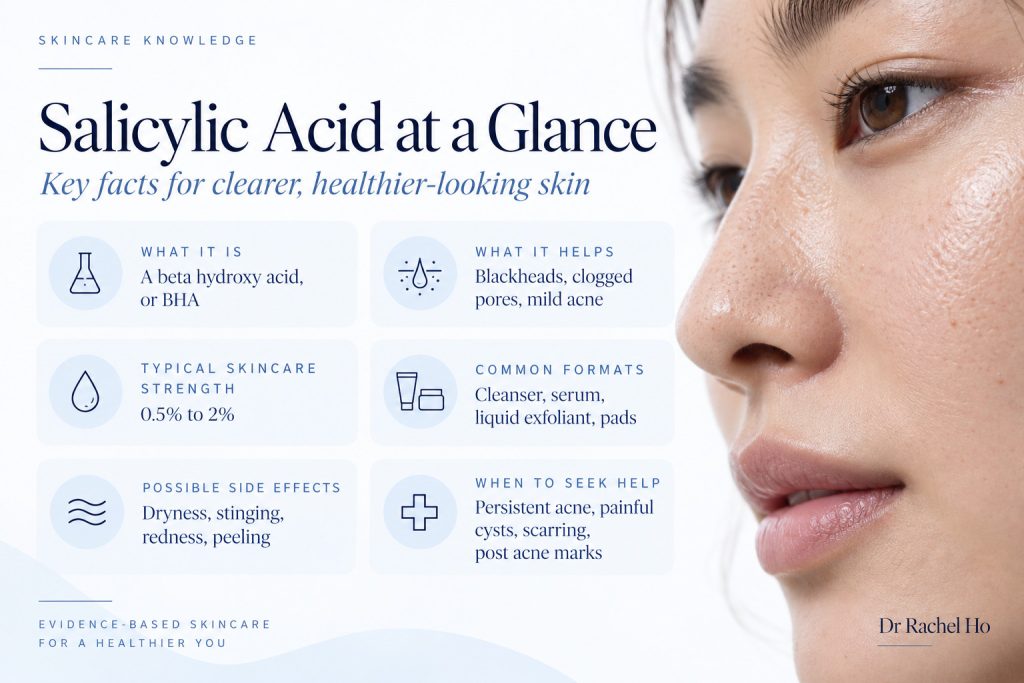
Everyday acne products commonly contain 0.5% to 2% salicylic acid. Choosing a product involves balancing its benefits for blocked pores against possible dryness, stinging, redness and peeling.
What does salicylic acid do for the skin?
Salicylic acid belongs to a class of skincare ingredients known as beta hydroxy acids, or BHAs¹. Unlike water-soluble acids, its unique affinity for lipids (oils) allows it to bypass the skin’s surface oil and act directly within oily follicles¹. There, salicylic acid loosens the connections between dead skin cells in the outer layer, encouraging them to gently shed rather than piling up inside the pore¹.
These oil-dissolving properties make it an ideal choice for treating comedones (i.e. blackheads and clogged pores) and oily skin¹. If you’d like a deeper dive into how this compares to other options, my guide to acids in skincare and chemical exfoliation explains exactly how BHAs differ from glycolic, lactic, and other exfoliating acids.
Beyond physical exfoliation, research has shown that salicylic acid can also influence lipid production and dampen inflammatory signaling in cultured sebocytes which are the cells that sebum in our skin³.
Does salicylic acid help acne and blackheads?
Salicylic acid is recognised by acne guidelines in the US as a useful option for acne while allowing room for tailored, individual treatment decisions². However, in those same acne guidelines, treatments like benzoyl peroxide and topical retinoids received stronger clinical recommendations compared to salicylic acid due to their more robust evidence.
Systematic reviews do highlight clear benefits from salicylic acid in several studies, although these findings are limited by the certainty and consistency of the evidence across the board⁴,⁵. Because formulations, overall concentrations, and study designs vary so wildly, we cannot assume results or findings from a single product or trial to hold for all salicylic acid skincare for everyone⁴,⁵.
For mild acne, congestion, and blackheads, salicylic acid is an effective and economical skincare ingredient to introduce to your routine¹,². However, if you are dealing with painful deeper cysts, developing scars, or persistent inflammatory acne, your skin deserves a medical assessment to address the pathogenesis of acne rather than focusing on harsher exfoliation². Please refer to my doctor’s guide to acne for in-depth look at acne and treatments.
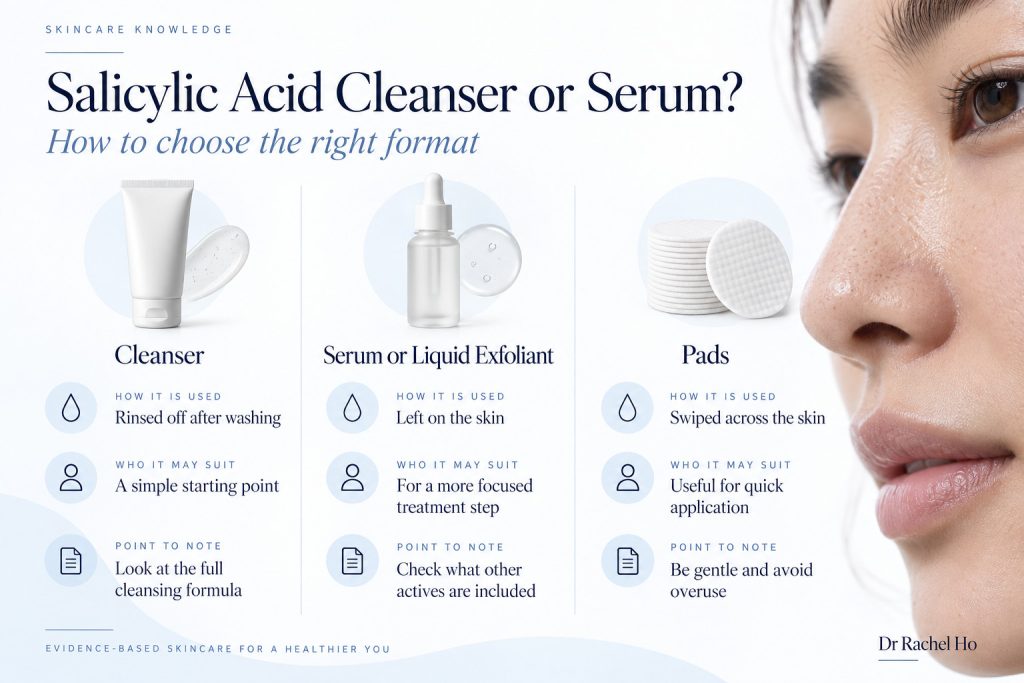
Salicylic acid cleansers are rinsed away, while serums and liquid exfoliants are generally left on the skin. Compare the complete formula and application instructions alongside the percentage on the label.
Salicylic acid cleanser or serum: which should you choose?
A salicylic acid cleanser is designed to be rinsed away after a short contact time, whereas a serum or liquid exfoliant remains active on the skin⁷,⁸,⁹,¹⁰. Therefore, in choosing salicylic acid skincare, the vehicle, format, concentration and intended usage factor in the decision making⁶.
Types of salicylic acid skincare
| Salicylic acid format | How it is used | What to consider |
|---|---|---|
| Cleanser or face wash | Applied during cleansing and thoroughly rinsed off⁹,¹⁰. | Look at the accompanying cleansing ingredients and carefully follow the washing instructions to avoid stripping the skin’s essential lipids. |
| Serum or liquid exfoliant | Applied after cleansing and left on the skin to absorb⁷,⁸. | Check the formula for other active ingredients and review brand advice regarding combining products. |
| Exfoliating pads | Used to apply a liquid formula by swiping the pad over the skin¹². | Examine the full formula and swipe gently across the face rather than aggressively scrubbing. |
Salicylic acid’s concentration, overall formulation, and pH level completely dictate how it behaves on your skin¹,⁶.
Keep in mind that professional chemical peels utilise vastly different medical preparations and application protocols compared to your everyday skincare¹. My chemical peel review explores their benefits, risks, and recovery, including when a clinical peel might be the best step for persistent congestion or acne.
Popular salicylic acid skincare 2026: a closer look at the formulas
Here’s a list of popular salicylic acid skincare for 2026. The ingredient list and product information below was checked against official product pages in August 2026. These examples illustrate current formulations and are not endorsements.
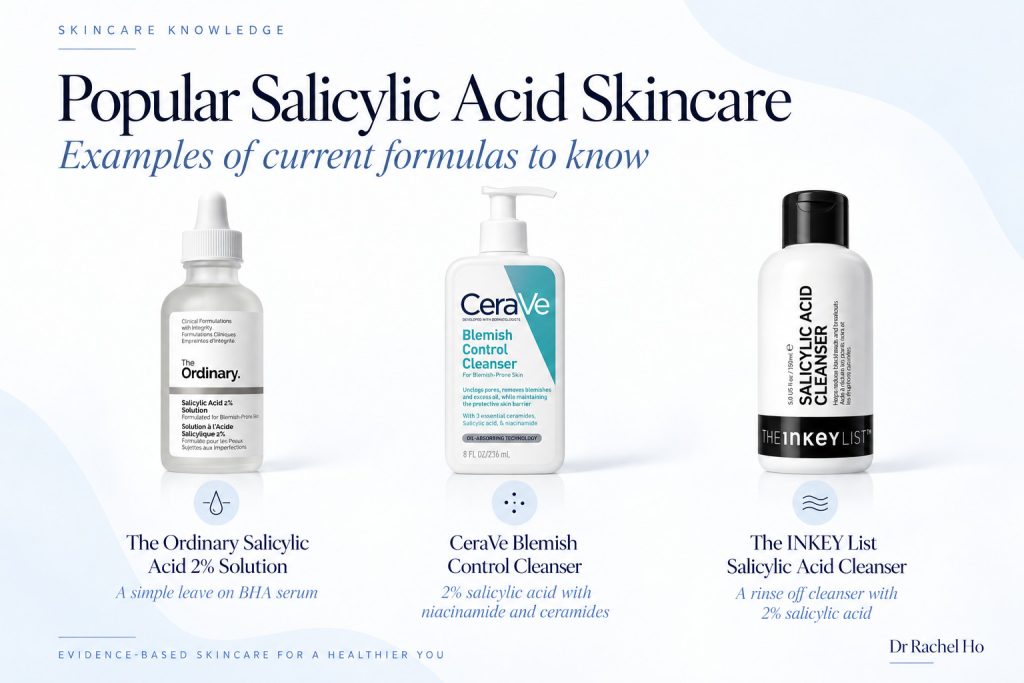
These three products contain 2% salicylic acid, but their formats and supporting ingredients differ. The Ordinary is a serum left on the skin, while the CeraVe and The INKEY List products are cleansers that are rinsed off.
Salicylic acid skincare comparison: ingredients, formulations and choosing a product
Popular salicylic acid skincare at a glance
| Product | Salicylic acid or related BHA | Format | Other formulation details |
|---|---|---|---|
| Paula’s Choice Skin Perfecting 2% BHA Liquid Exfoliant | 2% salicylic acid | Liquid exfoliant left on the skin | Ingredient list containing methylpropanediol, butylene glycol and green tea extract; fragrance free, with a stated pH of 3.2 to 3.8⁷. |
| The Ordinary Salicylic Acid 2% Solution | 2% salicylic acid | Water based serum left on the skin | Contains glycerin, pentylene glycol and saccharide isomerate; the published list contains no added fragrance⁸. |
| CeraVe Blemish Control Cleanser | 2% salicylic acid | Foaming gel cleanser that is rinsed off | Ingredient list includes niacinamide, three essential ceramides and oil absorbing clay⁹. |
| The INKEY List Salicylic Acid Cleanser | 2% salicylic acid | Cleanser that is rinsed off | Contains 0.5% allantoin, glycerin, betaine and zinc PCA¹⁰. |
| La Roche Posay Effaclar Ultra Concentrated Anti Acne Serum | 1.5% salicylic acid, combined with 3.5% glycolic acid and 0.45% LHA, listed as capryloyl salicylic acid | Serum left on the skin | Contains niacinamide and several exfoliating acids¹¹. |
| Medicube Zero Pore Pad 2.0 | Salicylic acid and betaine salicylate are listed.Concentration of salicylic acid is not disclosed. | Exfoliating liquid applied with textured pads | Contains lactic acid, panthenol, glycerin, allantoin and sodium hyaluronate¹². |
| COSRX BHA Blackhead Power Liquid | Betaine salicylate, rather than salicylic acid. Concentration is not disclosed. | Liquid exfoliant left on the skin | Contains willow bark water, butylene glycol, niacinamide, panthenol and sodium hyaluronate¹³ |
Always check your packaging when purchasing locally in Singapore or overseas, as formulas can vary slightly by market and manufacture date⁸.)
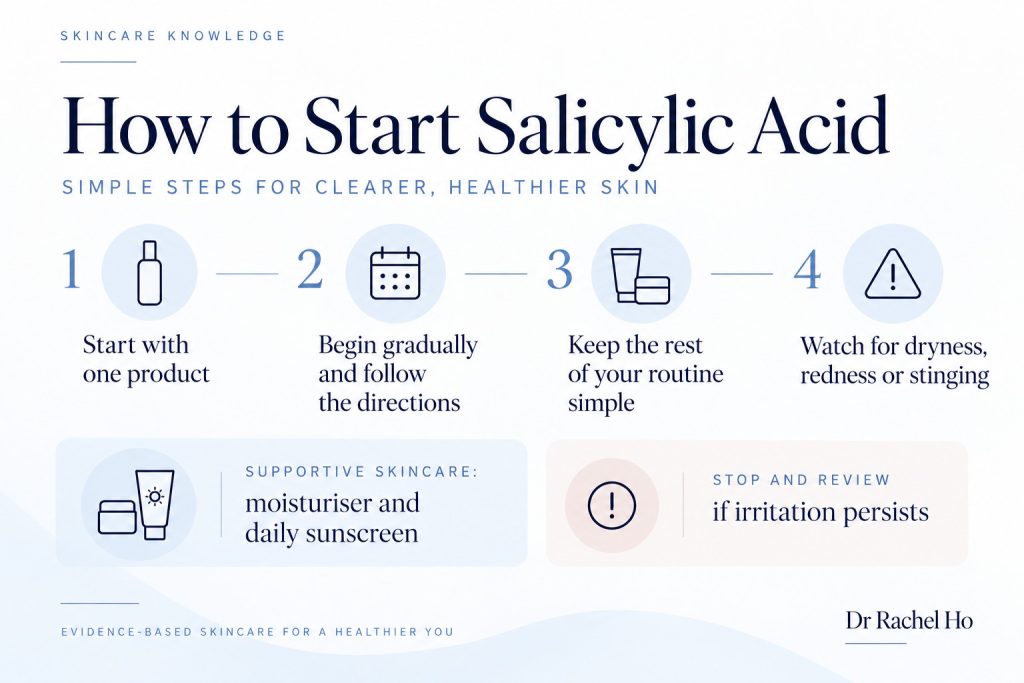
Introduce one salicylic acid product at a time and follow its directions, while maintaining moisturiser and sun protection. Persistent burning, redness or scaling is a reason to stop the product and review the routine.
How to introduce salicylic acid into your routine safely
Begin with one product
Start with introducing just one salicylic acid product and adhere to the application instructions. Simultaneously introducing a BHA cleanser, a leave-on serum, and exfoliating pads all can instead disrupt your skin barrier and worsen inflammation.
For salicylic acid products formulated to be left on the skin, a gradual introduction allows you to assess tolerability before you increase your frequency of application⁷,¹³. Exercise particular caution if your current routine already includes other exfoliating acids or a prescription retinoid⁸.
Keep the rest of your skincare simple
Continue using a supportive moisturisers that fortify your skin barrier and a broad-spectrum sun protection⁷,⁸. Always keep salicylic acid away from the delicate eye area and never apply it to actively damaged, raw, or irritated skin⁸.
Pay attention to persistent irritation
Salicylic acid can cause dryness, stinging, and mild peeling, with your tolerance determined by the product formula and your application frequency¹,⁶. Persistent burning, severe redness, or tight scaling are red flag signs to stop using the product and review your routine⁸. If your previously comfortable skincare has suddenly started to sting, my guide to recognising and repairing a damaged skin barrier explains the signs to look out for and how to heal your skin barrier.
Can salicylic acid be used with other skincare ingredients?
Salicylic acid and niacinamide
Yes, salicylic acid and niacinamide can be beautifully formulated together, as seen in the CeraVe cleanser and La Roche-Posay serum highlighted above⁹,¹¹. However, this does not mean that layering a separate, highly concentrated niacinamide serum on top of your BHA will improve every routine.My niacinamide skincare guide breaks down its various uses and formulation nuances.
Salicylic acid and retinol
Topical retinoids and salicylic acid both feature prominently in medical acne treatment guidelines, though they perform entirely different roles and have different supporting evidence². If you are already using a prescription retinoid, discuss whether an additional exfoliant is even necessary with your doctor before introducing it, especially if your retinoid is already causing dryness or peeling. My guide to retinol skincare explains more about how to use retinol safely.
Salicylic acid and vitamin C
The compatibility of these two ingredients depends entirely on their specific formulations. The safest approach is to follow the directions for the specific products you own and introduce changes separately. For an in depth read on vitamin C skincare and how to choose one for your skin, please refer to my guide to vitamin C skincare.
Common questions about salicylic acid skincare
Can I use salicylic acid skincare every day?
While some products include daily application instructions, those recommendations are specific to that brand’s formulation and testing⁷,⁹,¹⁰. Your skin’s unique response and the other treatments in your routine should guide your usage. While salicylic acid can be used everyday to exfoliate, especially for individuals with oily skin and congestion, this frequency of use must be balanced by the dryness and irritation that may result.
How long does salicylic acid take to work?
Most clinical studies on salicylic acid for acne assess acne improvement over a period of several weeks⁴,⁶. The elegance of the formulation, your consistency, and the underlying type of acne all heavily influence your response rate⁴,⁶. If your acne remains troublesome despite consistent care, or if painful lesions or scarring begin to develop, arrange a clinical assessment sooner rather than later². My clinic’s acne assessment and treatment guide explains the more advanced medical options available for treating acne.
Is a breakout after salicylic acid just purging?
Salicylic acid can cause purging by increasing cell turnover. However, not all redness is due to purging from salicylic acid. Burning, persistent redness, and dry scaling are signs of active irritation and barrier compromise, not purging¹,⁶. My article on skin purging vs. acne breakouts explores how to recognise the signs of purging and what to do if purging occurs.
Is salicylic acid or benzoyl peroxide better for acne?
In clinical guidelines, the AAD gives benzoyl peroxide a stronger overall recommendation than salicylic acid, while formally recognising both salicylic acid and benzoyl peroxide as highly valid treatment options². The choice of acne treatment should reflect the severity, specific type of acne you are treating, your skin’s previous responses, and tolerability². Salicylic acid’s ability to dissolve blockages inside the follicle makes it excellent for blackheads¹, while persistent, red, inflammatory acne typically requires a broader treatment plan addressing multiple contributing factors².
What about acne marks and pigmentation?
Treating active breakouts and fading the dark marks left behind (post-inflammatory hyperpigmentation) are different indications. Azelaic acid is an active ingredient that manages active acne while simultaneously addressing stubborn pigmentation². My azelaic acid guide explains its clinical uses and available formulations, which can help clarify your priorities before you decide to add this to your skincare routine.
Is salicylic acid suitable during pregnancy or breastfeeding?
A thorough clinical review of acne treatments during pregnancy and lactation considers the limited, topical use of low-concentration salicylic acid to be acceptable, while advising firmly against prolonged application over large areas of the body or under occlusive dressings¹⁵. These broader and occlusive applications dramatically increase systemic absorption and require strict separate consideration¹⁵. Always discuss your complete product list, concentrations, and intended use with your doctor during pregnancy or breastfeeding. My guide to pregnancy safe skincare shares more pregnancy do’s and don’ts.
Why is salicylic acid also used for psoriasis and warts?
Salicylic acid is a highly versatile keratolytic (peeling) agent. In dermatology, it helps remove the excessive, thick scale seen in psoriasis and is a valuable adjunct in specific treatment plans¹⁶. Over-the-counter preparations for warts and corns utilise higher concentrations and completely different application methods compared to your daily facial acne products¹.
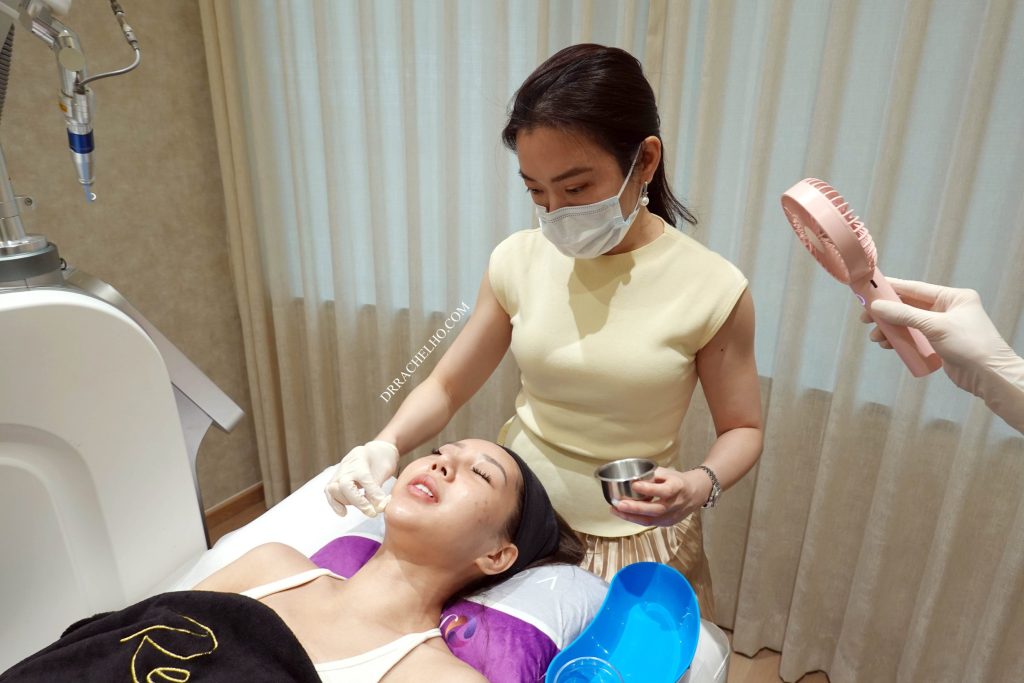
Administering a chemical peel for my patient in The Skin Longevity Clinic.
When skincare falls short: considering an in-clinic chemical peel
When a dedicated, consistent salicylic acid routine hasn’t brought the improvement you hoped for, an in-clinic chemical peel may be the next logical step for persistent comedones or mild acne¹,¹⁷. Studies analysing superficial chemical peels demonstrate significant improvements in acne, though trial quality varies across studies¹⁷.
Everyday acne products commonly contain 0.5% to 2% salicylic acid. Choosing a product involves balancing its benefits for blocked pores against possible dryness, stinging, redness and peeling.
The advantage of a chemical peel in a clinic is the precise selection of a specific peeling agent, the precise concentration, and the application protocol tailored directly to your indication and skin type by your doctor¹. This decision also accounts for your skin’s baseline sensitivity and tendency to develop post-inflammatory pigmentation¹.
In my clinic, if your skin is currently irritated, medical assessment and barrier repair are required before further exfoliation is considered¹. For a much closer look at your options, please read my chemical peel review: benefits, risks and results. My clinic’s chemical peel treatment guide also breaks down our exact assessment, clinical preparation, and recovery protocols.
For the right candidate, a carefully selected, medically supervised chemical peel offers the breakthrough improvement that everyday skincare my not cannot achieve¹,¹⁷.
References
- Arif T. Salicylic acid as a peeling agent: a comprehensive review. Clinical, Cosmetic and Investigational Dermatology. 2015;8:455 to 461.
- Reynolds RV, Yeung H, Cheng CE, et al. Guidelines of care for the management of acne vulgaris. Journal of the American Academy of Dermatology. 2024;90(5):1006.e1 to 1006.e30. doi:10.1016/j.jaad.2023.12.017. The Academy’s accompanying summary describes the strength of treatment recommendations and limitations of procedural evidence.
- Lu J, Cong T, Wen X, et al. Salicylic acid treats acne vulgaris by suppressing AMPK/SREBP1 pathway in sebocytes. Experimental Dermatology. 2019;28(7):786 to 794. doi:10.1111/exd.13934.
- Liu H, Yu H, Xia J, et al. Topical azelaic acid, salicylic acid, nicotinamide, sulphur, zinc and fruit acid for acne. Cochrane Database of Systematic Reviews. 2020;5:CD011368.
- Yuan Y, Wang Y, Xia J, et al. Topical, light based, and complementary interventions for acne: an overview of systematic reviews. Cochrane Database of Systematic Reviews. 2024;10:CD014918.
- Decker A, Graber EM. Over the counter Acne Treatments: A Review. Journal of Clinical and Aesthetic Dermatology. 2012;5(5):32 to 40.
- Paula’s Choice Singapore. Skin Perfecting 2% BHA Liquid Exfoliant. Manufacturer product information, ingredients and directions. Accessed September 2026.
- The Ordinary. Salicylic Acid 2% Solution. Manufacturer product information, ingredients and directions. Accessed September 2026.
- CeraVe Singapore. Blemish Control Cleanser. Manufacturer product information, key ingredients and directions. Accessed September 2026.
- The INKEY List. Salicylic Acid Cleanser. Manufacturer product information, ingredients and directions. Accessed September 2026.
- La Roche Posay Singapore. Effaclar Ultra Concentrated Anti Acne Serum. Manufacturer product information and ingredient list. Accessed September 2026.
- Medicube. Zero Pore Pads. Manufacturer product information, ingredient list and directions. Accessed September 2026.
- COSRX. BHA Blackhead Power Liquid. Manufacturer product information and ingredient list. Accessed September 2026.
- Sukakul T, Bruze M, Svedman C. Fragrance Contact Allergy: A Review Focusing on Patch Testing. Acta Dermato Venereologica. 2024;104. doi:10.2340/actadv.v104.40332.
- Ly S, Kamal K, Manjaly P, Barbieri JS, Mostaghimi A. Treatment of Acne Vulgaris During Pregnancy and Lactation: A Narrative Review. Dermatology and Therapy. 2023;13:115 to 130.
- Elmets CA, Korman NJ, Prater EF, et al. Joint AAD NPF guidelines of care for the management and treatment of psoriasis with topical therapy and alternative medicine modalities for psoriasis severity measures. Journal of the American Academy of Dermatology. 2021;84(2):432 to 470.
- Chen X, Wang S, Yang M, Li L. Chemical peels for acne vulgaris: a systematic review of randomised controlled trials. BMJ Open. 2018;8:e019607. doi:10.1136/bmjopen.2017.019607.

No Comments