


15 Aug Copper Peptides for Skin: Benefits, Evidence and How to Use Them
Copper Peptides for Skin: Benefits, Evidence and How to Use Them
By Dr Rachel Ho | Updated August 2026
Peptide skincare is one of the biggest trends in recent years, and copper peptides in particular, have emerged as one of the most hyped peptide skincare. iAre copper peptides truly a game-changing ‘botulinum toxin in a bottle’ for collagen stimulation, or just another over-hyped trend in supportive skincare?
What are copper peptides?
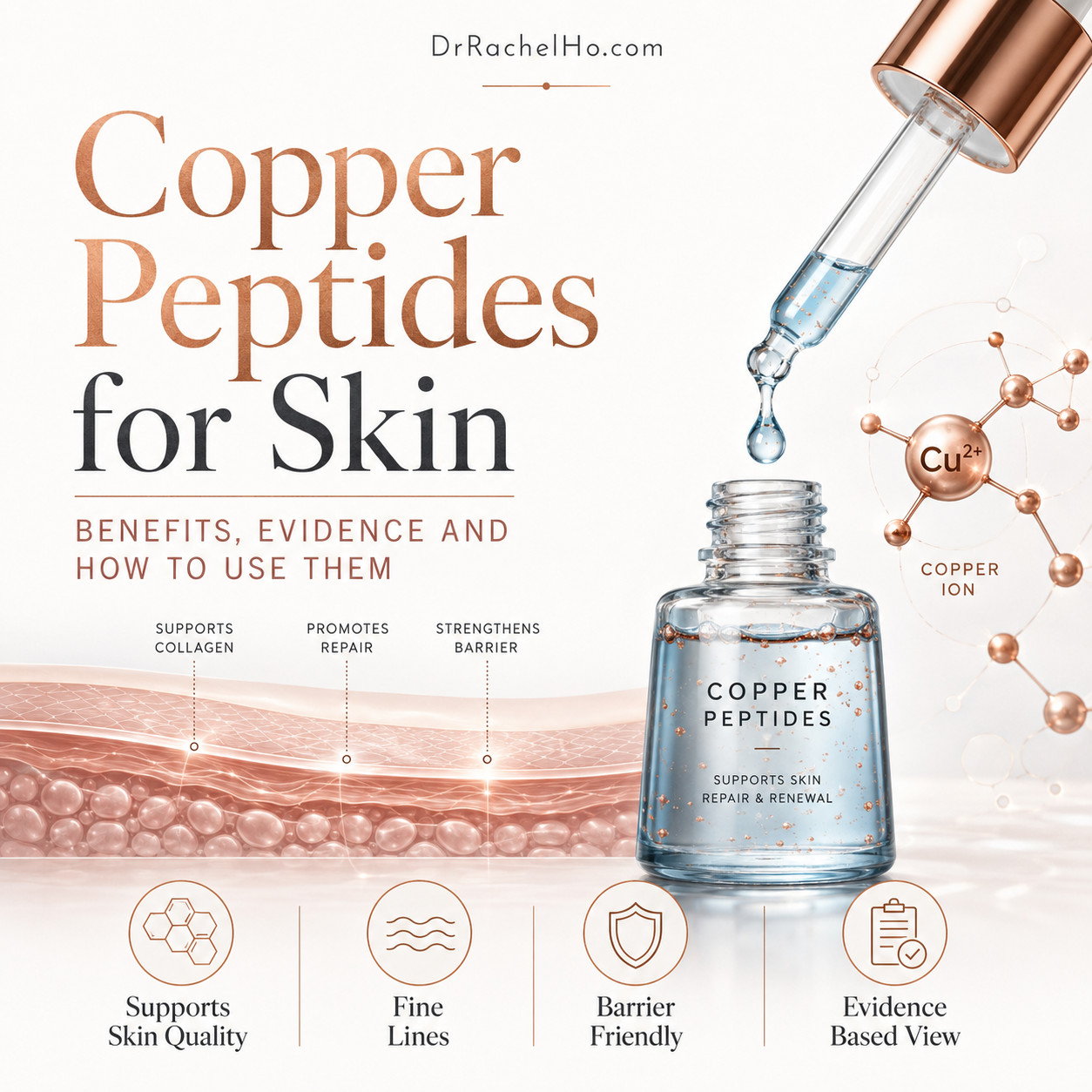
Copper peptides are short amino acid chains bound to copper. The best studied example is GHK Cu, which consists of glycine, histidine and lysine complexed with a copper ion.
Laboratory studies link GHK Cu with collagen remodelling, antioxidant defence and tissue repair. Small human studies also report improvements in fine lines, skin density and elasticity, but the clinical evidence is older, product specific and much less robust than the evidence for established retinoids1,2.
Copper peptides can be a useful supportive ingredient for hydration, early fine lines and skin quality. They do not replace sunscreen, prescription retinoids or procedures directed at muscle movement, laxity or acne scars.
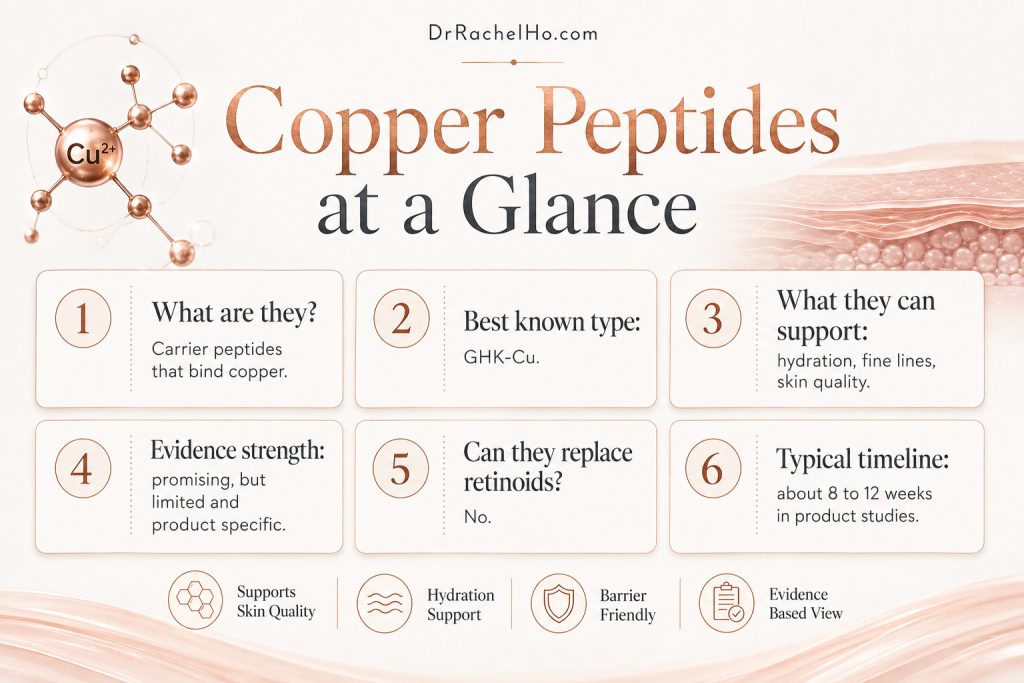
What are copper peptides? They are carrier peptides that bind copper, with GHK-Cu being the best-known form. Selected formulations can support hydration, early fine lines and skin quality, but current evidence remains product-specific and copper peptides do not replace retinoids.
Copper peptides at a glance
FAQ about copper peptides
| Question about copper peptides | Evidence based answer |
|---|---|
| What are copper peptides? | Carrier peptides that bind copper and deliver it in a biologically available form |
| What is GHK Cu? | A naturally occurring copper binding tripeptide found in plasma, saliva and urine |
| What can copper peptides improve? | Selected formulas can modestly improve hydration, fine lines, elasticity and skin density |
| Is the evidence strong for copper peptides? | Mechanistic evidence is extensive, while modern independent clinical trials remain limited |
| Can copper peptides replace retinol? | No. Retinoids have stronger evidence for photoageing and acne |
| Can they be used with vitamin C or retinol? | Compatibility depends on the complete formula and the manufacturer’s instructions |
| Can copper peptides treat acne scars? | A serum cannot rebuild deep rolling, boxcar or ice pick scars |
| How long do results take for copper peptide skincare? | Product studies generally assess changes after eight to twelve weeks |
What is GHK Cu copper peptide?
GHK is a naturally occurring tripeptide that binds copper strongly. Reviews report plasma concentrations of about 200 ng/mL at age 20 and about 80 ng/mL by age 60, although no study has established that this decline directly causes skin ageing or that applying GHK Cu restores youthful physiology2,3.
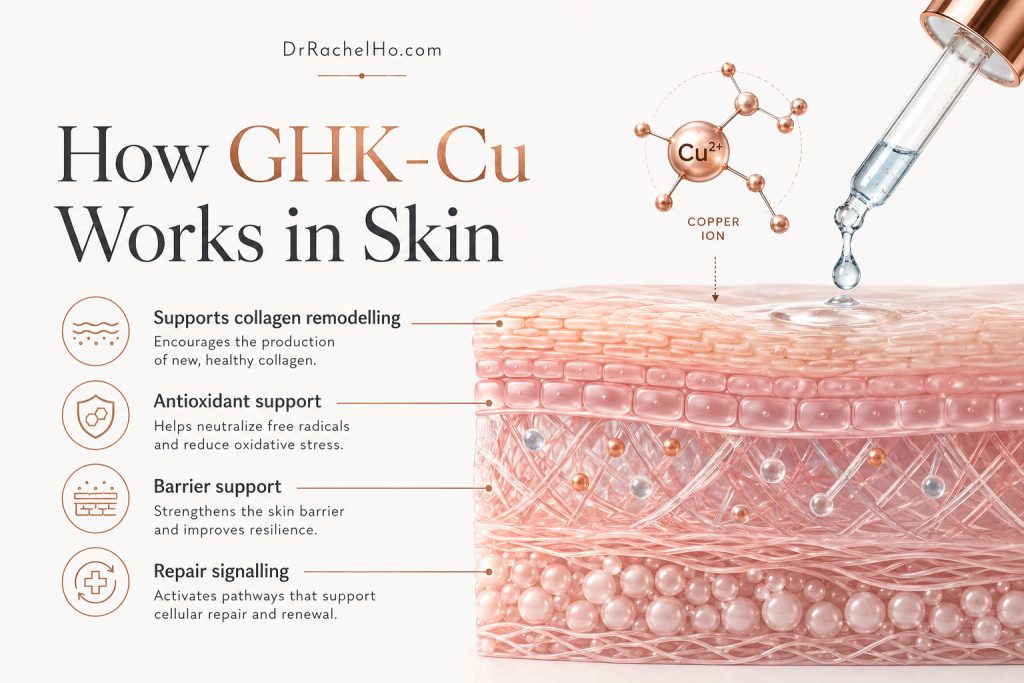
How is GHK-Cu proposed to work in skin? Laboratory and preclinical research links copper peptides with collagen remodelling, antioxidant activity and cellular repair signalling. These mechanisms are biologically plausible, but visible results still depend on skin penetration and the finished product formulation.
Copper acts as a cofactor for enzymes involved in collagen cross linking and antioxidant defence, including lysyl oxidase and superoxide dismutase. GHK Cu has also been shown in cell and animal studies to influence fibroblast activity, collagen, elastin, glycosaminoglycans, matrix metalloproteinases and inflammatory signalling2,3,5.
This biological explanation is plausible, but it is not the same as proof that every blue serum produces measurable dermal change. Ingredient concentration, stability, packaging and delivery determine whether a finished product reaches a relevant target.
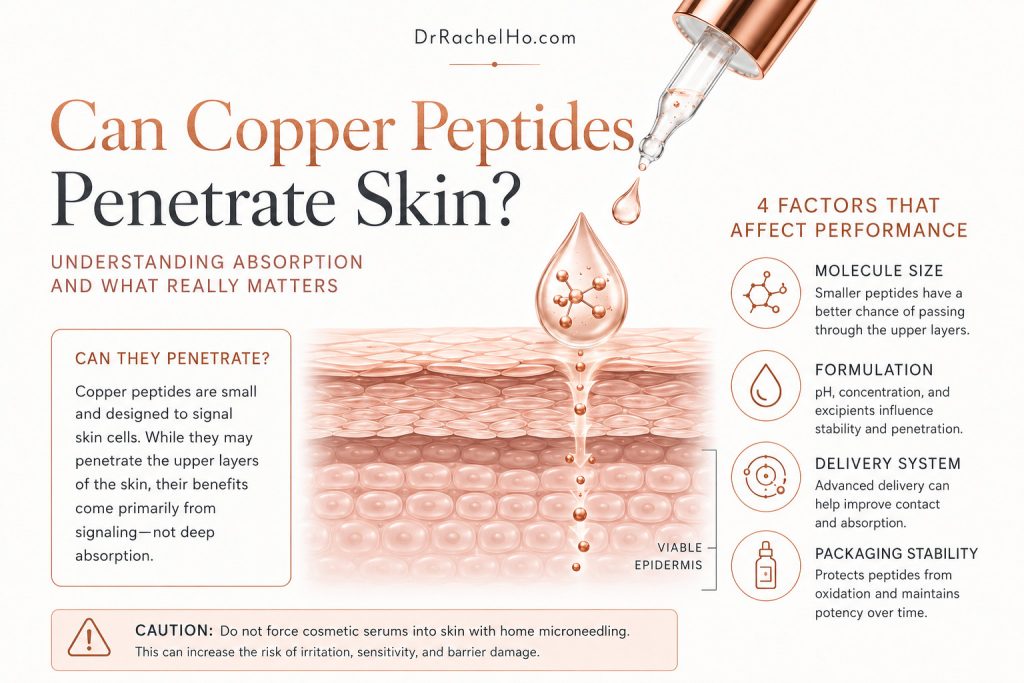
Can copper peptides penetrate the skin? Performance depends on the peptide, molecule size, concentration, pH, vehicle, delivery system and packaging. Laboratory penetration findings cannot confirm that every commercial serum reaches the same target, and cosmetic products should not be driven into skin with home microneedling.
Can copper peptides penetrate the skin?
Peptides are generally water soluble molecules, while the stratum corneum or skin barrier is designed to restrict their entry. An in vitro human skin study found that copper delivered as GHK Cu could penetrate and remain within skin at potentially useful levels, but laboratory skin penetration can not be extrapolated to cosmetic copper peptide serums with different formulations on a living face4.
To overcome the difficulties in skin barrier penetration, palmitoylation and encapsulation are examples of delivery systems used to improve peptide penetration in skincare . However, please note that home microneedling should not be used to force a cosmetic copper peptide serum into the skin, since cosmetic formulas are not designed or tested as sterile injectable products6.
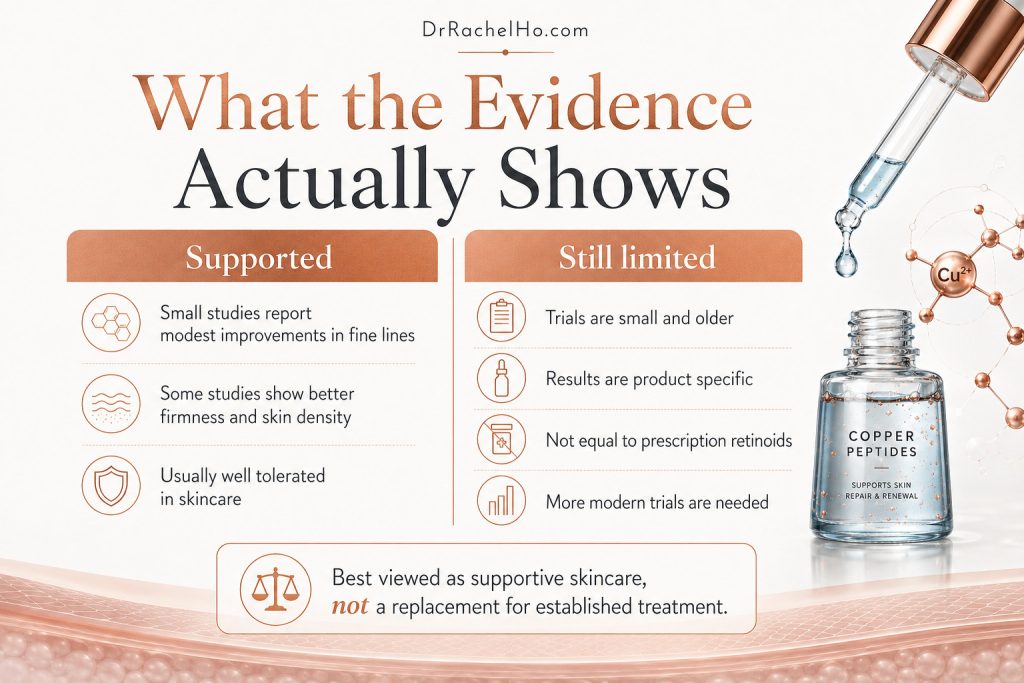
Do copper peptide serums work? Small studies have reported modest improvements in fine lines, firmness and skin density. The trials are generally older, small and product-specific, so copper peptides are best viewed as supportive skincare rather than an alternative to prescription retinoids or established collagen-remodelling treatments.
What does the clinical evidence show for copper peptides?
Several reviews describe a 12 week facial cream study containing GHK Cu copper peptides involving 71 women, an eye cream study involving 41 women and another study involving 67 women aged 50 to 59. These studies reported improvements in fine lines, wrinkle depth, skin density, thickness, firmness and elasticity2,3.
The findings are encouraging, but they need context. The studies are small and old, and several original reports are difficult to evaluate using modern standards because full product composition, randomisation methods, statistical reporting, funding and long term follow up were not available.
Another frequently cited thigh biopsy comparison reported increased collagen production in 70 % of women using GHK Cu, compared with 50%using vitamin C cream and 40% using retinoic acid. This does not prove that copper peptides outperform vitamin C or retinoids for facial ageing, because the outcome, formulations and study design were not equivalent to a modern head to head facial trial2.
Recent reviews continue to conclude that peptide skincare is supported mainly by laboratory, animal and ex vivo evidence, with fewer rigorous trials involving current finished products. Skin penetration, product stability and wide variation between formulas remain major limitations1,5-7.
Claims about post procedure healing also lack robust support at this stage. A controlled study of topical copper tripeptide after carbon dioxide laser resurfacing found no significant improvement in post treatment redness, healing or wrinkle outcome8.
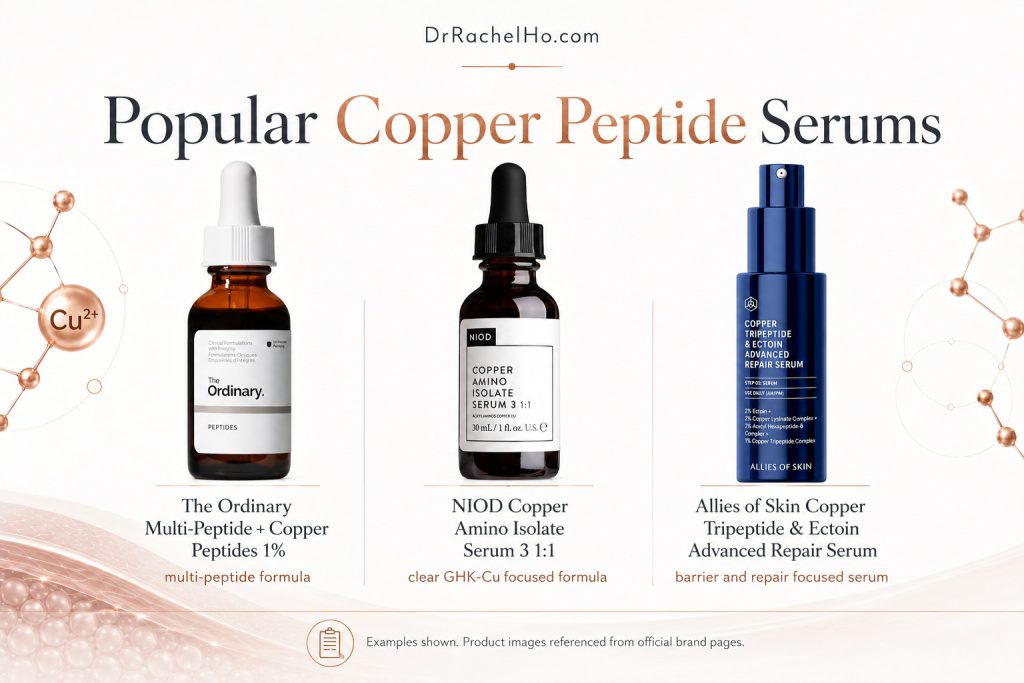
Popular copper peptide serums in Singapore include The Ordinary Multi-Peptide + Copper Peptides 1%, NIOD Copper Amino Isolate Serum 3 1:1 and Allies of Skin Copper Tripeptide & Ectoin Advanced Repair Serum. Their complete formulations, disclosed concentrations and supporting ingredients differ, and the examples are shown for education rather than endorsement.
Popular copper peptide skincare in 2026
The formulations below were checked against official product pages in August 2026. They are examples rather than endorsements, and manufacturer studies should not be treated as independent clinical evidence.
Popular copper peptide skincare in 2026
| Product | Current formulation approach | Practical interpretation |
|---|---|---|
| The Ordinary Multi Peptide + Copper Peptides 1% | Contains 1% copper peptides with several other peptide technologies and hydrating ingredients | A multi ingredient formula, so any result cannot be attributed to GHK Cu alone. The brand advises separating it from direct acids, retinoids and strong antioxidants such as vitamin C. |
| NIOD Copper Amino Isolate Serum 3 1:1 | Contains 1% GHK Cu and 1% uncomplexed GHK in a water based serum | One of the clearest disclosures of GHK Cu concentration, although much of the finished product evidence comes from brand testing. |
| Biossance Squalane + Copper Peptide Rapid Plumping Serum | Combines copper peptides with squalane and several hydrating ingredients; the copper peptide percentage is not prominently disclosed | Immediate plumping is likely to reflect hydration as well as peptide activity. It is currently listed by Sephora Singapore. |
| Medik8 Liquid Peptides | Uses a 30% multi peptide blend containing ten peptides, including an encapsulated copper peptide | Thirty percent refers to the overall peptide complex rather than pure copper peptide content. |
| Allies of Skin Copper Tripeptide & Ectoin Advanced Repair Serum | Combines copper tripeptide with ectoin and other barrier supportive ingredients; the peptide concentration is not disclosed | The complete formula targets recovery and barrier comfort, so brand results cannot be assigned to copper peptide alone. The product is currently listed on the Singapore store. |
The characteristic blue colour in copper peptide serums does not prove that one product contains more active copper peptide or works better. Instead, look for named peptide, disclosed concentration, delivery system and evidence involving the finished formula.
For product specific background, read my review NIOD Skincare Review, The Ordinary Skincare Review and the main guide Peptides for Skin.
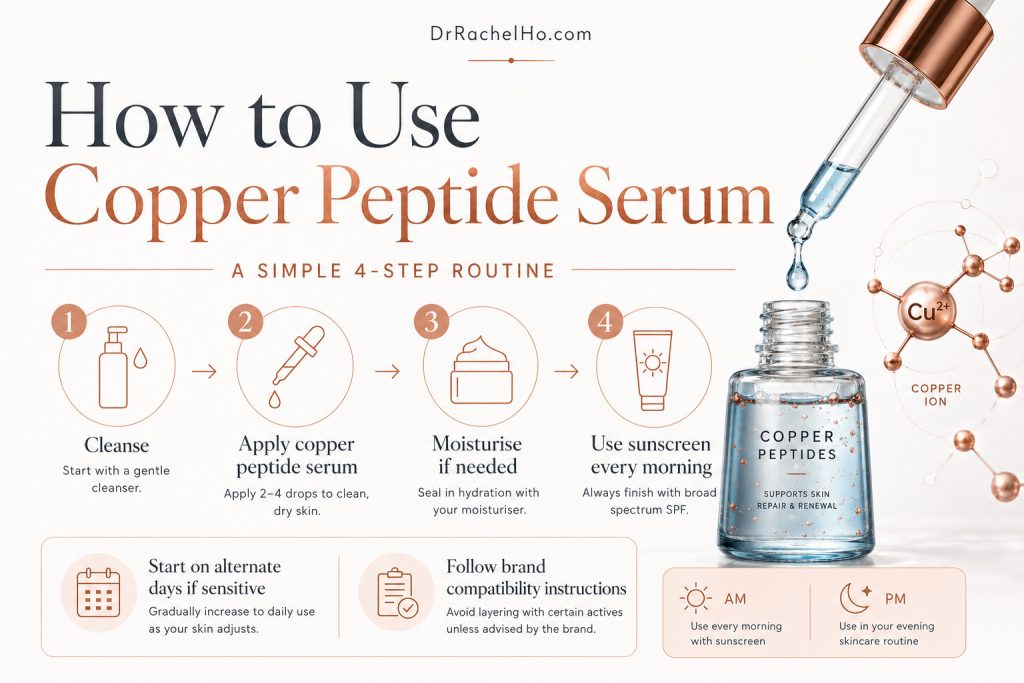
How should copper peptide serum be used? Apply it after cleansing and before moisturiser, then finish the morning routine with broad-spectrum sunscreen. Sensitive skin can begin on alternate days, while instructions for the exact product should guide compatibility with vitamin C, acids and retinoids.
How should copper peptide serum be used?
A simple routine is sufficient:
- Cleanse gently and allow the skin to dry.
- Apply a thin layer of copper peptide serum.
- Follow with moisturiser where needed.
- Use broad spectrum sunscreen every morning.
Copper peptide serums can usually be applied in the morning or evening. Sensitive skin can begin on alternate days before increasing frequency of copper peptide skincare application.
Compatibility advice is formula specific and varies across brands. The Ordinary advises avoiding retinoids, direct acids and strong vitamin C in the same routine, while Biossance states that its copper peptide serum can be used alongside retinol.9
This difference reflects formulation specific guidance rather than a universal chemical rule. A simple option is to use vitamin C in the morning, copper peptides in the evening and a retinoid on alternate nights until tolerance is clear.
Read Retinol for Skin, Retinol vs Retinal vs Tretinoin and Vitamin C for Skin for fuller guidance on these actives.
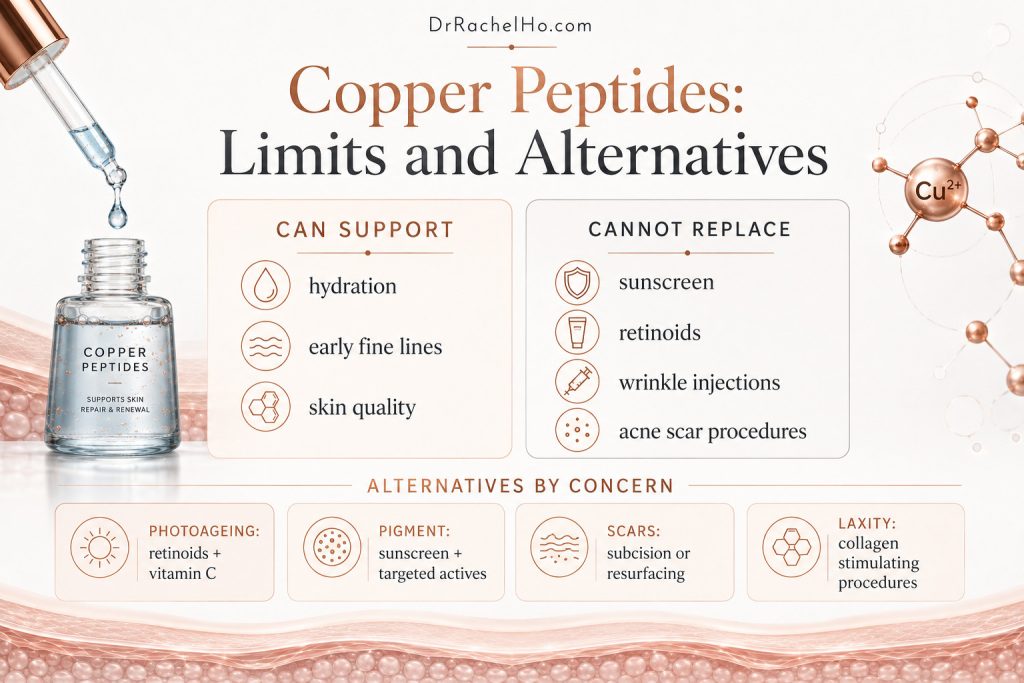
What can copper peptides realistically improve? They can support hydration, early fine lines and general skin quality, but they cannot replace sunscreen, retinoids, muscle-directed wrinkle treatment or acne-scar procedures. The appropriate alternative depends on whether the concern is photoageing, pigmentation, dermal scarring or skin laxity.
Side effects and who should avoid copper peptides
Most topical copper peptide products are well tolerated, but modern safety studies involving copper peptide skincare in large populations are lacking. Burning, itching, swelling, persistent redness or an eczema like rash can occur with any skincare product due to irritation or allergy to the peptide or another ingredient in the formula.
Pause peptide skincare during active eczema, broken skin, infection or marked barrier disruption. Copper peptide serum should also be delayed after laser, chemical peels or microneedling unless the treating doctor has recommended that exact sterile product for the recovery period.
Pregnancy specific studies for copper peptide safety are absent. Copper peptides are not retinoids, but the entire ingredient list should still be reviewed because combination formulas can contain other activities. Please read Pregnancy Skincare Guide: What’s Safe and What to Avoid for my list of pregnancy do’s and don’ts.
Cosmetic notification in Singapore does not mean that HSA has approved a serum’s safety or anti ageing efficacy. Singapore HSA states that cosmetic notification is intended for regulatory follow up and is not an endorsement or product approval.10
Cosmetic copper peptide serums should never be injected or mixed into home microneedling treatments. HSA defines cosmetics as externally applied products rather than injections, and the FDA has not cleared microneedling devices for delivering cosmetics into skin. As explained in Melanotan II & MT2 Peptides: The Dangers of Barbie Peptides, peptide injections may increase your risk of skin cancers.
Related blogposts:
5 Beauty Industry Scandals & Controversies
Korea Daiso Sunscreen Scandal Explained
5 Aesthetic Treatments to Avoid
Which copper peptide claims are overhyped?
Copper peptides do not produce the predictable muscle relaxation of botulinum toxin, restore lost facial volume or lift substantial loose skin. They also cannot release tethered acne scars or rebuild deep rolling, boxcar and ice pick scars.
Claims that copper peptides reliably fade melasma, reverse sun damage or replace a retinoid are also not supported by strong comparative trials. Sunscreen, retinoids and vitamin C have clearer roles in photoageing and pigment control.
A related peptide called AHK Cu stimulated human dermal papilla cells and elongated hair follicles in laboratory culture. This is promising ex vivo research, but it does not establish that a cosmetic GHK Cu serum treats human hair loss.9
Alternatives to copper peptide skincare
Alternatives to copper peptide skincare
| Main concern | More established skincare options | Medical or in clinic options |
|---|---|---|
| Early fine lines and photoageing | Daily sunscreen, retinoids and vitamin C | Fractional laser or radiofrequency microneedling |
| Dynamic forehead or eye lines | Skincare has limited control over muscle activity | Medical wrinkle assessment and muscle directed treatment |
| Skin laxity | Sunscreen and retinoids support long term skin quality | Radiofrequency tightening, collagen biostimulators or surgery according to severity |
| Pigmentation | Sunscreen, vitamin C, niacinamide, azelaic acid and retinoids | Pigment specific laser or chemical peels after diagnosis |
| Indented acne scars | Skincare cannot rebuild lost dermal structure | Subcision, RF microneedling, fractional laser or selected ECM support |
| Dry or reactive skin | Ceramides, glycerin, petrolatum and niacinamide | Assessment for eczema, rosacea or contact dermatitis |
My clinic’s guides to Wrinkle Treatment in Singapore, Radiofrequency Microneedling, Fractional CO2 Laser and Skin Tightening in Singapore explain when a structural concern needs more than skincare.
Dr Rachel Ho’s takeaway
Copper peptides have an attractive biological rationale and several encouraging small studies. The evidence is still too limited to treat them as equal to more established active ingredients like retinoids, vitamin C or collagen remodelling procedures.
Copper peptide skincare can be considered as a supportive skincare option for someone who wants a gentle routine for hydration and early skin ageing. A skincare product’s performance is ultimately dependent on its formulation and tolerance rather than by blue colour, price or the number of regenerative claims on the label.
Frequently asked questions
Do copper peptide serums really work?
Selected GHK Cu creams have reported improvements in fine lines, firmness and skin density. The evidence comes mainly from small, older and product specific studies, so results cannot be generalised to every serum.
Are copper peptides better than retinol?
Current evidence does not establish copper peptides as superior to retinol or prescription tretinoin. Retinoids have a broader and more consistent evidence base for photoageing and acne.
Can copper peptides be used with vitamin C?
Some brands advise separating their copper peptide products from direct vitamin C, while others permit combined routines. Following the instructions for the exact formula is safer than applying a universal compatibility chart.
Do copper peptides cause purging?
Copper peptides do not normally accelerate follicular turnover in the way retinoids do. New bumps are more likely to reflect irritation, the product vehicle or an unrelated acne flare.
Can copper peptides remove acne scars?
A topical serum cannot release scar tethering or replace lost dermal structure. Rolling, boxcar and ice pick scars need scar specific procedures according to their anatomy.
Can copper peptides grow hair?
AHK Cu has shown effects on human hair follicles in laboratory culture. Reliable human trials showing that topical cosmetic GHK Cu treats androgenetic hair loss are still lacking.
References
- Chan LKW, Lee KWA, Lee CH, et al. Cosmeceuticals in Photoaging: A Review. Skin Research and Technology. 2024. PMID 39233460.
- Pickart L, Margolina A. Regenerative and Protective Actions of the GHK Cu Peptide in the Light of New Gene Data. International Journal of Molecular Sciences. 2018. PMID 29986520.
- Dou Y, Lee A, Zhu L, Morton J, Ladiges W. The Potential of GHK as an Anti Ageing Peptide. Aging Pathobiology and Therapeutics. 2020. PMID 35083444.
- Hostynek JJ, Maibach HI, McBride ME. Human Skin Penetration of a Copper Tripeptide In Vitro as a Function of Skin Layer and Donor Age. Skin Pharmacology and Physiology. 2011. PMID 20721598.
- Pintea A, Manea A, Pintea C, et al. Peptides: Emerging Candidates for the Prevention and Treatment of Skin Senescence. Biomolecules. 2025. PMID 39858482.
- Pai VV, Bhandari P, Shukla P. Topical Peptides as Cosmeceuticals. Indian Journal of Dermatology, Venereology and Leprology. 2017. PMID 27451932.
- van Walraven N, FitzGerald RJ, Danneel HJ, et al. Bioactive Peptides in Cosmetic Formulations: Review of Current In Vitro and Ex Vivo Evidence. Peptides. 2025. PMID 40946970.
- Miller TR, Ross EV, Karcher HL, et al. Effects of Topical Copper Tripeptide Complex on Carbon Dioxide Laser Resurfaced Skin. Archives of Facial Plastic Surgery. 2006. PMID 16847171.
- Pyo HK, Yoo HG, Won CH, et al. The Effect of Tripeptide Copper Complex on Human Hair Growth In Vitro. Archives of Pharmacal Research. 2007. PMID 17703734.
- Health Sciences Authority Singapore. Regulatory Overview and Notification Requirements for Cosmetic Products. Updated August 2026.

No Comments