


30 Jul Korea Daiso Sunscreen Scandal: An Aesthetic Doctor Explains
Korea Daiso Sunscreen Scandal: What Happened and What It Means for SPF Claims
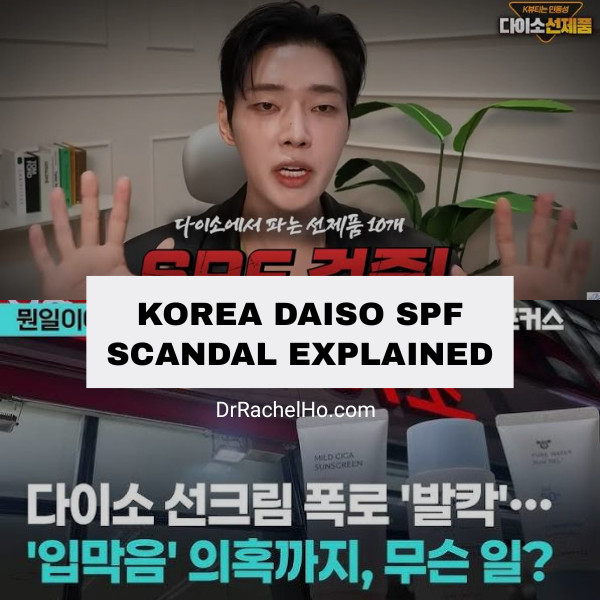
Hot on the heels of last year’s Australian sunscreens scandal comes a similar controversy in Korea, involving popular sunscreens from Korea Daiso. The Korea Daiso sunscreen scandal has raised doubts about the SPF protection stated by Korean sunscreens and has dealt a blow to Daiso Korea’s reputation for retailing high quality and affordable sunscreens.
Related blogposts:
Explainer: Australian Sunscreen Failing SPF Tests
View this post on Instagram
The Korea Daiso sunscreen controversy began in July 2026 after Korean YouTube channel Skin is Min Dong Sung claimed that several Daiso sunscreens did not meet their labelled SPF 50 or SPF 50+ claims based on his independent tests. Korea Daiso has rejected these allegations. Here’s my take on why this controversy could have happened and the implications for Korean sunscreen users
Related blogpost:
Seoul Korea: Ultimate Beauty Shopping Guide
Best Korean Beauty Stores & Experiences in Seoul 2024
Viral Korean Pharmacy Skincare Review
Key Takeaways
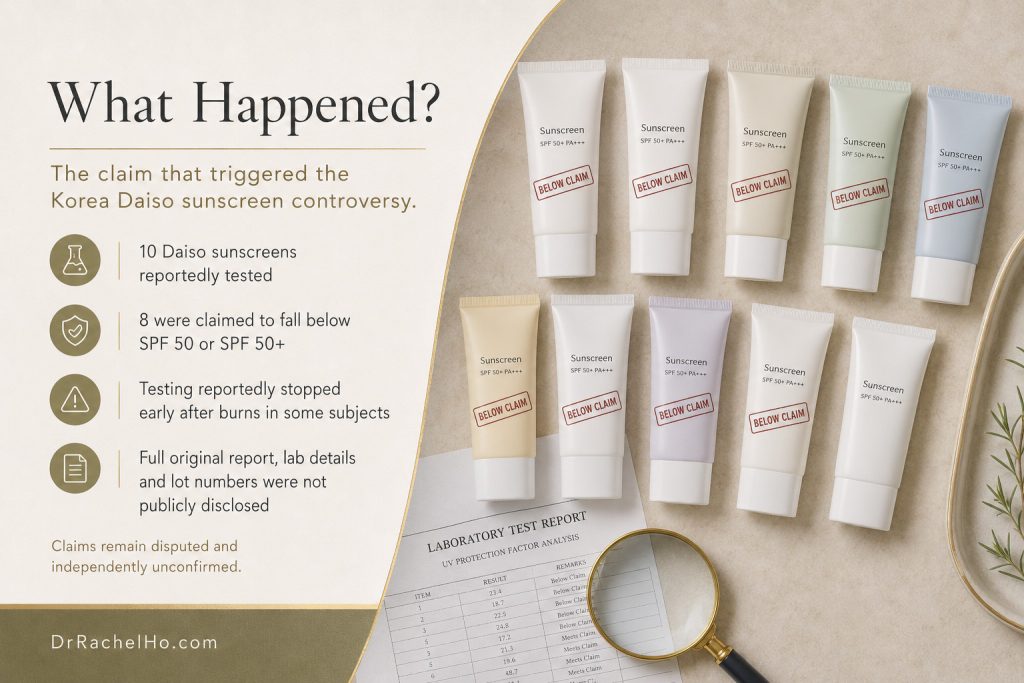
- The Korea Daiso sunscreen scandal is a dispute about SPF testing, consumer trust and the dominance of Korean sunscreen Original Design Manufacturers (ODMs).
- Skin is Min Dong Sung reportedly tested 10 Daiso sunscreens and claimed that 8 fell below their labelled SPF standard.
- Daiso Korea says the claim has not been confirmed and that the publicly released data used only 2 to 3 valid subjects per product, while formal SPF testing requires at least 10 valid subjects.
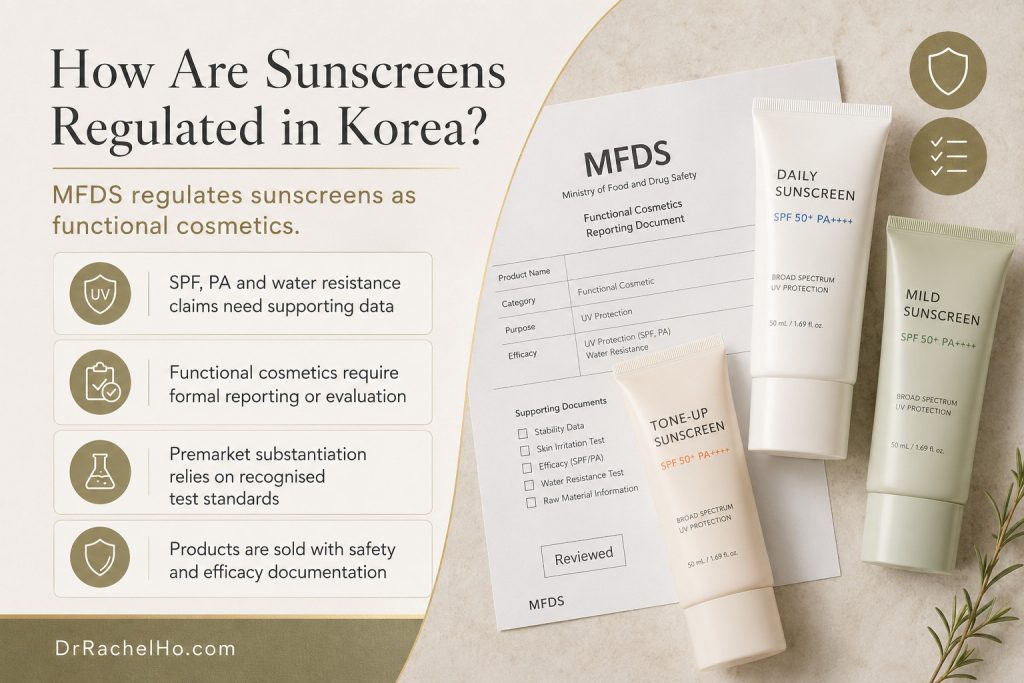
- Korean sunscreens are regulated as functional cosmetics
- SPF tests can vary because ISO 24444 is an in vivo human test, so volunteer biology and laboratory technique can influence results.

Screenshot from Skin is Min Dong Sung
What Is the Korea Daiso Sunscreen Scandal About?
Korean youtuber and founder of Youtube channel Skin is Min Dong Sung purchased 10 popular sunscreens from Daiso and commissioned these sunscreens for independent SPF testing, which cost 30 million won. The channel claimed that 8 of the products did not meet their labelled SPF 50 or SPF 50+ performance and that the tests had to be stopped because of burns in some of the subjects
The full original test report, testing laboratory, principal investigator, lot numbers and expiry dates have not been publicly disclosed by Skin is Min Dong Sung, which also raises questions about the validity of his claims.
Related blogposts:
5 Beauty Industry Scandals & Controversies
5 Aesthetic Treatments to Avoid
Korea Daiso’s Response to the SPF allegations
Daiso Korea has denied the allegations of SPF shortfall from Skin is Min Dong Sung. According to Korea Daiso, these sunscreens were sold after meeting requirements from Korea’s Ministry of Food and Drug Safety (MFDS), which includes tests on human subjects. has been established as fact. It said the products were sold after checking functional cosmetic related documents, finished product test certificates and human application test results. Daiso also argued that the sunscreen tests conducted by Skin is Min Dong Sung only involved 2 to 3 valid subjects per product, which falls short of the minimum of 10 subjects required by Korea MFDS. Other relevant information such as testing institution and product lot number were also not disclosed by Skin is Min Dong Sung
Daiso Korea has also announced that the company intends to pursue objective re- verification through a nationally accredited testing institution with the relevant suppliers.
How Are Sunscreens Regulated in Korea?
In Korea, sunscreens are regulated as functional cosmetics by the MFDS. Under MFDS regulations, sunscreens in Korea require formal premarket evaluations to verify their SPF, PA and water resistance claims, using internationally accepted ISO standards. These include iso 24444 testing for SPF claims.
What Is ISO 24444 SPF Testing?
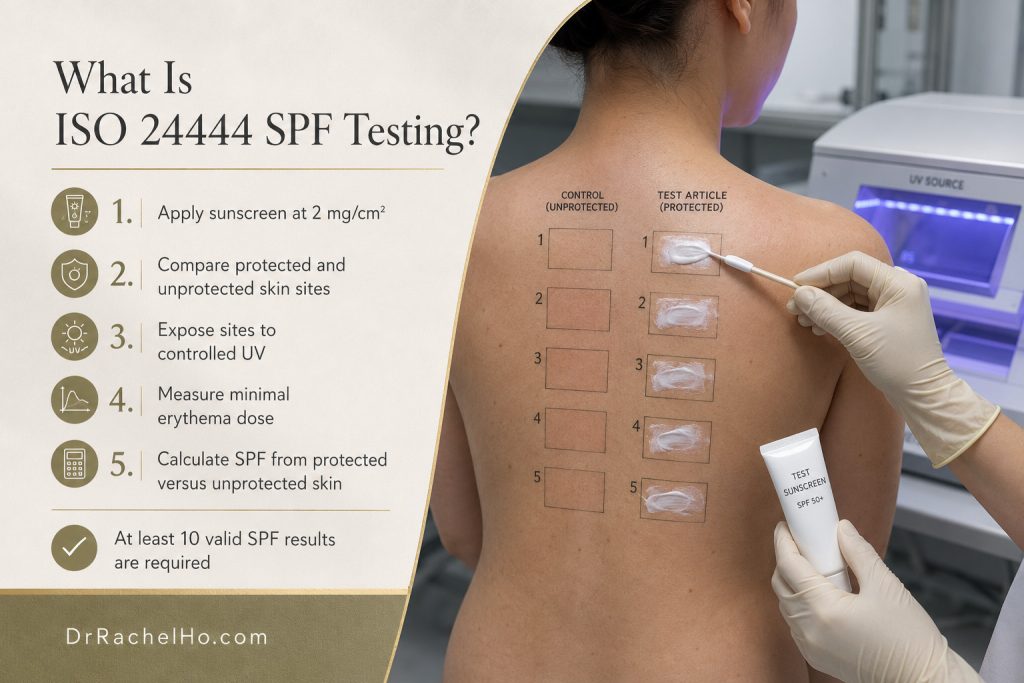
ISO 24444 is the international testing standard for SPF of sunscreens on human skin. This method standardises some of the parameters used in SPF testing such as standard thickness of sunscreen of 2 mg per square centimetre. A protected test site and an unprotected test site are exposed to controlled ultraviolet radiation. SPF is calculated by comparing the minimal erythema dose on protected skin against unprotected skin. ISO 24444 requires at least 10 valid SPF results.
Why Sunscreens Can Fall Short of SPF Ratings
There are several reasons a sunscreen can test below its expected SPF.
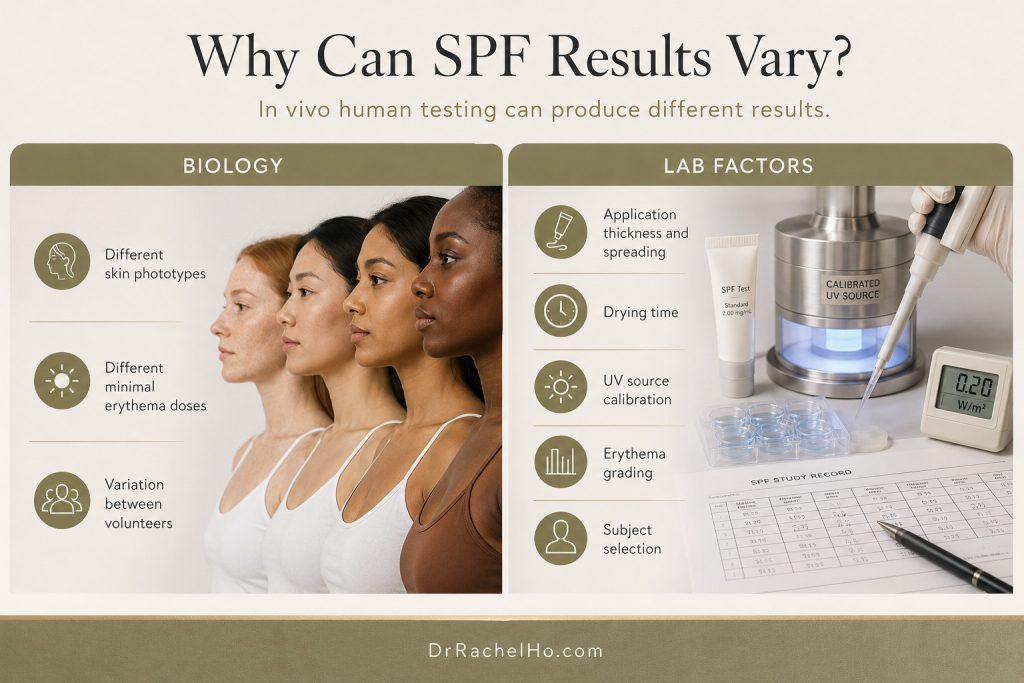
First, SPF testing is performed on human volunteers. Due to biological differences in humans, such as different skin phototypes and individual minimal erythema dose, test results can vary. These biological differences are why formal SPF testing requires multiple valid subjects and statistical acceptance criteria.
Second, laboratories can vary in technique, even when methods are standardised. Application thickness, spreading method, drying time, UV source calibration, exposure increments, erythema grading and subject selection can affect the measured SPF.
My Take on the Ongoing Korea Daiso Sunscreen Controversy as an Aesthetic Doctor and Beauty Industry Advisor
Sunscreens supposedly falling short of their SPF claims is not new, and will be an ongoing issue in sunscreen testing due to variations in biological behavior among human subjects and due to variations across laboratories. In-vivo SPF testing methods such as ISO 23675 (the in vitro Double Plate Method) and ISO 23698 (Hybrid Diffuse Reflectance Spectroscopy) are some of the SPF tests that can be adapted with current ISO 24444 tests for more accurate measures of a sunscreen’s SPF.
As an aesthetic doctor, my first response is caution, since these allegations have not been confirmed. However, shortfalls in SPF claims can result in users having inadequate UV protection, leading to burns and increased risks of skin cancer.
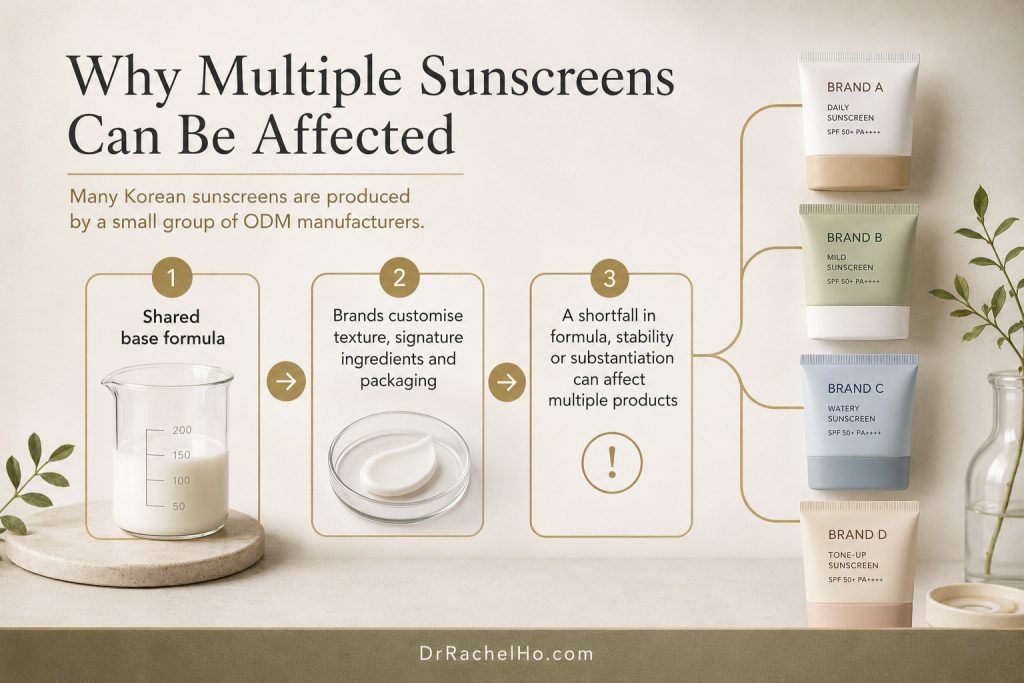
What may surprise many readers is that many popular Korean sunscreens come from a relatively small group of ODM manufacturers, which create a base formula that can be customised by beauty brands. Korean beauty brands often customise this shared formulation base with signature ingredients, texture changes, fragrance, packaging and marketing story. This is one reason Korean sunscreens can be elegant, affordable and fast to launch. However, the mass production of sunscreen by a small number of ODM or white label manufacturers also means that if there is a problem in a base formula, stability testing, manufacturing process or substantiation pathway, many sunscreens can also be affected.
Dr Rachel Ho’s Takeaway on the Korean Daiso Sunscreen Scandal
The Korea Daiso sunscreen scandal is ultimately about accountability to consumers, in spite of the limitations of sunscreen tests. For brands and retailers that profit from the claims and sales of sunscreen, the onus is ultimately on brands, manufacturers and retailers to ensure that the product sold to consumers lives up to the advertised SPF claims. This story is still developing, and I will continue to follow it for updates.
References
- Seoul Economic Daily. Daiso Disputes YouTuber’s Claim That Sunscreens Fail SPF Standards. 2026.
- Asia Business Daily. What’s Going On with Daiso Sunscreen? YouTube Uproar over 30 Million Won Clinical Trial. 2026.
- Ministry of Food and Drug Safety, Korea. Functional Cosmetics Approval Process.
- ISO 24444:2019. Cosmetics, Sun Protection Test Methods, In Vivo Determination of SPF.
- Trullàs C, Granger C, Lim HW, Krutmann J, Masson P. Linear and exponential sunscreen behaviours as an explanation for observed discrepancies in sun protection factor testing. Photodermatol Photoimmunol Photomed. 2020.
- Teramura T, Mizuno M, Asano H, Naito N, Arakane K, Miyachi Y. Relationship between sun protection factor and application thickness in high performance sunscreen. Clin Exp Dermatol. 2012.

No Comments