


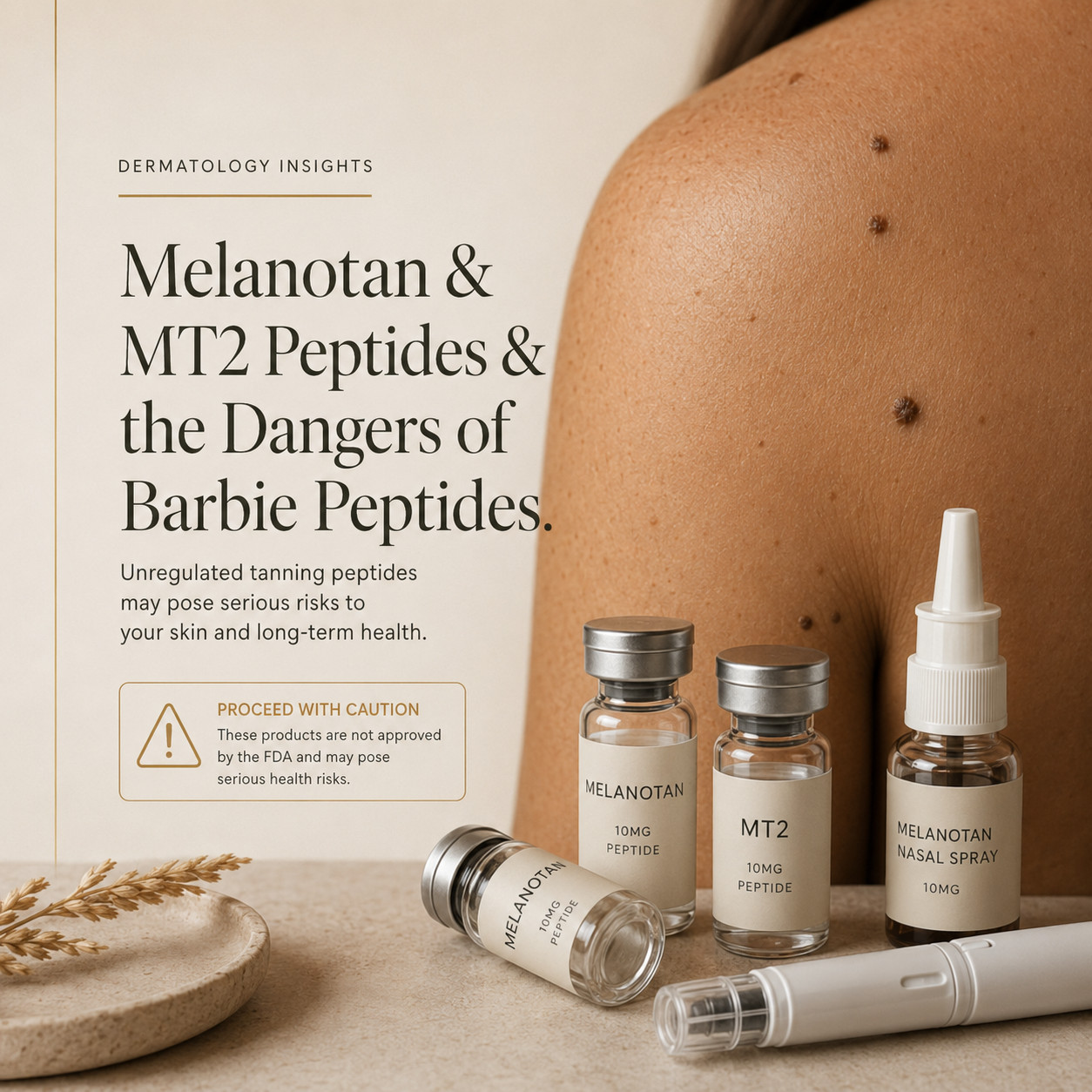
25 Jul Melanotan II & MT2 Peptides: The Dangers of Barbie Peptides
If you’re like the sun-kissed glow and tanned skin, you might have come across #tanmaxxing and the Barbie peptide craze on Reddit and TikTok, which has alarmed doctors. Melanotan or MT2 peptides are unregulated peptides administered as self-injections or through nasal sprays to create a tan without sun or UV exposure. However, many users are not aware that Melanotan or MT2 peptides can trigger new moles and have been linked to the development of skin cancers such as melanomas. As a result of these risks and the illegal distribution and manufacturing of Melanotan, TikTok has banned the term #melanotan- but not MT2, leaving behind another loophole for promoting this dangerous behaviour.
Related blogposts:
5 Aesthetic Trends to Avoid
What is the Barbie Arm Botulinum toxin Treatment
Why Are Peptide Skincare Products So Expensive?
This blogpost on Melanotan and MT2 injections and sprays will dive into the science and dangers of this peptide treatment.
Key Takeaways
- Melanotan and MT2 are synthetic analogues of alpha melanocyte stimulating hormone.
- They darken skin by stimulating melanocytes to produce more melanin.
Melanotan products promoted for cosmetic tanning are unregulated and are not approved for cosmetic tanning. - The most concerning dermatology reports involve rapid darkening of moles, new pigmented lesions and diagnostic confusion during mole checks.
- Patients who have used Melanotan and notice changing moles should have their moles evaluated.
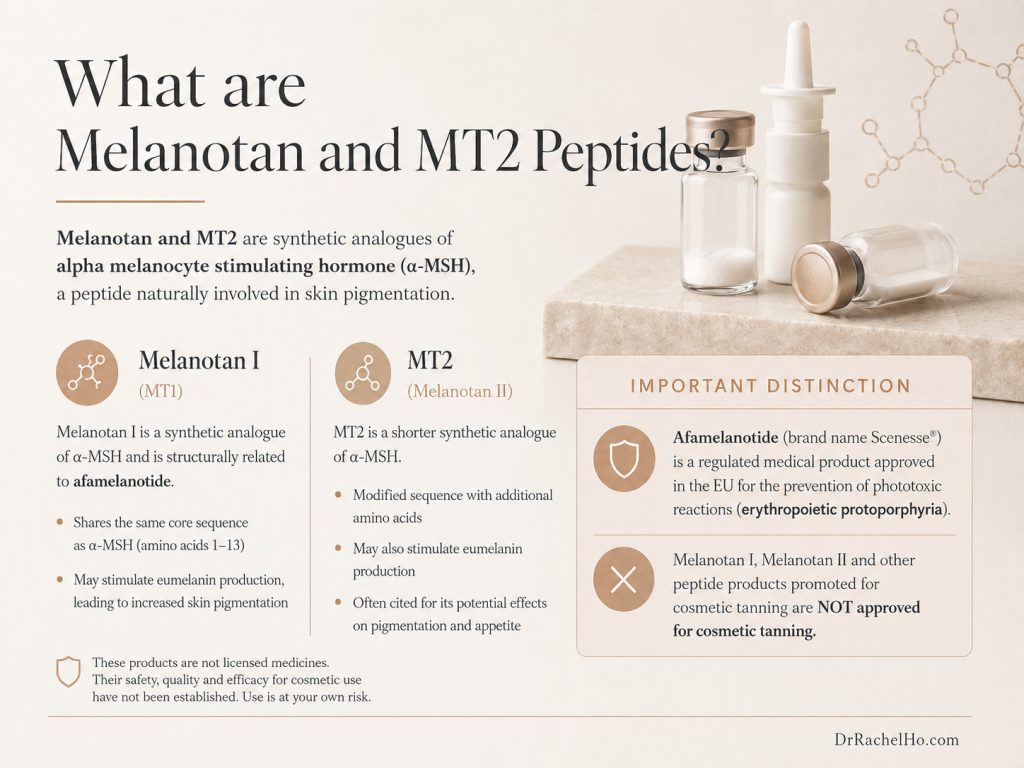
Melanotan and MT2 are synthetic peptides designed to stimulate pigment production, but products sold for cosmetic tanning are not approved for beauty use.
What Are Melanotan and MT2 Peptides?
Melanotan is a group of synthetic peptides that mimics alpha melanocyte stimulating hormone, or alpha MSH. This hormone is involved in the skin’s pigmentation formation pathway.
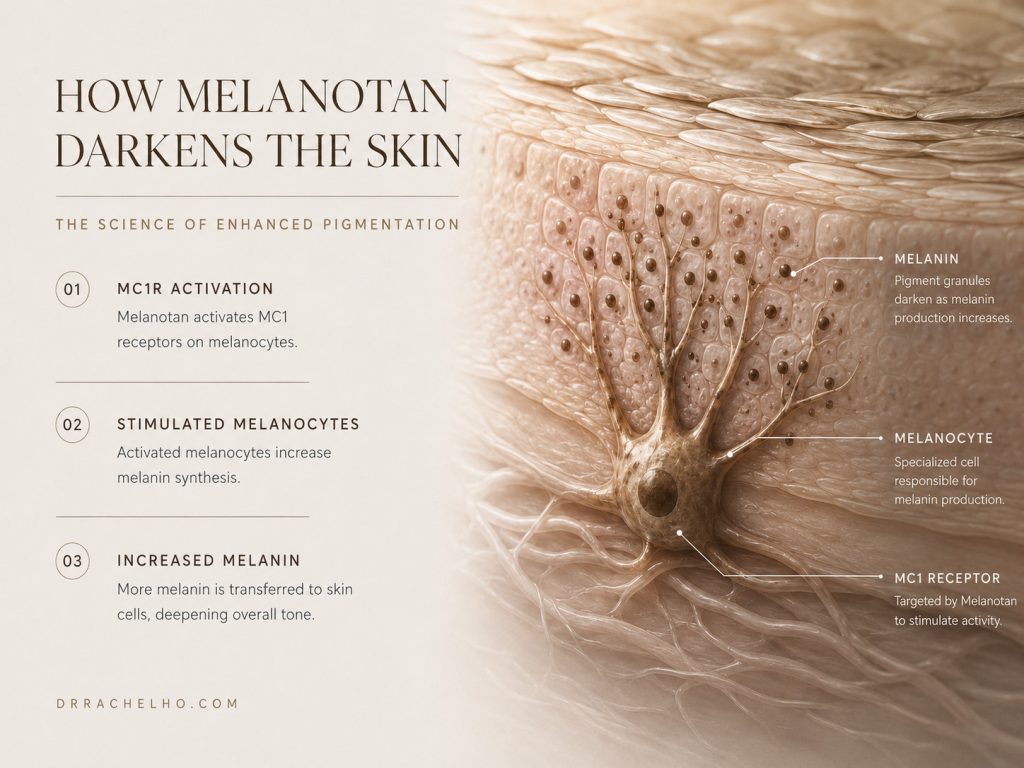
Melanotan and MT2 darken the skin by stimulating melanocytes to make more melanin, which is why users can develop a tanned appearance without direct UV exposure.
How Do Melanotan or MT2 Peptides Darken the Skin?
Melanotan/ MT2 peptides activate melanocortin receptors, especially MC1 receptors, on melanocytes (melanin or pigment producing cells). This triggers melanin production by the melanocytes, leading to increased melanin, the brown black pigment associated with tanning1,2.
This is how Melanotan or MT2 peptides darken the skin without direct UV exposure. Some users also combine Melanotan or MT2 peptides with sunbathing or tanning beds, which worsens the ultraviolet damage to the skin4.
Related blogpost:
Sunscreen Contouring: A Dangerous TikTok Trend
Melanotan 1 VS Melanotan 2: What are the differences?
Melanotan I is a longer peptide related to afamelanotide. Melanotan II is a shorter analogue that can act on melanocortin receptors beyond the skin1.
The regulated medical product often confused with Melanotan 2 is afamelanotide (i.e. Melanotan 1), sold as Scenesse. This is FDA approved only to increase pain free light exposure in adults with erythropoietic protoporphyria, a rare photosensitivity disorder3.
Why Dermatologists Are Concerned about Melanotan or MT2 Peptides
Melanotan II is not approved by the FDA or any major regulatory authority and is classified as an illegal substance in some countries. This unregulated nature of Melanotan 2 production raises concerns about its manufacturing standards including composition, purity, contamination and quality control.
Secondly, because Melanotan 2 stimulates melanocytes to produce more melanin, it can cause existing moles to grow and darken, which can complicate assessment of moles7. Melanotan can also accelerate the growth of bengin moles into atypical naevi or trigger melanoma6-8.
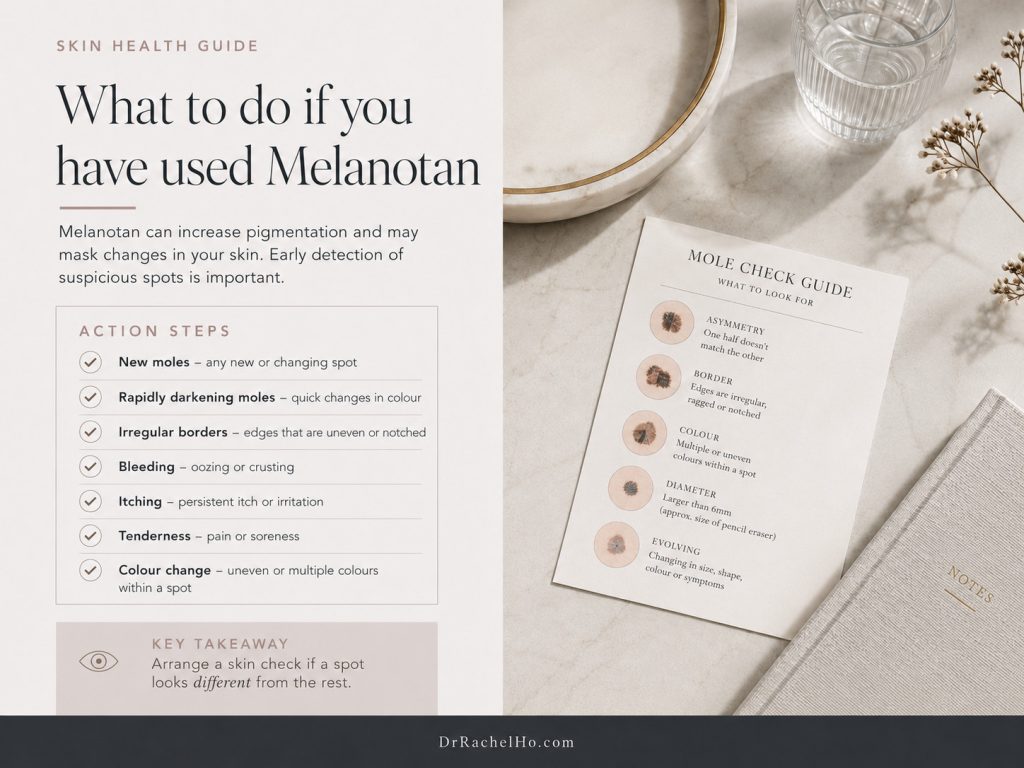
If you have used Melanotan or MT2 and notice new or changing moles, irregular borders, bleeding, itching or tenderness, arrange a skin check promptly.
What Should You Do If You Have Used Melanotan or MT 2 Peptides?
If you have used Melanotan and notice new moles, rapidly darkening moles, irregular borders, bleeding, itching, tenderness, colour change or any spot that looks different from the rest, arrange a skin check with your doctor.
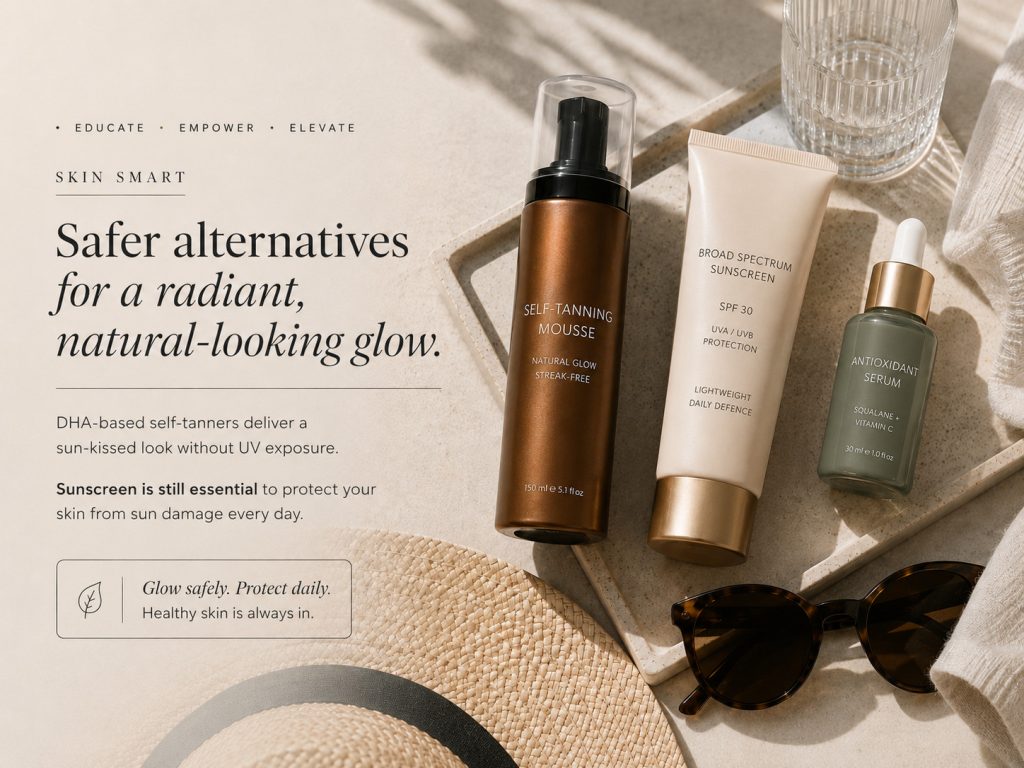
For patients who want a tanned look, DHA based self tanners are a safer cosmetic option than unregulated tanning peptides, though sunscreen is still essential.
Safer Alternatives for a Tanned Look
For safer tans, consider dihydroxyacetone based tanning lotions or sprays. These products interact with amino acids in the skin’s top layer to produce a temporary brown pigment, which generally lasts for 5 to 7 days and does not require ultraviolet exposure to develop colour. They still do not protect against sunburn, so sunscreen remains necessary.
Related blogposts:
Sunscreen Reviews 2024
Do Oral Sunscreens Work?
How to Prevent Sunscreen Pilling
Dr Rachel Ho’s Takeaways on MelanotanII and MT2 Peptides
The Melanotan II and MT2 trend is a reminder that sunless does not automatically mean safe Melanotan can darken moles and trigger conversion of benign moles into skin cancer. Use of Melanotan 2 is also unregulated and illegal in some countries.
References
1. Melanocortin peptide therapeutics: historical milestones, clinical studies and commercialization. Hadley et al. Peptides. 2006 Apr;27(4):921-30.
2. Risks of unregulated use of alpha-melanocyte-stimulating hormone analogues: a review. Habbema et al. Int J Dermatol. 2017 Oct;56(10):975-980.
3. United States Food and Drug Administration. Scenesse afamelanotide implant prescribing information. Initial US approval 2019.
4. Use of melanotan I and II in the general population. Evans-Brown et al. BMJ. 2009 Feb 17:338:b566.
5. Melanotan II injection resulting in systemic toxicity and rhabdomyolysis. Nelson et al. Clin Toxicol (Phila). 2012 Dec;50(10):1169-73.
6. Eruptive melanocytic naevi following melanotan injection. Cousen et al. Br J Dermatol. 2009 Sep;161(3):707-8.
7. Alpha melanocyte stimulating hormone induced eruptive nevi. Cardones and Grichnik. Arch Dermatol. 2009 Apr;145(4):441-4.
8. Does melanotan injection cause melanoma? A systematic review of the effects of melanotan injections. Javed et al. June 2013International Journal of Surgery 11(8):Page 677

No Comments