


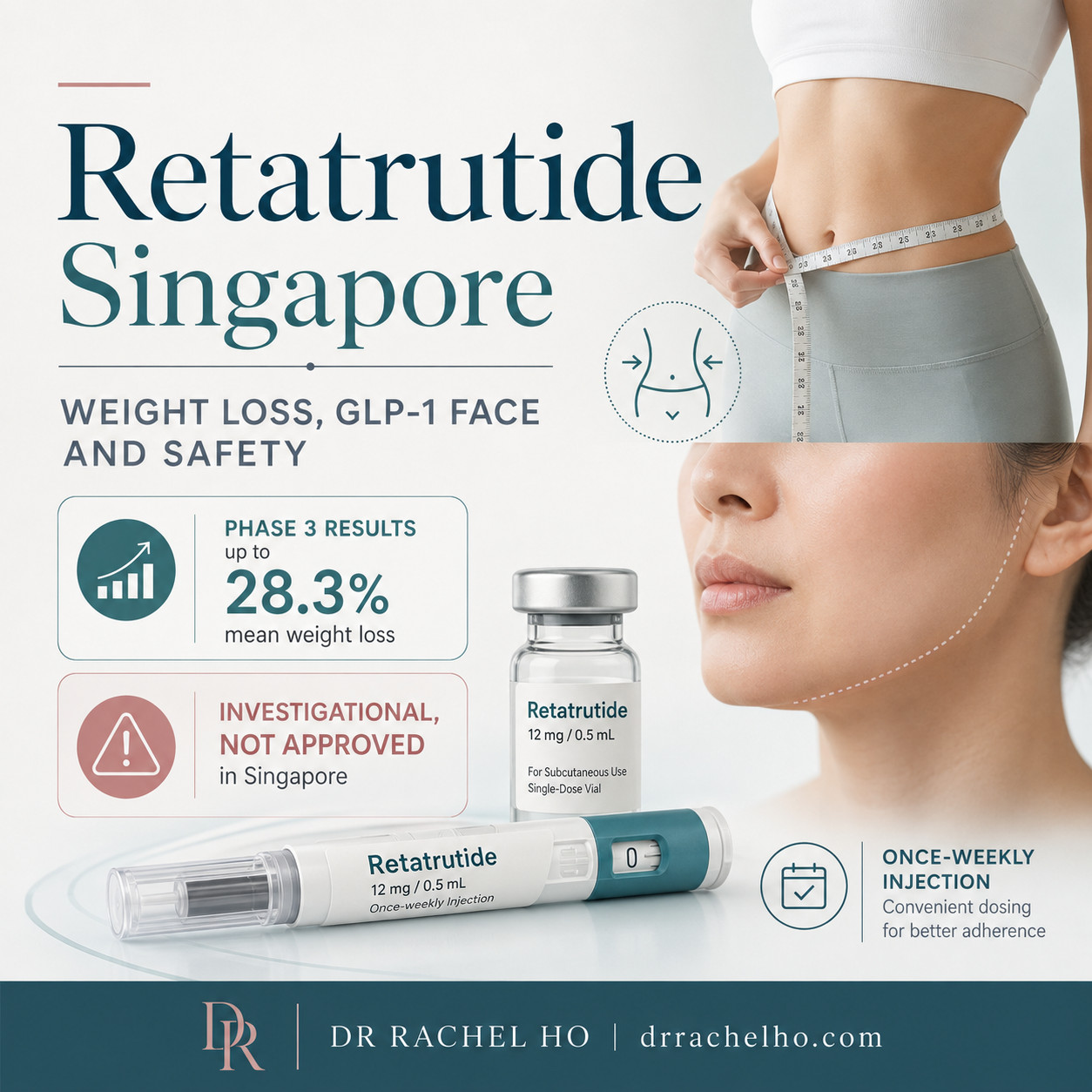
31 Aug Retatrutide Singapore: Weight Loss, GLP-1 Face and Safety
Retatrutide in Singapore: Weight Loss Results, GLP-1 Face and Safety
By Dr Rachel Ho | Updated 31 August 2026
With Phase 3 clinical trials reporting unprecedented weight reductions of up to 28.3%, retatrutide, a “triple agonist” targeting the GIP, GLP-1, and glucagon receptors, has emerged to be one of 2026’s most anticipated medication in the field of weight loss and GLP-1 agonists.
Although retatrutide is still being assessed in clinical trials, and won’t be commercially available until 2027, there has been news of unregulated, black-market retatrutide being sold online, bypassing medical oversight. As an aesthetic doctor who routinely manages the complex biological realities of rapid weight loss including GLP-1 faces, I am concerned about the illegal sales of GLP-1 medications and the lack of medical supervision that the user ends up with.
Before navigating the highly risky unregulated peptide market, let’s unpack the evidence-based reality of how retatrutide actually works, what the latest 2026 data reveals, and why waiting for approved clinical access is the only safe path forward.
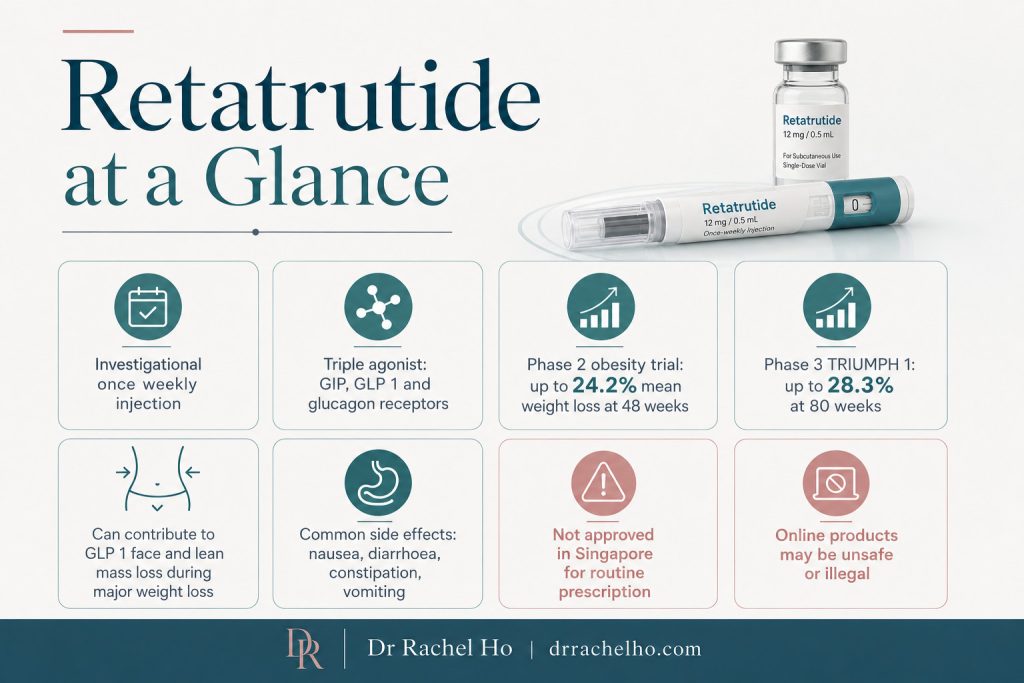
Retatrutide at a glance. Retatrutide is an investigational once weekly triple receptor agonist that activates GIP, GLP-1 and glucagon pathways. Trials have reported substantial weight reduction, although no approved retatrutide product is available for routine prescription in Singapore.
Retatrutide at a glance
Retatrutide FAQ
| Retatrutide FAQ | Evidence based answer |
|---|---|
| What is retatrutide? | Retatrutide is an investigational once weekly injection that activates the GIP, GLP-1 and glucagon receptors within one peptide.1 |
| Is retatrutide a GLP-1 medication? | Retatrutide includes GLP-1 receptor activity, but it also activates the GIP and glucagon receptors. It is therefore described as a triple hormone receptor agonist.1 |
| How much weight loss occurred in Phase 2? | The highest dose group in the Phase 2 obesity trial had a mean weight reduction of 24.2 % after 48 weeks.2 |
| What did the latest Phase 3 obesity trial show? | In TRIUMPH 1, the 12 mg group had a mean reduction of 28.3 % at 80 weeks under the efficacy estimand. The corresponding treatment regimen result was 25.0 %.13 |
| Does retatrutide cause GLP-1 face? | Retatrutide has not undergone a dedicated facial outcome study. Its large weight loss effect could plausibly produce facial fat loss and skin laxity in some patients, but this remains an inference from broader weight loss research.9,10 |
| Does retatrutide cause muscle loss? | Retatrutide reduces both fat mass and lean mass, although fat loss appears to predominate. Lean mass is broader than muscle alone and includes organs, fluids and other tissues.5,11 |
| What are the common side effects? | Nausea, diarrhoea, constipation, vomiting and reduced appetite are common. Dysesthesia and a temporary dose related increase in heart rate have also been reported.2,13 |
| Is retatrutide approved in Singapore? | No HSA approved retatrutide product is available for routine prescription or retail sale as of 31 August 2026.16,21 |
| Can retatrutide be bought safely online? | There is no approved consumer retatrutide product. Online products may have uncertain contents, concentration, sterility and storage conditions.20,21 |
| When will retatrutide be available in Singapore? | No Singapore approval or launch date has been confirmed. Lilly plans to seek US regulatory approval in the first quarter of 2027, but Singapore would require a separate HSA assessment.14,16 |
What is retatrutide?
Retatrutide, previously known by the development code LY3437943, is a single peptide designed to activate the receptors for glucose dependent insulinotropic polypeptide, glucagon like peptide 1 and glucagon1. H ence, retatrutide is also popularly known as GLP-3 on social media.
Retatrutide is currently being studied as a once weekly injection for obesity, type 2 diabetes and several complications associated with excess weight1,4,12-14. Its additional weight loss compared to the other GLP-1 medications, based on preliminary trial results, have made retatrutide highly anticipated in the fields of weight loss and metabolic diseases.
The additional GIP and glucagon receptor activity from retatrutide distinguishes it from semaglutide, which mainly activates GLP-1 receptors, and tirzepatide, which activates GIP and GLP-1 receptors1,7,8.
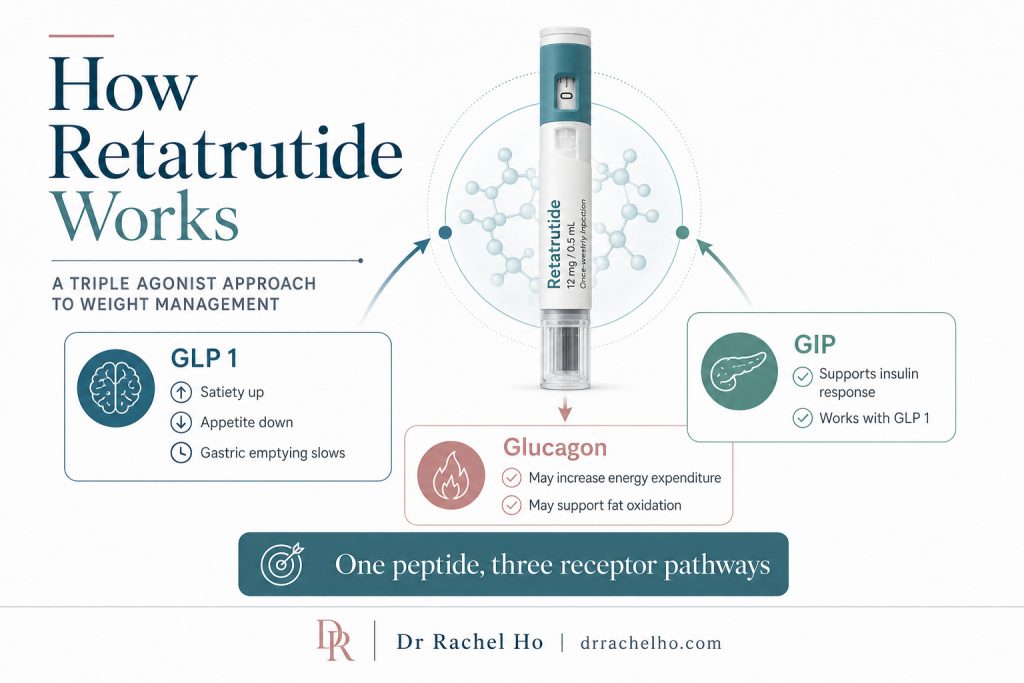
How does retatrutide work? One peptide activates three receptor pathways. GLP-1 supports satiety and appetite reduction, GIP contributes to insulin signalling, while glucagon receptor activity may influence energy expenditure and fat oxidation.
How does retatrutide work?
Retatrutide’s mechanism comes from its activation of receptors for glucose dependent insulinotropic polypeptide, glucagon like peptide 1 and glucagon1.
GLP-1 receptor activity
GLP-1 receptor activation increases satiety, reduces appetite and supports glucose dependent insulin secretion1. It can also slow gastric emptying, particularly during the earlier stages of treatment, which may help explain both its effects on food intake and some of its gastrointestinal side effects1,2.
GIP receptor activity
GIP is another hormone released in response to food. Its receptor supports glucose dependent insulin secretion and may complement the appetite and metabolic effects of GLP-1 receptor activation1.
Glucagon receptor activity
Glucagon receptor activation is the main feature that separates retatrutide from its predecessors, semaglutide and tirzepatide. Laboratory and animal studies suggest that this pathway may increase energy expenditure and fat oxidation while the GIP and GLP-1 components reduce food intake and support glucose regulation1.
What did the Phase 2 retatrutide trials show?
Retatrutide for obesity
The Phase 2 obesity trial included 338 adults with obesity or overweight and at least one weight related condition, without type 2 diabetes2. Mean weight reduction increased with both dose and duration, reaching 24.2 % after 48 weeks in the highest dose group without a clear plateau at the end of the study2.
The magnitude of weight loss was unusually large for a medication trial at that stage of development. Phase 2 studies still have important limits because their purpose includes exploring dose, efficacy and safety before larger confirmatory trials are completed2.
Retatrutide for type 2 diabetes
A separate Phase 2 trial in adults with type 2 diabetes found dose related improvements in both blood glucose and body weight3. HbA1c fell by up to approximately 2.02 %age points, while mean weight reduction reached approximately 16.9 % after 36 weeks at the highest studied dose3.
Gastrointestinal symptoms were the most common adverse effects in that study. These findings helped determine the doses and escalation schedules subsequently tested in the Phase 3 programme3.
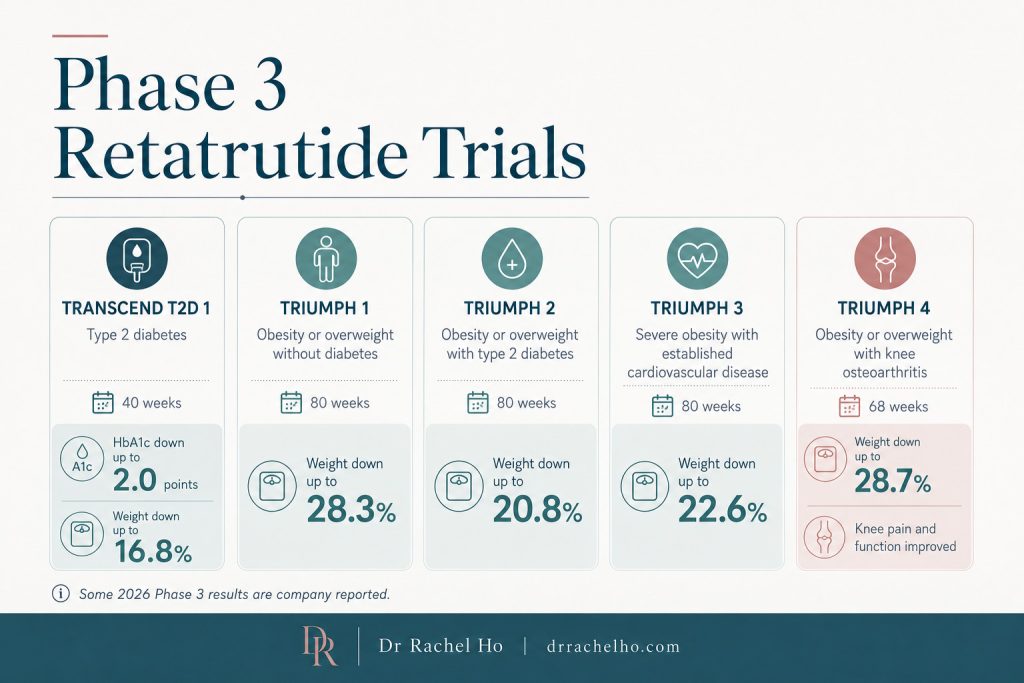
What do the Phase 3 retatrutide trials show? Reported results include improvements in body weight and glucose control across obesity, type 2 diabetes, cardiovascular disease and knee osteoarthritis study populations. Several TRIUMPH results remain company reported rather than fully peer reviewed.
What do the latest Phase 3 retatrutide trials show?
Five Phase 3 studies had reported positive results by July 2026. TRANSCEND T2D 1 has been published in a peer reviewed journal, while the detailed results from several TRIUMPH trials remain available mainly through company announcements and conference presentations4,12-14.
Phase 3 results of retatrutide at a glance
Retatrutide: Phase 3 results
| Trial | Population | Duration | Main reported result | Evidence status |
|---|---|---|---|---|
| TRANSCEND T2D 1 | Type 2 diabetes inadequately controlled with diet and exercise | 40 weeks | HbA1c reduction of up to 2.0 %age points and mean weight reduction of up to 16.8 % under the efficacy estimand.4 | Peer reviewed publication |
| TRIUMPH 1 | Obesity or overweight without diabetes | 80 weeks | Mean weight reduction of 19.0, 25.9 and 28.3 % across the three doses under the efficacy estimand.13 | Company reported Phase 3 results |
| TRIUMPH 2 | Obesity or overweight with type 2 diabetes | 80 weeks | Mean weight reduction of 12.7, 19.1 and 20.8 %, with HbA1c reductions of up to 1.6 %age points.14 | Company reported Phase 3 results |
| TRIUMPH 3 | Severe obesity with established cardiovascular disease | 80 weeks | Mean weight reduction of up to 22.6 %.14 | Company reported Phase 3 results |
| TRIUMPH 4 | Obesity or overweight with knee osteoarthritis | 68 weeks | Mean weight reduction of up to 28.7 % with improvement in knee pain and physical function.12 | Company reported Phase 3 results |
TRANSCEND T2D 1
TRANSCEND T2D 1 randomised 537 adults with relatively early type 2 diabetes to retatrutide or placebo4. At 40 weeks, mean HbA1c reductions ranged from 1.7 to 2.0 %age points under the efficacy estimand, while mean weight reduction ranged from 11.5 to 16.8 %4.
The treatment regimen estimates, which include treatment discontinuation and other events, mean weight reductions of 11.5 to 15.3 %4. Gastrointestinal symptoms occurred mainly during dose escalation, and discontinuation because of adverse events ranged from 2.2 to 5.1 % across the retatrutide groups4.
TRIUMPH 1
TRIUMPH 1 studied adults with obesity or overweight and at least one weight related condition who did not have diabetes13. Under the efficacy estimate, mean weight reduction at 80 weeks was 19.0 % with 4 mg, 25.9 % with 9 mg and 28.3 % with 12 mg13.
The widely repeated figure of 28.3 % assumes that participants remained on assigned treatment without specified intercurrent events. The treatment regimen estimate, which more closely reflects outcomes after events such as treatment discontinuation, was 25.0 % for the 12 mg group13.
A 104 week extension reported mean weight reduction of 30.3 % in participants assigned to the highest dose13. Those participants had started with a BMI of at least 35, completed the initial trial and tolerated treatment, so the result should not be treated as a prediction for every future patient13.
TRIUMPH 2 and TRIUMPH 3
TRIUMPH 2 involved adults with obesity or overweight and type 2 diabetes14. Lilly reported mean weight reductions of 12.7, 19.1 and 20.8 % at 80 weeks, together with HbA1c reductions of up to 1.6 %age points14.
TRIUMPH 3 studied adults with severe obesity and established cardiovascular disease, with or without type 2 diabetes14. Mean weight reduction reached 22.6 %, but the cardiovascular event estimates had wide confidence intervals and did not establish that retatrutide prevents heart attacks, strokes or cardiovascular death12.
TRIUMPH 4
TRIUMPH 4 involved adults with obesity or overweight and knee osteoarthritis12. The highest dose produced a mean weight reduction of 28.7 % at 68 weeks under the efficacy estimand, together with improvements in knee pain and physical function12.
A substantial component of joint improvement may reflect reduced mechanical loading after weight loss. Full peer reviewed publication remains necessary before the size and wider applicability of these benefits can be judged with confidence.
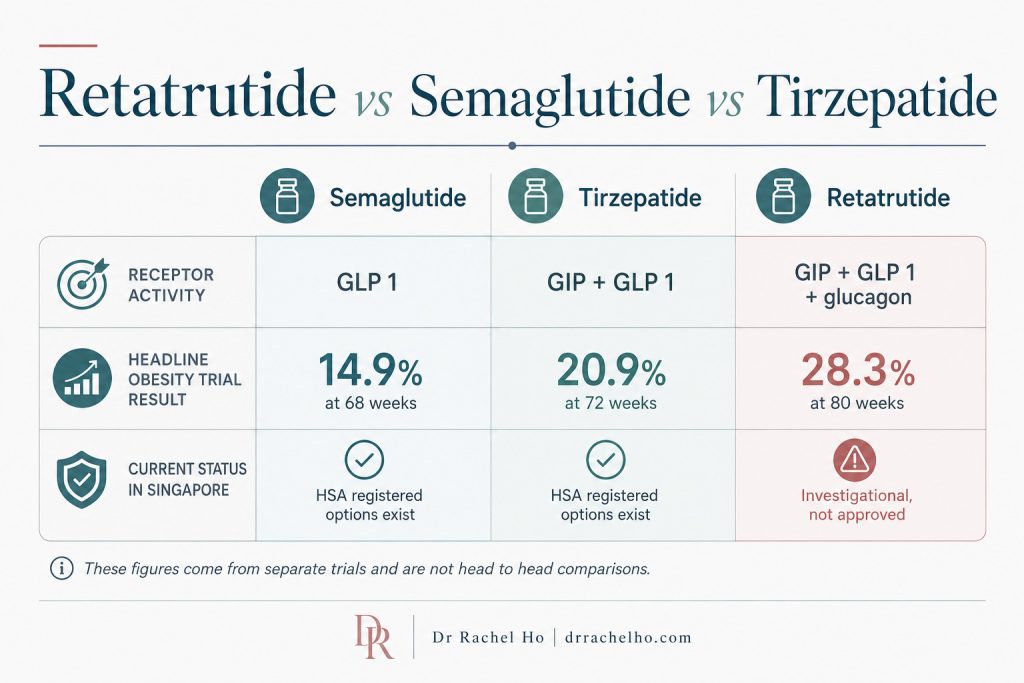
Retatrutide, semaglutide and tirzepatide act through different receptor combinations. Retatrutide has produced greater numerical weight reduction in a separate obesity trial, but differences in participants, duration and trial methods prevent a direct comparison of efficacy.
How does retatrutide compare with semaglutide and tirzepatide?
GLP-1 medications: How do they compare?
| Medication | Receptor activity | Headline obesity trial result | Current position |
|---|---|---|---|
| Semaglutide | GLP-1 | Mean weight reduction of 14.9 % at 68 weeks in STEP 1.7 | HSA registered products exist for defined indications.24 |
| Tirzepatide | GIP and GLP-1 | Mean weight reduction of up to 20.9 % at 72 weeks in SURMOUNT 1.8 | HSA registered products exist for defined indications.25 |
| Retatrutide | GIP, GLP-1 and glucagon | Mean weight reduction of up to 28.3 % at 80 weeks in TRIUMPH 1 under the efficacy estimand.13 | Investigational and unapproved |
Semaglutide primarily activates the GLP-1 receptor, while tirzepatide activates GIP and GLP-1 receptors7,8. Retatrutide adds glucagon receptor activity to these incretin pathways1.
Retatrutide has produced greater numerical weight loss than semaglutide and tirzepatide did in their original obesity trials7,8,13. Differences in trial duration, participants, dose escalation, withdrawal rates and statistical methods can confound results and so, these numbers cannot establish direct superiority7,8,13.
A Phase 3 head to head study comparing retatrutide with tirzepatide is under way15. Until those results are available, claims that retatrutide is definitively better than tirzepatide remain premature15.
Semaglutide and tirzepatide also have a practical advantage that %ages do not capture. Approved products have regulated manufacturing, formal prescribing information, recognised contraindications, batch traceability and post market safety surveillance, while retatrutide has yet to complete regulatory review16,24,25.

Could retatrutide associated weight loss affect the face? Substantial weight reduction may make temple hollowing, flatter cheeks, deeper folds and jawline or neck laxity more visible. Dedicated retatrutide studies have not yet measured facial outcomes, so the association remains plausible rather than proven.
Could retatrutide cause GLP-1 face?
GLP-1 face is a term for hollowed and aged facial changes noticed after substantial weight loss during GLP-1 based treatment. Common features include flatter cheeks, under eye and temple hollowing, deeper facial folds, less jawline support and looser skin along the face and neck9,10. For a fuller explanation of GLP-1 facial changes, risks and treatments, please read GLP-1 Face: Why Weight Loss Can Change Facial Volume and Skin Laxity . That guide also explains why skin quality and tightening treatments need to be prioritised before embarking on volume replacement.
Retatrutide has not yet undergone a dedicated facial volume or skin laxity trial. Its Phase 3 weight loss results make facial changes biologically plausible, particularly in people who lose a large amount of weight, but that conclusion remains an inference rather than a reported retatrutide specific outcome9,10,13.
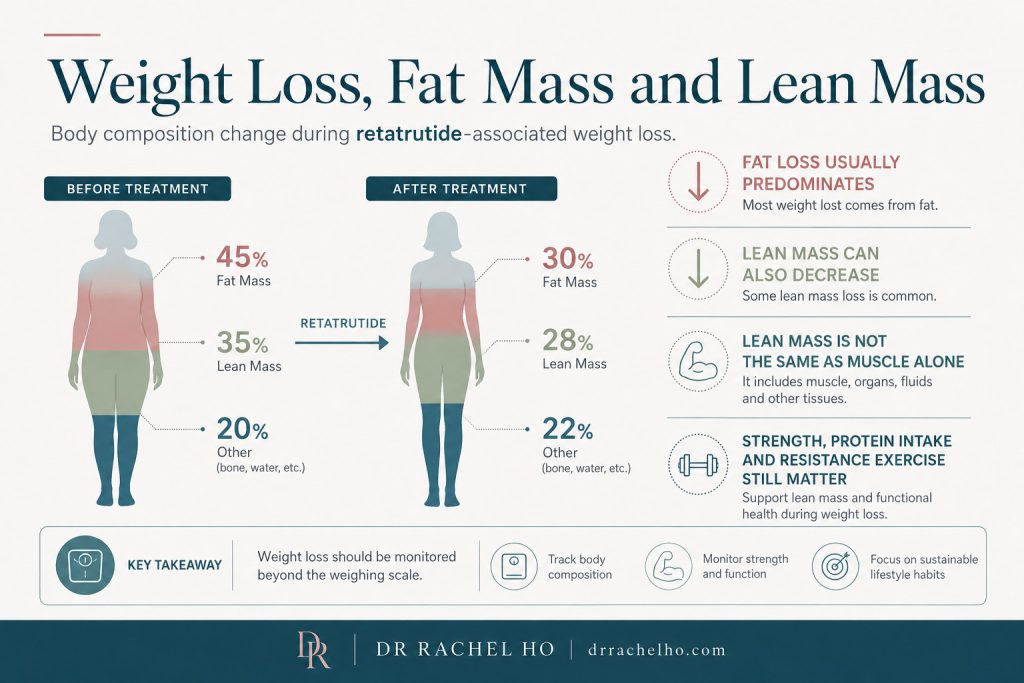
Retatrutide associated weight loss appears to come predominantly from fat mass, although lean mass can also decrease. Lean mass includes muscle, organs, fluids and other tissues, making strength, protein intake, resistance exercise and physical function important considerations during medical weight management.
Does retatrutide cause muscle loss?
Retatrutide reduces fat mass substantially, but lean mass is also lost during treatment5. A 2025 body composition substudy found that fat loss exceeded lean mass loss and that the proportion of lean mass loss was broadly similar to that seen with other obesity treatments5.
This loss of lean mass is a concern in frail and older adults, people with low baseline muscle mass, those consuming very little protein and patients who are physically inactive.11 Monitoring strength, nutrition and function are thus very important in patients taking retatrutide11.
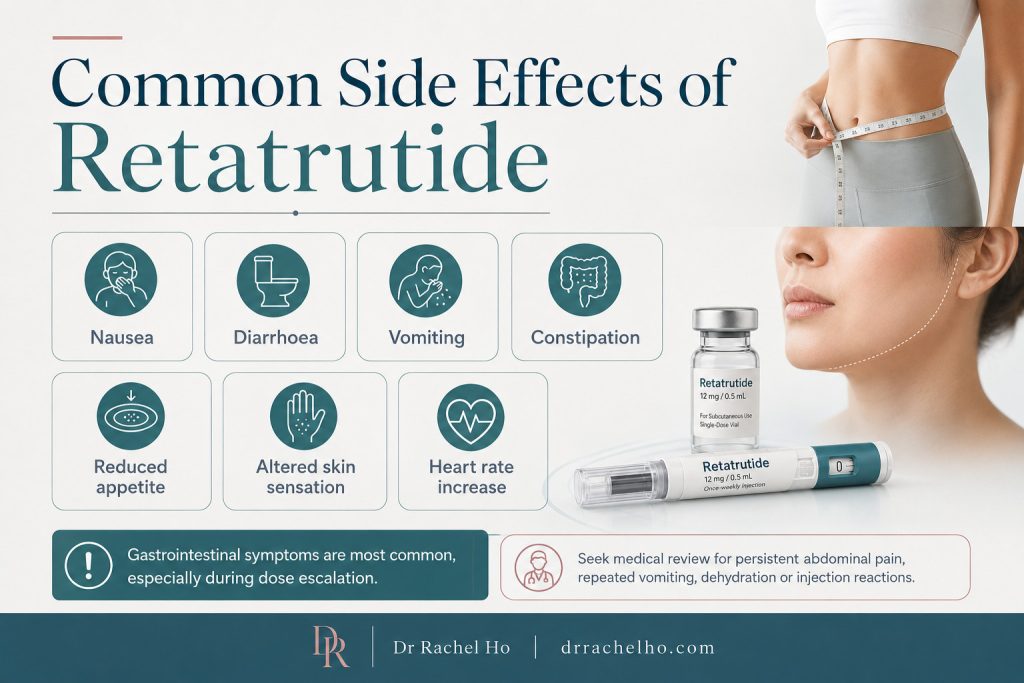
The most commonly reported retatrutide side effects are gastrointestinal. Nausea, diarrhoea, vomiting, constipation and reduced appetite occur most often, while altered skin sensation and a dose related increase in heart rate have also been observed in clinical trials.
What are the side effects of retatrutide?
Among the reported side effects of retatrutide, gastrointestinal symptoms were the most frequently reported. These symptoms include nausea, diarrhoea, vomiting, constipation, abdominal discomfort and reduced appetite2-4, 12,13.
In TRIUMPH 1, nausea occurred in 42.4 % of participants receiving the highest dose, while diarrhoea occurred in 32.0 %, constipation in 26.1 % and vomiting in 25.3 %13. Adverse events led to discontinuation in 11.3 % of the highest dose group, which shows that strong average efficacy does not mean treatment is easily tolerated by everyone13.
Dysesthesia refers to an altered or unusual skin sensation. It occurred in 12.5 % of the highest dose TRIUMPH 1 group compared with 0.9 % of the placebo group, and most cases were described as mild to moderate13.
The Phase 2 obesity trial also found a dose related increase in heart rate that peaked at 24 weeks before declining later in treatment2. The long term significance of this change still requires assessment in larger cardiovascular outcome studies2.
Longer follow up is needed to define uncommon adverse events, cardiovascular outcomes, pregnancy related risks, weight maintenance after treatment and the effects of prolonged exposure.
Is retatrutide approved in Singapore?
Retatrutide is not approved for routine prescription or sale in Singapore as of 31 August 2026. Eli Lilly, the manufacturer of retatrutide, states that no medicine containing retatrutide has been approved for human use by any regulatory agency in the world21.
Retatrutide is only legally available through regulated clinical trials. Any product advertised as Retratrutide through social media, online retailers, gyms, wellness providers or online peptide shops are unverified, unregulated and may even be fake.
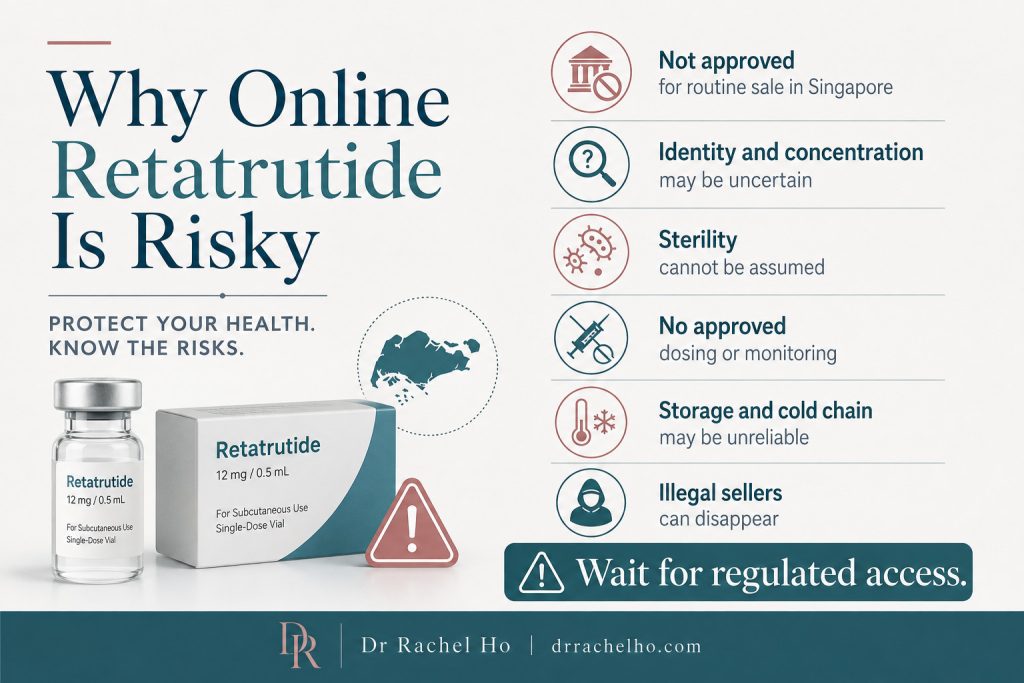
Why is online retatrutide risky? Products sold through websites, social media or messaging platforms may have uncertain identity, concentration, sterility, dosing and storage. Consumers in Singapore should wait for regulated access rather than injecting an unverifiable peptide product
What about illegal retatrutide sold in Singapore in Malaysia?
Unauthorised, illegal sale of retatrutide has been reported online and through the blackmarket. News reports from Malaysia have reported sale of illegal “retatrutide” medications; and Malaysia’s Ministry of Health has warned the public against the use and purchase of retatrutide weight loss pens in the country.
The international black market has also expanded illegal retatrutide sales. Lilly filed six lawsuits in August 2026 against businesses accused of selling unapproved retatrutide and called for stronger action from social media platforms, payment companies and regulators21.
Why is buying retatrutide before it has received regulatory approval dangerous?
1. Unregulated Black-Market & Synthetic Risks
Because retatrutide is not yet approved by regulatory bodies (such as the US FDA or Singapore’s HSA), there is no legally manufactured retail version of retatrutide anywhere in the world. Anything purchased online, via social media, or from unauthorised suppliers carries risks of unknown purity & chemical composition. The lack of regulatory oversight and likely quality control also raises doubts about the sterility, risks of infection and stability of illegally obtained and unapproved retatrutide.
2. Clinical & Biological Safety Risks
Retatrutide is a triple receptor agonist that simultaneously activating GIP, GLP-1, and glucagon receptors. This makes it significantly more potent than single or dual-action medications (like semaglutide or tirzepatide), which can potentially result in more adverse events when taken without medical supervision.
3. Missing Clinical & Regulatory Safeguards
When a patient takes a legally approved medication, they are protected by an entire healthcare ecosystem. Pre-launch use removes all of these safeguards including medical screening, titration supervision or any recourse with adverse drug events.
What should you do if you already bought retatrutide online?
Anyone who has bought a product sold as retatrutide should arrange a medical review before taking another dose. Keep the vial, packaging, batch number, payment records and seller messages because they may help a doctor or regulator identify what was supplied.
Suspicious sales of unregistered health products can be reported to HSA. The agency encourages members of the public to report possible offences to its Enforcement Branch22.
What is new in retatrutide research in 2026?
A 2026 exploratory analysis found changes in lipid and metabolite patterns associated with fatty acid oxidation and insulin resistance during retatrutide treatment6. These findings may help explain some of its metabolic effects, although an exploratory biomarker analysis cannot prove that a single pathway caused the observed weight los6.
Retatrutide is also being studied for obstructive sleep apnoea, metabolic liver disease, cardiovascular and kidney outcomes, knee osteoarthritis and chronic lower back pain12-14. Although these conditions are associated with weight gain, each indication will require its own evidence and regulatory assessment rather than being assumed from the weight loss result alone.
A direct Phase 3 comparison with tirzepatide is in progress15. A separate cardiovascular and kidney outcomes study is also evaluating whether retatrutide reduces serious clinical events rather than only improving risk markers15.
Lilly plans to submit retatrutide for US regulatory review in the first quarter of 202714. Lilly also announced a narrowly limited preapproval access programme in the United States for selected patients who meet specific medical criteria and cannot enter a trial23.
Dr Rachel Ho’s clinical perspective on retatrutide
Retatrutide deserves serious clinical attention because its effects on weight and metabolic health are substantial. And already we see that its reputation precedes its official release, with black market and illegal sales of retatrutide even before the drug has completed all of its phase 3 clinical trials. While retatrutide can be a game changer in the field of medical weight loss and metabolic diseases, its potency and side effects also means that retatrutide should only be taken under medical supervision, when it’s finally commercially available. I’ll be updating this blogpost, for more about GLP-1 agonist drugs and weight loss please read my clinic’s guide to GLP-1 Weight Loss Injections in Singapore.
Frequently asked questions about retatrutide Singapore
Is retatrutide available in Singapore?
Retatrutide is not an HSA approved medicine for routine prescription or sale in Singapore as of 31 August 202616,21.
Is retatrutide approved by the FDA?
Retatrutide has not been approved by the US FDA or any other regulatory agency21. Lilly plans a US submission in the first quarter of 2027, after which regulators would still need to evaluate its efficacy, safety, manufacturing and proposed prescribing information14,21.
Can retatrutide be bought legally online?
There is no approved consumer retatrutide product available through an online retailer. Websites, messaging accounts and social media sellers may advertise it, but their products fall outside the regulated medicine supply chain and may have uncertain identity, concentration, sterility and storage20,21.
Is retatrutide a GLP-1 medication?
Retatrutide activates the GLP-1 receptor, but it also activates the GIP and glucagon receptors1. Triple hormone receptor agonist is therefore a more complete description than GLP-1 agonist alone1.
Is retatrutide the same as GLP-3?
GLP-3 is an inaccurate online nickname rather than a recognised hormone or medication class. Retatrutide acts on three separate receptors, namely GIP, GLP-1 and glucagon1.
Does retatrutide cause GLP-1 face?
Dedicated retatrutide trials have not measured facial volume or skin laxity as formal outcomes. Its substantial weight loss could plausibly produce the hollowing and laxity associated with GLP-1 face in some patients, but that remains an inference from broader weight loss research9,10,13.
Is retatrutide better than tirzepatide?
Retatrutide has produced greater numerical weight loss in separate trials, but those studies differed in their populations, duration and statistical methods18,13. A direct Phase 3 comparison is under way, so superiority cannot yet be established15.
How much weight can someone lose with retatrutide?
The highest dose in TRIUMPH 1 produced a mean reduction of 28.3 % at 80 weeks under the efficacy estimand and 25.0 % under the treatment regimen13. Individual outcomes varied, and trial averages cannot predict one person’s response or tolerability.13.
Does retatrutide cause muscle loss?
Retatrutide treatment reduces some lean mass as body weight falls, while fat mass appears to account for the larger share of the reduction5.Lean mass is not identical to muscle, so strength, physical function and nutritional status provide important additional information11.
When will retatrutide be available in Singapore?
There is no confirmed approval or launch date for retatrutide in Singapore. A planned US submission in early 2027 would be followed by regulatory review, while Singapore availability would require a separate HSA application and decision14,16.
Conclusion
Retatrutide may become an important treatment for obesity, type 2 diabetes and selected complications associated with excess weight. Its Phase 3 results justify close attention, but they do not justify injecting an unapproved product from an unverifiable source.
Regulated manufacturing, medical assessment and follow up are part of the treatment rather than administrative barriers. Waiting for approved access is safer than turning yourself into an uncontrolled experiment.
Scientific references
- Coskun T, Urva S, Roell WC, et al. LY3437943, a novel triple glucagon, GIP and GLP-1 receptor agonist for glycaemic control and weight loss: from discovery to clinical proof of concept. Cell Metabolism. 2022;34(9):1234 to 1247.e9. doi:10.1016/j.cmet.2022.07.013.
- Jastreboff AM, Kaplan LM, Frías JP, et al. Triple Hormone Receptor Agonist Retatrutide for Obesity: a Phase 2 Trial. New England Journal of Medicine. 2023;389(6):514 to 526. doi:10.1056/NEJMoa2301972.
- Rosenstock J, Frías J, Jastreboff AM, et al. Retatrutide, a GIP, GLP-1 and glucagon receptor agonist, for people with type 2 diabetes: a randomised, double blind, placebo and active controlled Phase 2 trial. The Lancet. 2023;402(10401):529 to 544. doi:10.1016/S0140-6736(23)01053-X.
- Bajaj HS, Welch M, Shah P, et al. Efficacy and safety of retatrutide in people with type 2 diabetes and inadequate glycaemic control with diet and exercise: TRANSCEND T2D 1. The Lancet. 2026;407(10546):2402 to 2413. doi:10.1016/S0140-6736(26)00967-0.
- Coskun T, Wu Q, Schloot NC, et al. Effects of retatrutide on body composition in people with type 2 diabetes: a substudy of a Phase 2 randomised trial. The Lancet Diabetes and Endocrinology. 2025;13(8):674 to 684. doi:10.1016/S2213-8587(25)00092-0.
- Pearson MJ, Willency JA, Lin Y, et al. Retatrutide and lipid and metabolite profiles in participants with obesity with or without type 2 diabetes. Journal of Clinical Endocrinology and Metabolism. Published online 14 May 2026. doi:10.1210/clinem/dgag201.
- Wilding JPH, Batterham RL, Calanna S, et al. Once Weekly Semaglutide in Adults with Overweight or Obesity. New England Journal of Medicine. 2021;384(11):989 to 1002. doi:10.1056/NEJMoa2032183.
- Jastreboff AM, Aronne LJ, Ahmad NN, et al. Tirzepatide Once Weekly for the Treatment of Obesity. New England Journal of Medicine. 2022;387(3):205 to 216. doi:10.1056/NEJMoa2206038.
- Sharma RK, Vittetoe KL, Barna AJ, et al. Radiographic Midfacial Volume Changes in Patients on GLP-1 Agonists. Otolaryngology Head and Neck Surgery. 2025;173(2):360 to 366. doi:10.1002/ohn.1209.
- Frank K, Guertler A, Hoffmeister V, et al. GLP-1 Induced Weight Loss and the Face: Anatomical Mechanisms and Rationale for Collagen Stimulating and Volumising Aesthetic Treatments. Dermatologic Surgery. 2026;52(6S):S55 to S60. doi:10.1097/DSS.0000000000005180.
- Neeland IJ, Linge J, Birkenfeld AL. Changes in lean body mass with glucagon like peptide 1 based therapies and mitigation strategies. Diabetes, Obesity and Metabolism. 2024;26 Suppl 4:16 to 27. doi:10.1111/dom.15728.
Current trial and regulatory sources
- Eli Lilly and Company. TRIUMPH 4 Phase 3 results for retatrutide in adults with obesity or overweight and knee osteoarthritis. 11 December 2025.
- Eli Lilly and Company. TRIUMPH 1 Phase 3 results for retatrutide in adults with obesity or overweight. 21 May 2026.
- Eli Lilly and Company. TRIUMPH 2 and TRIUMPH 3 Phase 3 results. 23 July 2026.
- ClinicalTrials.gov. Retatrutide compared with tirzepatide in adults with obesity. NCT06662383.
- Health Sciences Authority Singapore. Regulatory overview of therapeutic products. Updated 2026.
- Health Sciences Authority Singapore. Import and supply of unregistered therapeutic products for patient use. Updated 25 May 2026.
- Ministry of Health Singapore. Cases of unauthorised sale of drugs for treatment of diabetes and obesity. 10 September 2024.
- Channel News Asia. Singapore authorities warn against illegal injectable peptides sold online. 19 February 2026.
- US Food and Drug Administration. FDA concerns with unapproved GLP-1 drugs used for weight loss. Updated 15 June 2026.
- Eli Lilly and Company. Lilly calls for action against the illegal retatrutide black market. 12 August 2026.
- Health Sciences Authority Singapore. Reporting suspicious sales of illegal health products.
- Reuters. Lilly offers narrowly limited preapproval access to retatrutide for selected US patients. 4 August 2026.
- Health Sciences Authority Singapore. New indication approval for semaglutide weight management products. February and August 2025.
- Health Sciences Authority Singapore. Approval of tirzepatide products for defined diabetes and weight management indications. October 2025.

No Comments