


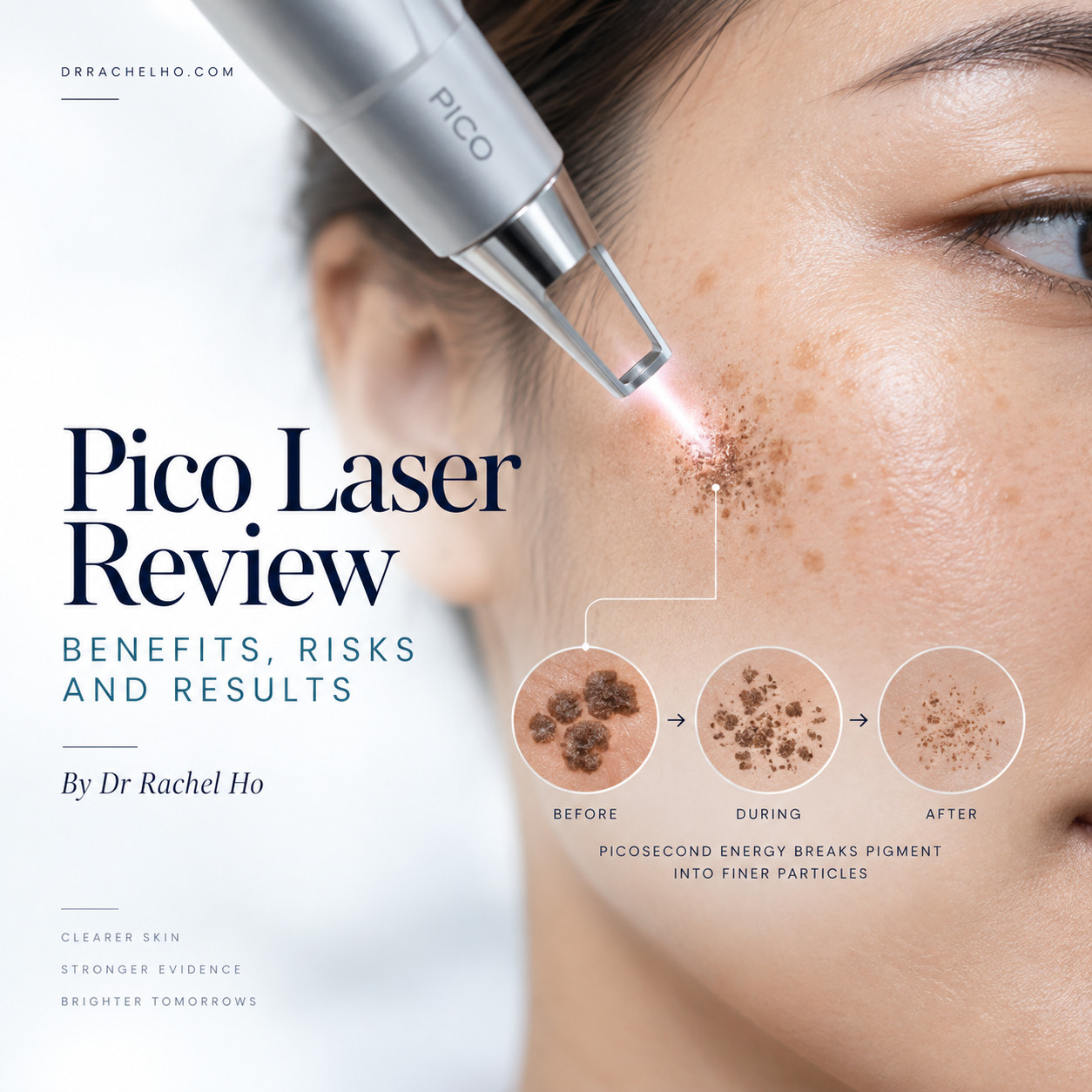
06 Sep Pico Laser Review: Benefits, Risks and What the Evidence Shows
By Dr Rachel Ho, MBBS, MMed
Aesthetic doctor and founder of The Skin Longevity Clinic, Singapore
Last clinically reviewed: 4th October 2026
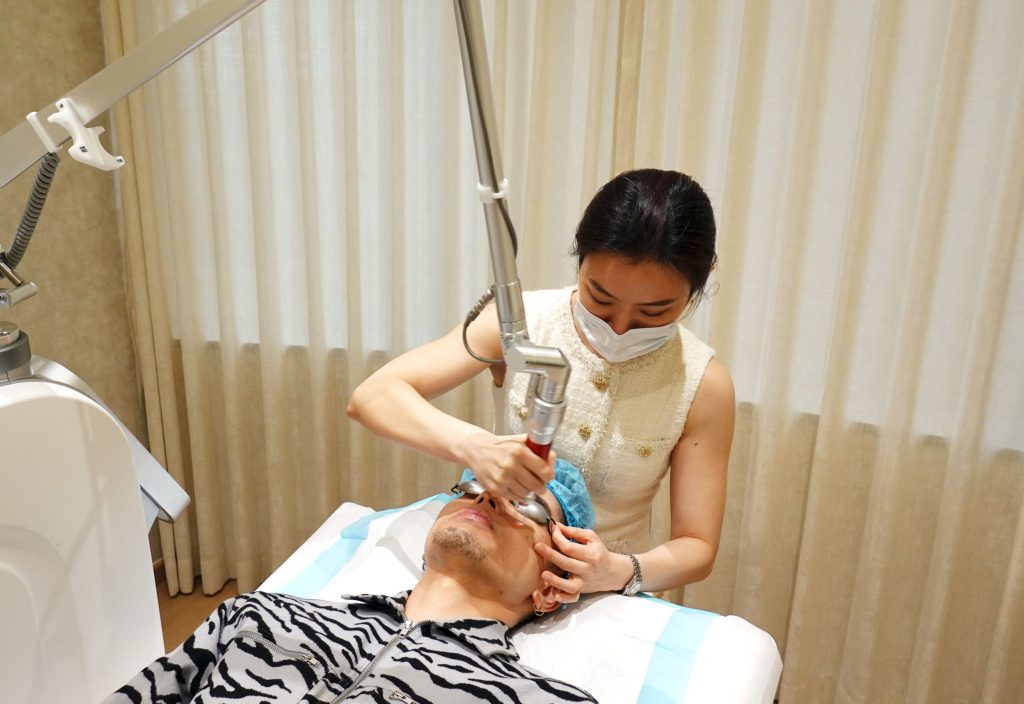
Administering pico laser treatment for my patient in The Skin Longevity Clinic, Singapore
n my clinic, dull skin, dark spots and stubborn pigmentation are among the most frequent concerns patients. In Singapore and Korea, Pico laser treatments have become the standard of care in many clinics to treat these dark spots. Pico laser is also a cornerstone of my pigmentation treatment protocols, especially for my patients with darker skin and complex hyperpigmentation. Pico laser delivers pulses measured in picoseconds. It is used for selected pigmentation concerns and, with fractional delivery, some scars and skin texture concerns².
Results of pico laser treatments depend on the diagnosis, wavelength and treatment settings. For melasma, evidence varies between protocols, and pigment darkening can still occur¹⁰. This pico laser review explains the benefits, limitations and assessment considerations before embarking on pico laser treatment in Singapore.
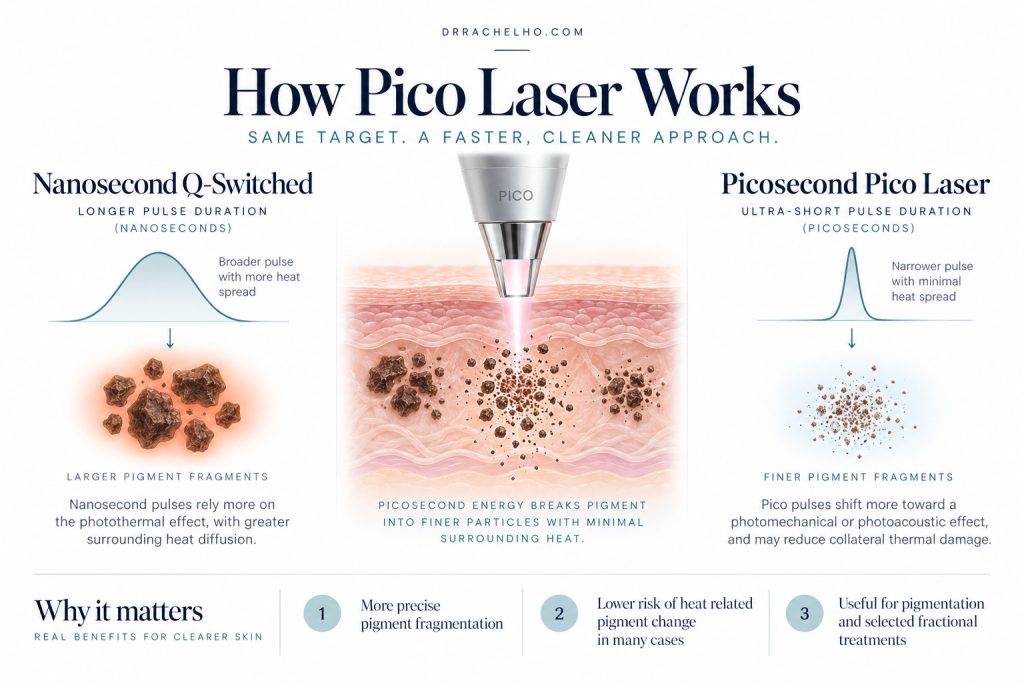
Pico lasers deliver very short pulses that favour mechanical pigment fragmentation while limiting heat spread²,³. The diagrams are schematic, and treatment effects also depend on wavelength, settings and the target tissue²,³.
What is pico laser, and how does it work?
Pico refers to picoseconds, or trillionths of a second, which describe the duration of the laser pulses². These very short pulses favour mechanical fragmentation of pigment (i.e. photoacoustic effect) while limiting the spread of heat, although thermal effects still occur²,³. The wavelength, energy settings and delivery system determine how the laser interacts with the skin².
Pico toning, spot treatment and fractional pico laser
Pico laser functions
| Treatment approach | How it is used | Important distinction |
|---|---|---|
| Pico toning | Broader-area treatment using settings selected for the pigmentation concern. | Evidence depends on the diagnosis and treatment protocol². |
| Spot treatment | Treatment directed at individual diagnosed pigmented lesions. | Settings and recovery differ from a gentle toning treatment². |
| Fractional treatment | Delivery in a fractional pattern, discussed separately for scars and texture concerns. | This approach is studied for collagen remodelling, acne scars, pores and texture³. |
Some of the indications for pico laser treatments include hyperpigmentation such as sun spots (lentigines), melasma and post inflammatory hyperpigmentation. Pico laser is also used for tattoo removal.
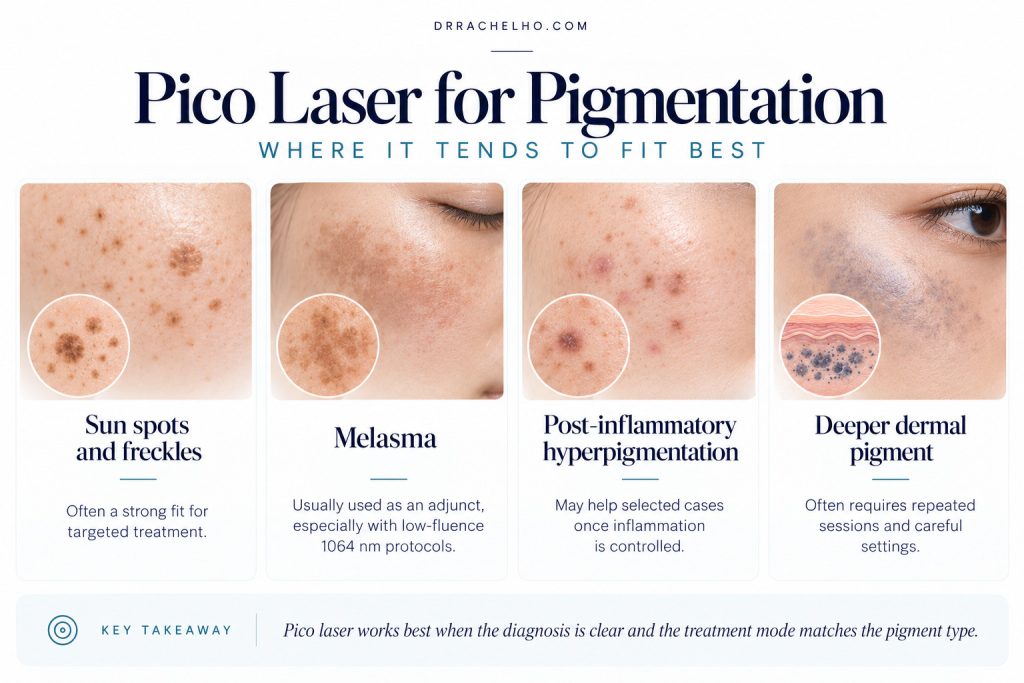
Evidence for pico laser treatment differs between sun spots, melasma, post inflammatory hyperpigmentation and deeper dermal pigmentation²,³,⁴.
What are the benefits of Pico laser treatments?
Picosecond lasers can improve pigmentation concerns, and comparative research has found fewer pigmentary side effects than with nanosecond treatment¹. The expected benefit depends on the diagnosis and treatment protocol, particularly when treating melasma⁹,¹⁰.
Does pico laser work for all types of hyperpigmentation?
Whether pico laser is the best treatment for your hyperpigmentation ultimately depends on the diagnosis of hyperpigmentation. Different types of hyperpigmentation have different depths of melanin deposition and can respond better to different approaches⁴. My guide to hyperpigmentation disorders, their causes and treatments explains the differences between sun spots, melasma and pigmentation following inflammation.
Pico laser for sun spots and freckles
A randomised study compared picosecond and Q switched treatment on opposite sides of the face in 14 Asian patients with sun spots or Hori’s naevus⁶. At six months, more than 50% improvement was recorded on 85.7% of picosecond treated sides versus 57.2% of Q switched sides⁶. Picosecond treatment was less uncomfortable for the subjects, while healing time and adverse event rates did not differ significantly⁶.
A newer retrospective study of 131 patients with mixed facial pigmentation found better outcomes and fewer side effects with a 730 nm picosecond laser than a 532 nm Q switched laser⁷. Because the wavelength and pulse duration of the lasers differed between the groups, it was not possible to establish that shorter pulses from pico laser alone explained the advantage⁷.
Pico laser for deeper pigmentation, including Hori’s naevus
Published studies on pico laser for treatment of dermal pigmentation include naevus of Ota and Hori’s naevus, also called acquired bilateral naevus of Ota like macules⁴,⁸. A 2026 review of 40 studies on Hori’s naevus found no statistically established difference in substantial clearance between picosecond and Q switched lasers⁸. Most studies were case series, and the certainty of this comparison was rated very low⁸.
Pico laser for post inflammatory hyperpigmentation
Evidence for treating established post inflammatory hyperpigmentation, or PIH, includes small studies and case reports³. Two published cases described improvement with a 755 nm picosecond laser that persisted at three years³.
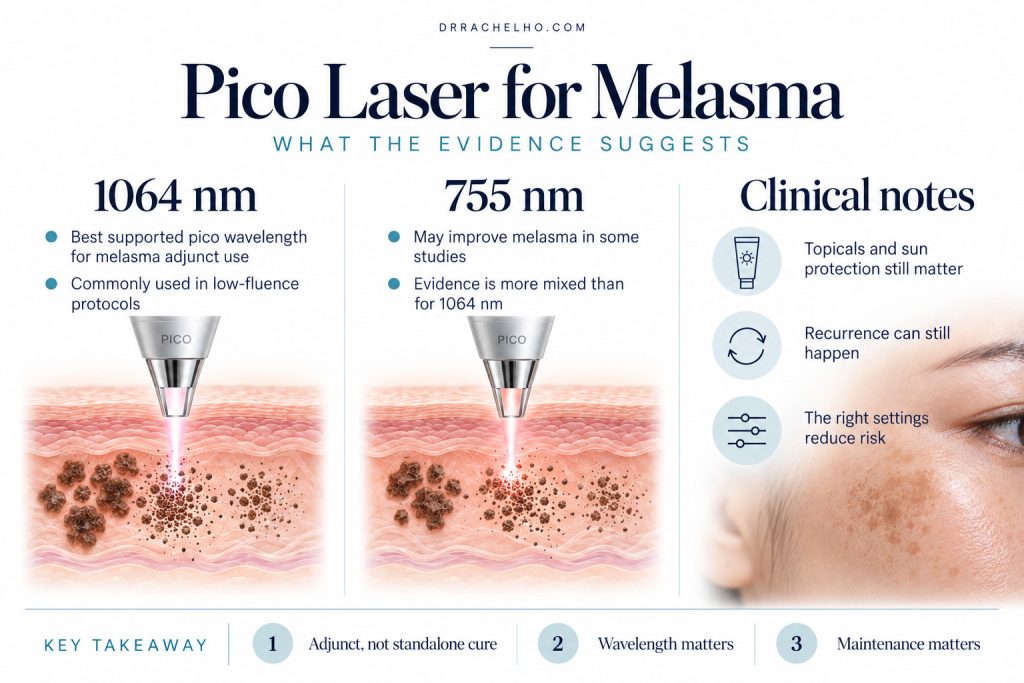
A 2023 meta analysis found a benefit for 1064 nm picosecond laser in its melasma subgroup, while 755 nm treatment did not outperform topical treatments¹⁰. Sun protection and topical therapy remain central to melasma care, and recurrence is possible⁹.
Pico laser for melasma: why the wavelength matters
Sun protection and topical treatment remain the foundation of melasma care for prevention⁹. Pico laser has a role as an complementary role in treating stubborn and melasma cases⁹. For help choosing daily sun protection, read my clinic’s guide to sunscreen for melasma: SPF, UVA and tinted protection. It explains how to interpret sunscreen labels, what iron oxide tints contribute and how to choose a formula that fits into your everyday routine.
What melasma studies show about different wavelengths.
| Wavelength of pico laser | What the evidence shows |
|---|---|
| 1064 nm picosecond laser | In a 2023 meta analysis of six randomised trials across several wavelengths, the 1064 nm subgroup showed significantly greater improvement in melasma severity than its comparison treatments¹⁰. |
| 755 nm picosecond alexandrite laser | Individual studies reported improvement, including one in which 40% of participants achieved 50% to 75% improvement¹¹. However, the meta analysis did not establish superiority over topical pigment treatments alone, and PIH occurred in the included research¹⁰. |
A randomised comparison of 1064 nm picosecond and nanosecond lasers found similar improvement in melasma¹². Picosecond treatment produced less pain and redness afterwards, illustrating that comfort and pigment clearance are separate outcomes¹².
Can micro lens arrays in pico laser machines reduce melasma recurrence?
A 2025 study treated 30 patients with low fluence 1064 nm picosecond laser alone on one side of the face and treatment incorporating a micro lens array on the other¹³. After five sessions, recurrence at six months occurred on one combination treated side compared with six control sides, equivalent to 3.3% versus 20%¹³. The small sample and limited follow up limit how widely these findings can be applied¹³.
Does combining pico laser with skincare improve results?
A randomised study found that adding topical tranexamic acid to 755 nm picosecond treatment improved melasma scores more than laser alone at one and three months¹⁴. The combination also caused more redness and sensitivity during the first week, so the additional benefit came with a tolerability tradeoff¹⁴.
Other combinations have produced different results. Research on 755 nm picosecond laser added to hydroquinone, and a separate trial adding it to 20% azelaic acid, found no additional clinical benefit over the topical treatment alone¹¹,¹⁵. These studies used different designs and do not establish tranexamic acid as the best combination for everyone¹¹,¹⁴,¹⁵.
For a closer look at maintenance treatment, read Melasma Treatment Singapore: Why It Returns and Where Pico Laser Fits. This explains how laser treatment fits alongside the longer term care that melasma requires.
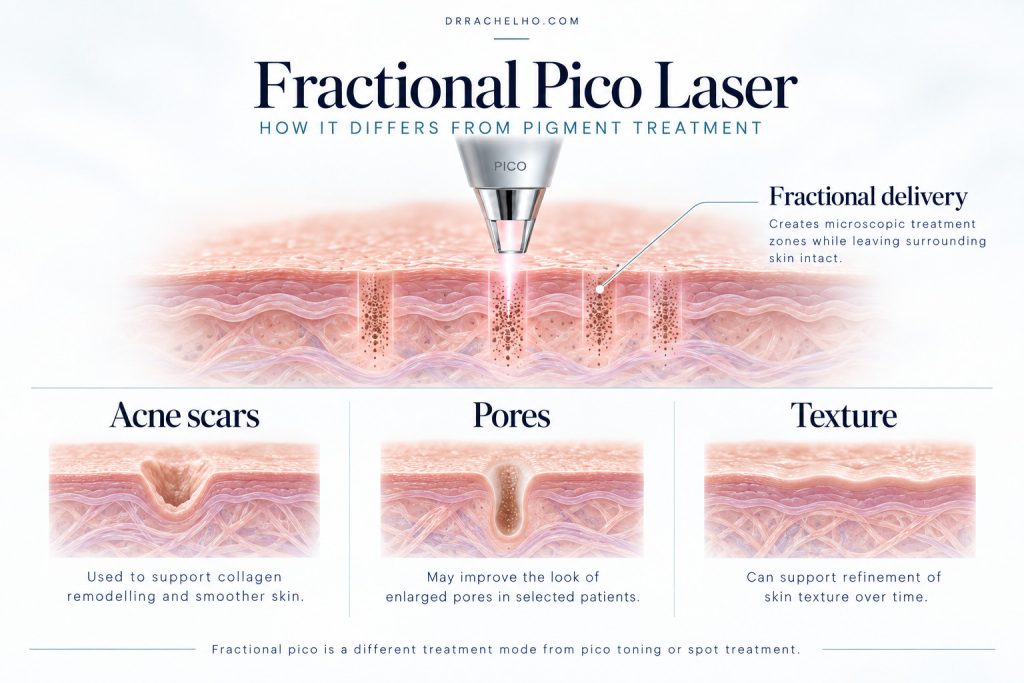
Fractional pico laser concentrates energy into microscopic treatment zones and has been studied for acne scars, pores and texture³.
Fractional pico laser for acne scars, pores and texture
Fractional pico laser creates microscopic treatment zones that stimulate tissue remodelling, which explains its use for indented acne scars and skin texture³.
In a randomised study of 25 Asian patients with acne scars, fractional 1064 nm picosecond laser and fractional carbon dioxide laser both improved scars, without a statistically significant difference in the short term outcome¹⁶. PIH occurred on 24% of carbon dioxide treated sides and none of the picosecond treated sides¹⁶.
Studies also report improvements in pores and texture, although the size and persistence of these changes vary³. For more context, read my review of enlarged pores and treatment options and the clinic’s guide to pico laser for acne scars and acne marks.
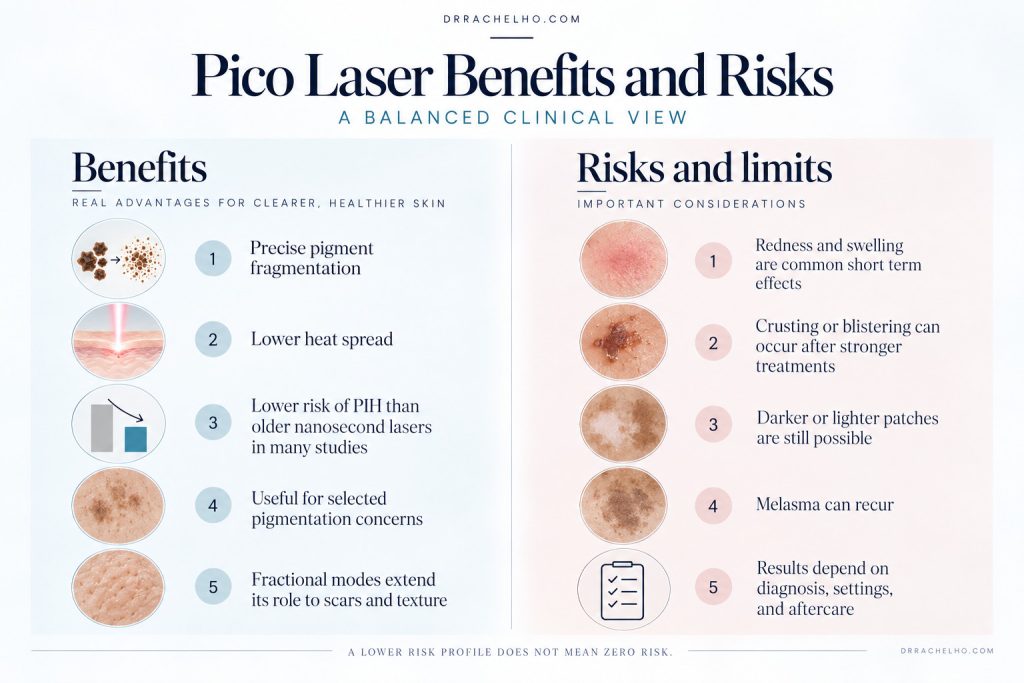
Comparative research found fewer pigmentary complications with picosecond than nanosecond lasers, with the safety advantage best supported in Asian patients¹. Redness, swelling and darker or lighter patches can still occur, while melasma may recur²,⁹.
What are the risks and side effects of pico laser?
A 2025 meta analysis included 20 randomised trials and one retrospective comparative study involving 971 patients¹. Picosecond lasers caused significantly less PIH and hypopigmentation than nanosecond lasers, with the safety advantage best supported in Asian patients¹.
Reported side effects of pico laser include discomfort, redness, swelling, crusting, blistering and darker or lighter patches². Scarring has also been reported, although less commonly².
Recovery also depends on whether treatment involves gentle toning, individual spots or fractional delivery²,³. For practical information on expected healing and symptoms that need assessment, read Pico Laser Downtime: What Recovery Looks Like Day by Day.
How many pico laser sessions are needed, and how long do results last?
Clinical studies use different schedules for different conditions, which makes a standard treatment course hard to extrapolate from these studies²,⁹. In my clinic, The Skin Longevity Clinic, treatment intervals are spaced about 4-6 weeks apart, depending on the patient’s ethnicity, skin type and condition of hyperpigmentation treated. I typically approach hyperpigmentation treatment holistically, with other modalities like chemical peels, PRX plus and microneedling radiofrequency.
Odds of recurrences can vary depending on factors like sunscreen use, medications, lifestyle and type of hyperpigmentation⁹. My article on 10 things to know before having lasers for pigmentation provides further questions to bring to that discussion.
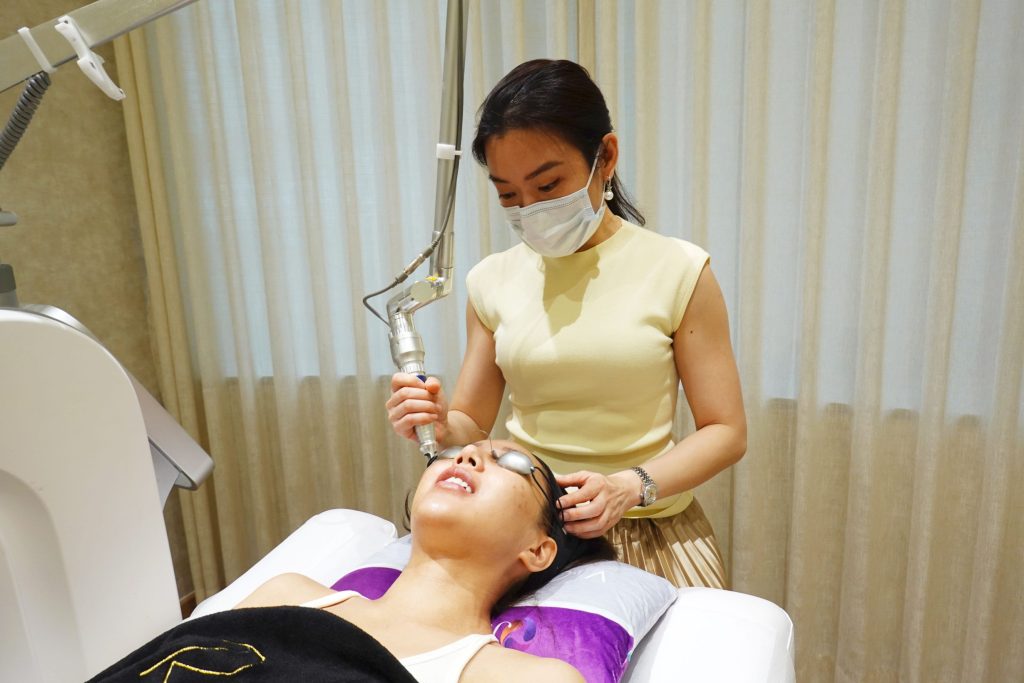
Administering pico laser for my patient’s dark spots in The Skin Longevity Clinic
What should be assessed before pico laser treatment in Singapore?
Before starting pico laser treatments, a medical consultation is necessary to diagnose the the pigmentation, texture or scar concern. For my patients, their skin tone, previous reactions to laser treatment, history of pigment darkening, current skincare and previous treatments are relevant considerations for treatment selection and counselling about realistic expectations and recovery. For more information about consultation and treatment planning, please refer to my clinic’s guide to pico laser treatments.
Dr Rachel’s takeaway and conclusion on pico laser treatments in Singapore
Pico laser can be a useful option for selected pigmentation concerns, with evidence of fewer pigmentary side effects than nanosecond treatment, particularly in Asian patients¹. I personally find pico laser to be more effective when combined with holistic management, which includes sunscreen use to prevent new dark spots and other treatment modalities that target other pigmentation pathways. Got a question about pico laser treatments? Let me know in the comments.
References
- Wu W, Du Y, Zhang Y, Su Q, Wang F. Comparative appraisal with meta analysis of picosecond versus nanosecond lasers for hyperpigmented disorders and tattoos. Lasers in Medical Science. 2025;40:465.
- Wu DC, Goldman MP, Wat H, Chan HHL. A Systematic Review of Picosecond Laser in Dermatology: Evidence and Recommendations. Lasers in Surgery and Medicine. 2021;53:9 to 49.
- Zhou Y, Hamblin MR, Wen X. An update on fractional picosecond laser treatment: histology and clinical applications. Lasers in Medical Science. 2023;38:45.
- Haykal D, Cartier H, Maire C, Mordon S. Picosecond lasers in cosmetic dermatology: where are we now? An overview of types and indications. Lasers in Medical Science. 2024;39:8. Published online December 2023.
- US Food and Drug Administration. PicoSure Workstation with 1064 nm Laser Delivery System: 510(k) clearance K160480. 2016.
- Ungaksornpairote C, Manuskiatti W, Junsuwan N, Wanitphakdeedecha R. A Prospective, Split Face, Randomized Study Comparing Picosecond to Q Switched Nd:YAG Laser for Treatment of Epidermal and Dermal Pigmented Lesions in Asians. Dermatologic Surgery. 2020;46:1671 to 1675.
- Lin G, Zhao R, Guo C. Comparing the efficacy and safety of a 730 nm picosecond laser with a 532 nm Q switched Nd:YAG laser for facial pigmented disorders: a retrospective comparative study. European Journal of Medical Research. 2026;31:536.
- Li F, Wang Y, Shen Z. Efficacy of Q Switched and picosecond lasers for acquired bilateral nevus of Ota like macules: a systematic review and exploratory dose response meta analysis. Lasers in Medical Science. 2026;41:180.
- Gan C, Rodrigues M. An Update on New and Existing Treatments for the Management of Melasma. American Journal of Clinical Dermatology. 2024;25:717 to 733.
- Feng J, Shen S, Song X, Xiang W. Efficacy and safety of picosecond laser for the treatment of melasma: a systematic review and meta analysis. Lasers in Medical Science. 2023;38:84.
- Pulumati A, Jaalouk D, Algarin YA, Nouri K. The role of 755 nm alexandrite picosecond laser in melasma management. Archives of Dermatological Research. 2024;316:60. Published online December 2023.
- Feng J, Huang L. Comparison of Picosecond and Nanosecond Nd:YAG 1064 nm Lasers in the Treatment of Melasma: A Split Face Randomized Clinical Trial. Plastic and Reconstructive Surgery. 2023;151:772 to 777.
- Wu X, Wang X, Lin X, et al. Efficacy and safety of low fluence 1064 nm picosecond laser with/without micro lens arrays for melasma treatment: a randomized, split face controlled study. Lasers in Medical Science. 2025;40:387.
- Li Y, Yao C, Zhang H, Li L, Song Y. Efficacy and safety of 755 nm picosecond alexandrite laser with topical tranexamic acid versus laser monotherapy for melasma and facial rejuvenation. Lasers in Medical Science. 2022;37:2879 to 2887.
- Lai D, Cheng S, Zhou S, et al. 755 nm picosecond laser plus topical 20% azelaic acid compared to topical 20% azelaic acid alone for the treatment of melasma: a randomized, split face and controlled trial. Lasers in Medical Science. 2024;39:113.
- Sirithanabadeekul P, Tantrapornpong P, Rattakul B, et al. Comparison of Fractional Picosecond 1064 nm Laser and Fractional Carbon Dioxide Laser for Treating Atrophic Acne Scars: A Randomized Split Face Trial. Dermatologic Surgery. 2021;47:e58 to e65.
- Shimojo Y, Nishimura T, Tsuruta D, Ozawa T, Kono T. Theoretical Analysis of Large Spot Picosecond Laser Treatment for Pigmented Lesions in Asian Skin. Lasers in Surgery and Medicine. 2026;58:135 to 149.

No Comments