


11 Aug Hypochlorous Acid for Skin: Benefits, Sprays and Safety
Hypochlorous Acid for Skin: Benefits, Popular Sprays and Safety
By Dr Rachel Ho | Updated August 2026
Hypochlorous acid, or HOCl, is an antimicrobial substance produced by immune cells and recreated in stabilised topical solutions. In skincare, it has been popularised as a gentle cleansing spray for sensitive, acne prone or a calming spray for after aesthetic treatments, on flights and after work outs.
Related blogposts:
Exercise & Your Skin: A Doctor’s Skin Guide for Athletes
What Happens to Your Skin on an Airplane Flight
Contrary to what social media and skincare companies may suggest, the evidence for hypochlorous acid is more specific and limited to improvement of select dermatological conditions. Medical HOCl formulations have credible applications in wound care and eyelid hygiene, however, current evidence for cosmetic sprays as standalone treatments for acne, eczema and rosacea remains limited and inconsistent1,2.
Hypochlorous acid is best viewed as supportive antimicrobial skincare. It does not unclog pores, replace moisturiser, rebuild the skin barrier or treat an inflammatory skin condition on its own.
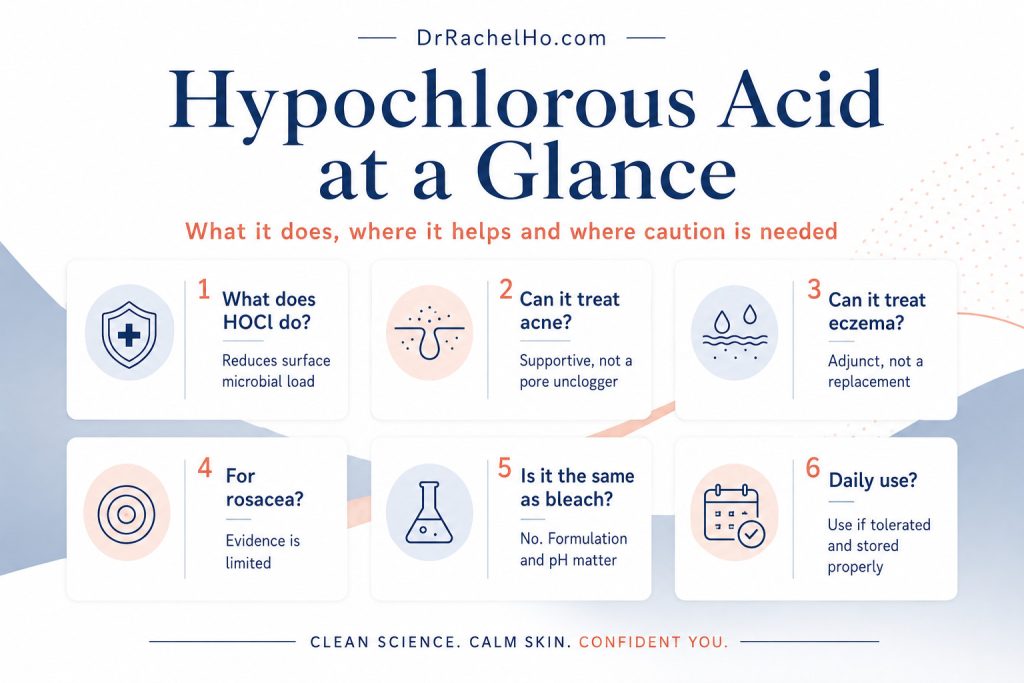
Hypochlorous acid at a glance: HOCl can reduce surface microbial load and support gentle cleansing. It remains an adjunct rather than a complete treatment for acne, eczema, rosacea or a damaged skin barrier.
Hypochlorous acid at a glance
Hypochlorous acid FAQ at a glance
| Question about hypochlorous acid | Evidence based answer |
|---|---|
| What does HOCl do for skin? | Hypochlorous acid reduces surface microbial load and can support gentle cleansing. |
| Can hypochlorous acid treat acne? | Hypochlorous acid can support a routine after sweating but does not clear blocked pores or regulate sebum. |
| Can hypochlorous acid treat eczema? | Hypochlorous acid can assist surface hygiene and itch control in selected cases but does not replace moisturiser or prescribed treatment. |
| Can hypochlorous acid treat rosacea? | Direct evidence for hypochlorous acid in treating rosacea and vascular lesions is limited. HOCL does not remove visible blood vessels or control every flare. |
| Is hypochlorous acid the same as bleach? | HOCl and sodium hypochlorite are related chlorine species, but their concentration and biological effects depend strongly on pH and formulation. |
| Can hypochlorous acid be used daily? | Skin specific cosmetic products are often designed for daily use when tolerated and stored correctly. |
| What makes one hypochlorous acid spray different from another? | HOCl concentration, pH, purity, hypochlorite content, packaging and stability. |
What is hypochlorous acid?
Neutrophils produce HOCl through the myeloperoxidase pathway during the immune response. It reacts with microbial proteins, membranes and cellular components, which gives it broad antimicrobial activity1.
Commercial hypochlorous acid spray is generally produced from purified water and sodium chloride. Electrolysis creates several chlorine species, after which pH and free available chlorine must be controlled to keep an adequate proportion of active HOCl.
HOCl and sodium hypochlorite, or NaOCl are distinct entities. Mildly acidic solutions contain a greater proportion of HOCl, while alkaline bleach solutions contain more hypochlorite ion, so evidence from one formulation cannot be assumed to hold for another formulation1,2.
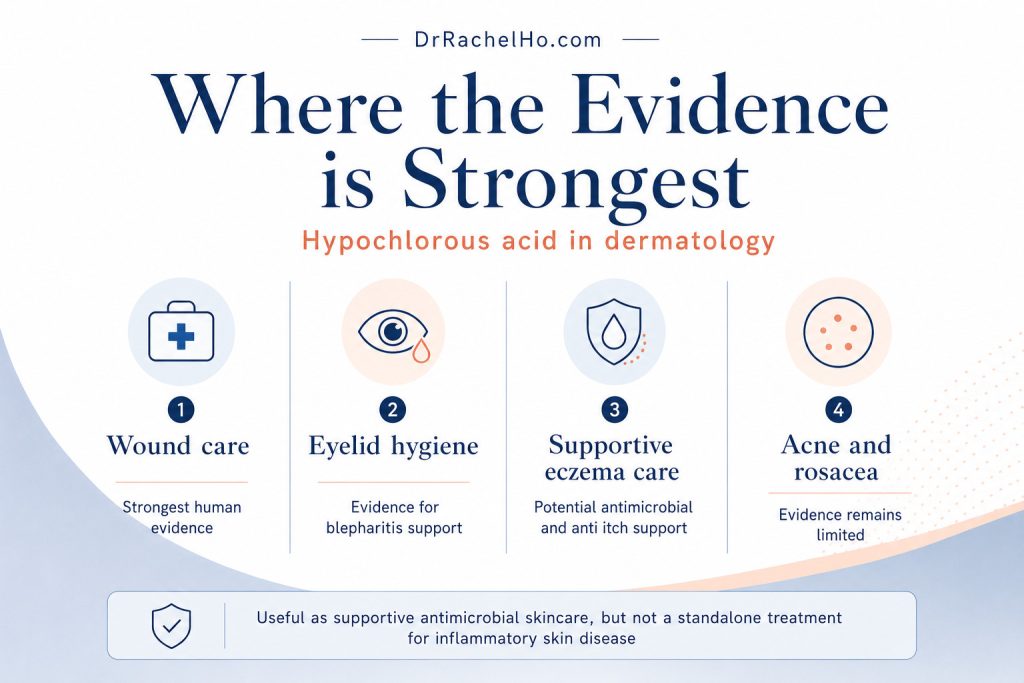
Where is the evidence for hypochlorous acid strongest? Human evidence is strongest for selected medical wound-care and eyelid-hygiene formulations. Evidence for cosmetic HOCl sprays in acne, eczema and rosacea remains more limited.
What is the evidence for hypochlorous acid in dermatology?
Wound care
The strongest human evidence for topical HOCl comes from medical wound care. In a randomised study involving 20 volunteers, stabilised HOCl increased re epithelialisation by 14% on day four and produced sustained antimicrobial activity compared with saline3.
It’s important to note that the evidence supports the specific medical wound formulation of hypochlorous acid that was studied. This evidence can not be extrapolated to a cosmetic facial mist with a different formulation as beneficial for accelerating wound healing or for surgical wounds.
Eyelid hygiene
A prospective randomised study involving 48 patients with blepharitis found that an HOCl eyelid hygiene solution reduced bacterial load and improved selected dry eye measurements after four weeks4.
Caveat: Only products specifically labelled for eyelid or ophthalmic use should be placed around the eyes. A general facial spray that is not indicated for the eyes should not be sprayed into the eyes.
Hypochlorous acid for eczema and itching
The rationale for HOCl in atopic dermatitis is partly its antimicrobial effects. More than 90% of patients in an established colonisation study carried Staphylococcus aureus, which can intensify inflammation and disease severity5.
Laboratory research found that NaOCl concentrations between 0.01% and 0.16% eradicated S. aureus biofilms, while 0.04% reduced bacterial recovery from an ex vivo atopic dermatitis skin model6. These concentrations are higher than the 0.005% to 0.006% solutions commonly used in dilute bleach baths.
HOCl could also have effects beyond antisepsis. In an atopic dermatitis mouse model, 0.05% HOCl hydrogel reduced skin lesion scores, serum IgE and scratching behaviour to a degree comparable with a potent topical corticosteroid7. The same study found reduced MAPK and NFκB signalling in immune and skin cells, together with reduced sensory neuron calcium responses at 0.0001%, a concentration too low for direct antimicrobial action7.
These are mechanistically interesting findings, but the strongest data came from mice and isolated cells rather than clinical trials involving human subjects. The findings from these studies also do not establish that a cosmetic HOCl spray performs like a corticosteroid in human skin.
Human evidence for hypochlorous acid remains weaker. A six week open label study of 50 children using a 0.006% NaOCl wash reported improvement, but participants continued existing treatment and 64% remained culture positive after two weeks8.
A small paediatric trial combining dilute bleach baths with intranasal mupirocin also reported better eczema control, but the combined protocol makes it difficult to isolate the contribution of the bath itself9. Other research found that bleach baths did not worsen hydration, pH or transepidermal water loss, although pooled four week analyses found little advantage over water baths alone10.
The 2019 Cochrane review included 41 studies and concluded that the clinical value of interventions intended to reduce S. aureus in eczema remained uncertain11. One short hypochlorous acid study reported an investigator global assessment P value of 0.012 without an effect size, while other studies supplied incomplete numerical reporting, preventing a reliable estimate of clinical benefit.
There is also uncertainty about whether very dilute NaOCl is reliably bactericidal on skin. Some low concentration preparations did not suppress bacterial load or toxin related signalling as expected, which weakens a purely antiseptic explanation for any clinical improvement.
The overall conclusion is measured. HOCl has plausible antimicrobial, anti inflammatory and anti itch actions, but large, well controlled human trials comparing it directly with topical corticosteroids or calcineurin inhibitors over long follow up are still lacking.
Hypochlorous acid for acne
On social media, HOCl sprays are portrayed as convenient skin cleansing or disinfectant sprays after exercise, helmet use, humid commutes or prolonged sweating. In Singapore’s hot and humid weather where acne and congestion are common, this might seem like a good idea.
But what does the evidence for hypochlorous acid actually show for acne? The commonly cited acne trial used 0.005% sodium hypochlorite, unlike most other hypochlorous acid skinare which contain less than 0.002% of HOCL12. The participants in this study involving 0.005% sodium hypochlorite reported fewer inflammatory lesions, but again, the result should not be assumed to hold true for all hypochlorous face sprays.
Based on the mechanisms of hypochlorous acid in dermatology, HOCl does not normalise follicular cell turnover, dissolve blackheads or regulate sebum, which are involved in the pathogenesis of acne. Salicylic acid, benzoyl peroxide, azelaic acid and topical retinoids address these acne pathways more directly.
Related blogposts:
Azelaic Acid Singapore: Benefits, Products and How to Use It
Niacinamide for Skin: Benefits, Best Percentage, Side Effects and How to Use It
5 Skincare Ingredients for Acne & Acne Prone Skin
Hypochlorous acid for rosacea and reactive skin
Direct controlled evidence for hypochlorous acid in treating rosacea remains sparse. Hypochlorous acid also does not remove blood vessels like telangiectasia or replace prescribed azelaic acid, ivermectin or metronidazole for rosacea.
Related blogposts:
Rosacea: Symptoms, Triggers, Skincare and Treatments
5 Skin Care Tips for Sensitive Skin and Rosacea
Persistent redness and irritation should be medically evaluated to avoid delaying treatment of conditions like rosacea, eczema and contact dermatitis which often overlap visually.
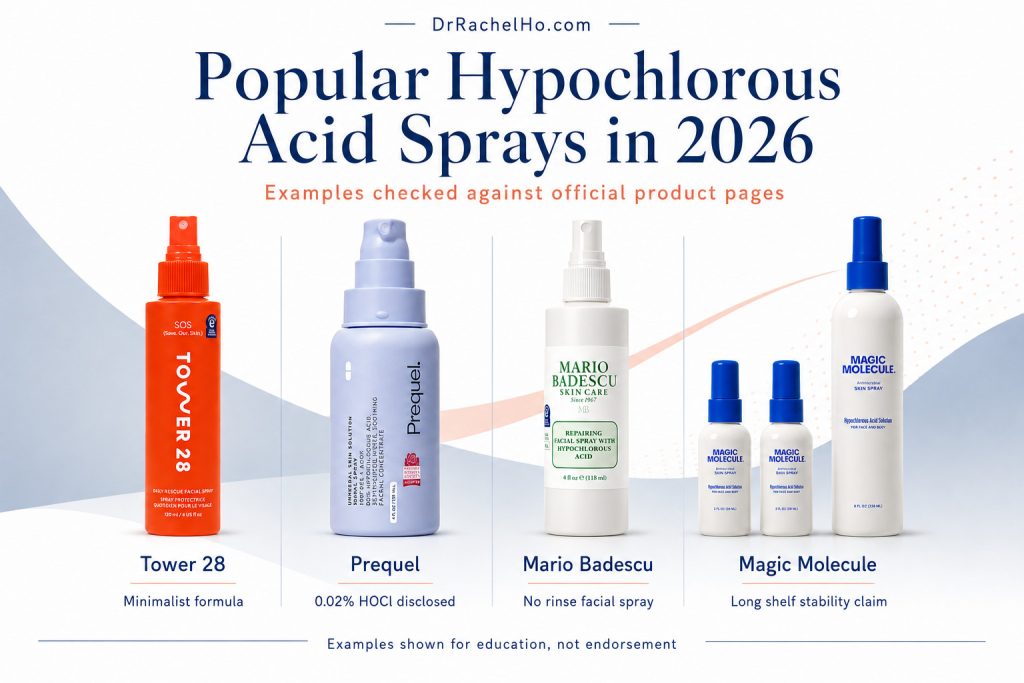
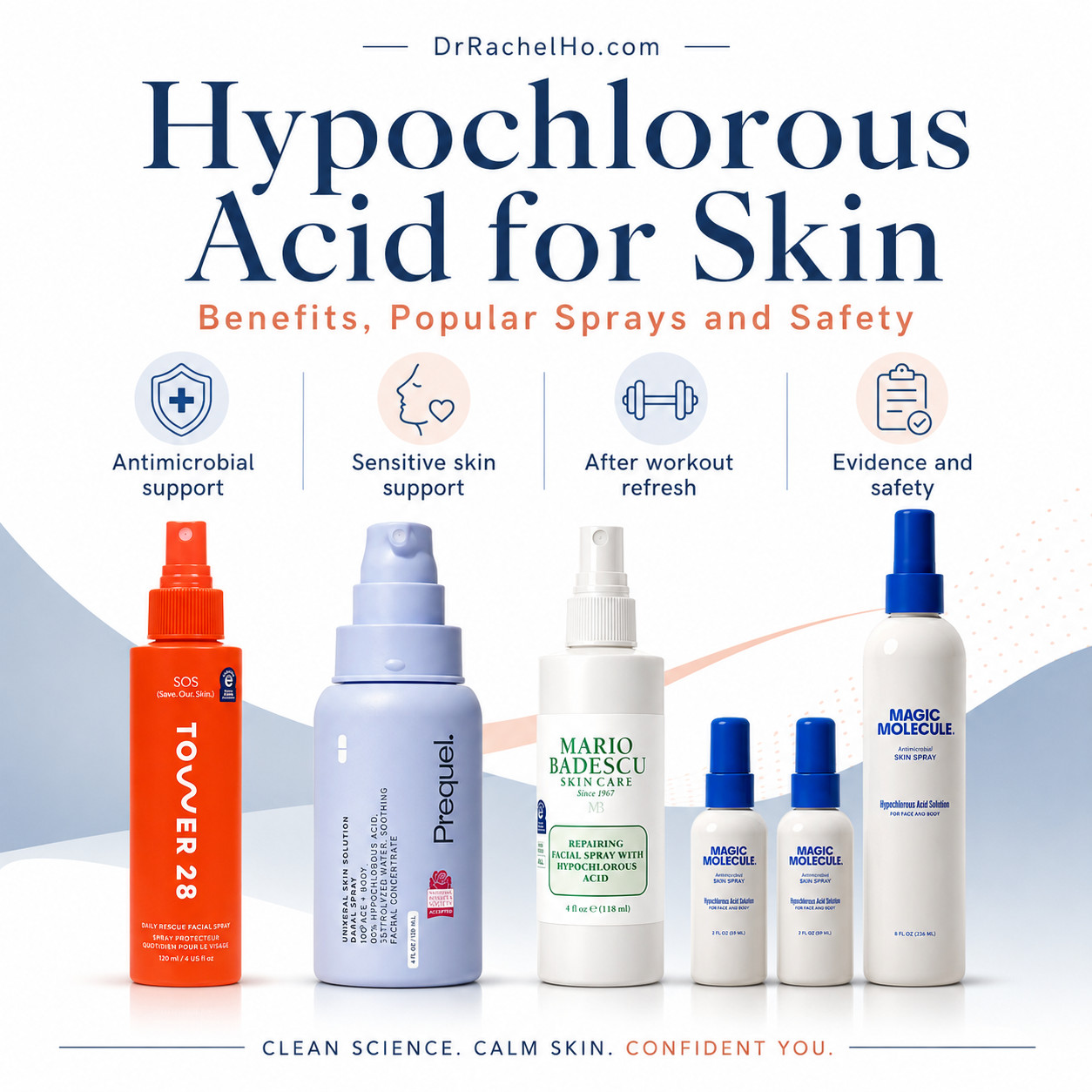
Popular hypochlorous acid sprays in 2026 include Tower 28 SOS, Prequel Universal Skin Solution, Mario Badescu Repairing Facial Spray and Magic Molecule. Concentration, pH, packaging and stability are more informative than popularity alone. Product examples are shown for education, not endorsement.
Popular hypochlorous acid sprays in 2026
Here’s a list of popular hypochlorous acid sprays and face mists 2026. The information below was checked against official product pages in August 2026. These examples illustrate current formulations and are not endorsements.
Popular hypochlorous acid skincare at a glance
| Hypochlorous acid product | Information available | About |
|---|---|---|
| Tower 28 SOS Daily Rescue Facial Spray | Water, sodium chloride and HOCl. The official product page does not prominently disclose an HOCl percentage. | A minimalist facial spray marketed for redness and irritation. |
| Prequel Universal Skin Solution | 0.02% HOCl in a pH stabilised face and body solution. | One of the more transparent brands regarding concentration and formulation. |
| Briotech Topical Skin Spray | 0.014% HOCl, 140 ppm and stated pH 4.0 to 5.2. | Concentration, ppm and pH are all disclosed. |
| Clinisoothe+ Skin Purifier | High purity, pH balanced hypochlorous. The current page does not disclose a percentage. | A cosmetic cleansing product without alcohol, fragrance or oils. |
| Mario Badescu Repairing Facial Spray | A no rinse HOCl cleansing mist for face and post workout use. It is currently available through Sephora Singapore. | Locally available, although the official page does not prominently disclose the HOCl concentration. |
| Magic Molecule Daily Skin Spray | Ionised water, sodium chloride, HOCl and hypochlorite ions. The brand states up to 24 months of shelf stability. | The stability statement is a manufacturer claim rather than independent comparative evidence. |
As you can see from the ingredient breakdown of these different hypochlorous acid sprays, the concentration, pH, purity, hypochlorite balance and packaging differ, and these differences can account for different individual responses.
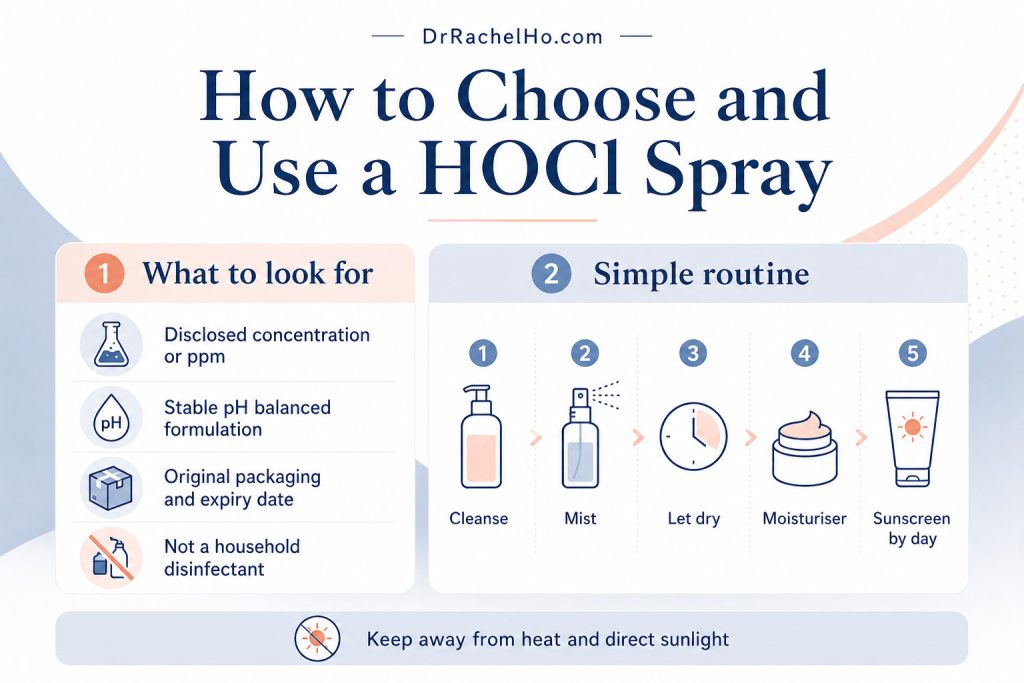
How should a hypochlorous acid spray be used? Choose a skin-specific product, cleanse or rinse first, mist evenly, allow it to dry, then continue with moisturiser and sunscreen. Keep the bottle away from heat and direct sunlight.
How to choose and use an hypochlorous acid spray
One hundred ppm equals 0.01%, while 200 ppm equals 0.02%. A higher concentration or amount of HOCL is not necessarily better or more effective because stability and skin tolerance depend on the complete formulation.
A simple routine is:
- Cleanse or rinse the skin.
- Mist the HOCl solution evenly.
- Allow it to air dry.
- Apply serum and moisturiser.
- Finish with sunscreen during the day.
HOCl loses activity with heat, light and unsuitable storage. Keep it in its original packaging, avoid hot cars and direct sunlight, and follow the stated expiry instructions.
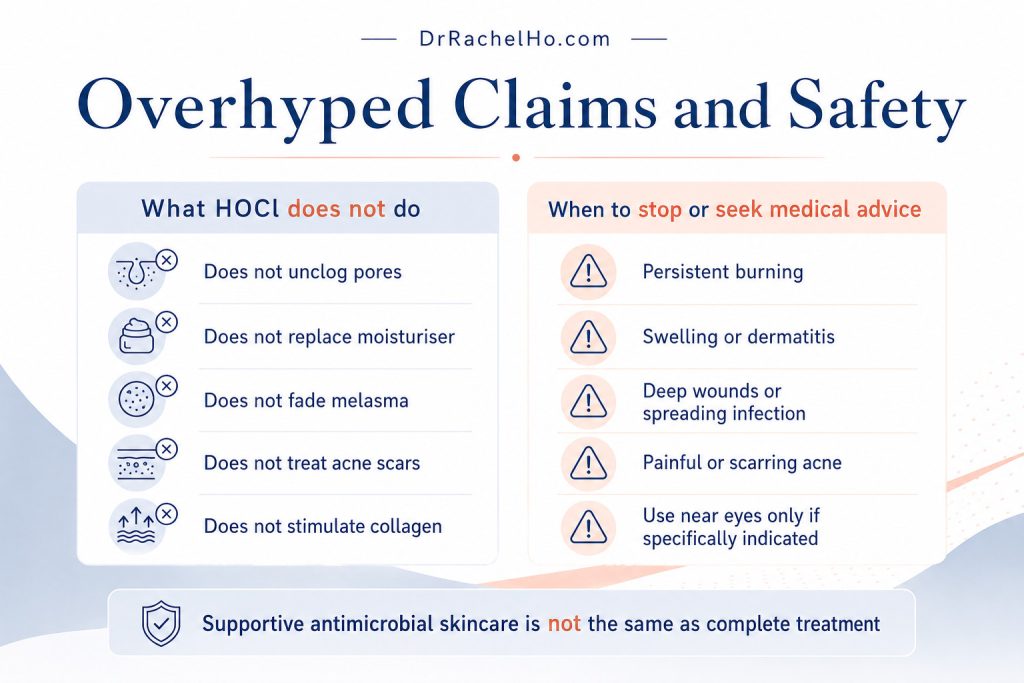
What can hypochlorous acid not do? HOCl does not unclog pores, replace moisturiser, fade melasma, remodel acne scars or stimulate collagen. Stop using it if persistent burning, swelling, itching or dermatitis develops.
Which hypochlorous acid claims are overhyped?
Hypochlorous acid does not unclog pores, replace barrier lipids, fade melasma, remodel acne scars or stimulate collagen. It also does not permanently shrink pores or function as a complete anti-aging treatment.
Healthy skin contains a complex microbiome, so the aim is not to sterilise the face. Using hypochlorous acid excessively in dermatological conditions where the delicate balance of microbiome is important for control can lead to exacerbations of inflammatory skin conditions.
Who should avoid or stop hypochlorous acid skincare?
Household disinfectants, homemade chlorine mixtures and products intended for surfaces should never be used as facial skincare. Skin care products require quality control measures including controlled concentration, pH, purity and topical labelling.
Stop using your hypochlorous acid skincare if persistent burning, swelling, itching or dermatitis develops. Deep wounds, spreading infection, severe eczema and painful or scarring acne need medical care rather than repeated spraying.
General facial mists should be kept out of the eyes unless the product is specifically labelled for periocular use. Pregnancy specific cosmetic studies remain limited, so the complete formulation should be reviewed when there is uncertainty.
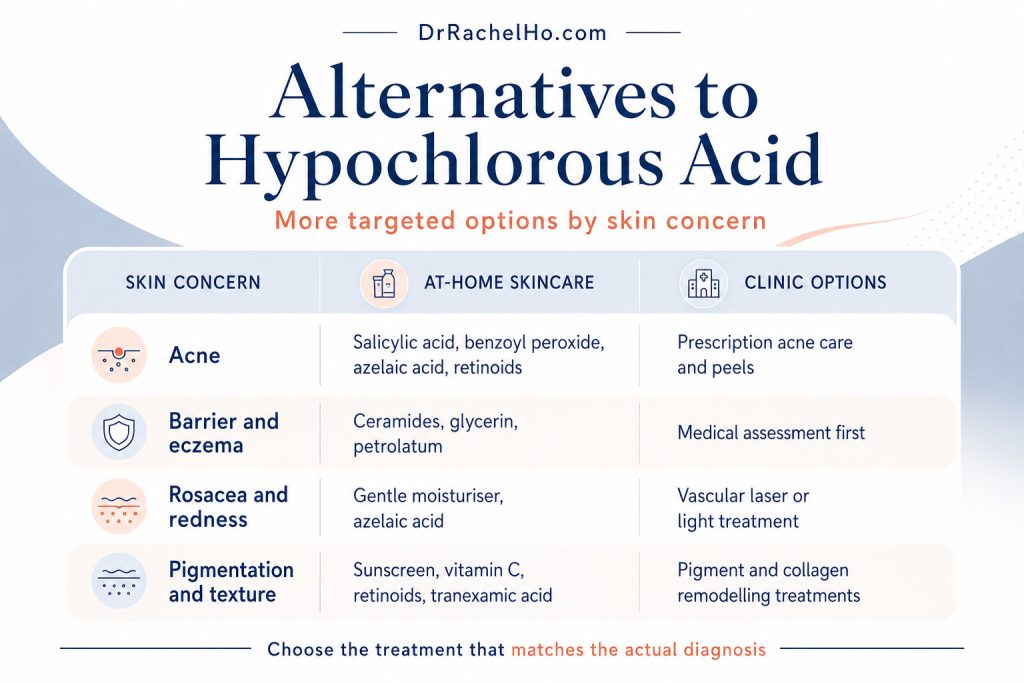
What are the alternatives to hypochlorous acid? The answer depends on the diagnosis. Acne, eczema, rosacea, pigmentation and acne scars require different skincare ingredients and, where appropriate, medical or in-clinic treatments.
Alternatives to hypochlorous acid
Alternative skincare and treatments to hypochlorous acid
| Concern | Recommended skincare | In clinic or medical options |
|---|---|---|
| Acne and clogged pores | Salicylic acid, benzoyl peroxide, azelaic acid or retinoids | Prescription acne treatment, chemical peels and selected sebaceous gland focused procedures |
| Eczema and barrier disruption | Ceramides, glycerin, petrolatum and prescribed anti inflammatory treatment | Medical assessment before elective procedures |
| Rosacea and redness | Gentle moisturiser, azelaic acid and prescribed treatment | Vascular laser or light treatment after diagnosis |
| Pigmentation | Sunscreen, vitamin C, azelaic acid, retinoids or tranexamic acid | Pico laser or chemical peels after the pigment type is identified |
| Acne scars and texture | Retinoids can support surface turnover | Subcision, radiofrequency microneedling and fractional resurfacing |
| Fine lines and laxity | Sunscreen, retinoids and antioxidant skincare | Radiofrequency, resurfacing or other collagen remodelling procedures |
If you have acne, hyperpigmentation, scars and wrinkles- you might want to consider the following treatments instead:
- Pico laser
- Chemical peels
- PRX Plus
- Tranexamic acid therapy
- Botulinum toxin
- Collagen biostimulators
- ECM skin boosters
- RF microneedling
Dr Rachel Ho’s takeaway on hypochlorous acid sprays
Hypochlorous acid is useful for antimicrobial support and gentle disinfectant. However, HOCl does not replace acne treatment, eczema medication, barrier repair, pigment treatment or collagen remodelling.
Frequently asked questions
Is hypochlorous acid the same as bleach?
They are related chlorine species, but skincare HOCl is formulated at controlled concentration and pH. Household bleach is unsuitable for facial use.
Can hypochlorous acid sprays be used every day?
Many cosmetic hypochlorous acid sprays are designed for daily use. Reduce frequency or stop if dryness, burning or dermatitis develops.
Does hypochlorous acid cause purging?
Hypochlorous acid does not accelerate follicular turnover like a retinoid. Swellings are more likely to reflect irritation, the product vehicle or an unrelated acne flare.
Can hypochlorous acid be used with vitamin C or antioxidants?
I would not recommend using hypochlorous acid skincare together with antioxidant skincare including vitamin C. This is because hypochlorous acid can oxidise antioxidants to render the latter ineffective or trigger dermatitis due to by-product formation.
Related blogposts:
Vitamin C for Skin: Benefits, Best Form and Serum Guide
Does hypochlorous acid repair the skin barrier?
Hypochlorous acid does not replace ceramides, cholesterol or fatty acids. An appropriate moisturiser remains more relevant for true barrier repair.
Related blogpost:
How to Repair Your Skin Barrier
References
- Del Rosso JQ, Bhatia N. Status Report on Topical Hypochlorous Acid. Journal of Clinical and Aesthetic Dermatology. 2018. PMID 30588272.
- Haralović V, et al. Hypochlorous Acid: Clinical Insights and Experience in Dermatology. Biomedicines. 2025. PMID 41462936.
- Burian EA, et al. Effect of Stabilised Hypochlorous Acid on Re Epithelialisation and Bacterial Bioburden in Acute Wounds. International Wound Journal. 2022. PMID 35578822.
- Mencucci R, et al. Hypochlorous Acid Hygiene Solution in Patients With Blepharitis. BMJ Open Ophthalmology. 2023. PMID 38088255.
- Abeck D, Mempel M. Staphylococcus Aureus Colonisation in Atopic Dermatitis. British Journal of Dermatology. 1998. PMID 9990408.
- Eriksson S, et al. Antibacterial and Antibiofilm Effects of Sodium Hypochlorite Against Staphylococcus Aureus. British Journal of Dermatology. 2017. PMID 28238217.
- Fukuyama T, et al. Hypochlorous Acid Is Antipruritic and Anti Inflammatory in a Mouse Model of Atopic Dermatitis. Clinical and Experimental Allergy. 2018. PMID 29028288.
- Majewski S, et al. Sodium Hypochlorite Body Wash in Staphylococcus Aureus Colonised Atopic Dermatitis. Pediatric Dermatology. 2019. PMID 30983053.
- Huang JT, et al. Treatment of Staphylococcus Aureus Colonisation in Atopic Dermatitis Decreases Disease Severity. Pediatrics. 2009. PMID 19403473.
- Chopra R, et al. Efficacy of Bleach Baths in Reducing Severity of Atopic Dermatitis. Annals of Allergy, Asthma and Immunology. 2017.
- George SM, et al. Interventions to Reduce Staphylococcus Aureus in the Management of Eczema. Cochrane Database of Systematic Reviews. 2019. PMID 31684694.
- Dorostkar A, et al. Sodium Hypochlorite 0.005% Versus Placebo in Mild to Moderate Acne Vulgaris. 2021. PMID 34123555.

No Comments