


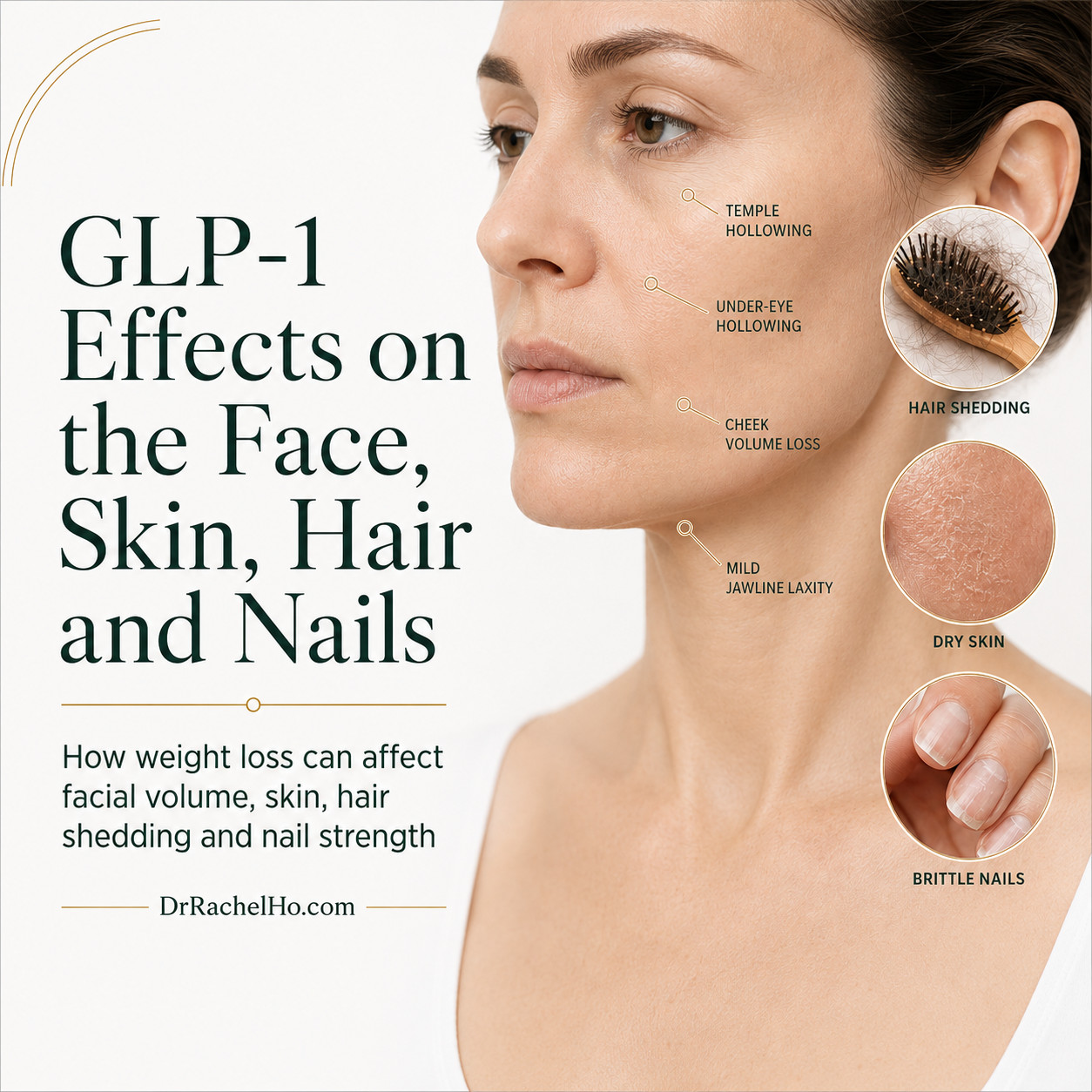
06 Aug GLP-1 Effects on the Face, Skin, Hair and Nails
GLP-1 medications have changed the management of type 2 diabetes and obesity. This class of medications can produce substantial weight loss and improve important metabolic and cardiovascular outcomes.
While the health benefits of GLP-1 medications have been extensively reported, the aesthetic and dermatological results of GLP-1 agonist drugs present a conflicting picture. Inflammatory conditions such as psoriasis and hidradenitis suppurativa can improve with GLP-1 medications. However, patients also note accelerated signs of facial aging and skin changes such as hollow face, looser skin, increased hair shedding, dry skin or brittle nails. These effects are not universal, and they should not overshadow the health benefits of medically appropriate treatment.
The most obvious changes in the appearance of the face, hair and nails associated with GLP-1 therapy are linked to the amount and speed of weight loss, although direct effects on skin, fat and hair biology remain under investigation1-4.
EGLP-1 effects at a glance
| Region | Changes that may occur | Most likely contributors |
|---|---|---|
| Face | Flatter cheeks, temple hollowing, deeper folds, eye bags and jawline laxity | Loss of facial fat, reduced tissue support and limited skin recoil |
| Skin | Dryness, loose skin, crepey texture and injection site irritation | Weight loss, reduced intake, dehydration and local reactions |
| Hair | Diffuse shedding or more visible pattern hair loss | Telogen effluvium, nutritional insufficiency and underlying androgenetic alopecia |
| Nails | Slower growth, splitting and brittleness | Reduced intake, dryness and possible nutritional deficiency |
| Inflammatory skin disease | Possible improvement in psoriasis or hidradenitis suppurativa | Weight reduction, metabolic improvement and reduced inflammation |
This review is part of a series of GLP-1 medications and their effects in dermatology. You can read the other articles on seperate topics here:
What are GLP-1 medications?
Glucagon-like peptide 1 is a hormone involved in appetite, satiety, insulin secretion and glucose regulation. GLP-1 receptor agonists mimic part of this activity, helping people feel full earlier and reducing food intake.
GLP-1 agonist medications are prescription medicines in Singapore and many countries. In Singapore, the approved indications for prescribing GLP-1 medications depend on the exact product, and treatment should be supervised by the prescribing doctor. Patients should not stop or alter their medication because of a cosmetic or hair concern without first discussing it with their medical team.
The scale of weight loss can be considerable. In the STEP 1 trial, semaglutide 2.4 mg produced a mean body weight reduction of 14.9 percent after 68 weeks, compared with 2.4 percent with placebo. In SURMOUNT 1, the highest tirzepatide dose produced an average reduction of 20.9 percent after 72 weeks5,6.
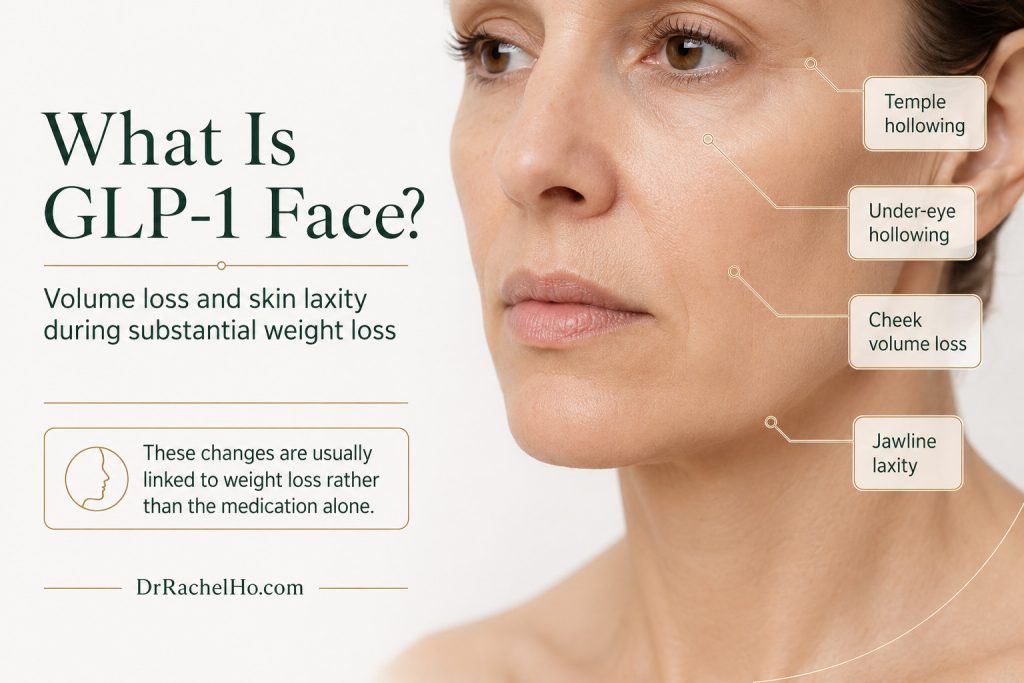
Facial changes during GLP-1 treatment may include temple and under-eye hollowing, flatter cheeks and softer jawline definition. These changes are usually linked mainly to fat loss, reduced tissue support and limited skin recoil.
What is GLP-1 face?
GLP-1 face describes facial volume loss and skin laxity that become more visible during substantial weight reduction. The facial changes are not unique to GLP-1 medications and can occur after weight loss with other medications, bariatric surgery or lifestyle intervention.
Common changes to the face after GLP-1 agonist medications include:
• Temple and forehead hollowing
• Under-eye hollowing and more visible eye bags
• Reduced cheek and submalar volume
• Deeper nasolabial and marionette folds
• Reduced jawline definition
• Loose skin along the face and neck
The face contains separate superficial and deep fat compartments that support the skin and facial contours. When these compartments lose volume, the skin has less structural support, folds become deeper and shadows around the eyes may become more obvious.
A 2025 radiographic study documented midfacial volume reduction in patients taking GLP-1 medications and found that greater weight loss was associated with greater facial volume loss. The reduction was not necessarily uniform, which helps explain why some areas appear hollow while others retain more fullness7.
Age, baseline facial volumes, skin elasticity and the speed of weight reduction also influence the impact of these facial changes from GLP-1 agonists. For example, younger skin tends to retract more effectively, while older or sun-damaged skin has less collagen and elastin reserve and may not respond similarly.
For a fuller facial analysis, read my guide to GLP-1 Face: Why Weight Loss Can Change Facial Volume and Skin Laxity. The distinction between volume loss and loose skin is important because the two concerns require different approaches.
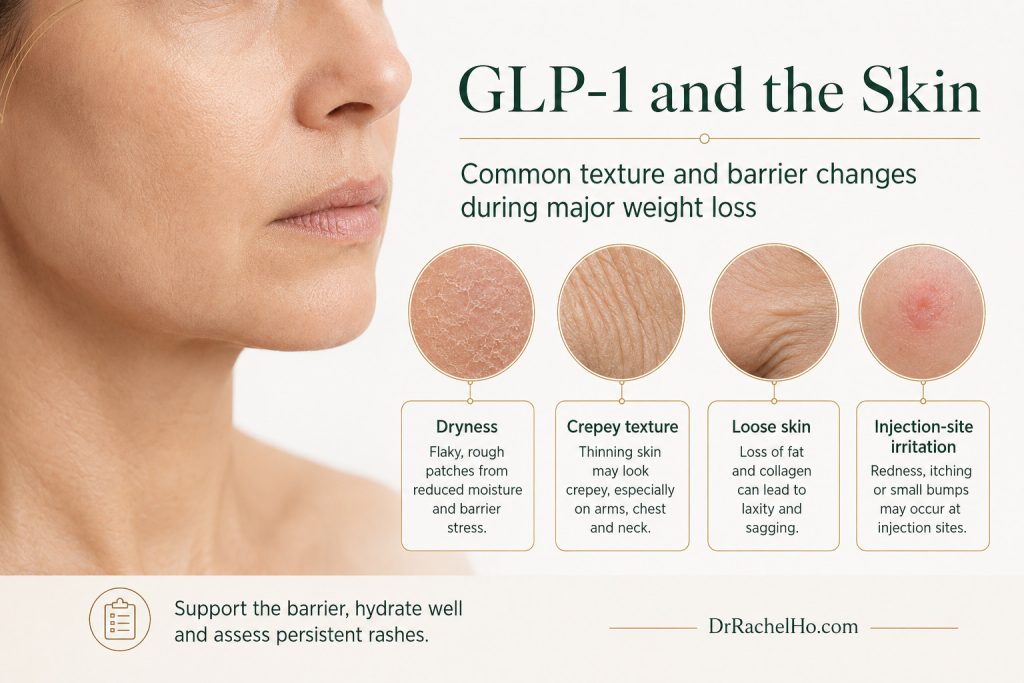
GLP-1 skin changes may include dryness, crepey texture, loose skin and local injection-site irritation. Hydration and barrier-supportive skincare may improve surface dryness, but cannot replace lost facial fat or remove significant excess skin.
Does GLP-1 medication directly age the skin?
Besides weight loss, GLP-1 face is due to direct effects on skin biology and adipose tissue dynamics. Some of these mechanisms of GLP-1 agonist medications on skin and tissue dynamics include8-10:
Adipose (fat) tissue effects:
GLP-1 receptors are present on adipose-derived stem cells (ADSCs) and fibroblasts. Receptor stimulation reduces ADSC production of protective cytokines, promotes reactive oxygen species (ROS) production causing oxidative damage to fibroblasts, and reduces glucose uptake by ADSCs leading to decreased ATP production and apoptosis.
Hormonal changes:
GLP-1 receptor stimulation on ADSCs indirectly reduces estrogen production from dermal white adipose tissue (DWAT), which decreases fibroblast stimulation to produce collagen.
Other skin changes during GLP-1 treatment
Some patients notice dry or tight skin during GLP-1treatment. Reduced food and fluid intake, vomiting or diarrhoea, changes in body composition can also contribute to these facial changes.
Skincare may improve dryness and surface texture, but it cannot replace lost facial fat or tighten a large amount of loose skin. To address these facial changes, patients may require collagen biostimulators and skin tightening changes or dermal fillers to compensate for diminished facial volumes.
Injection site reactions from GLP-1 also include localised redness, itching, swelling or tenderness. Rotating injection sites and following the prescribed injection technique in a sterile manner can reduce repeated trauma to one area. Persistent, spreading or severe reactions should be reviewed by the prescribing doctor.
Substantial weight loss can also result in folds of loose skin on the abdomen, arms, thighs or breasts. In my practice, skin tightening and lifting treatments like XERF have been useful in improving the laxity and loose folds. Friction and retained moisture within skin folds can lead to irritation, intertrigo or secondary infection, particularly in Singapore’s warm and humid climate.
Can GLP-1 medications improve skin disease?
Early studies and reviews suggest that psoriasis and hidradenitis suppurativa may improve in some patients following weight reduction, improved insulin resistance and reduced systemic inflammation.
It remains unclear how much improvement comes from the medication itself and how much comes from weight and metabolic changes. The evidence is promising but not yet sufficient to use GLP-1 medication as a routine standalone treatment for these skin conditions3-11.
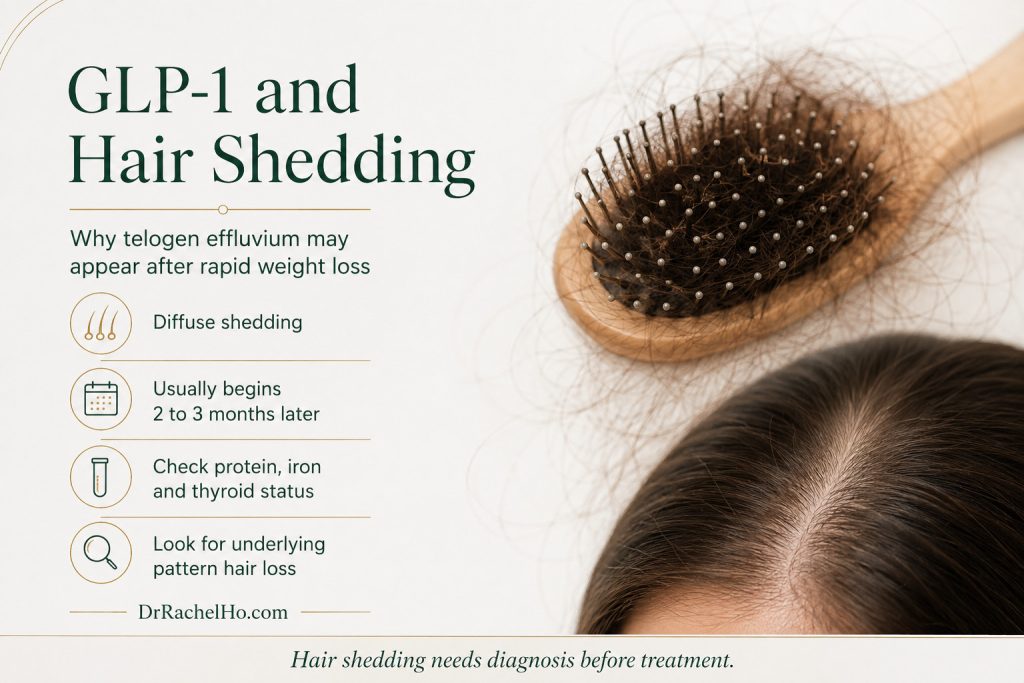
Hair shedding during semaglutide or tirzepatide treatment is often consistent with telogen effluvium, which may begin two to three months after rapid weight loss, reduced protein intake or another physiological stress.
Do GLP-1 medications cause hair loss?
Hair shedding has been reported with semaglutide, tirzepatide and other GLP-1 related medications. Recent systematic reviews and pharmacovigilance studies suggest a possible association, although hair loss remains uncommon overall and the exact mechanism has not been confirmed12,13.
The most common cause of hair loss due to GLP-1 medications is telogen effluvium. Telogen effluvium is diffuse shedding that occurs when a physical or metabolic stress pushes more hair follicles than usual into the resting phase, resulting in more apparent hair loss
Rapid weight loss, reduced protein intake, low iron stores, thyroid disease, illness and major dietary change can all trigger telogen effluvium. Shedding commonly begins two to three months after the trigger, which is why patients may not immediately connect the change to an earlier period of rapid weight loss14.
Some patients also have underlying androgenetic alopecia, which is a common genetic and hormonal type of hair loss. Androgenetic alopecia is also known as male-pattern or female-pattern hair loss. Telogen effluvium can reveal this predisposition, making thinning at the parting, temples or crown more noticeable even after the acute shedding settles.
Hair loss during GLP-1 treatment should be diagnosed first. Assessment for hair loss includes the pattern and timing of shedding, scalp examination, weight loss history, dietary intake and selected blood tests. Depending on the clinical picture, blood tests may include a full blood count, ferritin, thyroid function and other nutritional markers.
Patients should avoid taking high doses of biotin, iron, zinc or other supplements without evidence of deficiency. Excessive supplementation can cause adverse effects and may interfere with laboratory testing.
For more background on hair, read my guide to Hair Loss and Telogen Effluvium in Singapore.
Is GLP-1 hair loss permanent?
Acute telogen effluvium is usually temporary once weight and nutritional intake stabilise and the underlying trigger is addressed. Shedding may last several months, while visible density takes longer to recover because scalp hair grows slowly14.
Persistent thinning beyond the expected recovery period may indicate chronic telogen effluvium, androgenetic alopecia, iron deficiency, thyroid dysfunction or another form of hair loss. Early assessment is helpful because different conditions require different management.
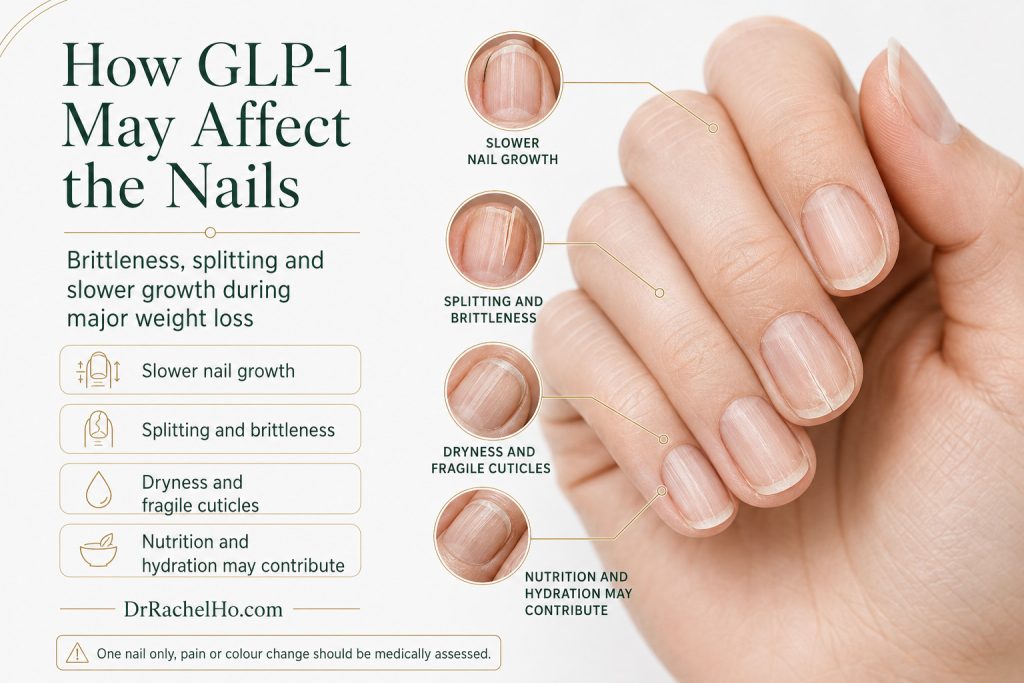
How can GLP-1 medications affect the nails?
Some patients report slower nail growth, splitting or increased brittleness during substantial weight loss. The evidence linking these changes directly to GLP-1 receptor activity is currently limited.
Reduced protein and micronutrient intake, dehydration, repeated wet work and pre-existing nail fragility are more established explanations. Protein and essential fatty acid deficiency can contribute to dry skin, brittle nails and impaired barrier function15.
A moisturiser applied to the hands and cuticles can reduce dryness, but unexplained nail should be medically assessed. Spoon-shaped nails, marked colour changes, pain, separation from the nail bed or changes affecting only one nail may indicate causes unrelated to GLP-1 treatment.
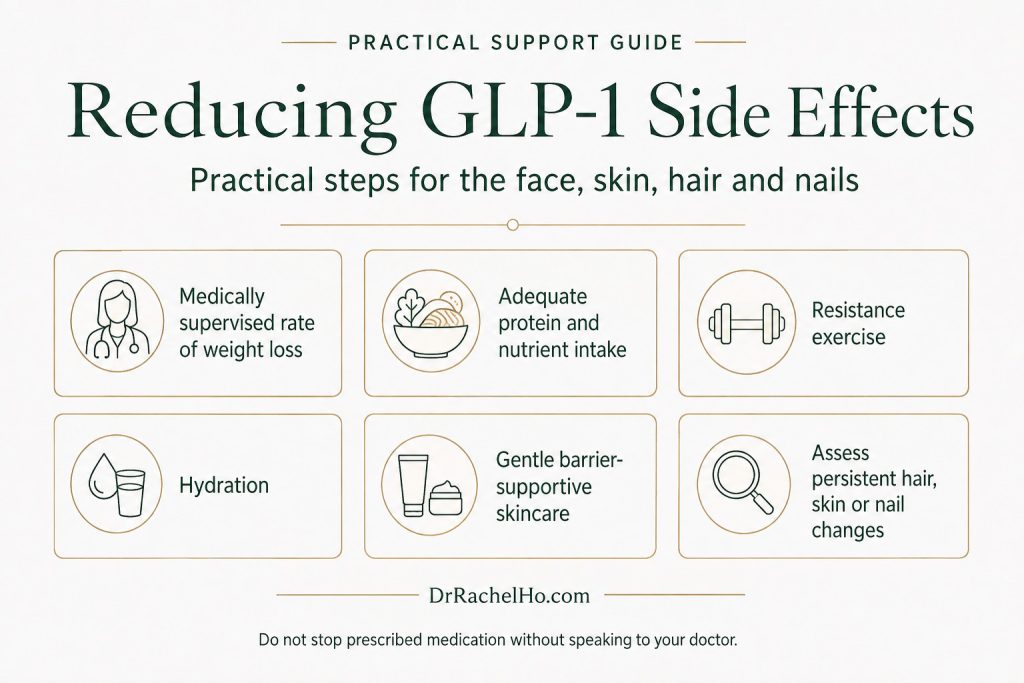
A medically supervised rate of weight loss, adequate protein and nutrient intake, resistance exercise, hydration and gentle skincare can reduce avoidable contributors to GLP-1-related face, skin, hair and nail changes.
Can these changes to the face, hair and nails from GLP-1 agonist drugs be prevented?
There is no guarantee that facial volume loss, shedding or loose skin will not occur. However, early identification of risk factors and strategic management can mitigate some of the negative changes. Some advice I provide to my patients on GLP-1 medications include:
• Following a medically supervised rate of weight loss
• Maintaining adequate protein and overall nutrient intake
• Including resistance exercise to support lean body mass
• Drinking enough fluid, especially when gastrointestinal symptoms occur
• Using gentle, barrier-supportive skincare
• Treating pre-existing hair loss before it becomes advanced
• Reviewing facial changes after weight begins to stabilise
Diet and blood tests should guide the correction of genuine deficiencies rather than relying on generic hair, skin and nail products.
When should you seek medical advice after starting GLP-1 agonist medications?
Speak to the prescribing doctor if there is persistent vomiting, diarrhoea, dehydration, a severe rash, facial swelling or a significant injection reaction. These symptoms require medical assessment.
A skin or hair assessment should be considered if you have the following signs:
• Hair shedding is heavy, prolonged or patchy
• The scalp is painful, inflamed or scarred
• Acne or rashes begin after treatment
• Loose skin folds become sore or infected
• Nail changes are progressive or affect one nail only
• Facial changes cause concern and weight has become relatively stable
Dr Rachel Ho’s clinical perspective on GLP-1 agonist changes to the face, skin, hair and nails.
GLP-1 medications can provide significant health benefits, and visible changes to the face, skin or hair should be discussed without alarmist language. My role is not to discourage medically appropriate weight treatment, but to help my patients identify these changes and reduce any negative side effects.
The safest approach to starting GLP-1 medications is a coordinated approach between the prescribing doctor, nutritionist and clinician assessing the skin, hair and facial structure. Treatment should support the patient’s health goals rather than compete with them.
Takeaway on GLP-1 change to the face, skin hair and nails
GLP-1 medications may affect the face, skin, hair and nails, mainly through substantial weight loss, altered tissue support, reduced intake and physiological stress. Not everyone develops these changes, and many are manageable once the correct cause is identified.
Hair shedding requires diagnosis, and brittle nails should not automatically be treated with supplements without a medical assessment. Patients should continue working with their prescribing doctor and seek an appropriate assessment when changes are persistent or concerning.
References
1. A Closer Look at the Dermatological Profile of GLP-1 Agonists. Persson et al. Diseases. 2025 Apr 22;13(5):127.
2. Dermatologic Implications of Glucagon-Like Peptide-1 Receptor Agonist Medications. Burke et al. Skin Appendage Disord. 2025 Oct;11(5):416-423.
3. A Review of Glucagon-like Peptide-1 in Dermatology. Patino et al. J Clin Aesthet Dermatol. 2025 Mar;18(3):42-50.
4. “Ozempic Face” in Plastic Surgery: A Systematic Review of the Literature on GLP-1 Receptor Agonist Mediated Weight Loss and Analysis of Public Perceptions. Daneshgaran et al. Aesthet Surg J Open Forum. 2025 Jun 11;7:ojaf056.
5. Once-Weekly Semaglutide in Adults with Overweight or Obesity. Wilding et al. N Engl J Med. 2021 Mar 18;384(11):989-1002.
6. Tirzepatide Once Weekly for the Treatment of Obesity. Jastreboff et al. N Engl J Med. 2022 Jul 21;387(3):205-216.
7. Radiographic Midfacial Volume Changes in Patients on GLP-1 Agonists. Sharma et al. Otolaryngol Head Neck Surg. 2025 Aug;173(2):360-366.
8. GLP-1RA and the Possible Skin Aging. Paschou et al. Endocrine. 2025 Sep;89(3):680-685.
9. Decoding the Implications of Glucagon-like Peptide-1 Receptor Agonists on Accelerated Facial and Skin Aging. Ridha et al. Aesthet Surg J. 2024 Oct 15;44(11):NP809-NP818.
10. Functional and Aesthetic Periorbital, Ocular Adnexal and Ocular Surface Changes Linked to GLP-1 Receptor Agonists. Kapantais et al. J Clin Med. 2025 Dec 12;14(24):8792.
11. The Use of GLP-1 Agonists in the Management of Cutaneous Disease. Lal and Herringshaw. J Clin Aesthet Dermatol. 2024 Sep;17(9):34-37.
12. GLP-1 Therapies and Hair Loss: A Systematic Review of Current Evidence and Implications for Counseling. Gupta et al. Sci Prog. 2026 Apr-Jun;109(2):368504261444578.
13. Hair Loss Associated With Glucagon-Like Peptide-1 Receptor Agonist Use: A Systematic Review. Alsuwailem et al. Cureus. 2025 Sep 16;17(9):e92454.
14. Telogen Effluvium: A Review. Malkud. J Clin Diagn Res. 2015 Sep;9(9):WE01-WE03.
15 When Diet Trends Go Viral: Cutaneous Manifestations of Social Media-Driven Fad Diets and Supplements. Parga and Coven. Cureus. 2025 Jun 19;17(6):e86334.

My Aestheticplus
Posted at 12:55h, 18 SeptemberGreat overview of how GLP-1 treatments impact facial volume, hair, and skin. It’s so important for patients to realize that rapid weight loss requires a combined approac balancing medical weight loss with proactive aesthetic care like skinboosters and collagen biostimulators. Thanks for sharing such clear insights,my cosmetic clinic