


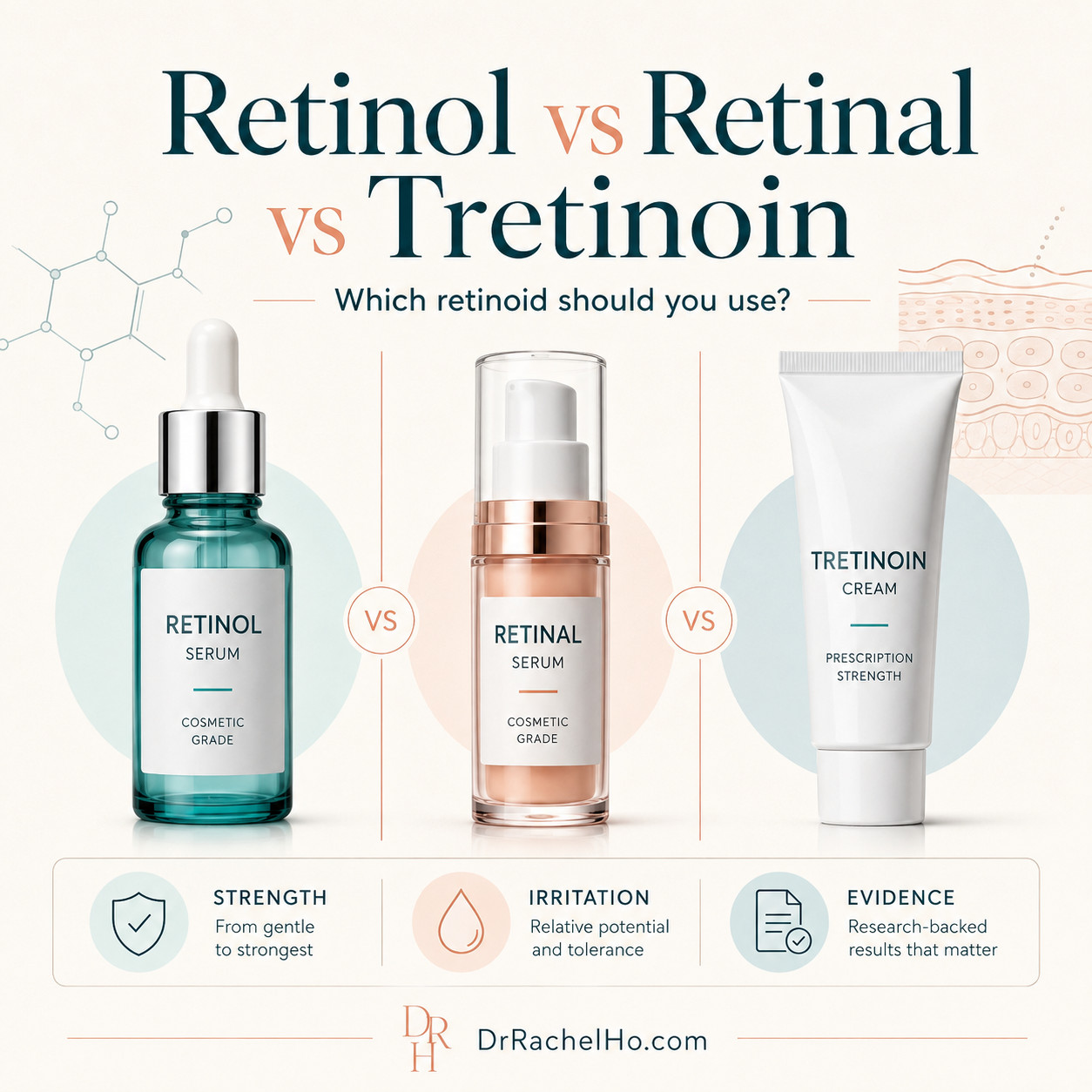
10 May Retinol vs Retinal vs Tretinoin: Which Should You Use?
Retinol vs Retinal vs Tretinoin: Which Retinoid Should You Use?
By Dr Rachel Ho | Updated August 2026
Retinol, retinal and tretinoin all belong to the retinoid family, but they are not interchangeable. Retinol requires two conversion steps before it becomes active retinoic acid, retinal requires one step, and tretinoin is retinoic acid itself1,2.
This difference affects the strength of evidence, speed of response and likelihood of irritation. Retinol is a practical cosmetic starting point, retinal is a closer cosmetic precursor with growing clinical evidence, and tretinoin is a prescription treatment with the most established evidence for acne and photoageing1,3,4.
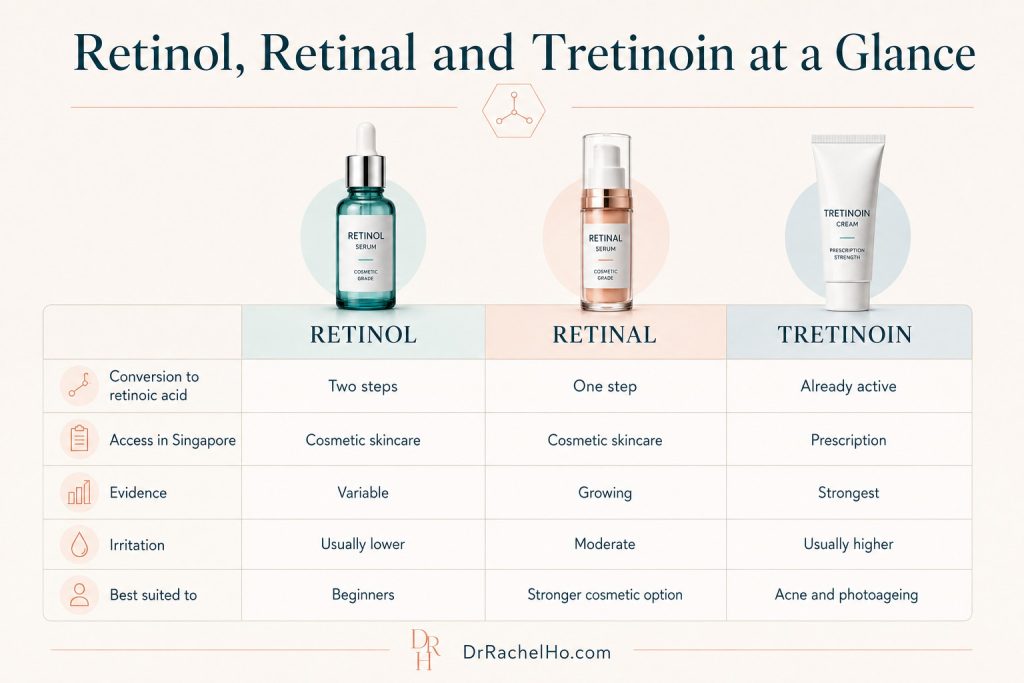
How do retinol, retinal and tretinoin differ? Retinol is a common cosmetic starting point, retinal is a stronger cosmetic precursor, and tretinoin has the most established evidence for acne and photoageing but usually carries a higher irritation risk.
Retinol, retinal and tretinoin at a glance
Retinoids at a glance
| Retinoid category | Retinol | Retinal | Tretinoin |
|---|---|---|---|
| Full name | Retinol | Retinaldehyde | All trans retinoic acid |
| Conversion to retinoic acid | Two steps | One step | Already active |
| Access in Singapore | Cosmetic skincare | Cosmetic skincare | Prescription medication |
| Evidence | Variable across products | Growing clinical evidence | Strongest evidence for acne and photoageing |
| Irritation | Usually lower | Formulation dependent | Usually higher |
| Best suited to | Beginners and early skin changes | Users seeking a stronger cosmetic retinoid | Medical acne care and established photoageing |
Percentages cannot be compared directly. A 0.1 percent retinal product is not equivalent to 0.1 percent retinol or 0.1 percent tretinoin because the molecules, vehicles and biological activity differ.
What is a retinoid?
Retinoid is the umbrella term for vitamin A compounds that influence cell turnover, follicular keratinisation, pigment distribution and collagen related pathways. Cosmetic retinol and retinal must convert inside the skin before they bind efficiently to retinoic acid receptors, while tretinoin acts directly1,2.
The conversion pathway is:
Retinyl esters → retinol → retinal → retinoic acid
A shorter pathway does not guarantee a better product. Stability, encapsulation, concentration, vehicle and regular use all influence how a formula performs on real skin.
Retinol: the gentlest common starting point
Retinol is widely available in creams, serums and oils. It suits beginners who want gradual improvement in early fine lines, mild uneven tone, rough texture or minor congestion without beginning with prescription treatment.
The evidence is less consistent than product marketing suggests. A systematic review identified nine randomised controlled trials of over the counter vitamin A products, with four finding no significant difference from vehicle and five showing weak evidence of a modest effect on fine facial wrinkles1.
Retinol still has a useful role when the formulation is stable and the skin tolerates regular application. Its main strength is accessibility and a lower irritation burden compared with tretinoin.
Read Retinol for Skin: Benefits, Side Effects and How to Use It for the complete ingredient guide.
Retinal: one conversion step closer
Retinal, also called retinaldehyde, sits between retinol and retinoic acid in the conversion pathway. It has become popular in cosmetic skincare because it offers a closer route to the active form while remaining available without prescription.
A randomised controlled trial comparing 0.05 percent and 0.1 percent retinal creams found improvements in photoageing, texture, hydration and water loss after three months. The study found no significant difference between the two strengths for most measured outcomes, which shows why a higher percentage is not automatically superior3.
Direct clinical comparisons between retinal and retinol remain limited. Product specific delivery systems also influence tolerability, so retinal should be introduced gradually rather than treated as a universally gentle shortcut to tretinoin.
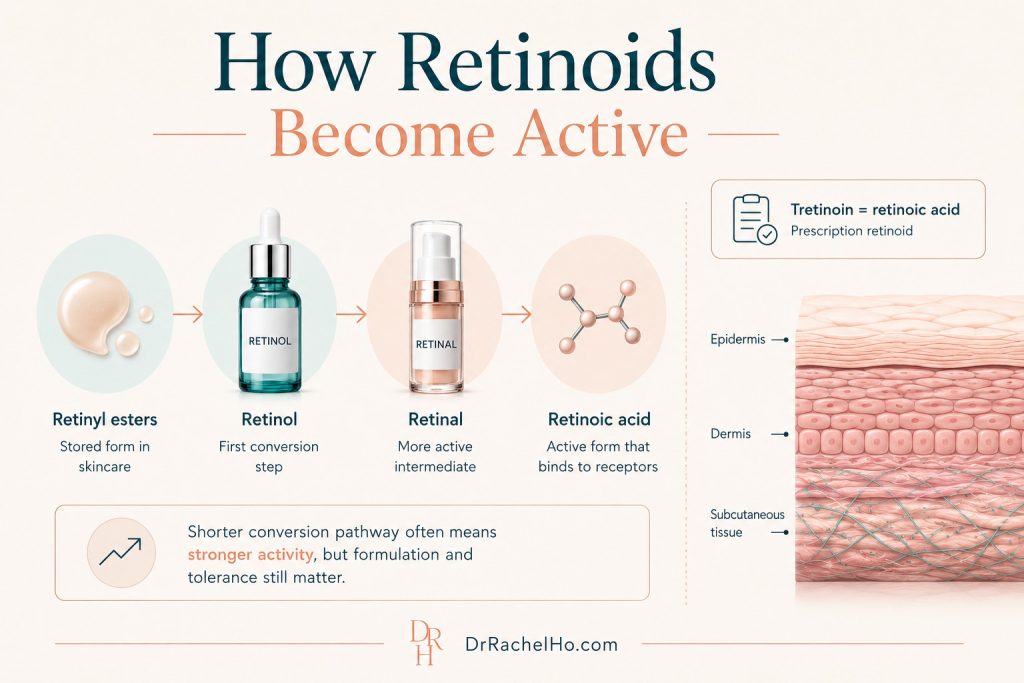
How do retinoids become active? The conversion pathway is retinyl esters to retinol, retinal and finally retinoic acid. Tretinoin is retinoic acid itself, while cosmetic retinol and retinal require conversion inside the skin.
Tretinoin: the prescription standard
Tretinoin is retinoic acid and does not require conversion within the skin. It has the strongest evidence for photoageing, while current acne guidelines give topical retinoids a strong recommendation for treating clogged pores and inflammatory acne4,5.
The trade off is irritation. Dryness, redness, peeling, stinging and retinoid dermatitis occur more often with tretinoin, especially when treatment begins too frequently or is combined with several drying products4,6.
In Singapore, topical tretinoin is used under medical guidance. HealthHub advises gradual introduction, avoidance of broken skin, daily sunscreen and reduced frequency when irritation becomes significant7.
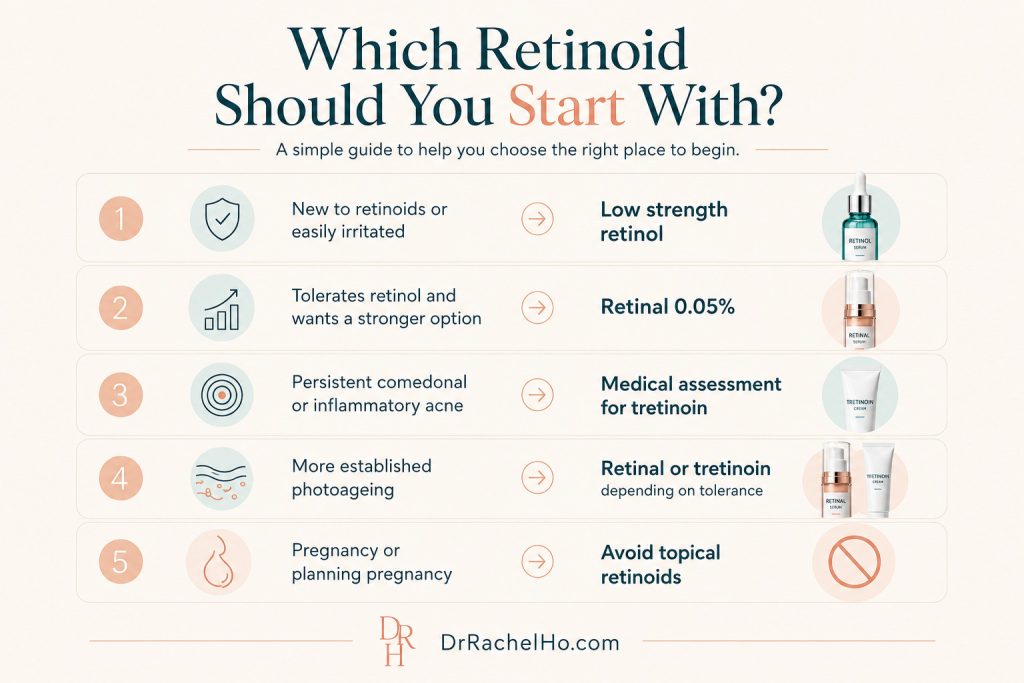
Which retinoid should you start with? Beginners and reactive skin often start with low-strength retinol. Retinal can suit people who already tolerate retinol, while persistent inflammatory or comedonal acne deserves medical assessment for a prescription retinoid
Which retinoid should you start with?
Your starting point should reflect the main concern, skin barrier and tolerance for irritation.
Retinoid starting tips
| Skin goal or profile | Retinoid starting tips |
|---|---|
| New to retinoids or easily irritated | Low strength retinol twice weekly |
| Tolerates retinol and wants a stronger cosmetic option | Retinal 0.05 percent introduced slowly |
| Persistent comedonal or inflammatory acne | Medical assessment for a prescription topical retinoid |
| More established photoageing | Retinal or prescription tretinoin according to tolerance |
| Active eczema, rosacea flare or damaged barrier | Stabilise the skin before beginning |
| Pregnancy or planning pregnancy | Avoid topical retinoids and discuss alternatives with a doctor |
Sensitive Asian skin deserves particular care because irritation can leave post inflammatory pigmentation that persists after the redness settles8. A slower schedule often produces a better long term result than repeated cycles of overuse and recovery.
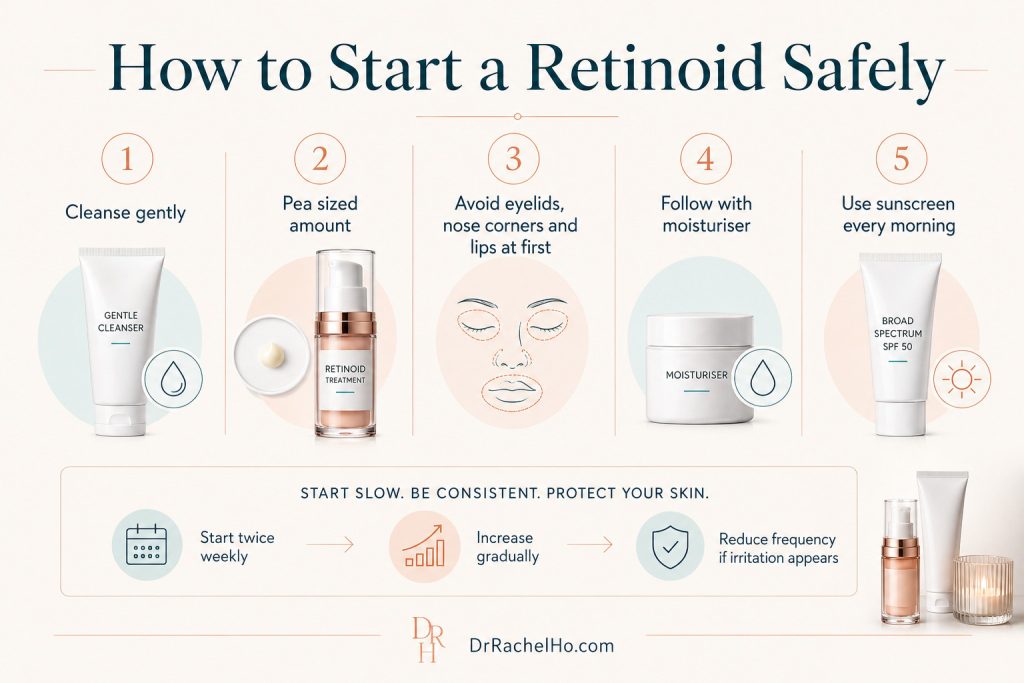
How should retinol, retinal or tretinoin be started? Apply a pea-sized amount to clean, dry skin, avoid sensitive facial creases initially, follow with moisturiser and use broad-spectrum sunscreen every morning. Begin twice weekly and increase only when the skin remains comfortable.
How to start a retinoid safely
A simple evening routine is enough:
- Cleanse gently and pat the skin dry.
- Apply a pea sized amount across the whole face.
- Avoid the eyelid margins, corners of the nose and lips at first.
- Follow with a plain moisturiser.
- Use broad spectrum sunscreen every morning.
Begin twice weekly for two to four weeks. Increase to alternate evenings only when the skin remains comfortable, and reduce frequency when persistent redness, burning or peeling appears.
Applying moisturiser before and after the retinoid is commonly called the sandwich method. This can improve comfort for dry or reactive skin, although very occlusive products can alter penetration.
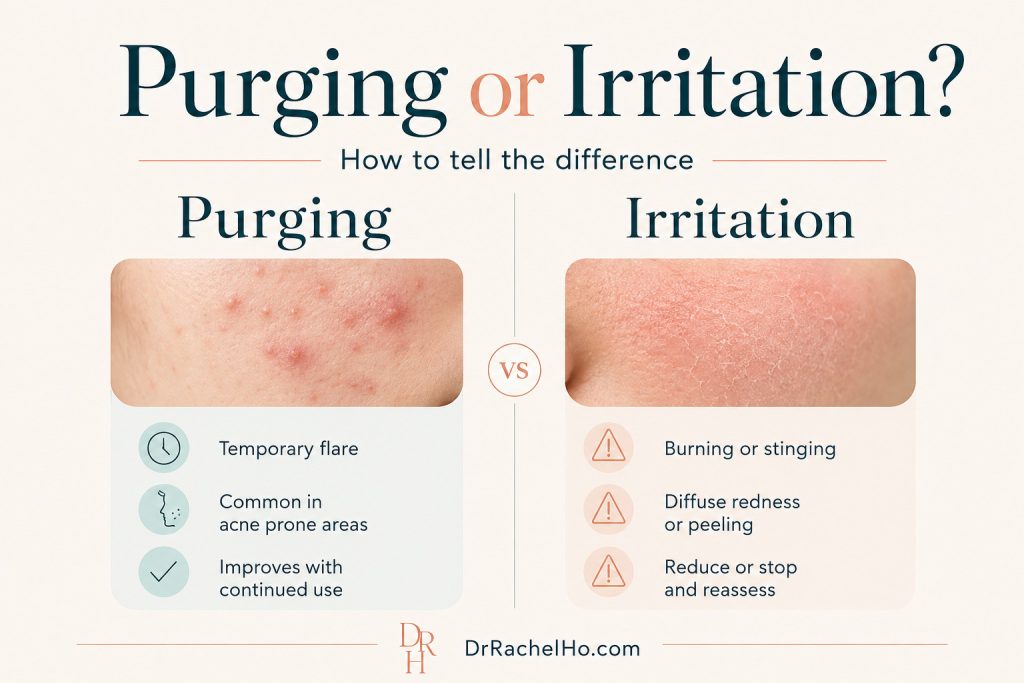
Is it retinoid purging or irritation? Purging usually appears as a temporary flare in familiar acne-prone areas. Burning, persistent stinging, widespread redness, scaling or peeling point more strongly to irritation and indicate that the routine should be reduced or paused.
Purging versus irritation
Retinoids can cause purging, which temporarilys make acne look worse during the first two to three weeks as existing clogged pores and blocked follicles surface. Purging is a known phenomenon with skincare ingredients and treatments that increase cell turnover. For more about purging and associated treatments, please read Is Your Skin Purging or Breaking Out?
Burning, blistering, crusting, swelling, marked itching or a rash indicate irritation or an adverse reaction rather than productive purging. Stop the product and seek medical advice when these symptoms are severe or persistent.
Read How to Repair Your Skin Barrier before restarting a routine that has caused ongoing sensitivity.
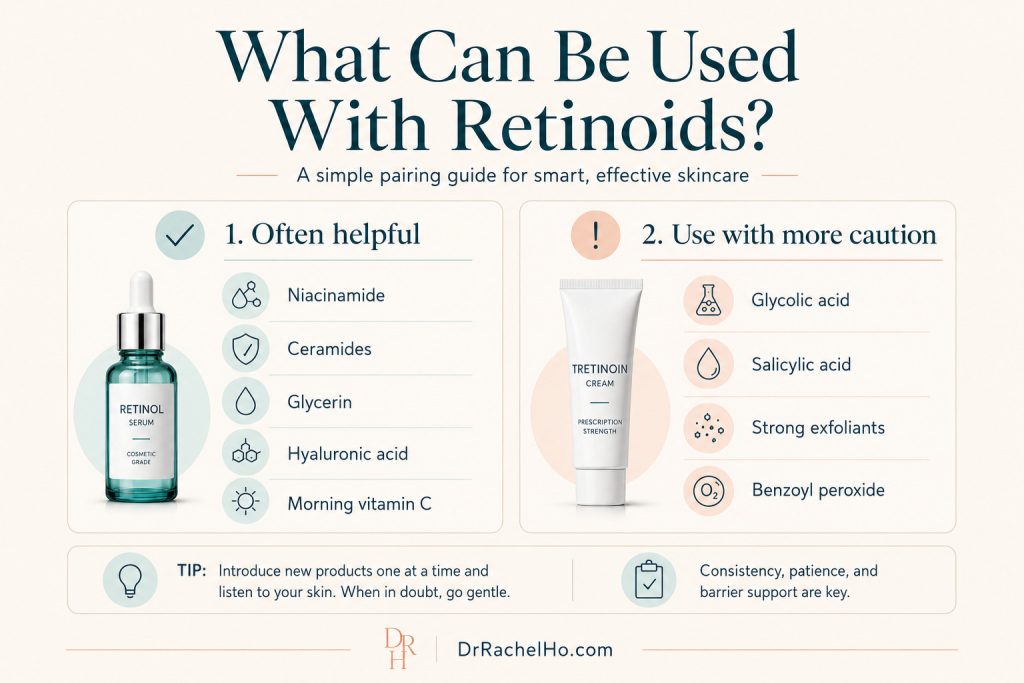
What can be used with retinoids? Niacinamide, ceramides, glycerin and hyaluronic acid can support barrier tolerance. Glycolic acid, salicylic acid, strong exfoliants and benzoyl peroxide require more careful scheduling because cumulative irritation can develop.
What can be used with retinoids?
Niacinamide, glycerin, hyaluronic acid and ceramide moisturisers can support hydration and barrier tolerance. Vitamin C can remain in the morning routine while the retinoid is used at night.
Glycolic acid, salicylic acid and strong exfoliating products increase cumulative irritation when used too frequently. Benzoyl peroxide should be separated from ordinary topical tretinoin unless the prescribed product is specifically formulated as a stable combination7.
For related skincare guides, please refer to Niacinamide for Skin, Vitamin C for Skin and Azelaic Acid Singapore.
Pregnancy and breastfeeding
European medical guidance contraindicates topical retinoids during pregnancy and while planning pregnancy as a precaution9. Cosmetic retinol and retinal belong to the same wider vitamin A family, so I recommend avoiding them during this period as well.
Breastfeeding requires individual review of the product, treatment area and exposure risk. Read my Pregnancy Skincare Guide for alternatives for acne, pigmentation and skin ageing.
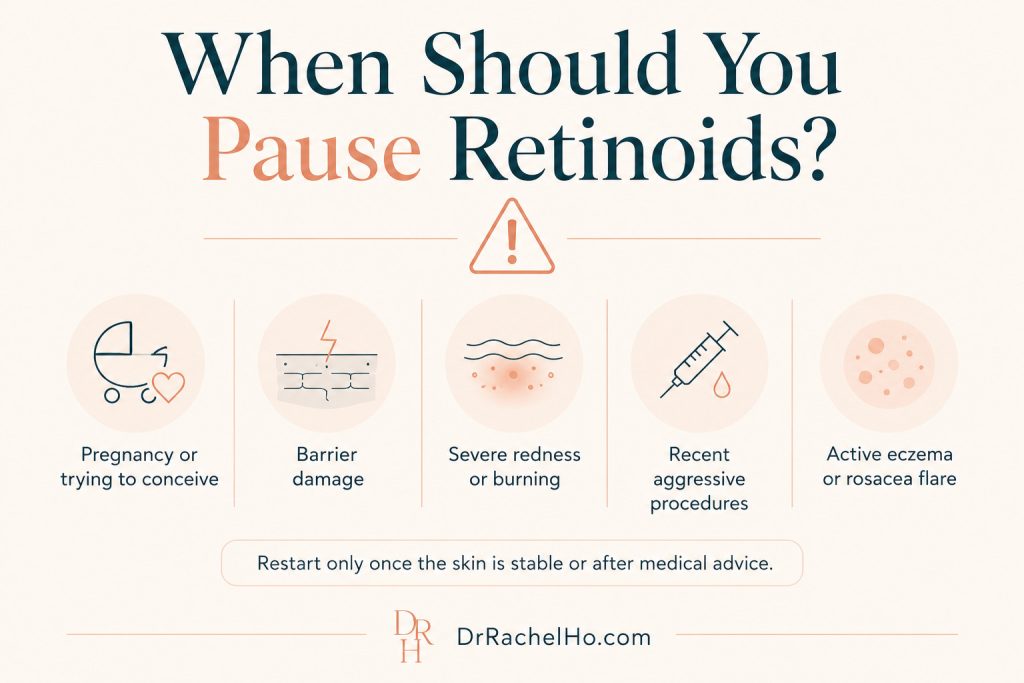
When should retinoids be paused? Topical retinoids should be avoided during pregnancy or pregnancy planning and delayed when the skin is inflamed, severely irritated or recovering from an intensive procedure. Active eczema or rosacea should be stabilised first.
What retinoid skincare cannot do
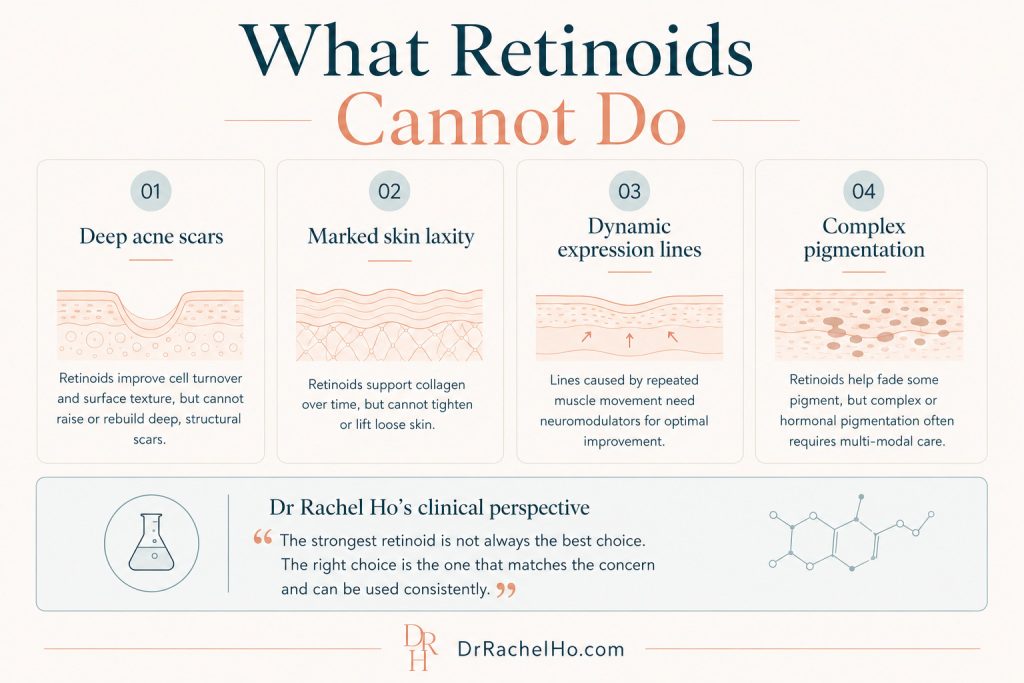
Retinoids improve selected surface and cellular processes, but they cannot replace sunscreen or correct every structural concern. Deep acne scars, marked laxity, dynamic expression lines and complex pigmentation require diagnosis and a different treatment category.
Indented acne scars can be assessed for radiofrequency microneedling or fractional carbon dioxide laser. Persistent dark spots and melasma need a pigment specific plan, outlined in the clinic guide to hyperpigmentation treatment for Asian skin.
Movement related lines need an assessment of muscle activity, while marked loose skin needs a separate laxity assessment. The clinic pages on wrinkle treatment and radiofrequency skin tightening explain these distinctions.
What can retinoids not treat fully? Retinoids cannot rebuild deep indented acne scars, lift marked skin laxity, correct muscle-driven expression lines or treat every form of pigmentation. Dr Rachel Ho recommends matching the retinoid or procedure to the actual diagnosis rather than choosing the strongest option.
Dr Rachel Ho’s clinical perspective on retinoids
I usually begin with retinol or retinal when a patient wants gradual cosmetic improvement and has a stable skin barrier. Tretinoin becomes more relevant when acne or photoageing justifies prescription treatment and the patient can follow a structured introduction plan.
The strongest retinoid is not automatically the best choice. The best choice is the one that addresses the correct concern, can be used consistently and does not create persistent inflammation.
Frequently asked questions
Is retinal stronger than retinol?
Retinal is one conversion step closer to retinoic acid, so it has a shorter metabolic pathway. Direct comparative evidence remains limited, and formulation quality still affects the real world result.
Is tretinoin better than retinol?
Tretinoin has stronger evidence for acne and photoageing because it is already active retinoic acid. Its higher irritation burden and prescription status mean that it is not the right starting point for every person.
Can retinol and vitamin C be used together?
Both can remain in the same overall routine. Using vitamin C in the morning and a retinoid at night usually keeps the routine simpler and reduces cumulative irritation.
How long do retinoids take to work?
Acne improvement from tretinoin often becomes clearer after four to seven weeks, while photoageing studies usually assess results over three to six months3,4,7. Continued use is needed to preserve the effect.
Can retinoids remove acne scars?
Retinoids can improve brown post acne marks and minor surface irregularity. Deep rolling, boxcar and ice pick scars involve dermal structure and need procedure based treatment.
References
- Spierings NMK. Evidence for the Efficacy of Over the Counter Vitamin A Cosmetic Products in the Improvement of Facial Skin Aging: A Systematic Review. Journal of Clinical and Aesthetic Dermatology. 2021. PMID 34980969.
- Milosheska D, Roškar R. Use of Retinoids in Topical Antiaging Treatments. Clinical, Cosmetic and Investigational Dermatology. 2022.
- Kwon HS, et al. Efficacy and Safety of Retinaldehyde 0.1 Percent and 0.05 Percent Creams Used to Treat Photoaged Skin. Journal of Cosmetic Dermatology. 2018. PMID 29663701.
- Siddiqui Z, et al. Comparing Tretinoin to Other Topical Therapies in the Treatment of Skin Photoaging: A Systematic Review. American Journal of Clinical Dermatology. 2024. PMID 39348007.
- Reynolds RV, et al. Guidelines of Care for the Management of Acne Vulgaris. Journal of the American Academy of Dermatology. 2024. PMID 38300170.
- Narsa AC, et al. A Comprehensive Review of Strategies to Reduce Retinoid Induced Skin Irritation in Topical Formulation. Dermatology Research and Practice. 2024. PMID 39184919.
- HealthHub Singapore. Topical Tretinoin. Updated 2026.
- Mar K, et al. Treatment of Post Inflammatory Hyperpigmentation in Skin of Colour: A Systematic Review. Journal of Cutaneous Medicine and Surgery. 2024. PMID 39075672.
- European Medicines Agency. Updated Measures for Pregnancy Prevention During Retinoid Use. 2018.

My Homepage
Posted at 11:19h, 09 December… [Trackback]
[…] Informations on that Topic: drrachelho.com/blog/retinol-retinoid-tretinoin-best-guide/ […]