


11 May New Injectables from Europe: Hybrid Cooperative Complex for Structure
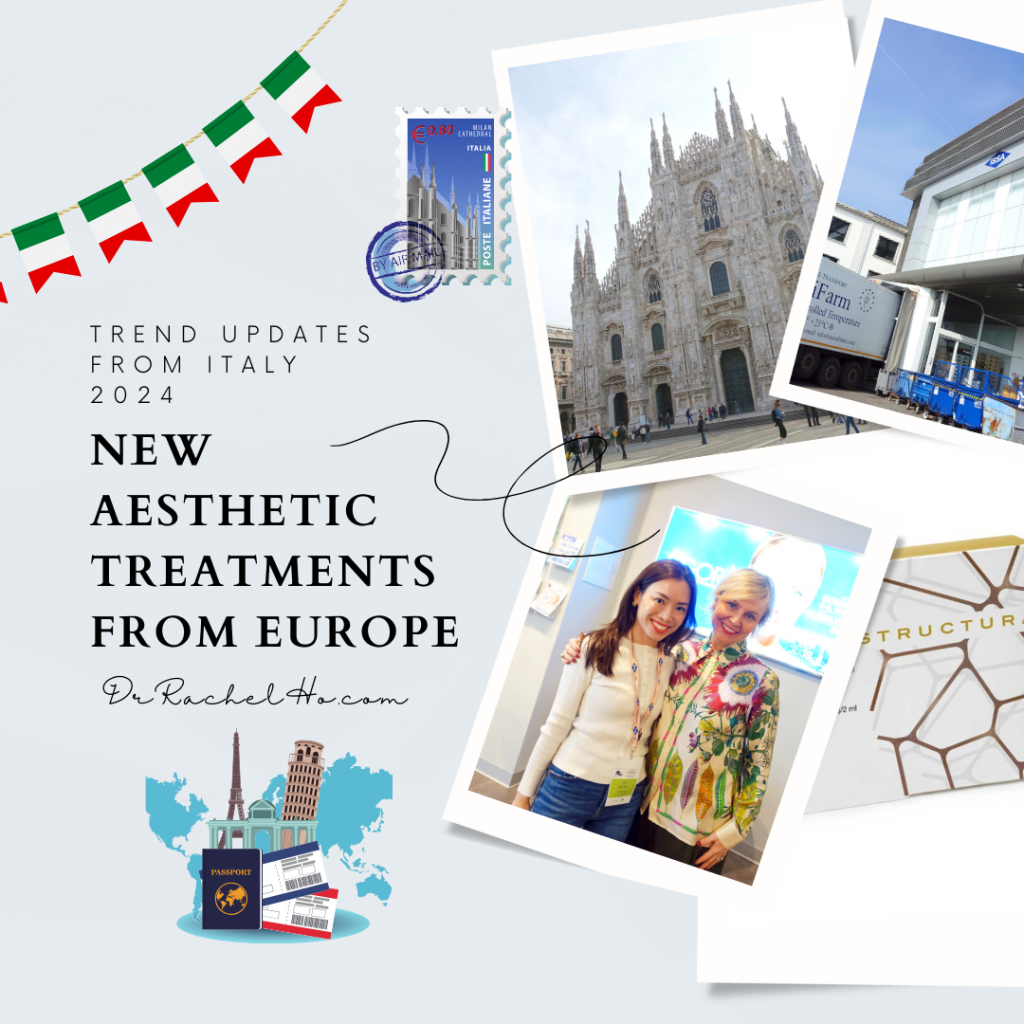
If you could stave off volume loss in your face without surgery or facial fillers, would you? A new aesthetic treatment launching in Singapore in 2025 may be the closest thing to restoring facial contours and facial fats. Hybrid Cooperative Complex for Structure is the newest hyaluronic acid injectable moisturiser that was unveiled in 2024 in Europe. I was in Milan recently to visit the Agora School of Aesthetic Medicine, a post graduate institution that formalises training of plastic surgeons and dermatologists in Aesthetic medicine and surgery. During this visit, I had the opportunity to learn from Italian surgeons about expanding indications for Hybrid Cooperative Complex Injectable Moisturiser and Hybrid Cooperative Complex for Structure ahead of its launch in Singapore! *Update June 2025- this treatment is now available in Singapore!
Related blogposts:
Is Hybrid Cooperative Complex Injectable Moisturiser the Injectable Skincare of the Future?
Neck Hybrid Cooperative Complex Injectable Moisturiser to Lift, Tighten and Rejuvenate the Neck
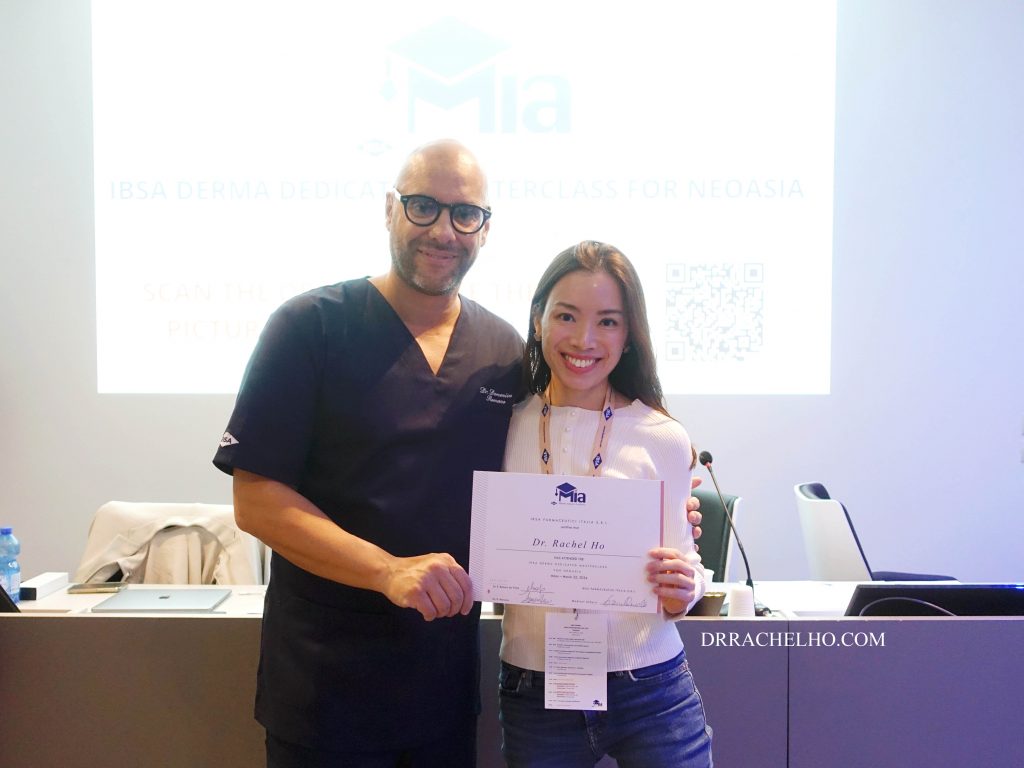
An honour to have learnt from Italian plastic surgeon,Dr. Domenico Romano at the Agora School of Aesthetic Medicine in Milan in 2024.
Sharing the newest updates in Aesthetics medicine from Europe in this review before they arrive in Singapore!
What is Hybrid Cooperative Complex for Structure?
Hybrid Cooperative Complex for Structure is a new hyaluronic acid injectable from the makers of Hybrid Cooperative Complex Injectable Moisturiser, IBSA Pharma. Like its predecessor, Hybrid Cooperative Complex Injectable for Structure also contains a high concentration of high and low molecular weight hyaluronic acid. This new product is designed to restore the fat tissues of the face, which naturally reduces as we get older.
What does Hybrid Cooperative Complex Injectable for Structure contain?
Hybrid Cooperative Complexfor Structure contains 45 mg of low molecular weight hyaluronic acid and 45 mg of high molecular weight hyaluronic acid. This mixture is contained in a 2 mL syringe. Hybrid Cooperative Complex for Structure also uses the same NAHYCO® Hybrid Technology as its predecessor, Hybrid Cooperative Complex Injectable Moisturiser. This means that Hybrid Cooperative Complex for Structure’s mixture of high and low weight hyaluronic acid molecules are joined together without chemical cross links.

Administering Hybrid Cooperative Complex for Structure in my clinic in Singapore
What does Hybrid Cooperative Complex Injectable Moisturiser for Structure do?
Hybrid Cooperative Complex for Structure restores and respositions fat tissues in the face. This delays the natural age related volume loss and hollowness in the face. According to information from IBSA, Hybrid Cooperative Complex for Structure allows the preservation of a natural look, and aesthetic effects similar to those obtained using crosslinked dermal fillers.
How is Hybrid Cooperative Complex Ifor Structure different from Hybrid Cooperative Complex Injectable Moisturiser?
Hybrid Cooperative Complex for Structurehas a higher hyaluronic acid content (90mg/2mL) than the original Hybrid Cooperative Complex Injectable Moisturiser (64mg/2mL); as well as different rheological characteristics. Hybrid Cooperative Complex for Structure has been developed to restore the fat tissue layer; as opposed to being an injectable moisturiser like Hybrid Cooperative Complex Injectable Moisturiser.
The injection techniques for Hybrid Cooperative Complexfor Structure are also different from the original Hybrid Cooperative Complex Injectable Moisturiser.

With Dr. Editta Buttura, Maxillofacial surgeon to learn about Hybrid Cooperative Complex for Structure in 2024.
Many of us are familiar with Hybrid Cooperative Complex Injectable Moisturiser as an injectable moisturiser that’s classically injected in the cheeks; but the indications for Hybrid Cooperative Complex Injectable Moisturiser beyond this region i.e. forehead, temples and periorbital regions have expanded.
Hybrid Cooperative Complex Injectable Moisturiser 2.0: Expanding indications
Termed Hybrid Cooperative Complex Injectable Moisturiser 2.0, treatment of the upper face with hyaluronic acid injections can improves skin hydration, texture and signs of ageing like wrinkles and loss of elasticity. As I’ve shared in great detail about the science and benefits of Hybrid Cooperative Complex Injectable Moisturiser in Is Hybrid Cooperative Complex Injectable Moisturiser the Injectable Skincare of the Future? , this treatment can be useful in stimulating collagen and elastin formation in the skin. Individuals who have acne scars, enlarged pores, sagging and wrinkles in the upper face can consider Hybrid Cooperative Complex Injectable Moisturiser 2.0 to treat these conditions.
I’m honored to have gained a sneak preview of Hybrid Cooperative Complex for Structure ahead of its launch in Singapore; as well as to learn from Plastic Surgeon Dr. Domenico Romano and OMS surgeon Dr. Editta Buttura advanced injections for Hybrid Cooperative Complex Injectable Moisturiser. I’ve also shared my must visit beauty experience in Milan in Milan, Italy: 5 Best Beauty Stores.

A few of my favourites memories of Spring in Italy- heading out to the coast and beaches of Portofino and Bocadasse, beautiful magnolia blooms in Tirano, all the food and art in Milan!
References:
1. Elucidations on the Performance and Reversibility of Treatment with Hyaluronic Acid Based Dermal Fillers: In vivo and in vitro Approaches. Scrima et al. Clin Cosmet Investig Dermatol. 2022 Dec 8:15:2629-2640.
2. Restoring Adipose Tissue Homeostasis in Response to Aging: Initial Clinical Experience with Hybrid Cooperative Complex Injectable Moisturiser Structura®. Cassuto et al. Gels. 2023 Jul 28;9(8):614.
3. Efficacy and tolerability of Hybrid Cooperative Complex Injectable Moisturiser® Structura intended to restore lateral cheek fat compartment: An observational pilot study. Sparavigna et al. Health Sci Rep. 2024 Jan 21;7(1):e1743.

No Comments