


04 Sep Perimenopause & Menopause Singapore: Symptoms, HRT and Treatment
Perimenopause and Menopause in Singapore: A Doctor’s Guide
By Dr Rachel Ho | Updated September 2026
For decades, conversations about perimenopause and menopause were shrouded in stigma, resulting in women enduring their symptoms in silence. Thankfully, we are witnessing a profound and welcome attitude towards this natural, physiological life stage for women with open dialogue, sensitivity, and scientific validation.
A landmark study by KK Women’s and Children’s Hospital (KKH) revealed that seven in ten Singaporean women aged 45 to 65 experience moderate to severe menopausal symptoms, yet 70% still suffer without medical support. Beyond hot flushes, local women navigate complex changes ranging from sleep disruptions, joint aches, and physical exhaustion to shifts in mood, skin density, body composition, and intimate health. The global medical landscape is also catching up with this mindset change. On 12 February 2026, the FDA approved changes to the labels of six menopausal hormone therapy products, including removal of selected boxed-warning statements about cardiovascular disease, breast cancer and probable dementia. This was not a declaration that every hormone product is risk-free, and it does not replace an individual discussion of benefits, risks and suitability in Singapore.
This guide provides general education about perimenopause and menopause treatment in Singapore.
Perimenopause and menopause at a glance
FAQ about perimenopause and menopause in Singapore
| Question | Evidence based answer |
|---|---|
| What is perimenopause? | Perimenopause is the period around the final menstrual period when ovarian hormone production fluctuates, menstrual cycles may change and menopause symptoms may begin4,5,10. |
| What is menopause? | Menopause is confirmed after 12 consecutive months without menstruation when another cause is absent1,4,10. |
| What is the average age of natural menopause in Singapore? | A nationwide Singapore study reported a mean age of 49 years1,3. |
| Can symptoms begin while periods continue? | Hot flushes, sleep problems, mood changes, vaginal dryness and other symptoms can begin before the final menstrual period4,10. |
| Is a blood test needed? | Women aged 45 and above with a typical history can usually be assessed clinically without routine hormone testing1,4,5. |
| What does menopause treatment include? | Treatment may involve lifestyle measures, menopause hormone therapy, nonhormonal medicines, menopause specific cognitive behavioural therapy, vaginal treatments and care directed at individual symptoms1,4,5,7,8. |
| What is HRT or MHT? | HRT and MHT refer to hormone treatment using oestrogen, with a progestogen when required, for recognised menopause symptoms and selected bone health indications1,4,6,7. |
| Who may benefit from systemic MHT? | For most healthy symptomatic women younger than 60 or within 10 years of menopause onset, the benefits usually outweigh the risks when treatment is medically suitable1,6,7. |
| What helps vaginal dryness? | Vaginal moisturisers and lubricants may help symptoms. Low dose vaginal oestrogen is an effective treatment for persistent genitourinary symptoms in suitable women1,4,5,7. |
| Are nonhormonal treatments available? | Evidence based options include menopause specific cognitive behavioural therapy and selected medicines such as certain antidepressants, gabapentin, oxybutynin and fezolinetant4,5,8,15. |
| Can aesthetic treatment treat menopause? | Aesthetic treatment can address selected concerns such as dryness, pigmentation, acne or skin laxity, but it does not treat systemic symptoms like hot flushes, abnormal bleeding or osteoporosis1,17. |
Guidelines from Singapore, UK and US collectively emphasise individualised care rather than a standardised treatment plan1,4,6,7. The appropriate plan depends on the individual patient’s syptoms, personal medical risks, whether the uterus is present and the woman’s preferences1,4,6,7.
What is perimenopause?
Perimenopause is the transition leading towards menopause. During this time, ovarian function becomes less predictable and oestrogen and progesterone levels can fluctuate considerably4,5,10.
Periods can become shorter, longer, lighter, heavier or more widely spaced. Symptoms of menopause can also appear while the menstrual cycle still seems regular, so the presence of periods does not exclude perimenopause4,10.
Pregnancy can remain possible while ovulation continues. HRT does not provide contraception, so women who wish to avoid pregnancy should discuss contraception separately with their doctor4,5.
What is menopause?
Menopause marks the end of natural menstrual cycles and is diagnosed after 12 consecutive months without a period when pregnancy, medication or another medical condition does not explain the change1,4,10. The years that follow are described as postmenopause4,10.
A nationwide Singapore study reported a mean age of 49 years for natural menopause3. Menopause occurring between 40 and 44 is generally described as early menopause, while loss of ovarian function before 40 may represent premature ovarian insufficiency4-6. Both conditions have implications for fertility, bone health and long term health differ from menopause at the usual age1,4,6-7.
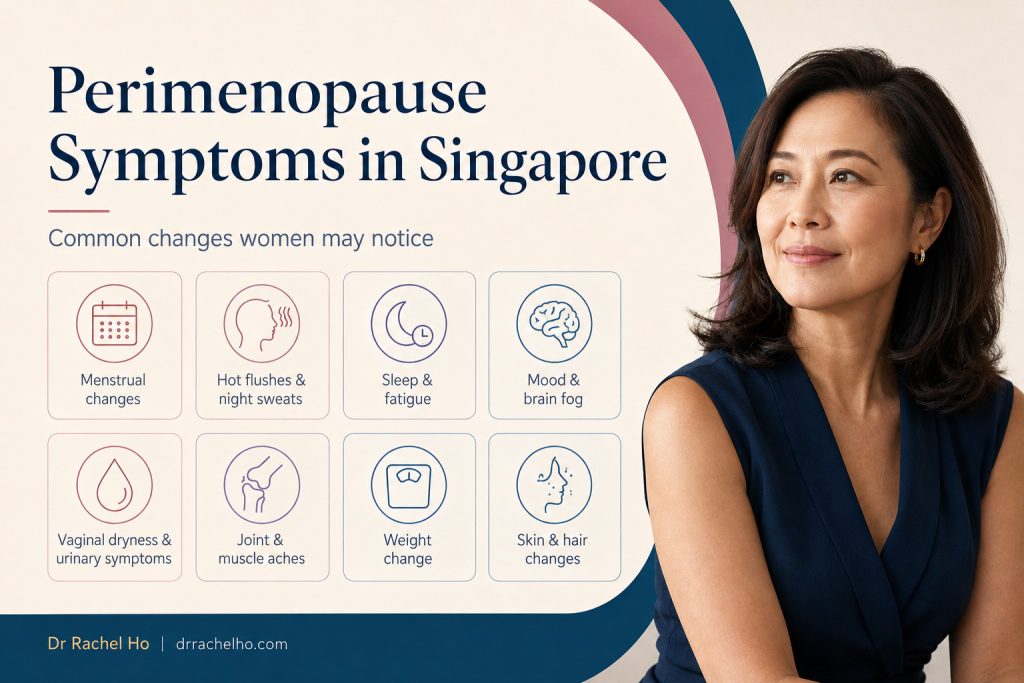
Perimenopause can involve much more than hot flushes. Singapore women may notice menstrual changes, disturbed sleep, fatigue, joint and muscle aches, vaginal symptoms, mood changes and changes to skin and hair.
What are the symptoms of perimenopause in Singapore?
According to Singapore’s 2026 menopause guidelines, new joint and muscle pain, disturbed sleep, sexual and urinary concerns, physical and mental exhaustion, and hot flushes are among the most prominent local symptoms1. The accompanying KKH survey found that weight gain, difficulty sleeping, head or neck aches, vaginal dryness, and joint and muscle aches were the most frequently reported moderate to severe concerns2.
Common symptoms of perimenopause in Singapore
| Symptom group | What women may experience |
|---|---|
| Menstrual changes | Less predictable timing, heavier or lighter bleeding, skipped cycles or prolonged bleeding4,10,18 |
| Vasomotor symptoms | Hot flushes, night sweats, chills and sleep disruption1,10,11 |
| Sleep and energy | Difficulty falling asleep, repeated waking, tiredness and reduced stamina1,2,10 |
| Mood and cognition | Low mood, anxiety, irritability, reduced concentration and subjective brain fog1,4,10 |
| Genitourinary symptoms | Vaginal dryness, discomfort, painful sex, urinary urgency or recurrent urinary concerns1,4,7,10 |
| Musculoskeletal symptoms | New joint aches, muscle discomfort and reduced physical strength1,2 |
| Body composition | Greater central fat accumulation and gradual loss of lean mass in some women12 |
| Skin and hair | Dryness, reduced resilience, changes in texture, acne or hair thinning2,13,14 |
Conditions such as thyroid disease, iron deficiency, pregnancy, medication effects, sleep disorders and mental health conditions can produce overlapping complaints and confuse diagnosis of perimenopause/ menopause4,10. If your symptoms are persistent, please seek clinical assessment1,4,10.
How long can hot flushes and night sweats last?
Hot flushes and night sweats can continue for longer than many women expect. In a large US longitudinal study, frequent vasomotor symptoms lasted for a median of 7.4 years and continued for a median of 4.5 years after the final menstrual period11.
The duration of hot flushes and night sweats varies for individuals. Based on these statistics from the US, vasomotor symptoms can persist for years and should not be dismissed especially if these symptoms impair sleep, concentration, work or quality of life1,4,7,10.
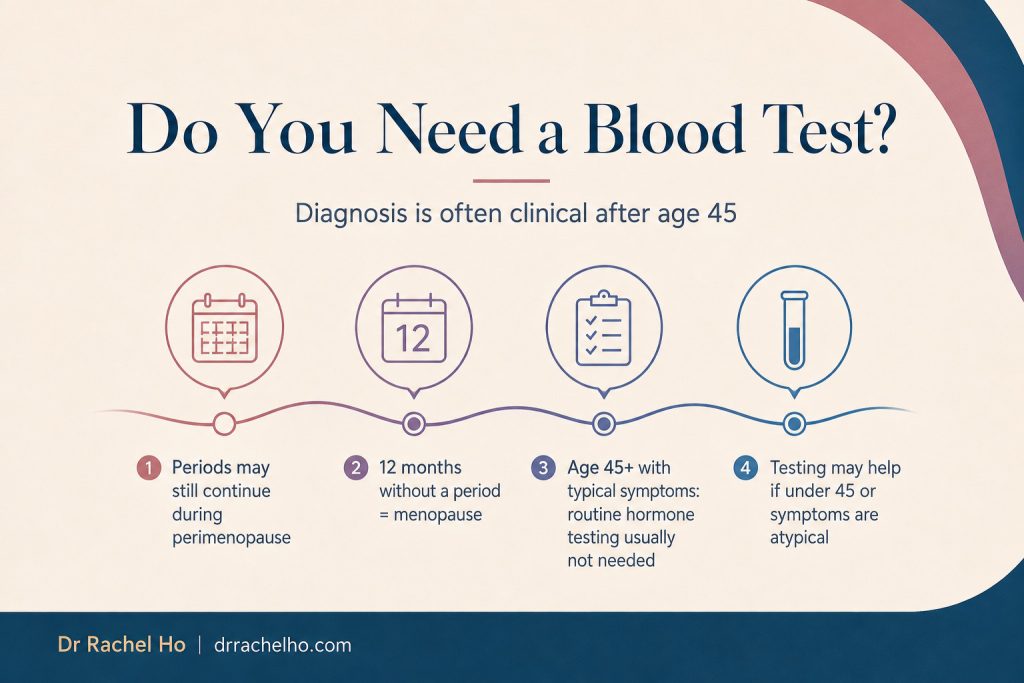
Routine hormone testing is usually unnecessary for women aged 45 and above with a typical perimenopause history. Blood tests may be useful at younger ages, with atypical symptoms or when another medical condition needs to be excluded.
Do you need a blood test for perimenopause?
Women aged 45 and above with a typical menstrual and symptom history can usually be diagnosed clinically without routine hormone testing1,4,5.Follicle stimulating hormone levels can fluctuate substantially during perimenopause and do not reliably show symptom severity or determine whether treatment is required4,5.
NICE guidelines advise considering follicle stimulating hormone testing in people aged 40 to 45 with menopause symptoms and menstrual change, and in those younger than 40 when menopause is suspected4,5.. Further investigation may also be required when symptoms are atypical, pregnancy is possible or another medical condition needs to be excluded1,4,10.
Broad hormone panels and repeated saliva testing should not be used as substitutes for a clinical assessment. According to the British Menopause Society, the evidence is insufficient to support multiple blood or saliva tests promoted as a way to personalise compounded hormone treatment16.
Where Singapore, UK and US menopause guidelines converge
Shared clinical positions on menopause and perimenopause in Singapore, USA and UK
| Points | Shared clinical position in Singapore, USA and UK |
|---|---|
| Diagnosis after 45 | A typical history is usually sufficient, with laboratory testing reserved for selected situations1,4,5 |
| Treatment planning | Care should be individualised according to symptoms, history, risk factors and preferences1,4,6,7 |
| Hot flushes and night sweats | Systemic MHT is the most effective treatment for suitable women1,4,6,7 |
| Women with a uterus | Systemic oestrogen requires adequate progestogen to protect the endometrium1,4,6,7 |
| Vaginal and urinary symptoms | Vaginal moisturisers, lubricants and low dose vaginal oestrogen are recognised options1,4,5,7 |
| Route of systemic oestrogen | Transdermal oestrogen is generally preferred when venous thrombosis risk is raised4,5,6,7 |
| Treatment duration | Duration should be individualised and reviewed rather than stopped at one universal age4,5,6,7 |
| Chronic disease prevention | Systemic MHT should not be prescribed solely to prevent cardiovascular disease or dementia in asymptomatic women reaching menopause at the usual age1,4,7,17 |
| Compounded hormones | Custom compounded hormone preparations are generally discouraged because evidence, dose consistency and regulatory oversight are limited1,6,7,16 |
The differences between the Singapore, US and UK guidelines mostly concern the sequencing and emphasis given to particular nonhormonal treatments. The central message from these guidelines, however, is consistent with emphasis on informed choice and individual risk assessment for guiding menopause care1,4,6-8.
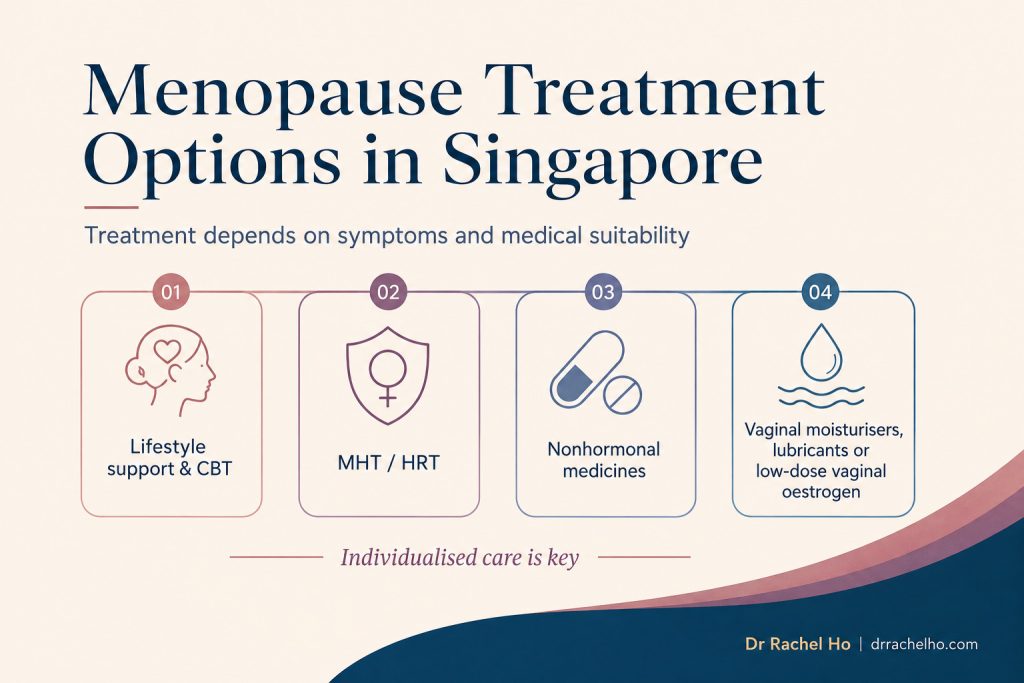
Menopause care is individualised. Depending on symptoms and medical suitability, treatment may include lifestyle measures, menopause specific CBT, HRT, nonhormonal medicines or treatment for vaginal and urinary symptoms.
How are perimenopause and menopause treated in Singapore?
Perimenopause treatment in Singapore should be tailored to the patients’ symptoms, risk factors and priorities. Some women need information, lifestyle support and monitoring, while others benefit from HRT, nonhormonal medication, vaginal treatment, psychological support or care for a separate medical condition1,4,10.
Lifestyle factors such as healthy eating, regular aerobic and resistance exercise, smoking avoidance, moderate alcohol intake, adequate sleep and weight management support bone, cardiovascular and metabolic health are emphasised for women experiencing perimenopause and menopause1. Lifestyle care provides a foundation, while significant hot flushes, sleep disruption, vaginal symptoms or mood concerns may still require specific treatment1,4,7,8.
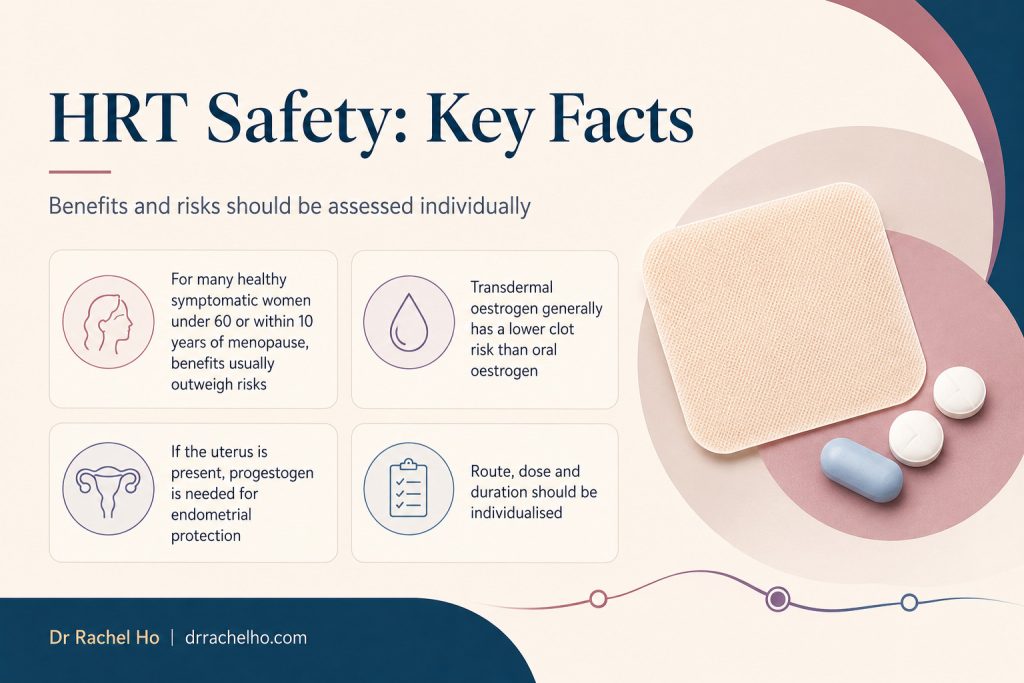
HRT safety depends on the woman, hormone regimen, route and medical history. Transdermal oestrogen generally carries a lower venous thrombosis risk than oral oestrogen, while women with a uterus require adequate endometrial protection.
What is HRT or menopause hormone therapy (MHT)?
Systemic menopause hormone therapy typically supplies oestrogen through tablets, patches, gels or sprays4,6,7,9. Women with a uterus generally need an progestogen alongside systemic oestrogen to protect the endometrium, while women who have undergone hysterectomy usually receive oestrogen alone unless circumstances apply1,4,6,7.
Low dose vaginal oestrogen is a local treatment for genitourinary symptoms and has much lower systemic absorption than systemic MHT1,4,5,7.
Who may benefit from MHT?
MHT is the most effective treatment for troublesome hot flushes and night sweats1,4,6,7,10. It can also prevent bone loss and reduce fracture risk while treatment continues, and may help selected menopause related mood symptoms1,4,6,7.
For most healthy women with troublesome symptoms who are younger than 60 or within 10 years of menopause onset, Singapore, British and US guidance describes a generally favourable balance of benefits and risks1,6,7. The risk-benefit ratio ultimately depends on the proposed hormone, route, dose, symptom burden, medical history and personal preference1,4,6,7.
Medical history of hormone sensitive cancer, unexplained vaginal bleeding, previous venous thrombosis or stroke, active liver disease or significant cardiovascular risk can change whether systemic MHT is appropriate4,6,7,10. Women with complex medical histories should receive individual assessment, sometimes involving a menopause specialist, gynaecologist, oncologist or another relevant clinician1,4,5,7.
What are the main HRT risks?
Blood clots and route of treatment
Oral oestrogen is associated with a higher risk of venous thromboembolism than transdermal oestrogen4-7. NICE and BMS therefore advise considering a patch, gel or spray when thrombosis risk is raised, including in women with obesity or other risk factors4-6.
Breast cancer
Breast cancer risk depends on the hormone regimen and duration of use4,6,7. NICE and BMS describe little or no increase with estrogen only HRT, while combined oestrogen and progestogen therapy can be associated with an increase that becomes more relevant with longer treatment duration4-6.
The absolute risk of breast cancer while on hormone replacement therapy also depends on the woman’s underlying breast cancer risk. Personal and family history, body weight, alcohol intake, screening history and the reason for treatment should therefore form part of the discussion4,6,7.
Endometrial protection in menopause and perimenopause
Systemic oestrogen given without adequate progestogen increases endometrial cancer risk in a woman who still has a uterus1,4-7. An appropriate progestogen regimen is therefore an essential part of combined systemic treatment1,4-7.
Heart disease and dementia risks in menopause
MHT should not be prescribed solely to prevent cardiovascular disease or dementia in women who reach menopause at the usual age based on guidelines from Singapore, USA and the UK1,4,7,17. . Starting treatment for recognised symptoms in a suitable younger woman is a different clinical decision from starting systemic hormones many years after menopause solely for disease prevention4,6,7.
Treatment duration of menopause hormone replacement therapy
There is no recommendation for the age at which every woman must stop HRT6,7. NICE recommends review approximately three months after starting treatment and annually once the regimen is stable, while BMS and US guidance support continued treatment for a documented indication after periodic reassessment4-7.
What changed in the US FDA boxed warnings?
In November 2025, the FDA requested changes to menopausal hormone therapy labels, and in February 2026 it approved revised labels for an initial six products9. Statements concerning cardiovascular disease, breast cancer and probable dementia were removed from the boxed warning on those revised labels9.
The FDA retained cardiovascular and breast cancer information elsewhere in the warnings and precautions for systemic products9.. The boxed warning concerning endometrial cancer also remains for systemic oestrogen used without progestogen in women with a uterus9.
The label revision reflects a more individualised presentation of risk, particularly for women starting treatment near menopause9. It does not make systemic HRT suitable for every woman or remove the need for balanced counselling7,9,17.
What helps vaginal dryness and painful sex?
Genitourinary syndrome of menopause can include vaginal dryness, burning, irritation, painful sex, urinary urgency and recurrent urinary symptoms1,4,7,10. These symptoms may persist and can gradually become more troublesome as menopause progresses4,7,10.
Vaginal moisturisers can support regular comfort, while lubricants reduce friction during sexual activity1,4,5. Low dose vaginal oestrogen is recognised as an effective option when symptoms continue, and guidelines support longer term use with periodic review because systemic absorption is very low1,4,5,7.
Women with current or previous breast cancer or another hormone sensitive cancer should discuss vaginal and systemic hormone treatment with the relevant cancer and menopause teams1,4,5,7. Individual circumstances and concurrent endocrine treatment can change the recommendation1,4,5.
What nonhormonal menopause treatments are available?
NICE recommends menopause specific cognitive behavioural therapy as an option for hot flushes, night sweats and associated sleep problems, either alongside HRT or when HRT is unsuitable or decline4,5.Cognitive behavioural therapy aims to reduce the distress and disruption caused by symptoms rather than alter circulating hormone levels4,5.
US guidance from The Menopause Society recognises certain serotonin reuptake inhibitors, serotonin noradrenaline reuptake inhibitors, gabapentin, oxybutynin and fezolinetant as evidence based nonhormonal options for vasomotor symptoms8.Medication choice should consider the patient’s medical conditions, possible interactions and side effects8,10.
HSA approved fezolinetant in March 2025 for moderate to severe vasomotor symptoms associated with menopause15. Rare serious liver injury has been reported, so Singapore guidance requires liver blood tests before treatment, monthly during the first three months, and again at six and nine months15.
Black cohosh, phytoestrogens and other complementary products have inconsistent evidence, and formulation quality can vary1,5,8. Women should also check for interactions with prescribed medication before using herbal or complementary preparations5,8.
What about mood, sleep and brain fog?
Poor sleep can arise from night sweats, anxiety, stress, sleep apnoea or a separate sleep disorder1,4,10. Treating troublesome vasomotor symptoms may improve sleep, while menopause specific cognitive behavioural therapy can help selected women with sleep disruption4,5,7.
Low mood, anxiety and emotional instability may occur during the menopause transition1,4,10. MHT may be considered when mood symptoms begin around the same time as other menopause symptoms, while persistent or severe depression requires appropriate mental health assessment and treatment1,4,5.
Brain fog commonly describes reduced concentration, word finding difficulty or forgetfulness during midlife. New, progressive or functionally significant cognitive symptoms should be assessed, and MHT should not be prescribed solely to prevent dementia4,7,17.
Joint aches, weight and body composition
Joint and muscle aches were among the most frequently reported concerns in Singapore’s KKH data on menopausal symptoms1,10. However, persistent joint and muscle pain may also be due to osteoarthritis, injury, inflammatory disease and other musculoskeletal conditions, so a medical assessment of these symptoms are necessary to avoid misdiagnosis1,10.
A longitudinal SWAN analysis found that fat gain accelerated and lean mass began to decline around the menopause transition, while overall midlife weight gain remained strongly influenced by chronological ageing12.
MHT is not a weight loss treatment and should not be prescribed solely for weight control17. Resistance exercise, aerobic activity, adequate nutrition and attention to sleep are still necessary for preserving muscle mass and metabolic health1,12,17.
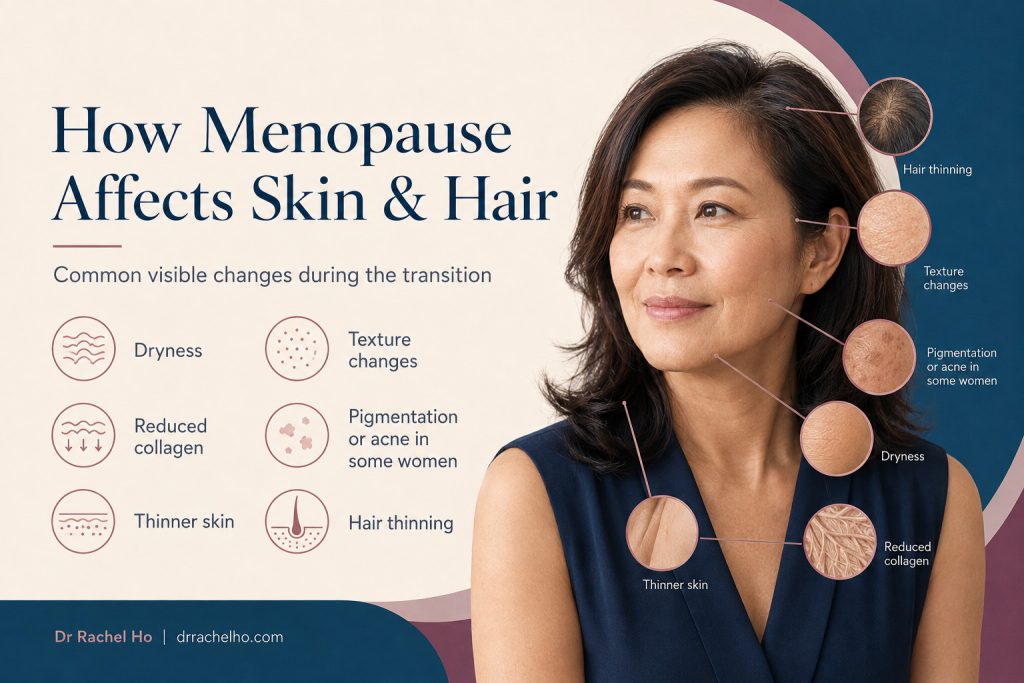
Declining oestrogen can contribute to changes in hydration, collagen support, skin thickness, texture and hair density. Other influences such as ultraviolet exposure, genetics, ageing and medical conditions remain important.
How do perimenopause and menopause affect skin?
Declining oestrogen is associated with changes in skin hydration, barrier function, collagen support, elasticity and wound repair13. Ultraviolet exposure, smoking, inflammation, genetics and chronological ageing continue to shape how these changes appear in each woman13.
Menopause and perimenopause skin treatments are specific to the pathology and symptoms experienced by the patient, be it dryness, adult acne, pigmentation, dynamic wrinkles, laxity or facial volume change. Readers looking for a skin focused guide can continue with Perimenopause and Menopause Skin Treatments in Singapore, which explains where skincare, skin boosters, collagen treatments, radiofrequency, laser and other procedures may fit.
Midlife acne can persist or begin during perimenopause, but treatment still depends on acne type, severity and medical suitability. My article Adult Female Acne: A Doctor Explains discusses hormonal influences, jawline acne and evidence based treatment in greater detail.
Systemic HRT may improve selected measurements of hydration, collagen or elasticity in some studies, although the evidence is inconsistent13. Current US guidance advises against prescribing systemic hormone therapy solely for skin ageing, hair loss or other age related cosmetic changes17.
Does menopause cause hair loss?
Hair density, shaft diameter and hair cycling can change during and after menopause14. Female pattern hair loss and telogen effluvium may occur, although coexisting thyroid disease, iron deficiency, nutritional restriction, medication and inflammatory scalp conditions can produce similar changes14. Treatment of hair loss during perimenopause or menopause should treat the condition appropriately and not the menopausal status alone14.
Are bioidentical hormones safer for perimenopause or menopause hormone replacement therapy?
The term bioidentical describes hormones with the same molecular structure as hormones produced by the body. Regulated estradiol and micronised progesterone products are available, while compounded preparations are produced outside the usual product authorisation or regulation pathways16.
The British Menopause Society does not recommend compounded bioidentical HRT because evidence for effectiveness, safety, purity and dose consistency is insufficient16. Similarly, Singapore’s guidelines advise against custom made hormone preparations because their effectiveness and safety have not been established16.
What happens with early menopause or premature ovarian insufficiency?
Menopause between ages 40 and 44 is described as early menopause, while premature ovarian insufficiency occurs before age 404-6. These situations require active assessment because earlier loss of ovarian function affects fertility, bone health and long term cardiovascular health1,4,6,7.
Singapore, NICE, BMS and US guidance generally recommend hormone treatment until at least the average age of natural menopause when it can be used safely14-7. Fertility counselling, psychological support and bone health assessment may also be appropriate1,4,5.
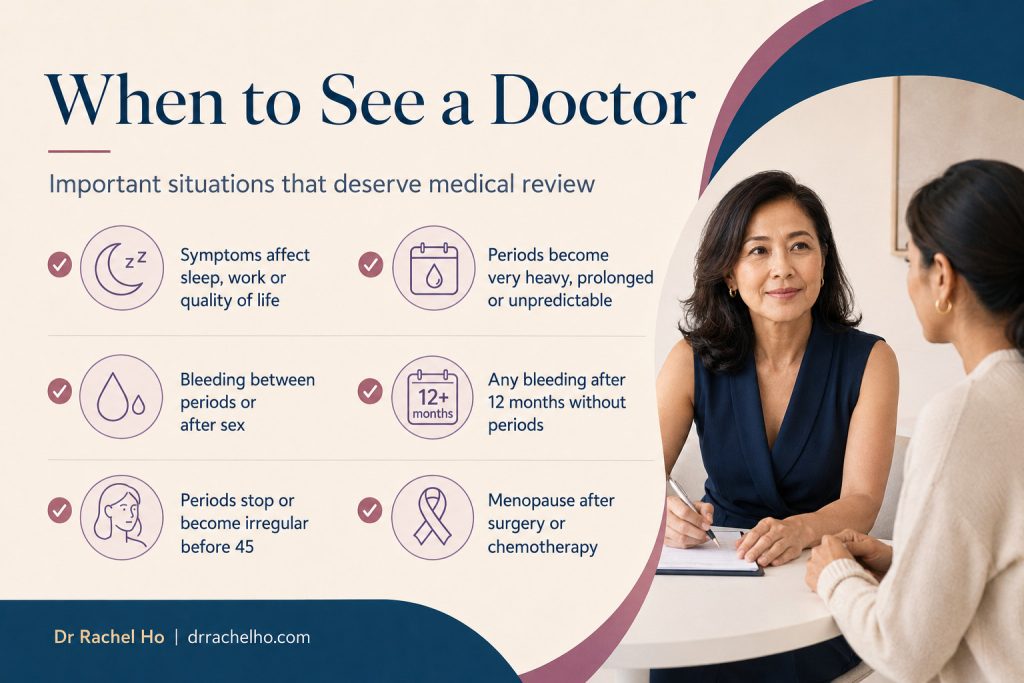
Medical assessment is advisable when symptoms significantly affect daily life, periods become unusually heavy or unpredictable, menopause occurs early, or bleeding occurs after 12 months without a period.
When should you see a doctor for perimenopause and menopause?
Medical review is appropriate when perimenopause symptoms affect sleep, work, mood, relationships, sexual health or quality of life1,4,10.Earlier assessment is also advisable when periods stop or become irregular before 45, menopause follows chemotherapy or surgery, or the medical history makes HRT decisions more complex1,4,5.
Heavy or prolonged bleeding, bleeding between periods, bleeding after sexual intercourse and any bleeding after 12 months without menstruation should be assessed18. Postmenopausal bleeding can be due benign and serious causes, so even light spotting should be medically reviewed18
Dr Rachel Ho’s clinical perspective on perimenopause
Women should not be made to feel embarrassed or suffer in silence due to a naturally occurring physiological life phase. I am glad that conversations and care for perimenopause and menopause are becoming more inclusive, sensitive and evidence based for patients.
MHT can be transformative for appropriate patients with troublesome symptoms due to perimenopause and menopause. In Singapore, the most symptoms related to menopause are joint and muscle pain, disturbed sleep, sexual and urinary concerns compared to vasomotor symptoms more commonly reported in the West.
Frequently asked questions about perimenopause and meno,3ause in Singapore
What age does perimenopause start?
Perimenopause commonly begins during the forties, although timing varies widely4,10. The average age of natural menopause in Singapore is approximately 49 years, so the transition usually begins before this point10.
Can I be in perimenopause while having regular periods?
Symptoms can begin while periods are still occurring and may appear before cycle changes become obvious4,10. A typical menstrual cycle therefore does not automatically exclude early perimenopause.
Do I need a hormone test for perimenopause?
Most women aged 45 or older with a typical history do not need routine hormone testing1,4,5. Testing may be useful before 45, in unusual presentations or when another condition needs to be excluded1,4,5.
What is the best perimenopause treatment?
The most suitable treatment depends on the symptoms causing difficulty and the woman’s medical history1,4,7,10. Options include lifestyle support, MHT, nonhormonal medication, cognitive behavioural therapy, vaginal treatment and care for specific concerns such as abnormal bleeding or depression1,4,7,8.
Is HRT safe for women in Singapore?
For most healthy symptomatic women younger than 60 or within 10 years of menopause onset, current Singapore, British and US guidance describes a favourable benefit and risk balance when MHT is medically suitable1,6,7. Safety still depends on the individual woman, hormone regimen, route, dose and medical history1,4,6,7.
Does HRT cause breast cancer?
The relationship depends on the regimen and duration4,6,7. Estrogen only HRT is associated with little or no increase in breast cancer risk in current UK guidance, while combined oestrogen and progestogen therapy can carry a duration-related increase4-6.
Is a hormone patch safer than tablets?
Transdermal oestrogen generally carries a lower venous thrombosis risk than oral oestrogen and is preferred when clot risk is elevated4-7. The safest route still depends on the individual medical history and the complete hormone regimen4,6,7.
Can HRT improve skin?
Some studies report improvements in selected measurements of hydration, collagen, thickness or elasticity13. Systemic MHT should not be started solely as an anti ageing or cosmetic skin treatment13.
Are compounded bioidentical hormones safer?
Compounded bioidentical preparations have less regulatory oversight and limited evidence for dose consistency, effectiveness and safety16. BMS and Singapore guidance recommend regulated hormone products rather than custom compounded mixtures wherever possible1,16.
What is the newest nonhormonal menopause treatment in Singapore?
Fezolinetant was approved by HSA in March 2025 for moderate to severe vasomotor symptoms15. It requires scheduled liver monitoring because rare serious liver injury can occur15.
Can HRT be continued after age 60 or 65?
Current BMS and US guidance does not require every woman to stop at a fixed age6,7. Continuing treatment may be reasonable for persistent symptoms or bone protection after individual reassessment of benefits and risks6,7.
Conclusion
Perimenopause can begin while periods are still occurring, and its first effects may involve sleep, joint discomfort, fatigue, vaginal dryness, mood or menstrual change rather than hot flushes alone1,2,4. Recognising the pattern allows women to seek treatment while also investigating symptoms that may have another cause.
Singapore’s 2026 guidelines, NICE, BMS and current US guidance support clinical diagnosis for most women over 45, individualised MHT for suitable women and evidence based nonhormonal options when hormones are unsuitable or declined1,4-8. Good menopause care combines symptom relief with attention to bone, cardiovascular, metabolic, sexual and emotional health.
Scientific and clinical references
- KK Women’s and Children’s Hospital Maternal and Child Health Research Institute. Singapore Guidelines on Management of the Menopause Transition. 2026.
- Quah PL, Puvanendran R, Lulla D, et al. Menopausal Health in Singapore: A Survey of Women’s Menopause Specific Quality of Life, and Knowledge, Attitudes, and Practices Among Women and Healthcare Professionals. Singapore Journal of Obstetrics and Gynaecology. 2026;57(1).
- Loh FH, Khin LW, Saw SM, Lee JJM, Gu K. The Age of Menopause and the Menopause Transition in a Multiracial Population: A Nationwide Singapore Study. Maturitas. 2005;52:169 to 180.
- National Institute for Health and Care Excellence. Menopause: Identification and Management. NICE Guideline NG23. Updated November 2024.
- British Menopause Society. Menopause: Identification and Management, From NICE Guideline to Practice. March 2025.
- Hamoda H, Panay N, Pedder H, Arya R, Savvas M. BMS and Women’s Health Concern Recommendations on Hormone Replacement Therapy in Menopausal Women. British Menopause Society. Updated September 2025.
- The North American Menopause Society Advisory Panel. The 2022 Hormone Therapy Position Statement of The North American Menopause Society. Menopause. 2022;29:767 to 794.
- The North American Menopause Society Advisory Panel. The 2023 Nonhormone Therapy Position Statement of The North American Menopause Society. Menopause. 2023;30:573 to 590.
- United States Food and Drug Administration. Menopausal Hormone Therapy Labeling Changes. November 2025 and February 2026.
- Crandall CJ, Mehta JM, Manson JE. Management of Menopausal Symptoms: A Review. JAMA. 2023;329:405 to 420.
- Avis NE, Crawford SL, Greendale G, et al. Duration of Menopausal Vasomotor Symptoms Over the Menopause Transition. JAMA Internal Medicine. 2015;175:531 to 539.
- Greendale GA, Sternfeld B, Huang M, et al. Changes in Body Composition and Weight During the Menopause Transition. JCI Insight. 2019;4:e124865.
- Viscomi B, Muniz M, Sattler S. Managing Menopausal Skin Changes: A Narrative Review of Skin Quality Changes, Their Aesthetic Impact, and the Role of Hormone Therapy. Journal of Cosmetic Dermatology. 2025;24 Suppl 4:e70393.
- Gupta AK, Economopoulos V, Mann A, Wang T, Mirmirani P. Menopause and Hair Loss in Women: Exploring the Hormonal Transition. Maturitas. 2025;198:108378.
- Health Sciences Authority Singapore and HealthHub Singapore. Fezolinetant Approval and Medication Guidance. 2025 to 2026.
- British Menopause Society. Bioidentical Hormone Replacement Therapy. Reviewed April 2026.
- The Menopause Society. Statement on Misinformation Surrounding Hormone Therapy. 2024.
- KK Women’s and Children’s Hospital. Menopause and Menstrual Bleeding Guidance. Updated 2026.

No Comments