


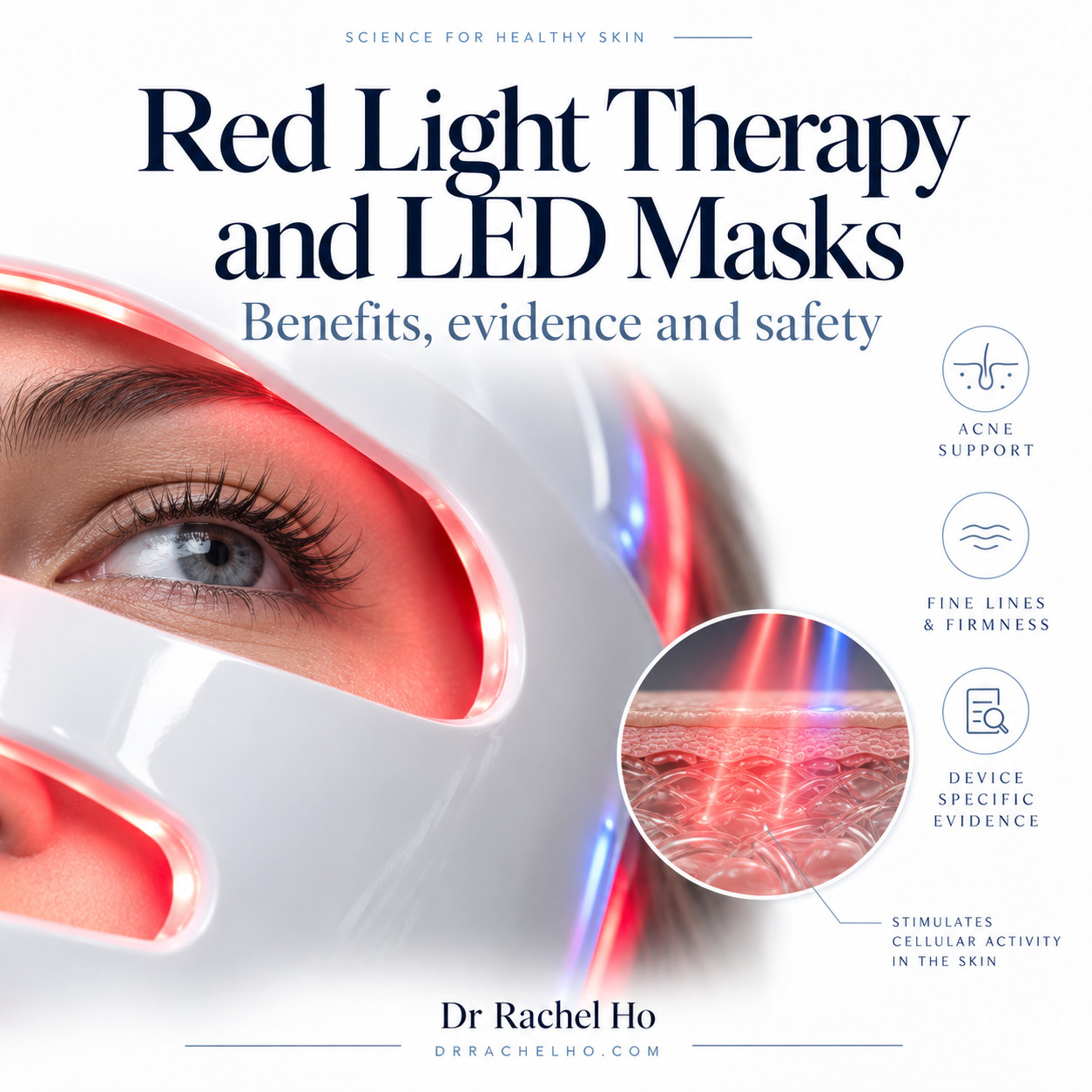
11 Dec Red Light Therapy & LED Light Therapy: Benefits, Masks & Safety
Red Light Therapy and LED Masks: Benefits, Evidence and Safety
By Dr Rachel Ho
Evidence checked: 2 October 2026 | FOREO experience: June 2020
Red light therapy utilises red or near-infrared wavelengths to alter cellular activity within the skin². Clinical data for LED light lends support for treatment specific types of acne and fine wrinkles. However, the clinical outcomes of LED light ultimately depend on the device specifications, treatment protocols, and the specific dermatological concern being addressed⁶˒⁷.
If you are considering an LED mask, let this doctor’s guide take you through the science and evidence behind LED light therapy before you purchase your own LED light device.
Does red light therapy work? The short answer
Red light therapy can improve selected skin outcomes when the wavelength, light dose and treatment protocol are appropriate. Human studies support specific red and near infrared LED protocols for fine wrinkles, while red and blue LED devices have evidence as adjunctive treatments for mild to moderate acne⁶˒⁷.
The results from one LED mask cannot be assumed to apply to another LED device. Wavelength, irradiance, fluence, treatment time, distance from the skin and treatment frequency all influence the light dose received by the skin⁵.
Red light therapy at a glance
FAQ about red light therapy
| FAQ about red light therapy | Evidence based answer |
|---|---|
| Does red light therapy work for skin? | Selected clinical protocols have shown improvement in fine wrinkles and other measures of skin ageing⁷. |
| Does LED light therapy help acne? | Selected red, blue and combined red and blue home LED devices improved mild to moderate acne in a 2025 systematic review⁶. |
| Does every LED face mask work? | No conclusion can be made for every device because wavelengths, irradiance, dose and treatment schedules vary substantially⁵. |
| Is stronger light always better? | Irradiance alone does not determine the delivered dose or clinical result⁵. |
| Is LED light therapy a replacement for acne medication? | It is more appropriately considered an adjunct for selected patients rather than a universal replacement for established acne treatment⁶. |
| Does red light therapy require downtime? | The studied LED protocols are generally well tolerated and do not involve ablative skin injury⁶˒⁷. |
What is LED light therapy?
LED stands for light-emitting diode. LED devices emit specific wavelengths of light, with blue, red, and near-infrared being the most frequently evaluated in dermatological literature³.
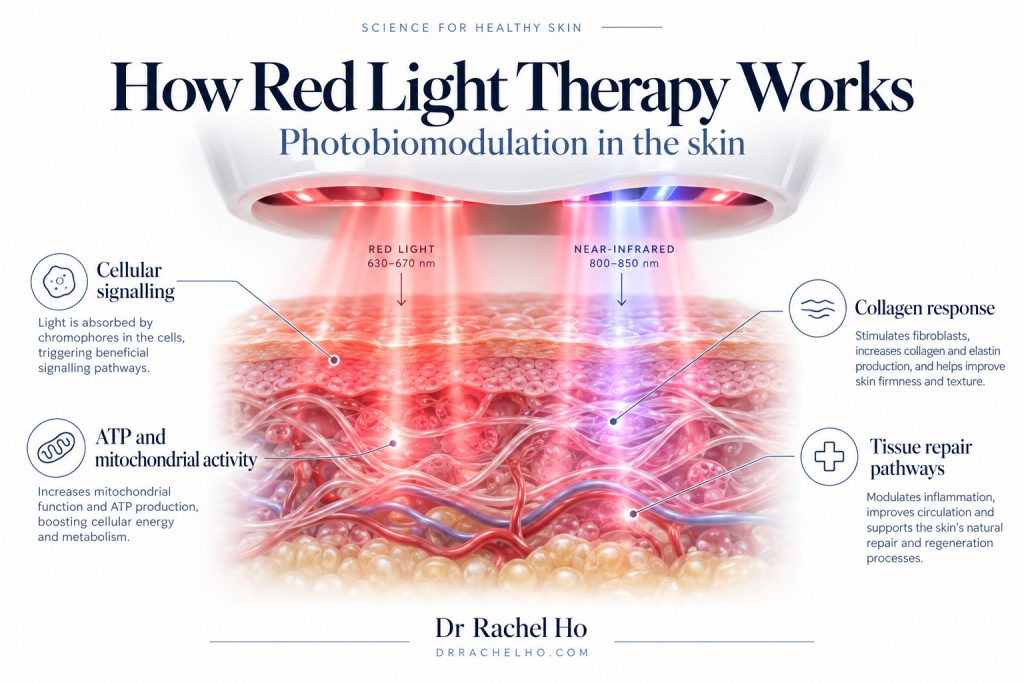
Red light therapy works through photobiomodulation, where absorbed light can alter cellular signalling, mitochondrial activity and pathways involved in inflammation and tissue remodelling. The biological response depends on wavelength and the amount of light delivered.
How does LED light therapy work in dermatology?
LED light therapy works principally by photobiomodulation. Photobiomodulation is the biological response that occurs when this light is absorbed by target cells and tissues, for example to alter cellular activity such as cell growth and collagen production². These changes are affected by LED light parameters such as the wavelength, fluence (‘intensity’), surface area and treatment length. For example, each wavelength has unique properties due to differences in chromophore targets and how deeply each wavelength penetrates the skin.
Red light therapy vs LED light therapy vs photobiomodulation: what is the difference?
Red light therapy describes treatment using red wavelengths and sometimes near infrared light to produce biological effects in tissue. LED light therapy describes the light source and can include blue, red, yellow and near infrared wavelengths²˒³.
Photobiomodulation is the broader biological concept of using selected wavelengths of light to alter cellular activity². In dermatology, LED light therapy has been used to address conditions such as acne vulgaris, infections, wound healing and aging. That said, research in photobiomodulation encompasses both LEDs and low-level lasers, so the evidence and data from these trials need to be scrutinised before being extrapolated to an at-home LED mask².
What are the benefits of red light therapy for skin?
The potential benefits of red light therapy depend on the condition and the specific treatment protocol utilised. Current, evidence in human studies is more convincing for selected signs of skin ageing and for LED light used as part of acne treatment than for many of the broader health and cosmetic claims associated with red light devices⁶˒⁷. For an explainer on acne, please see my guide to acne types and causes; my clinic guide to acne treatments also discusses acne medical evaluations and treatments in Singapore.
Skin concerns and the evidence for LED light treatments
Skin concern
What the current evidence supports
Fine lines and wrinkles
Selected red and near infrared LED protocols have improved wrinkle measurements in controlled human studies⁷.
Mild to moderate acne
Red, blue and combined red and blue LED devices improved acne outcomes in a 2025 systematic review of home devices⁶.
Skin repair
Photobiomodulation has biological effects relevant to tissue repair, although clinical results vary considerably according to treatment parameters²˒⁴.
Pigmentation and melasma
Research exists, but the evidence does not support treating every pigment disorder with a standard consumer LED mask¹˒³.
Eczema and psoriasis
Small studies exist for selected protocols, but evidence remains insufficient to generalise to consumer red light devices¹˒³.
What do the studies say about the effectiveness of LED light therapy? Here’s a review and summary about the efficacy of LED light therapy for different skin conditions and treatments:
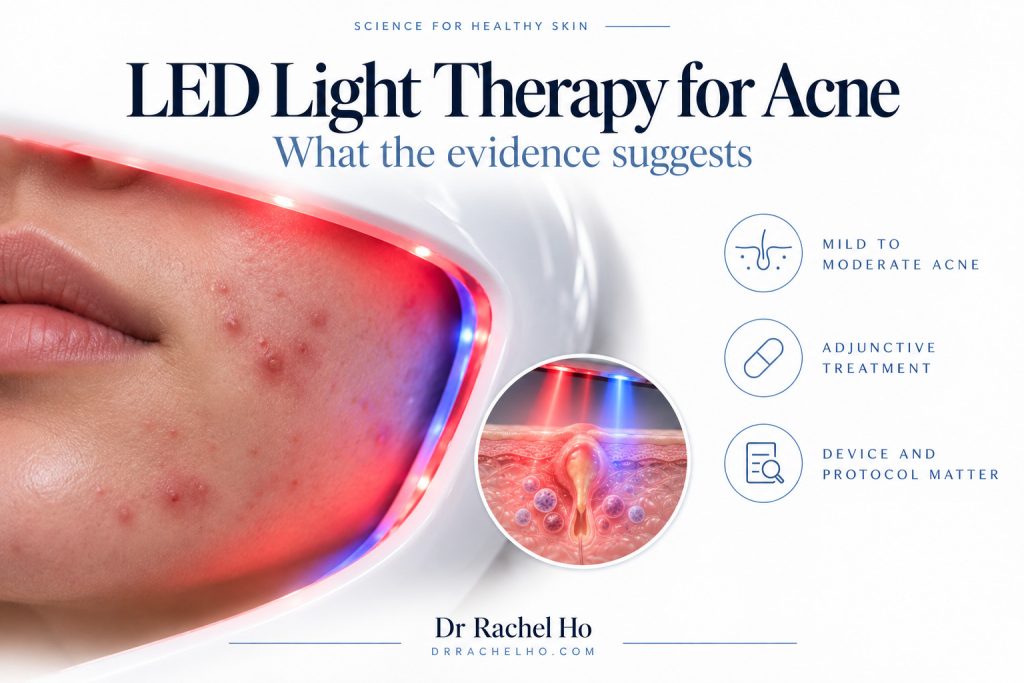
red and blue light over acne prone skin with a follicle diagram. Selected red, blue and combined LED protocols have improved mild to moderate acne in clinical trials. LED is best considered an adjunct to an appropriate acne treatment plan rather than a replacement for established medical therapy.
Does red light therapy work?
Acne and LED light therapy
A 2025 systematic review in JAMA Dermatology evaluated six trials comprising 216 patients with mild to moderate acne⁶. The data indicated that home devices utilising red light, blue light, or a combination of both improved acne pathology compared to controls, with measurable changes typically observed after four to twelve weeks⁶. However, significant variations in device specifications and treatment protocols limit how broadly these findings apply to other commercially available masks⁶.
An earlier review of 31 studies assessing multiple dermatological conditions noted a pooled benefit for acne: a standardised mean difference of −2.42, with a 95% confidence interval of −2.64 to −2.15 and an I² of 17%¹. The subgroup estimates for blue and red light were −2.64 and −2.30 respectively, though these separate analyses do not definitively establish the clinical superiority of one wavelength over the other¹.
Conflicting data also exists in the medical literature for red light therapy and acne, including a 2021 review of red light for acne that reported no statistically significant difference between treated and control groups10. The variability in these results suggests that LED therapy is perhaps better viewed as an adjunctive option within a comprehensive acne management plan, with device selection guided by specific clinical evidence and the patient’s acne severity⁵˒⁶.
Fine lines and skin texture and red light therapy
A 2025 controlled trial involving 60 participants evaluated a home mask that combined 630 nm red light with 850 nm near-infrared light⁷. Following a twelve-week protocol, the active device group demonstrated an improvement in periorbital wrinkles compared to the sham device group⁷.
These findings validate the specific device and protocol evaluated in that trial⁷. The findings, should not be extrapolated to other devices that can have different variables such as irradiance, treatment area coverage, and exposure duration which directly influence the skin’s physiological response⁵.
Does red light therapy work for the face?
Clinical evidence suggests that selected red light and near infrared protocols can produce modest improvements in some facial ageing outcomes. A 2025 randomised, double blind, sham controlled study of 60 participants evaluated a mask delivering 630 nm red light and 850 nm near infrared light and found greater improvement in crow’s feet wrinkles with the active device⁷.
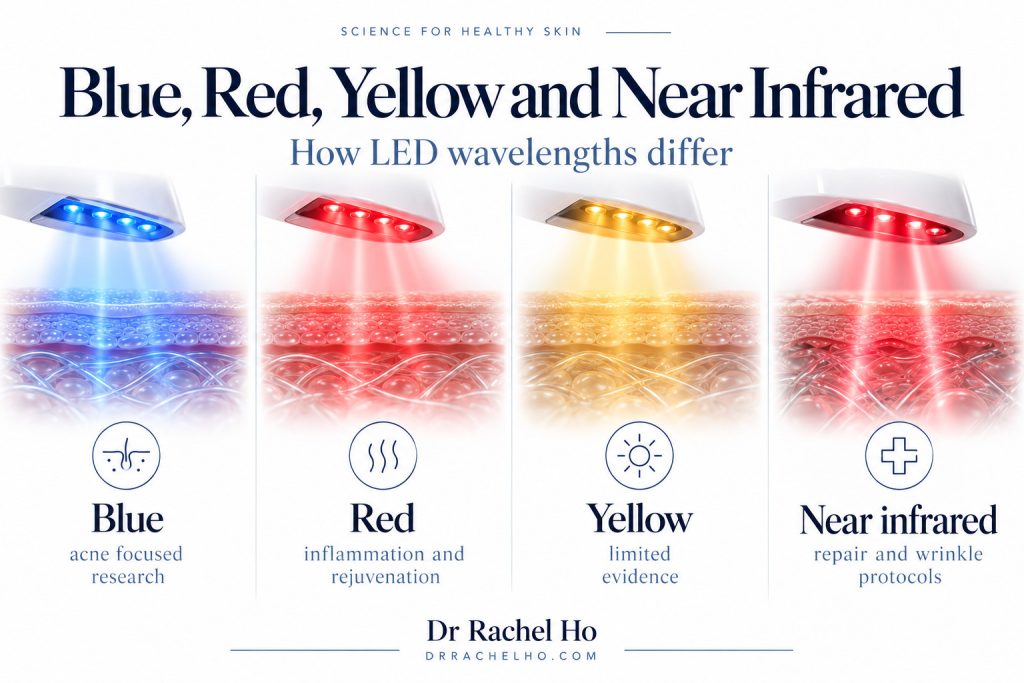
Different LED wavelengths interact with skin differently. Blue light has been studied principally for acne, while red and near infrared light have been investigated for inflammation, tissue responses and skin rejuvenation; evidence for consumer yellow light devices remains more limited.
Blue, red, yellow LED light and near infrared light: what are the differences?
Types of LED light treatments
| Light | What the research shows | What this means for users |
|---|---|---|
| Blue | Activates porphyrins produced by Cutibacterium acnes, generating reactive oxygen species that can damage the bacteria³. | Relevant principally to acne; laboratory barrier research provides a different level of evidence from clinical acne trials³. |
| Red | Penetrates more deeply than blue light and has been studied for inflammation, collagen responses and skin rejuvenation³. | Look for clinical results for the intended concern and specific device². |
| Yellow | Research has explored effects on pigmentation, melasma and photoageing³. | Evidence remains limited for choosing a consumer yellow light mask as a primary treatment for these concerns³. |
| Near infrared | Has been studied for skin rejuvenation, pigmentation and tissue repair³. | Some wrinkle trials combine it with red light, making the contribution of each individual wavelength difficult to separate⁷. |
What wavelength is used for red light therapy?
Red light used in dermatology is generally described within approximately 630 to 760 nm, while near infrared extends beyond visible red light into approximately 760 to 1200 nm³. Specific clinical studies use narrower wavelengths within these ranges; for example, the 2025 home mask trial discussed above combined 630 nm red light with 850 nm near infrared light⁷.
Wavelength alone does not determine the effectiveness of a device. Other variables such as irradiance, fluence, treatment duration, distance and frequency also determine the treatment exposure and performance⁵.
How does LED light therapy affect the skin?
Proposed intracellular light-absorbing targets of LED light therapy on the skin include mitochondrial cytochrome c oxidase, opsins, and cryptochromes³˒⁸. Experimental models demonstrate downstream effects of LED light therapy on ATP production, reactive oxygen species signalling, immune pathway modulation, collagen synthesis, and angiogenesis¹˒³˒⁸.
These physiological mechanisms help explain why specific light exposures may modulate cutaneous inflammation and tissue repair⁸.
What about LED light therapy for pigmentation, eczema, psoriasis and wound healing?
While clinical studies have investigated LED protocols for pigmentation and eczema, current evidence offers limited justification for treating these conditions with a standard at-home mask¹˒³. Persistent hyperpigmentation requires a formal medical assessment to determine its aetiology. My guide to understanding the different types of hyperpigmentation and my clinic’s guide to hyperpigmentation treatment outlines the different types of hyperpigmentation treatment available in Singapore.
The 2023 review of LED light therapy mentioned earlier noted consistent improvements across three small psoriasis cohorts, though the authors emphasised the necessity for larger, statistically robust trials¹. Small studies have also shown accelerated healing of herpes simplex lesions using specific near-infrared protocols, including its use as an adjunct to antiviral pharmacotherapy¹. It’s important to note that these results are tied to strict clinical parameters and do not provide evidence for using LED light masks to treat active skin infections¹.
Data surrounding LED light therapy for wound healing is inconsistent with substantial inter-study heterogeneity (I² of 85%)¹. While experimental in vitro results support theoretical repair mechanisms, in vivo human data is inconclusive regarding optimal treatment parameters⁴.
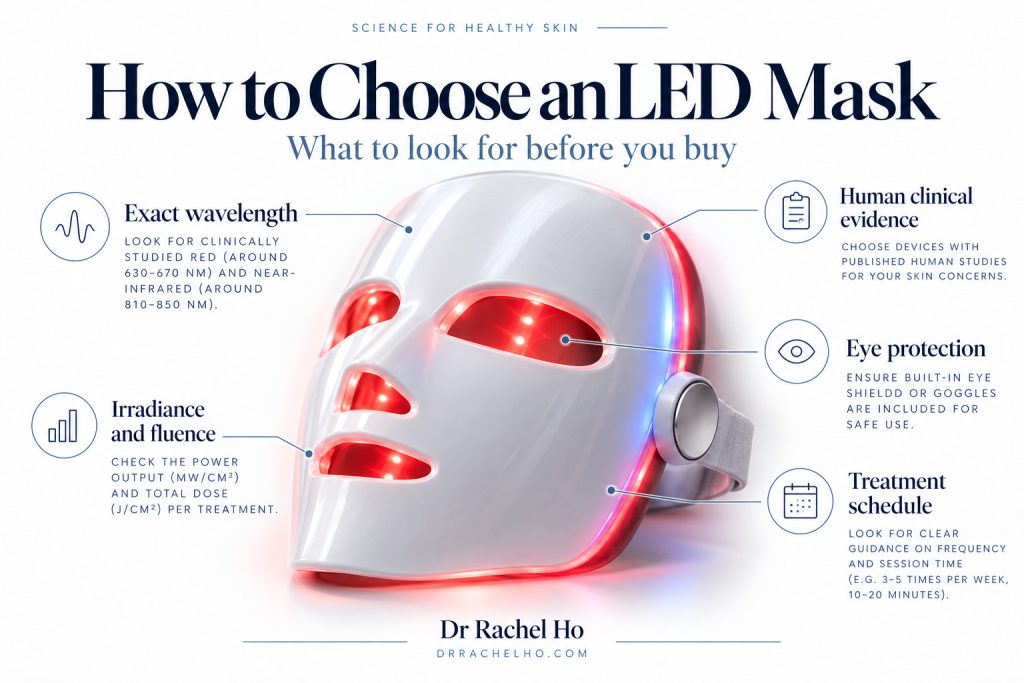
When comparing an LED face mask, look beyond the number of LEDs or colours. More useful specifications include the exact wavelength, irradiance, fluence, treatment schedule and human evidence for the specific device.
How to choose an LED light therapy mask?
I’d recommend first defining your objectives for wanting LED light therapy at home. Is this for acne, or skin rejuvenation? The next steps would be to assess the following parameters of the LED light device:
Parameter to look for when choosing an LED light device at home
| Parameter | What to look for |
|---|---|
| Intended purpose | A device indicated specifically for the dermatological concern you wish to address, such as acne vulgaris or facial wrinkles¹². |
| Clinical evidence | Human trials utilising the exact model, featuring a control group, defined clinical endpoints, and adequate follow-up periods⁵. |
| Wavelength of LED light | The precise emission wavelength measured in nanometres, rather than subjective colour descriptions⁵. |
| LED light output and dose | Irradiance, usually expressed in mW/cm², and fluence, expressed in J/cm², measured at the intended treatment position⁵. |
| Treatment schedule | Clear operational instructions detailing session duration, frequency, and anatomical positioning¹². |
| Eye protection | The specific ocular safety measures mandated for that particular hardware¹². |
| Practical tips | An ergonomic fit, manageable treatment duration, clear hygiene protocols, and accessible post-purchase servicing. |
Manufacturers are responsible for clarifying how their published clinical data relates to the specific model retailed. A 2025 methodological analysis highlighted that commercial LED studies frequently exhibit discrepancies in dose reporting, control group design, and blinding protocols, with industry funding serving as another variable when appraising the data⁵.
Does a higher powered LED mask work better?
A higher irradiance figure does not by itself establish that an LED mask is more effective. The biological exposure depends on the amount of energy reaching the skin over time, while wavelength, treatment distance, coverage and treatment frequency also influence the protocol⁵.
When comparing LED face masks, I would therefore prioritise published wavelength, irradiance, fluence, treatment duration and evidence for the exact device rather than the number of LEDs or the brightness of the mask.
How often should you use an LED mask?
Stick to the instructions and advice schedule provided for your specific device, including instructions regarding concurrent skincare application and physical positioning¹². Because research protocols differ significantly, adopting the treatment duration of a different mask will alter your total light exposure dose⁵.
Is red light therapy safe?
LED interventions are generally well-tolerated within the discussed clinical trials, though transient xerosis, erythema, or mild discomfort can occur⁶. Most of the trials had relatively short observation windows, so definitive conclusions regarding long-term daily use ares till unclear¹².
Before starting LED light therapy, please consult your doctor to confirm suitability if you have a medical history of photosensitivity or are prescribed medications that induce photosensitivity¹². Patients with darker Fitzpatrick skin types or a predisposition to hyperpigmentation should also seek clinical advice, as the visible light spectrum can stimulate new dark spots¹². Always use the eye protection provided and seek a medical review if the treatment repeatedly induces discomfort or cutaneous irritation¹².

My FOREO UFO Smart Mask Device review in short: too little results for too much effort.
FOREO LED mask review: my experience with the FOREO UFO Smart Mask Device
I received the FOREO UFO Smart Mask Device as a gift in June 2020. The UFO model I tested was a handheld unit integrating a small sheet mask with LED emission, thermal warming, cryotherapy cooling, and sonic pulsation functions. I appreciated the brief 90-second treatment cycles and the capacity to modulate parameters via the companion app. However, operating a smartphone interface with damp hands was a practical inconvenience.
After incorporating it on alternate days for approximately two and a half weeks, I observed a mild improvement in skin brightness. I did not think that results from using the FOREO LED mask were remarkable or worth the time and effort required at home for the barely visible outcomes.
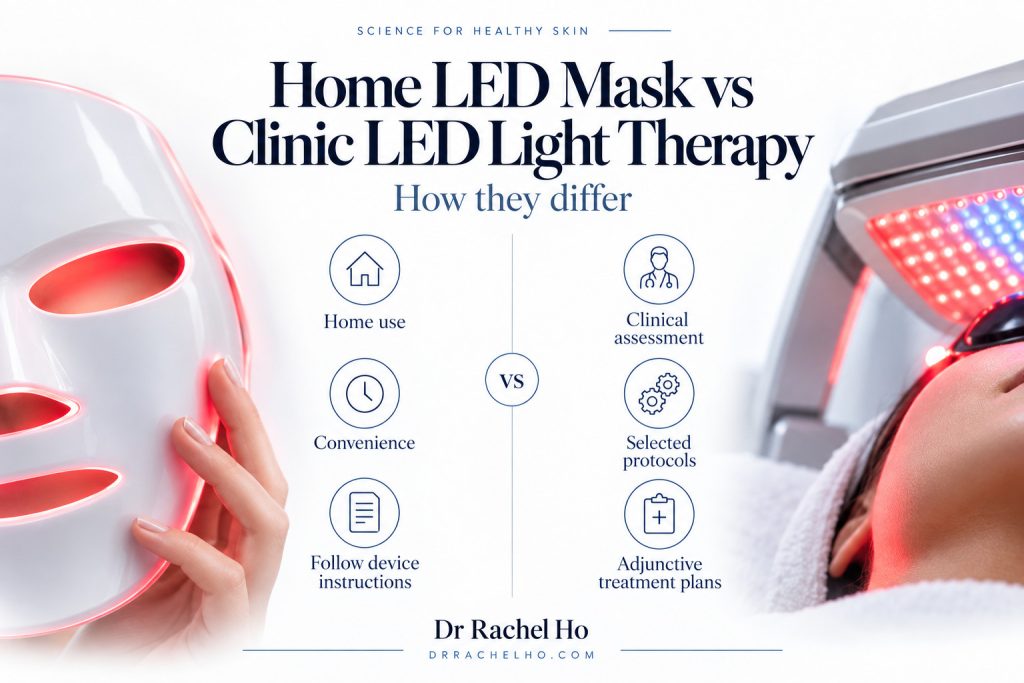
Home LED masks prioritise convenience, while clinic LED therapy can be selected within a broader medical treatment plan after the underlying skin concern has been assessed. Device specifications and protocols still determine the relevance of the evidence in either setting.
Home LED mask vs clinic LED light therapy
Home and clinic LED devices use the same broad principle of delivering selected wavelengths of light, but their hardware, treatment coverage, irradiance and protocols can differ. Clinical results should therefore be interpreted according to the device that was actually studied⁵.
Home LED masks VS Clinic LED light therapy
| Home LED mask | Clinic LED light therapy | |
|---|---|---|
| Main advantage | Convenience and repeated use | Treatment selected as part of a clinical plan |
| Device choice | Consumer selects the device | Selected according to the skin concern |
| Protocol | Manufacturer instructions | Device specific clinical protocol |
| Skin assessment | Usually none | Underlying skin condition can be medically evaluated |
| Acne | Suitable devices may complement treatment⁶ | Can be incorporated into a wider acne treatment plan |
| Persistent skin disease | Medical assessment may still be required | Diagnosis can guide whether LED or another treatment is appropriate |
LED light therapy in Singapore: when clinic treatment helps
LED within a medical treatment plan
In my clinic, The Skin Longevity Clinic, LED light treatments are offered as adjuncts for selected types of acne, inflammatory skin conditions, and post-procedure recovery. All patients are first assessed to diagnose the underlying pathology and treatment(s) for these conditions, which may also include topical or oral medications or other in-clinic treatments such as the Q-switched laser. For more about LED light treatments in Singapore, please refer to my clinic’s guide to LED light therapy.
Dry, sensitive or irritated skin
For patients presenting with active skin inflammation or skin that feels dry, tight, or reactive, the priority is to determine the cause of barrier inflammation, which can be due to skincare or inflammatory skin conditions like eczema. My guide to repairing the skin barrier shares more details about skincare tips and clinical management of a compromised skin barrier.
Another adjunctive treatment available in my clinic for hydration and calming inflammation is Bellasonic LDM facials, which use dual-frequency ultrasound for skin hydration and recovery. A clinical trial evaluating related ultrasound technology in 26 patients with acne or rosacea noted objective improvements in cutaneous erythema and transepidermal water loss parameters⁹. However, the limited sample size and study design restrict broad conclusions, and the findings apply specifically to the equipment and parameters tested⁹. For more details about acne and skin dryness, please refer to my clinic’s writeup on acne and a compromised skin barrier.
Frequently asked questions about red light therapy and LED masks
Does red light therapy really work?
Selected red light therapy protocols have demonstrated clinical improvements for specific outcomes, including fine wrinkles, while red and blue LED devices have evidence for mild to moderate acne⁶˒⁷. Results depend on the wavelength, dose and treatment protocol, so one positive trial does not validate every red light device⁵.
What does red light therapy do for the skin?
Red light photobiomodulation can alter cellular signalling pathways involved in energy metabolism, inflammation and tissue remodelling²˒⁸. Clinical relevance depends on whether an appropriate wavelength and light dose are delivered for the condition being treated.
Does red light therapy increase collagen?
Experimental research supports effects on pathways involved in collagen synthesis, while selected human trials have reported improvements in wrinkle measurements²˒⁷˒⁸. The magnitude of any clinical effect depends on the device and treatment protocol.
Does LED light therapy help acne?
A 2025 systematic review of six trials involving 216 patients found improvement in mild to moderate acne with selected red, blue and combined red and blue home LED devices⁶. LED is best interpreted as an adjunct for selected acne rather than a replacement for appropriate medical treatment.
Which is better for acne, blue or red LED light?
Blue and red light work through different biological mechanisms, and both have been studied for acne³˒⁶. Current evidence does not establish that one wavelength is universally superior, while some studies have evaluated combination red and blue protocols⁶.
Are LED face masks safe?
The home LED devices evaluated in clinical trials were generally well tolerated, with transient irritation, dryness or redness reported in some studies⁶. People with photosensitivity, photosensitising medication or a tendency to pigmentation should seek medical advice and follow device specific eye protection instructions¹¹.
How often should I use a red light therapy mask?
Follow the schedule tested and specified for the individual device. Treatment protocols differ in irradiance, fluence and duration, so copying the treatment time from another mask can substantially alter the delivered light dose⁵.
Is red light therapy the same as infrared therapy?
Red light is visible light, while near infrared lies beyond the visible red spectrum and penetrates tissue differently³. Some devices combine red and near infrared wavelengths, but their individual contributions cannot always be separated when they are studied together⁷.
Conclusion and takeaway by Dr Rachel Ho
While LED therapy presents a scientifically valid adjunctive tool for managing mild acne and superficial signs of ageing, it is not a standalone substitute for targeted dermatological medications or interventions. Light therapy follows a strict dose-response relationship; the hardware specifications, irradiance, and the consistency of your protocol ultimately dictate the physiological outcome or results.
When navigating the market of home LED light devices, I recommend prioritising clinical data of the specific device and look for evidence in human trials that validate the specific model.
Ultimately, a device should supplement, not replace, foundational skincare and medical management. If your skin concern, whether persistent acne, chronic erythema, or established scarring, does not respond to a structured routine, a formal clinical assessment remains the most efficient, evidence-based path to long-term skin health.
References
- Ngoc LTN, Moon JY, Lee YC. Utilization of light emitting diodes for skin therapy: systematic review and meta analysis. Photodermatology, Photoimmunology & Photomedicine. 2023;39(4):303 to 317. doi:10.1111/phpp.12841.
- Glass GE. Photobiomodulation: The Clinical Applications of Low Level Light Therapy. Aesthetic Surgery Journal. 2021;41(6):723 to 738. doi:10.1093/asj/sjab025.
- Guo Z, Yuan K. The Application of Light Emitting Diode LED in Cosmetic Dermatology. Photodermatology, Photoimmunology & Photomedicine. 2025;41(5):e70041. doi:10.1111/phpp.70041.
- Aggarwal I, Lio PA. Photobiomodulation therapy and low level light therapy in wound healing. Lasers in Medical Science. 2023;38(1):239. doi:10.1007/s10103-023-03909-9.
- Grimes DR. Methodological issues in visible LED therapy dermatological research and reporting. PLOS ONE. 2025;20(9):e0332995. doi:10.1371/journal.pone.0332995.
- Ershadi S, Barbieri JS. At Home LED Devices for the Treatment of Acne Vulgaris: A Systematic Review and Meta Analysis. JAMA Dermatology. 2025;161(5):552 to 555. doi:10.1001/jamadermatol.2025.0019
- Park SH, Park SO, Jung JA. Clinical study to evaluate the efficacy and safety of home used LED and IRED mask for crow’s feet: a multi center, randomized, double blind, sham controlled study. Medicine. 2025;104(7):e41596. doi:10.1097/MD.0000000000041596.
- Hamblin MR. Mechanisms and Mitochondrial Redox Signaling in Photobiomodulation. Photochemistry and Photobiology. 2018;94(2):199 to 212. doi:10.1111/php.12864.
- Kim YJ, Moon IJ, Lee HW, et al. The Efficacy and Safety of Dual Frequency Ultrasound for Improving Skin Hydration and Erythema in Patients with Rosacea and Acne. Journal of Clinical Medicine. 2021;10(4):834. doi:10.3390/jcm10040834.
- Wu Y, Deng Y, Huang P. Application of red light therapy for moderate to severe acne vulgaris: A systematic review and meta analysis. Journal of Cosmetic Dermatology. 2021;20(11):3498 to 3508. doi:10.1111/jocd.14369.
- American Academy of Dermatology. Is red light therapy right for your skin? Updated September 2024.

Pingback:Lights in a Box Reviews - Markt Value
Posted at 12:29h, 09 October[…] that can make it difficult for individuals to understand its benefits and limitations. One of the most common misconceptions is that LED light therapy is only for severe skin concerns, such as acne or hyperpigmentation. […]