


17 May ECM Skinboosters Explained: What the Extracellular Matrix Has to Do With Skin Ageing
The new trend in skinboosters and collagen biostimulators in 2026 may make you squirm, but it has nothing to do with salmon sperm. Extracellular matrix (ECM) boosters from donor cadavers are at the frontier of next generation collagen building skin booster treatments, with 4 different pharmaceutical companies releasing ECM skinboosters in Korea this year1,2.
This trend has made its way to Singapore, and I’ve started to introduce ECM skinboosters approved by Singapore’s Health Science Authority in my practice as part of skin and tear trough rejuvenation by rebuilding the dermal matrix.

Many thanks to Dr Park Je Young and Park Sae Bomi for their insights and tips on ECM skinboosters!
This blogpost is a deep dive into science and controversies around ECM skinboosters. I’ve had the honor to learn from and train under Korean dermatologists Dr Park Je Young and Dr Park Sae Bomi when they visited Singapore recently; and this review also shares my insights and experience with this relatively new treatment in Singapore.
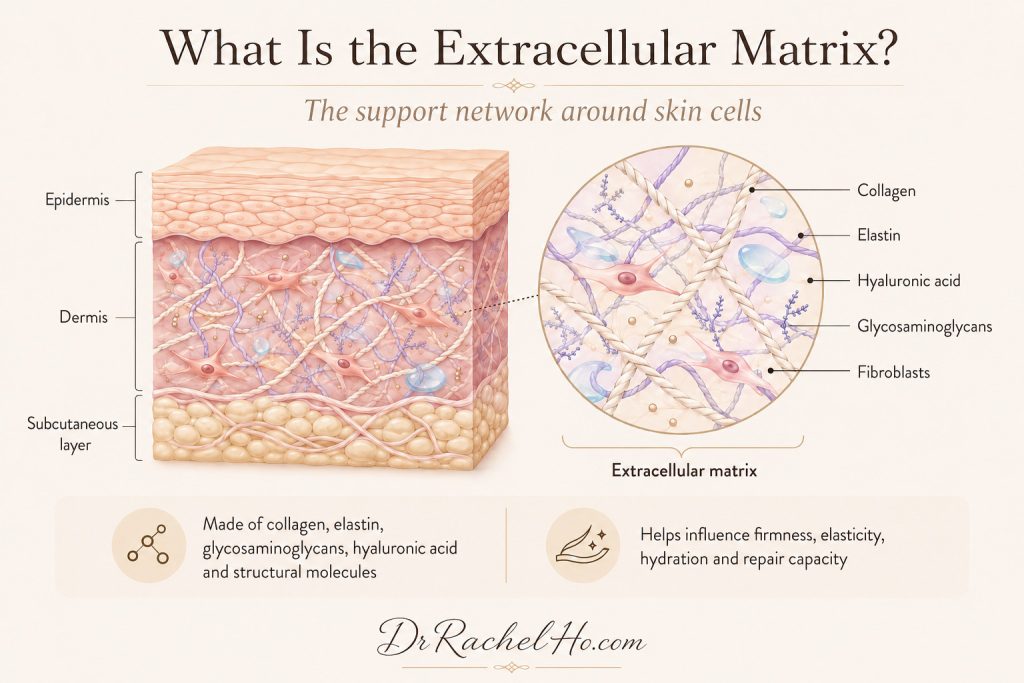
Extracellular matrix in skin showing collagen elastin glycosaminoglycans hyaluronic acid fibroblasts and dermal support
What is the extracellular matrix?
The extracellular matrix is the support network around cells. In the skin, the extracellular matrix consists of collagen, elastin, glycosaminoglycans, hyaluronic acid and other structural molecules which give skin its strength, elasticity, hydration and repair capacity3.
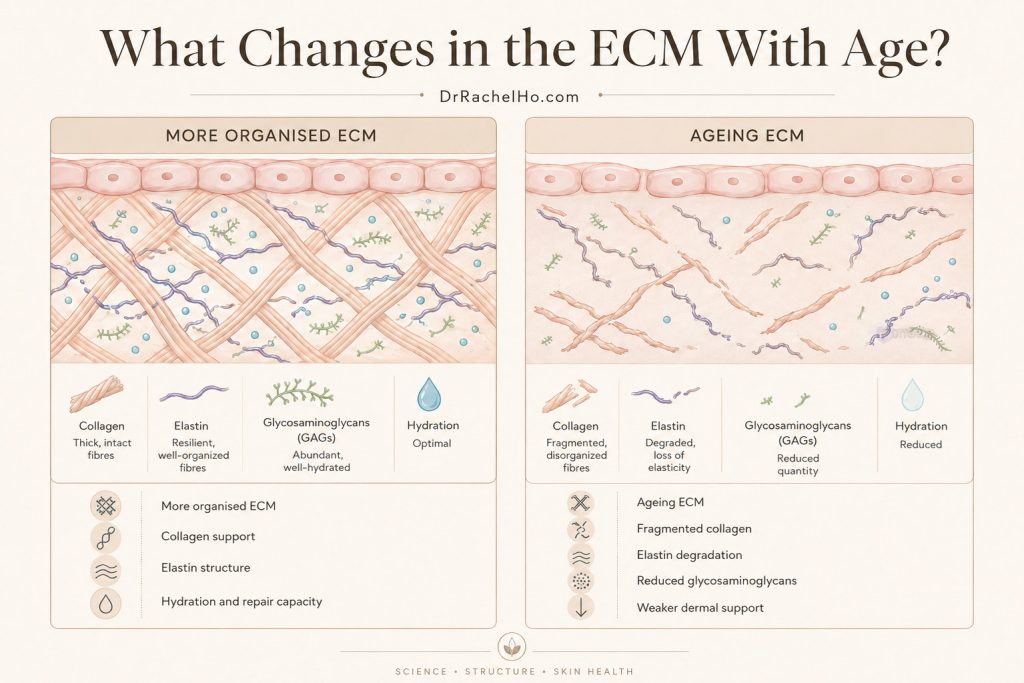
Ageing changes in the extracellular matrix can contribute to dermal thinning, reduced elasticity, wrinkles and weaker skin support.
As we age, the extracellular matrix in our skin undergoes changes which reflect in its structural, mechanical and functional capacity of the skin. Collagen fibres fragment, elastin fibres degrade and the glycosaminoglycans in the reticular dermis decreases3-6. These changes in the extracellular matrix result in dermal thinning, reduced structural integrity, wrinkle formation, and increased susceptibility to mechanical injury4,5. Functionally, the dermis also has Impaired cellular signaling and diminished epidermal-dermal communication4,5,7.
For these reasons, the extracellular matrix is an important layer of the skin to address when it comes to skin longevity and treating signs of ageing.
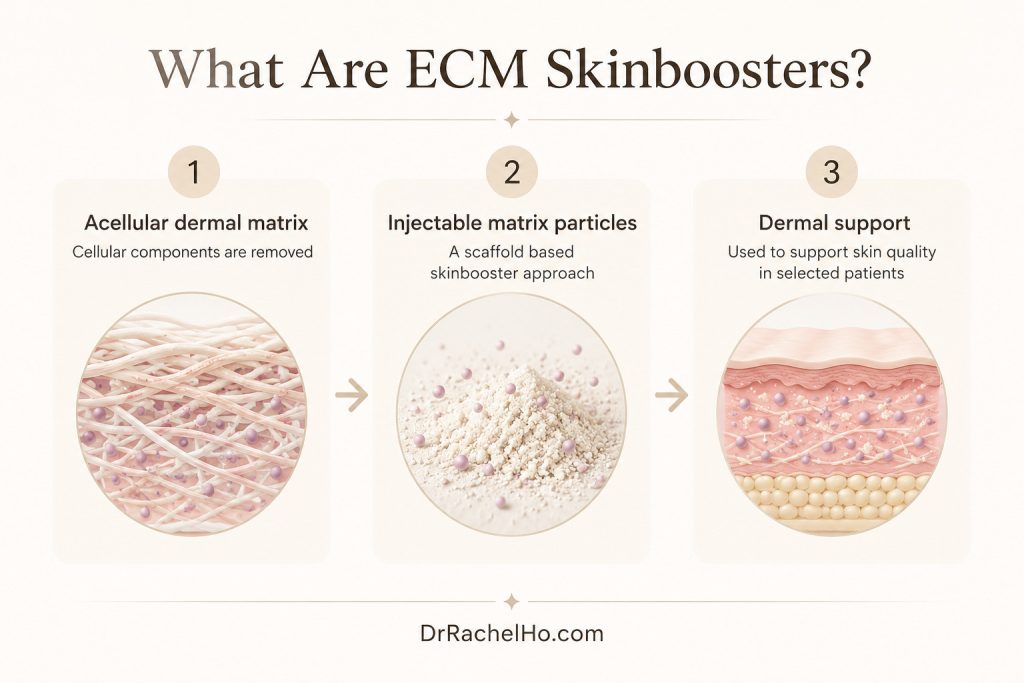
ECM skinboosters are injectable skin quality treatments that use acellular dermal matrix material as a dermal scaffold concept.
What are ECM skinboosters?
ECM skinboosters are injectable skin quality treatments that aim to support the dermal matrix environment. ECM based treatments typically use acellular dermal matrix material. Acellular means the cellular components have been removed, leaving behind a structural scaffold that may contain extracellular matrix components.
The acellular dermal matrix in ECM skinboosters is typically obtained from tissue harvested from cadaver skin. This acellular dermal matrix is processed into a powder; which can be dissolved in fluids like normal saline to be injected into the face.
The premise of ECM skinboosters seems relatively straightforward. By directly replacing the skin’s extracellular matrix, ECM skinbooster rebuilds the scaffold of the skin that has weakened with age.
What are the benefits of ECM skinboosters?
Some of the reported benefits of ECM skinboosters include:
• Reduction of enlarged pores
• Improvement in skin texture
• Increased skin hydration
• Improved skin barrier function
• Reduced redness
• Reduced fine lines
Besides treating these signs of ageing, ECM skinboosters are also used to treat acne scars and rejuvenate tired looking eyes.
What does the evidence for ECM skinboosters show?
ECM or dermal matrix products have been used in plastic surgery to improve wound healing and treat burn wounds and breast reconstruction since the 1990’s8,9.
Essentially, acellular dermal matrices (ADMs) act as a scaffold to improve organised regeneration of host tissue and remodelling, which are important for wound healing in reconstructive surgeries8. In addition ADMs have been shown to improve the aesthetic outcomes of scars in burn victims10.
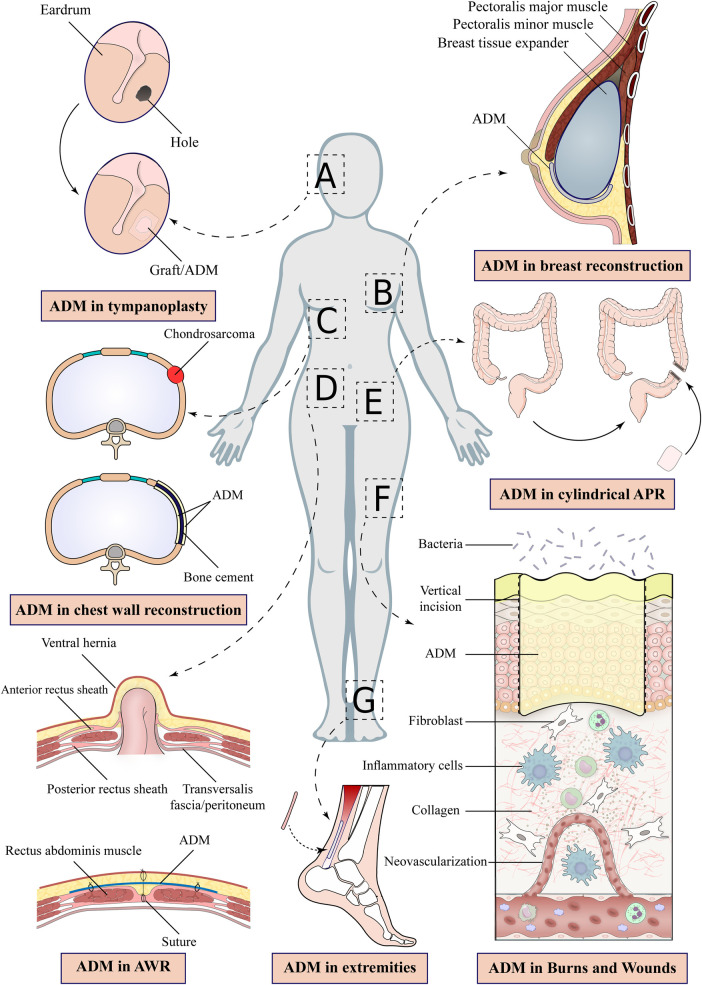
Some examples of acellular dermal matrices in surgery. Image credit: Mohammadyari et al.
ECM or dermal matrices as injectable skinboosters for cosmetic dermatology treatments, however, is relatively new and lacks the same wealth of data that dermal matrices have. Also, the composition of acellular dermal matrices used in surgery is very different from current types of ECM skinboosters in Singapore, so the evidence for safety and efficacy cannot be assumed to be the same.
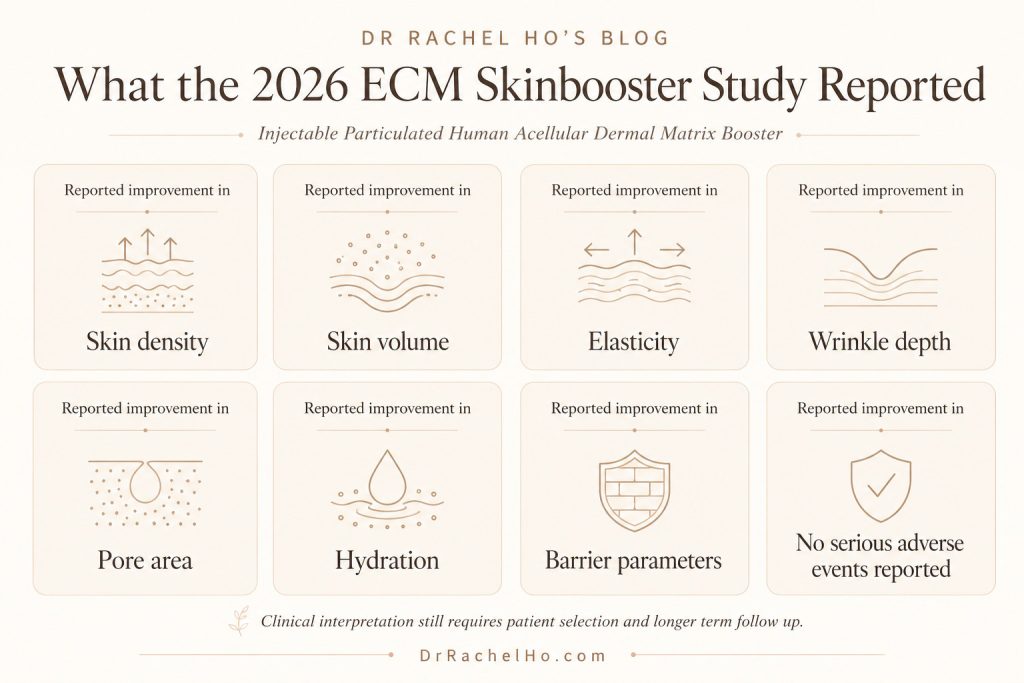
A 2026 ECM skinbooster study supports the concept of dermal matrix based skin restoration, while longer term and larger studies remain useful.
The new ECM skinbooster study: What does it show?
There is one 2026 study published in the International Journal of Molecular Sciences on ECM skinboosters that was supported L&C Bio Co., Ltd, the first major producer of ECM skinboosters in Korea, that’s now available in Singapore. If you’re wondering why I’m being vague and not naming the product- that’s due to HSA advertising guidelines that prohibit me from doing so, even though my scientific reviews and deep dives are not advertising.
This 2026 ECM skinbooster study was a clinical trial with clinical and preclinical work11. The clinical component was a randomised, split face, double blinded trial in 20 adults with moderate cheek roughness. One side of the face was treated with particulated human Acellular Dermal Matrix Booster (phADM), while the other side received hyaluronic acid as a control. The participants were followed up for 20 weeks.
The results showed that the phADM treated side showed greater improvement than the HA treated side in several measured skin parameters which included skin density, skin volume, elasticity, wrinkle depth, pore area, hydration and barrier related parameters at multiple time points11. There were no reported serious adverse events during the clinical trial11.
The preclinical findings were also interesting. In ex vivo human skin, phADM showed dermal distribution and preservation of extracellular matrix architecture. In UVB irradiated skin, the treated skin was associated with restoration of basement membrane related proteins. In animal studies, the implanted matrix showed fibroblast infiltration and localised new collagen formation11.
In laboratory assays, phADM was associated with fibroblast proliferation, extracellular matrix synthesis, increased hyaluronan production, reduced pro-inflammatory cytokines in activated macrophages and reduced melanogenesis related gene expression in melanoma cells11.
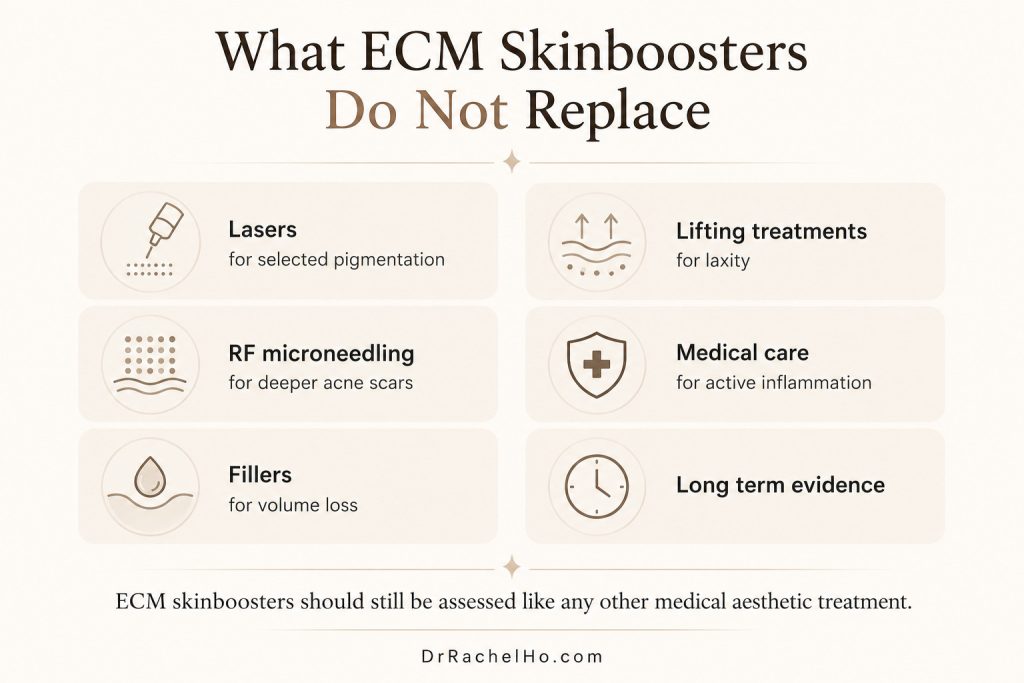
ECM skinboosters may fit selected skin quality concerns, but they do not replace treatments for pigmentation, scars, volume loss, laxity or inflammation.
The limitations of the 2026 ECM skinbooster study
While the outcomes of this study were encouraging as a starting point, longer term data beyond 20 weeks is still lacking. The clinical trial only included 20 adults that were treated with a specific product and protocol, so we need to interpret these findings with caution too.
Laboratory and animal data help explain possible mechanisms, but they do not always predict the same effects in patients. In real world conditions, outcomes can vary due to injection techniques by doctors and varying combinations.
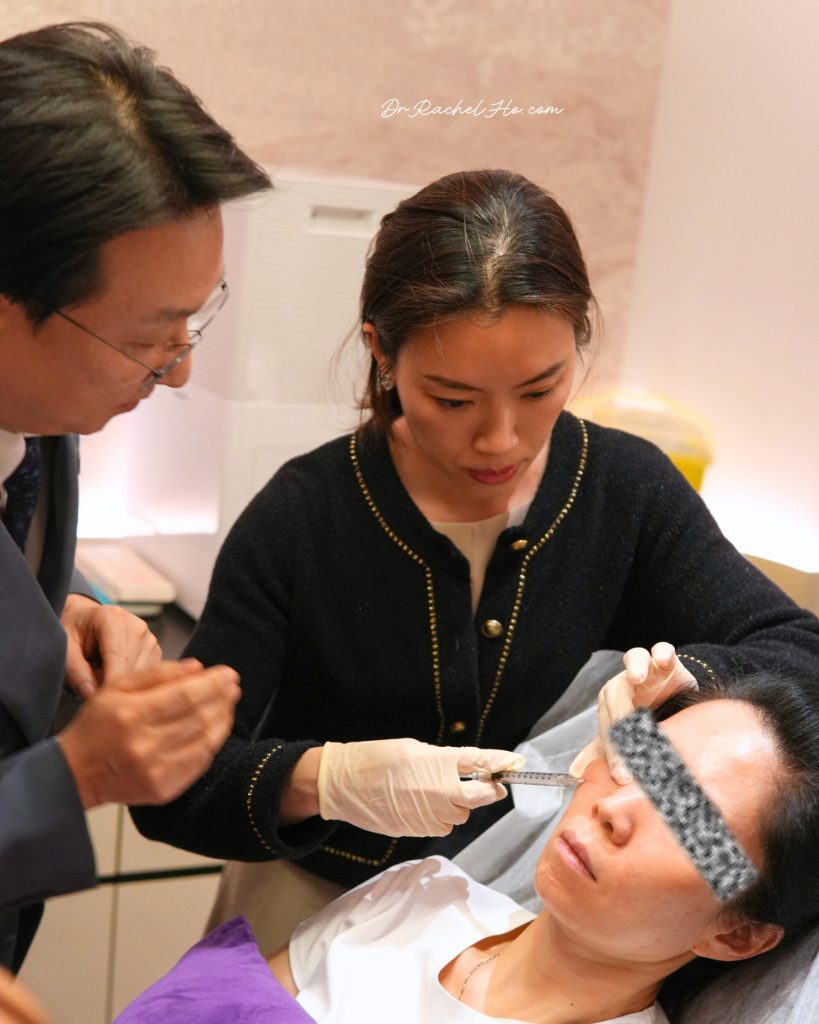
Performing undereye rejuvenation using ECM Skinboosters under the tutelage of Dr Park Je Young, dermatologist from Korea, for a candidate with eye bags and crepe-y under eyes
My personal experience with ECM skinboosters
I was very intrigued by the concept of ECM skinboosters after first learning about this category of treatments in Korea. Afterall, the current range of skinboosters and biostimulators available in Singapore revolved around a completely different range of mechanisms with polynucleotides, PDLLA and hyaluronic. ECM skinboosters consisting of the architecture of the dermis for incorporation into the tissues was a completely new frontier in aesthetic dermatology.
Since one of the brands of ECM skinboosters attained HSA approval in Singapore, I have been using ECM skinboosters for treating acne scars, enlarged pores, fine wrinkles and improving skin quality in selected patients. The early outcomes have been very promising and my subjects are pleased with their skin quality outcomes, so I’m incorporating ECM skinboosters into my clinical practice. I have not shared about ECM skinboosters on my blog because I wanted to be more certain about the results and outcomes, given that as a relatively new innovation, published data on ECM skinboosters in human trials are lacking
Separately, in 2026, I also had the opportunity to have Korean dermatologists Dr Park Je Young and Dr Park Sae Bomi refine my injection techniques for a newly launched ECM skinbooster in Singapore for undereye rejuvenation. Having introduced ECM skinboosters in my patients, I have found this skin quality treatment to be very helpful in rejuvenating tired looking under eyes, especially for patients who are not candidates for tear trough fillers.
Related blogposts:
How to Get Rid of Eye Bags Without Surgery: Tear Trough Fillers
Dark Eye Circles: Laying “I’m Tired” to Rest
ECM Skinboosters Compared With HA, PN and Collagen Stimulators
| reatment category | Main discussion point | Often considered for |
|---|---|---|
| HA skinboosters | Hydration and fine crepiness | Dry, dull or crepey skin |
| PN or PDRN skinboosters | Repair and scar support | Recovery focused skin and selected scars |
| Collagen stimulators | Gradual collagen response | Firmness and dermal support |
| ECM skinboosters | Dermal matrix support | Skin quality, pores, texture and under eye rejuvenation in selected patients |
ECM skinboosters versus HA, PN and collagen stimulators
This relatively new category of collagen biostimulators/ skinboosters adds diversity to current options for patients, but undoubtedly also adds to the confusion. Already in Singapore, we have a wide range of collagen biostimulator- skinbooster hybrids consisting of hyaluronic acid, polynucleotides (PDRN). So how do I, as their doctor, help patients to choose the best collagen biostimulator or skinbooster for them?
Each of these categories of collagen building skinbooster has their unique properties and benefits due to their active ingredients and injection techniques. For the sake of a simple read (feel free to let me know if you want a more detailed discussion), hyaluronic skinboosters are usually chosen when the main concern is hydration and fine crepiness. Polynucleotide or PDRN (from salmon or trout) skinboosters are often discussed in relation to repair and scar treatments. ECM skinboosters are more relevant for patients whose concerns are skin quality and skin longevity, and in my experience, undereye rejuvenation of dark eye circles.
My take on ECM skinboosters as an aesthetic doctor in Singapore
ECM skinboosters are a new and interesting development for improving skin quality and signs of ageing. Bringing the extracellular matrix into the aesthetic conversation shifts the focus from temporary glow toward dermal support for skin longevity.
The early evidence is promising, especially because the recent phADM study links clinical changes with biological mechanisms such as fibroblast activity, extracellular matrix synthesis, hyaluronic acid production and collagen formation. However, more rigorous studies with longer term outlooks are necessary for us to have more definitive data on its safety and efficacy, and we should not assume the evidence supporting dermal matrices used in reconstructive surgery holds true for ECM skinboosters used in aesthetic treatments. My experience with ECM skinboosters for improving enlarged pores, wrinkles, skin quality and under eye rejuvenation has been very positive. However, I look forward to more data and will update this review as we go along.
References
1. Four ECM Skin Boosters Launch This Year, but Rejuran Stands Apart. Seoul Economics Daily. 16 May 2026.
2. South Korea moves to close regulatory gap on cadaver-skin boosters. Chosun Biz. 16 April 2026.
3. Alterations in extracellular matrix composition during aging and photoaging of the skin. McCabe et al. Matrix Biol Plus. 2020 Jun 17;8:100041.
4. Skin barrier immunity and ageing.Chambers and Vukmanovic-Stejic. IImmunology. 2020 Jun;160(2):116-125.
5. Age-related changes in dermal collagen physical properties in human skin. He et al. PLoS One. 2023 Dec 8;18(12):e0292791.
6. Changes in human skin composition due to intrinsic aging: a histologic and morphometric study. Arnal-Forné et al. Histochem Cell Biol. 2024 Oct;162(4):259-271.
7. Intrinsic aging- and photoaging-dependent level changes of glycosaminoglycans and their correlation with water content in human skin. Oh et al. J Dermatol Sci. 2011 Jun;62(3):192-201.
8. Acellular dermal matrices in abdominal wall reconstruction: a systematic review of the current evidence. Janis et al. Plast Reconstr Surg 2012; 130(Suppl 2)
9. Systematic review of the impact of acellular dermal matrix on aesthetics and patient satisfaction in tissue expander-to-implant breast reconstructions. DeLong et al. Plast Reconstr Surg 2019; 144: 967e–974e.
10. Pilot clinical evaluation of PoreSkin: a human acellular dermal matrix in burn scars. J Med Assoc Thai 2017; Angspatt et al. 100: 441–446.
11. Injectable Particulated Human Acellular Dermal Matrix Booster for Skin Restoration: An Integrated Randomized, Split Face, Double Blinded Clinical Trial and Preclinical Study. Lee YI, Chau NH, Nguyen NH, Ham S, Baek Y, Kim J, Lee JH. International Journal of Molecular Sciences. 2026. Volume 27, Issue 5.

No Comments