


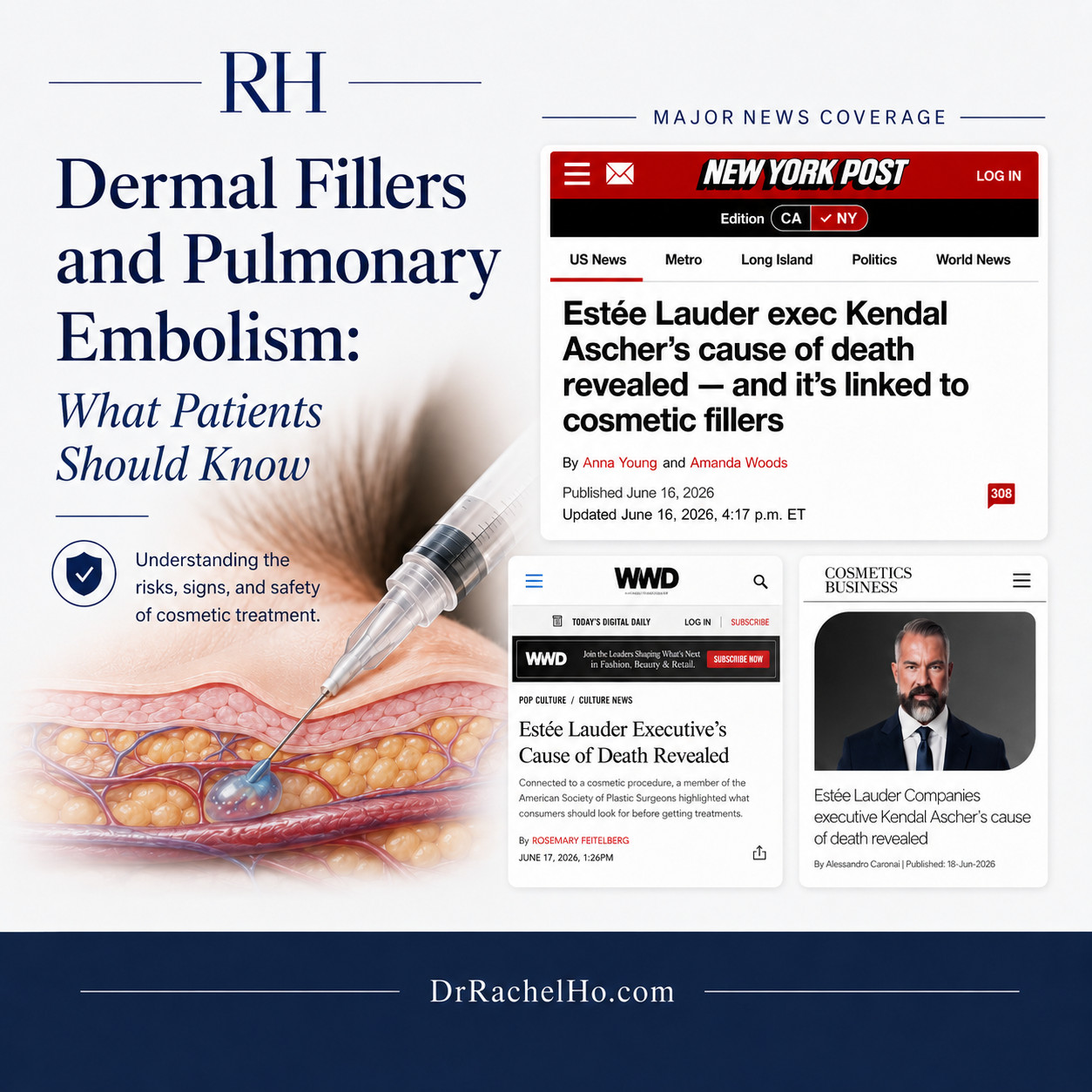
30 Jun Dermal Fillers and Pulmonary Embolism Death: What Patients Should Know
In June 2026, the New York Post reported that Kendal Ascher, a senior Estée Lauder executive, died after a pulmonary embolism linked to cosmetic filler injections. According to the report, the New York City medical examiner attributed the death to acute respiratory failure due to a pulmonary embolism connected to foreign material1.
Pulmonary embolism and death due to dermal filler injections is a very rare complication. Nonetheless, in light of this recent news, it’s important for us to understand pulmonary embolism and how complications can occur from dermal fillers.
Related blogposts:
Blindness from Dermal Filler Injections
5 Aesthetic Treatments to Avoid
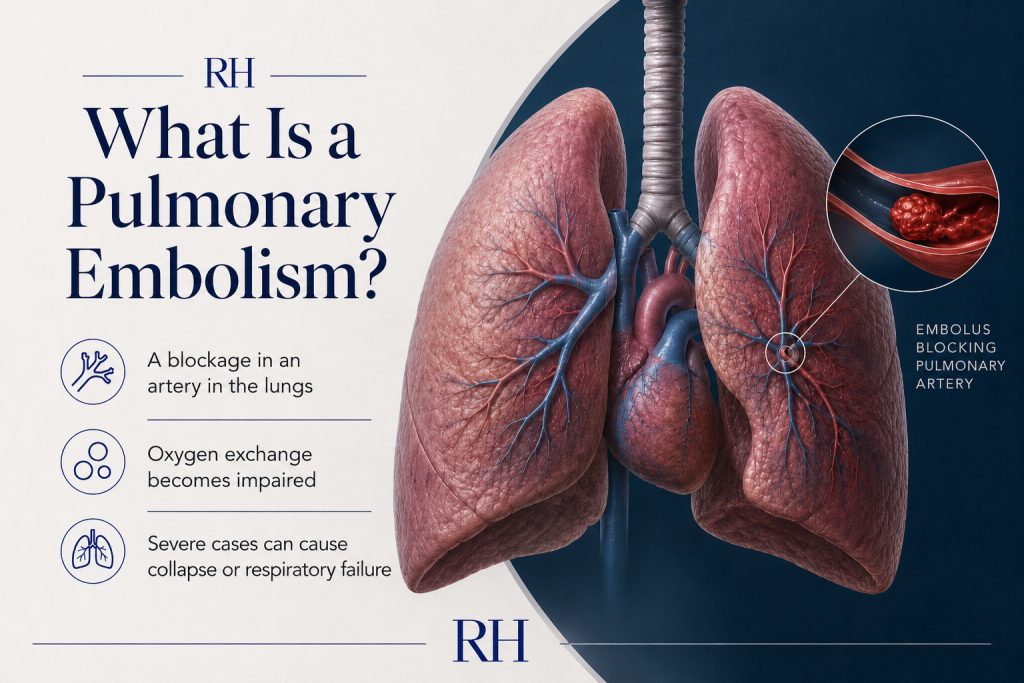
A pulmonary embolism occurs when material blocks blood flow in the arteries of the lungs.
What is a pulmonary embolism?
A pulmonary embolism (PE) occurs when a material blocks one or more arteries in the lungs. Most commonly, this material is a blood clot that has travelled from the deep veins of the leg i.e deep vein thrombosis. Less commonly, other materials such as fat, air, tumour tissue, amniotic fluid or foreign material can enter the circulation and obstruct the lung vessels2.
When blood flow through the lungs is blocked, oxygen exchange becomes compromised. In severe cases, the heart has to pump against sudden resistance in the lung circulation, which can cause collapse, shock, respiratory failure and death. PE is therefore treated as a medical emergency.
Why does pulmonary embolism occur?
Most pulmonary emboli arise from venous thromboembolism, where a clot forms in a vein and travels to the lungs. Risk factors include immobility, surgery, cancer, smoking, pregnancy, hormonal therapy, clotting disorders and previous clots2.
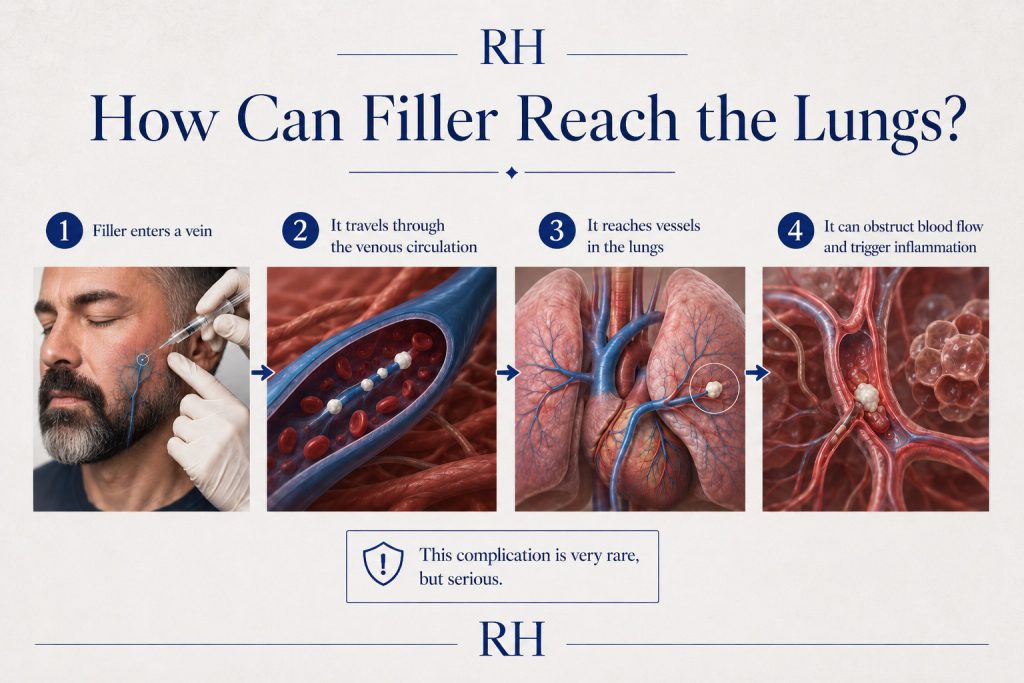
Filler related pulmonary embolism is very rare, but can occur if material enters the venous circulation and reaches the lung vessels.
How can pulmonary embolism occur from dermal fillers injections?
Dermal fillers are injected into the face or body to restore volume, contour, soften folds or improve proportions. The commonly used facial fillers include hyaluronic acid, calcium hydroxylapatite, poly L lactic acid and other biostimulatory products.
Pulmonary embolism from dermal fillers is extremely rare, and is due to the dermal filler material entering the venous circulation and travelling to the lung vessels, causing non-thrombotic pulmonary embolism (NTPE)3. The first biopsy-proven case of pulmonary embolism due to dermal fillers was reported in 2010 following an illegal cosmetic vaginal procedure3.
Pulmonary embolism from dermal fillers can occur directly and indirectly through:
- Direct intravascular injection: Filler material inadvertently injected into veins can travel through the venous system to the pulmonary circulation
- High-pressure injection techniques: Excessive injection pressure can force filler material into vascular structures4
- Foreign body granulomatous reaction: Once in the pulmonary vessels, the filler material triggers an inflammatory response with multinucleated giant cells and granuloma formation4

Filler safety depends on anatomy knowledge, technique, product choice, training and emergency preparedness.
The risks of pulmonary embolism due to dermal fillers injections are higher with these risk factors4:
- Off-label use of dermal fillers in highly vascular areas (such as vaginal procedures)
- Procedures performed by unlicensed practitioners
- Large-volume injections
- Injection into areas with prominent venous drainage
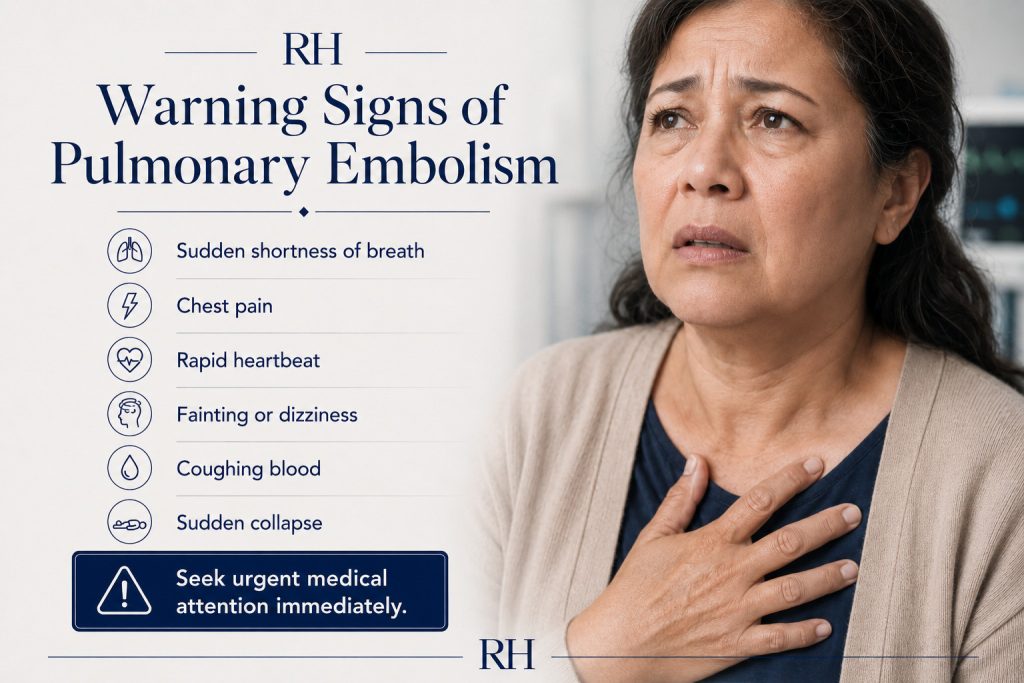
Sudden shortness of breath, chest pain, rapid heartbeat, fainting, coughing blood or collapse require urgent medical attention.
What are the signs of pulmonary embolism?
Symptoms of pulmonary embolism can vary, but signs include sudden shortness of breath, chest pain, rapid heartbeat, fainting, dizziness, coughing blood, sudden collapse, severe anxiety with breathlessness, or unexplained low oxygen levels. A PE can occur rapidly, and symptoms may be mistaken for panic, fainting or an allergic reaction.
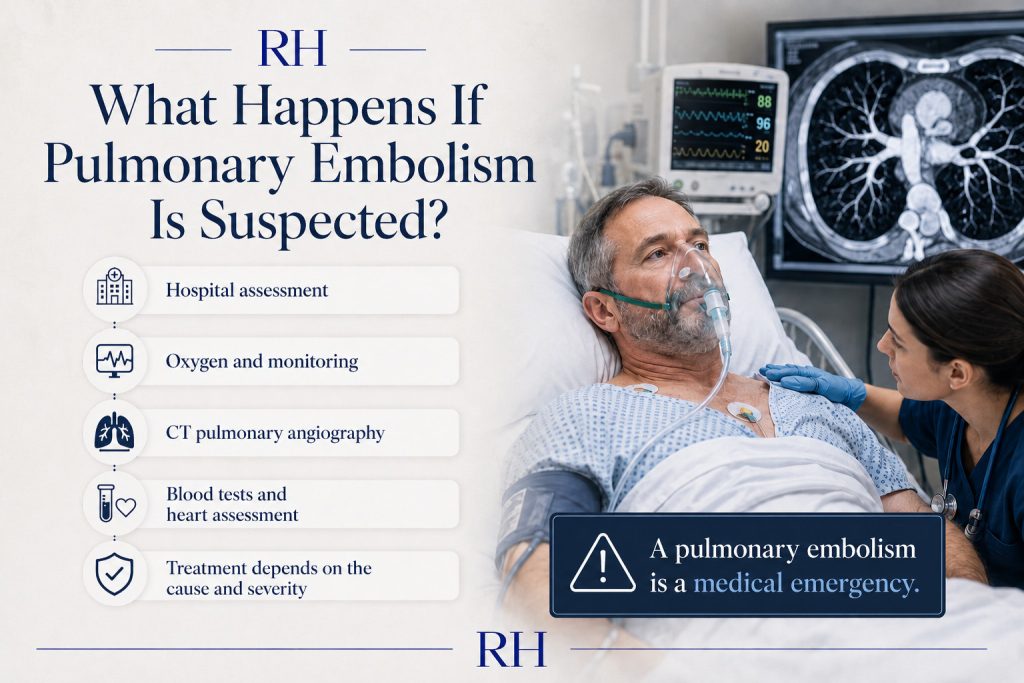
Suspected pulmonary embolism requires hospital assessment, monitoring, imaging and emergency treatment when needed.
How is pulmonary embolism treated?
Pulmonary embolism requires inpatient management with supplemental oxygen, intravenous access, monitoring, imaging such as CT pulmonary angiography, blood tests and heart assessment. Standard PE treatment usually involves anticoagulation to stop clot progression. In life threatening cases, thrombolysis, catheter based treatment or surgical embolectomy are among the treatment options2.
If the suspected embolus is foreign material from filler, the situation is more complex. If hyaluronic acid filler is involved, hyaluronidase can be used to dissolve the dermal filler in the affected tissue.
Related blogpost:
How to Dissolve & Remove Fillers with Hyaluronidase
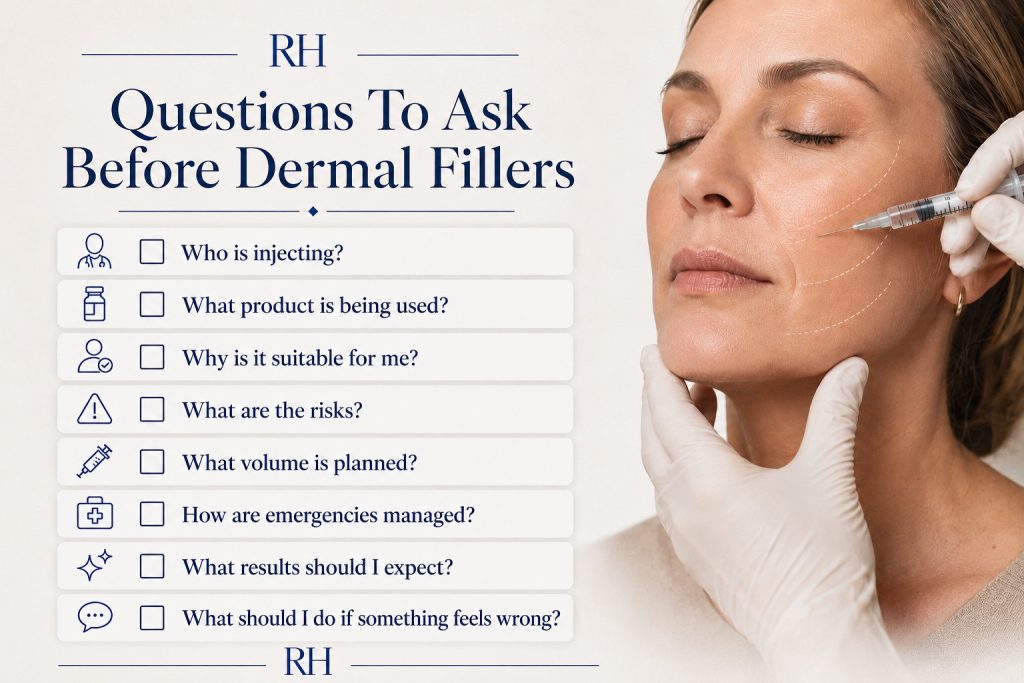
Questions to ask before dermal fillers including product used injector qualifications risks volume and emergency plan
How can patients reduce the risk of pulmonary embolism and severe dermal filler complications?
Risks of dermal filler injections can be reduced, but never nullified. To reduce your risk of complications from dermal fillers or aesthetic procedures, always look for an experienced doctor who understands facial anatomy, product rheology and emergency management.
Discuss with your doctor about the specific risks of your dermal filler injections. These can be determined by the volume and type of dermal filler injected, anatomical region treated, injection technique for a risk assessment, as well as the clinic’s protocols for managing emergencies and complications.
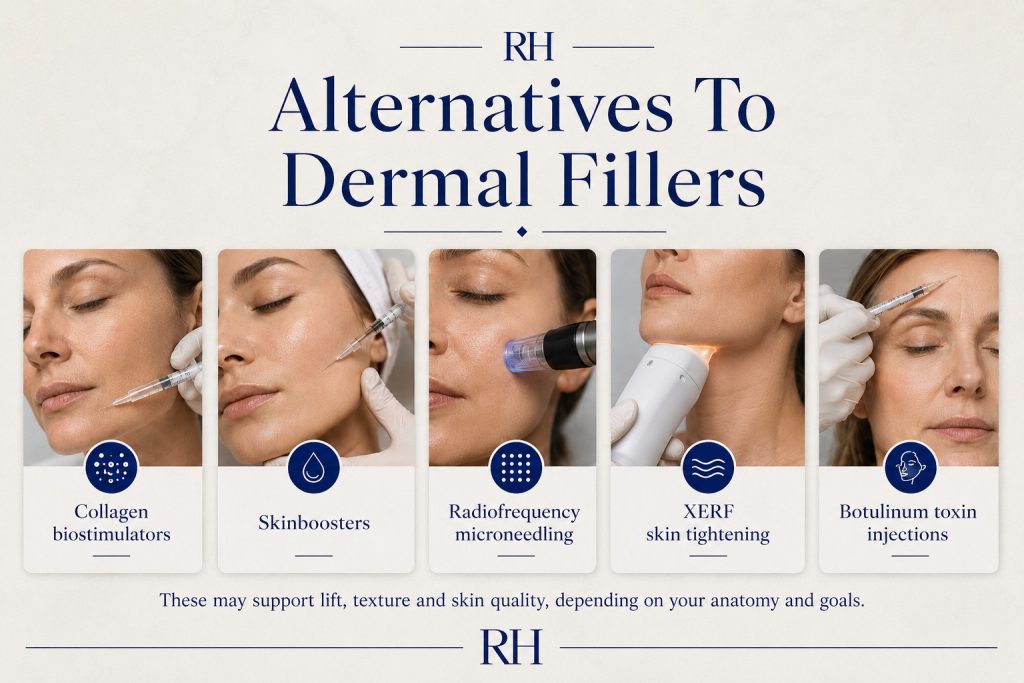
Non filler treatments to lift, texture and improve skin quality, depending on anatomy, skin condition and treatment goals.
Alternatives to dermal fillers at The Skin Longevity Clinic
While dermal fillers may be the treatment of choice for patients who require volume restoration and structural support, there are non-filler alternatives that can also improve support and lift in the face. These include:
- Collagen biostimulators: these are collagen building injectable treatments (e.g. PDLLA, hybrid cooperative complexes) which lift and restore structural support in the face and neck
- Skinboosters: Microinjections in the skin to restore skin dermal support and tighten skin. Examples include PDLLA and ECM skin boosters.
- Radiofrequency microneedling: A combination of radiofrequency energy emitted at precise depths combined with microneedling to lift and tighten the skin. This treatment also treats enlarged pores, depressed acne scars and improve skin texture
- XERF: A non-invasive radiofrequency treatment that lifts and tightens the skin
- Botulinum toxin injections as part of the liquid face lift.
While these non-filler alternatives do not replace volume loss, they can also treat sagging, laugh lines and laxity to improve a patient’s appearance.
How I approach dermal filler safety in The Skin Longevity Clinic
When it comes to recommending and performing dermal filler injections for my patients, ensuring safe outcomes are my priority. I take a conservative approach to my filler treatments, with a less is more approach. To me, there is skill and finesse in achieving the best results with as little dermal fillers or product as possible, as opposed to heavy handed approaches that overfill or distort a patient’s face.
Related blogpost:
Fillers Gone Wrong: Telltale Signs of Too Much Filler Injections
All patients undergo a risk assessment prior to getting their dermal filler injections, with an evaluation of their risks based on their anatomy, type of dermal filler and technique used.
Dr Rachel Ho’s takeaways on pulmonary embolism and dermal filler related complications
The reported death of Estée Lauder staff from pulmonary embolism due to dermal fillers is tragic. This news also serves as a timely opportunity to understand dermal filler safety.
Dermal fillers can be useful when performed safely. This procedure, like all treatments,can also cause rare but serious complications when injected into or around blood vessels. Pulmonary embolism from filler appears extremely rare, but it is a risk that all doctors should recognise.
For patients; choose an experienced doctor, ask what product is being used, avoid excessive volume, understand warning signs and seek urgent medical attention if something feels wrong.
References:
- Inside the cosmetic filler complication that killed Estée Lauder VP. New York Post. Lethal injection: 2026.
- Deep vein thrombosis and pulmonary embolism. Nisio et al. Lancet. 2016 Dec 17;388(10063):3060-3073.
- Hyaluronic acid pulmonary embolism: a critical consequence of an illegal cosmetic vaginal procedure. Park et al. Thorax. 2010 Apr;65(4):360-1.
- Understanding Vascular Complications Arising From Dermal Filler Injection. Yi et al. J Craniofac Surg. 2025 Jun 1;36(4):1168-1174.

No Comments