


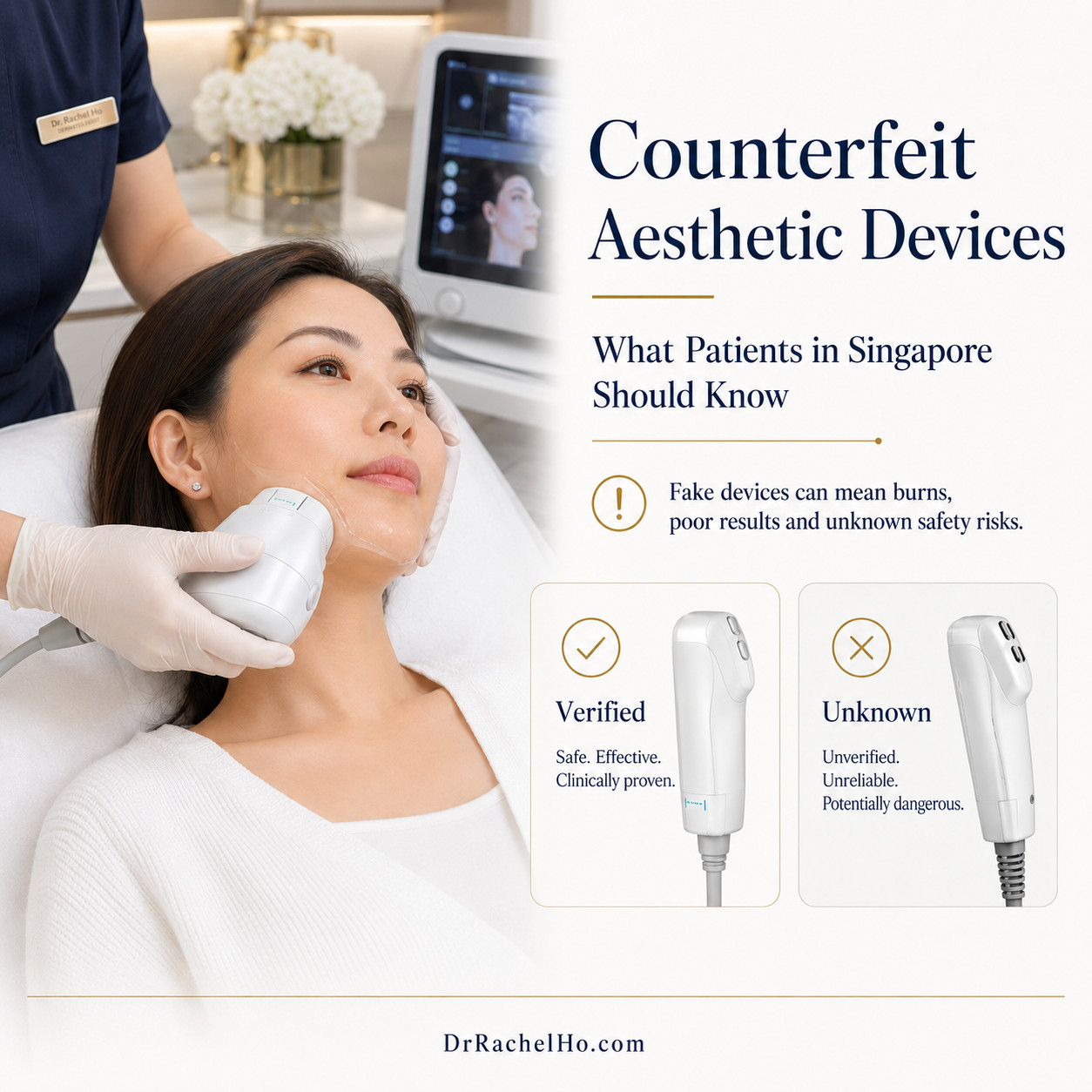
20 Jun Counterfeit Ultherapy Prime & Fake Aesthetic Devices in Clinics
In June 2026, an aesthetic clinic in Kuala Lumpur was found to use a counterfeit Ultherapy Prime device and transducers1,. As an aesthetic doctor in Singapore, this problem of counterfeit or fake medical devices is more than infringement of the medical device’s patent and brand trademark. Unlike legitimate medical devices that have been validated for their safety and efficacy, a counterfeit aesthetic medical device can complicate treatments and compromise patient safety. treatment accuracy, complication management and patient safety.
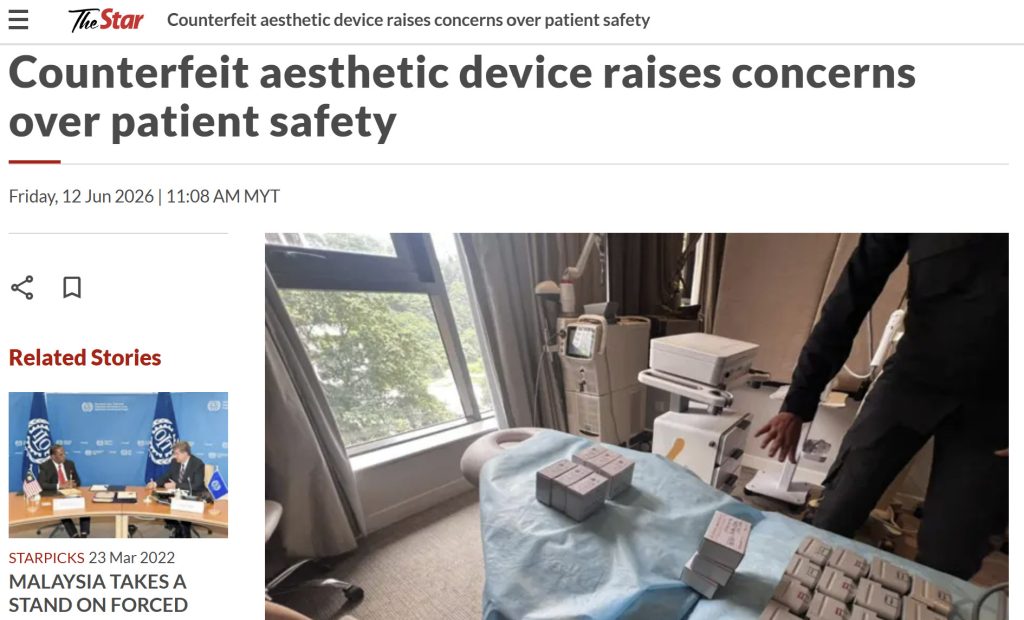
For patients in Singapore who travel overseas for cheaper aesthetic treatments, or compare treatment prices across clinics, this news is a timely reminder: if the price is unusually low, you should ask why.
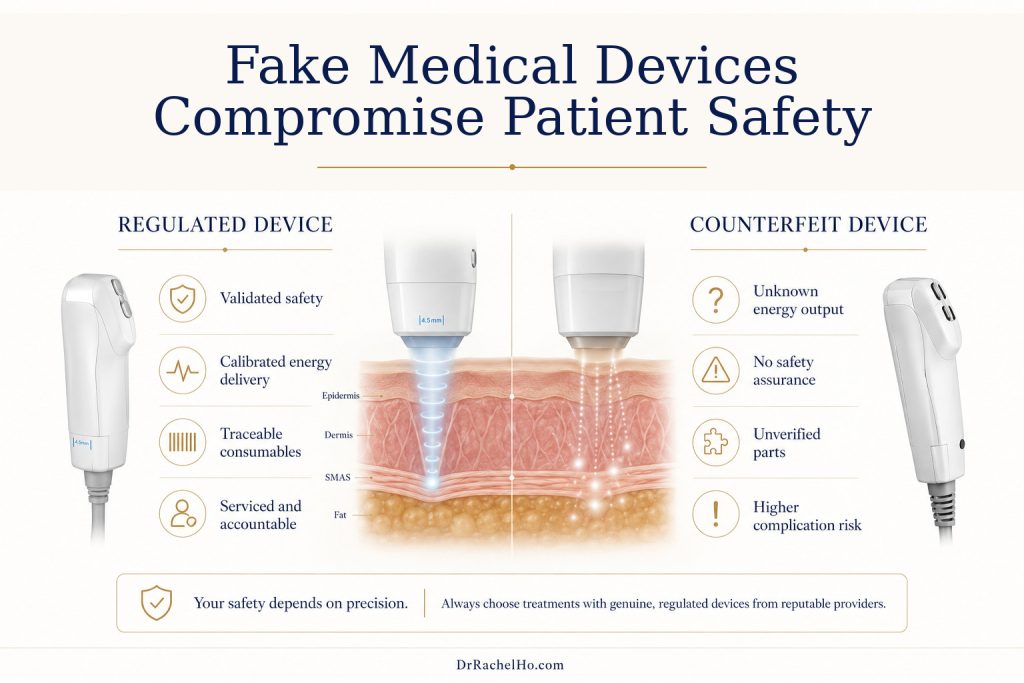
Counterfeit Ultherapy prime and fake medical devices compromise patient safety
Why Counterfeit Ultherapy Prime and Aesthetic Devices Compromise Patient Safety
Aesthetic treatments such as Ultherapy Prime, XERF, Pico laser, radiofrequency microneedling and fractional CO2 lasers depend on controlled energy delivery to the skin. These medical devices have to deliver the appropriate energy parameters at precise depths, for the right duration, through properly manufactured and calibrated handpieces. In Singapore, medical devices are regulated by the Health Science Authority (HSA) and these devices must meet the regulatory requirements before they can be distributed to clinics in Singapore.
Counterfeit devices, however, are illegal and for obvious reasons are not registered or regulated with HSA in Singapore. Although counterfeit devices may look similar, there is no assurance about its internal engineering, energy output, depth of delivery, servicing history or safety checks. For energy based treatments like Ultherapy Prime this is especially important because focused ultrasound is designed to create controlled thermal injury below the skin surface to initiate collagen remodelling. It is possible that the risks of adverse effects of HIFU such skin burns and nerve injury can be higher from an illegal device where the safety has not been evaluated.
What Can Go Wrong With Fake Ultherapy or Fake HIFU?
Ultherapy and other HIFU treatments work by delivering focused ultrasound energy into the skin to treat laxity2,3.
Side effects and complications arise when energy is delivered too superficially, energy levels that are too intense, repeated passes, or through a transducer that does not couple well to the skin. These can result in HIFU burns4.
A counterfeit HIFU or any fake medical device, because of their illegal nature, are not regulated for its safety and may contain defective components and inaccurate calibrations, which can lead to burns or treatment failures. In particular for HIFU or energy devices treatments, counterfeit devices can also worsen the risks of burns and blisters, post inflammatory hyperpigmentation, scarring, prolonged redness or swelling, nerve irritation, temporary weakness and unwanted fat loss.
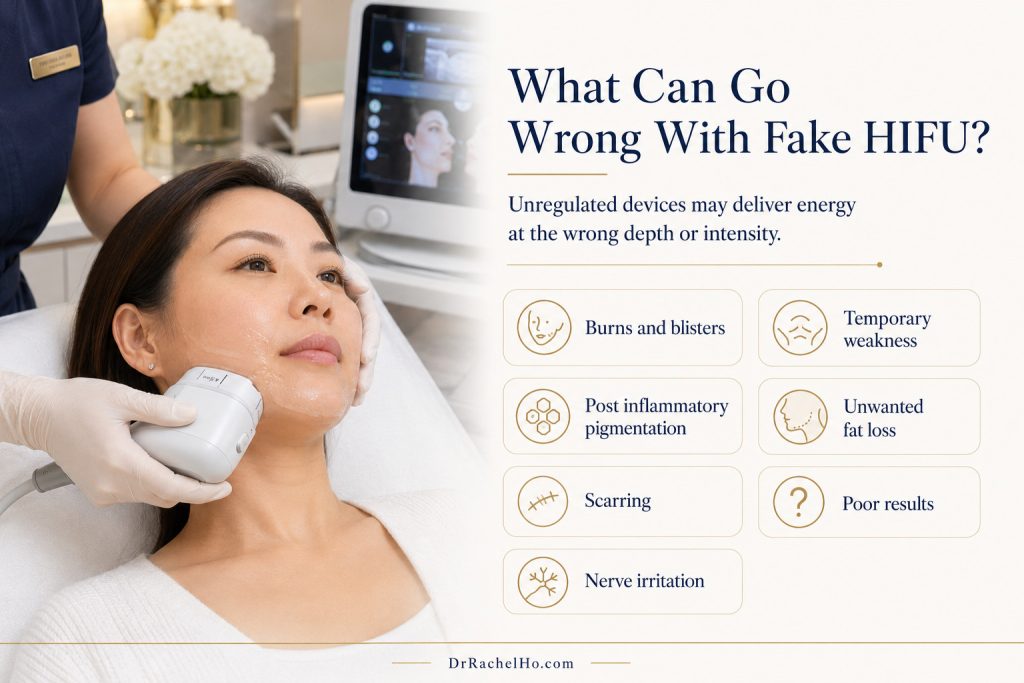
Unregulated Ultherapy Prime and HIFU devices may deliver energy at the wrong depth or intensity, increasing the risk of burns, pigmentation, scarring and poor results.
Complication Risks from Fake Ultherapy Prime and Aesthetic Treatments
When patients agree to treatment and recommended medical protocols, they are agreeing to a specific device, technology, safety profile and treatment protocol. If a clinic advertises one device but uses a counterfeit or unrelated machine, the patient has not received the treatment she consented to.
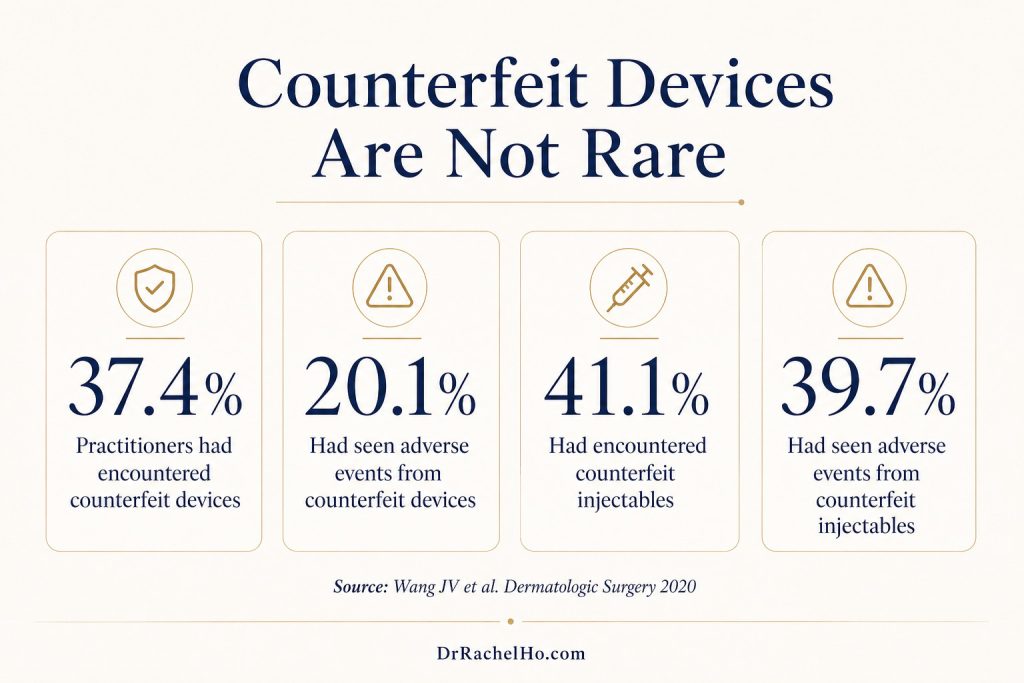
Counterfeit aesthetic device statistics from Dermatologic Surgery showing side effects
According to a survey of aesthetic practitioners published in Dermatologic Surgery, 37.4 percent of respondents had encountered counterfeit medical devices, and 20.1 percent had seen patients with adverse events from counterfeit devices. For injectables, 41.1 percent had encountered counterfeit products, and 39.7 percent had seen patients with adverse events from them5. This shows that counterfeit aesthetic products and their risks are real.
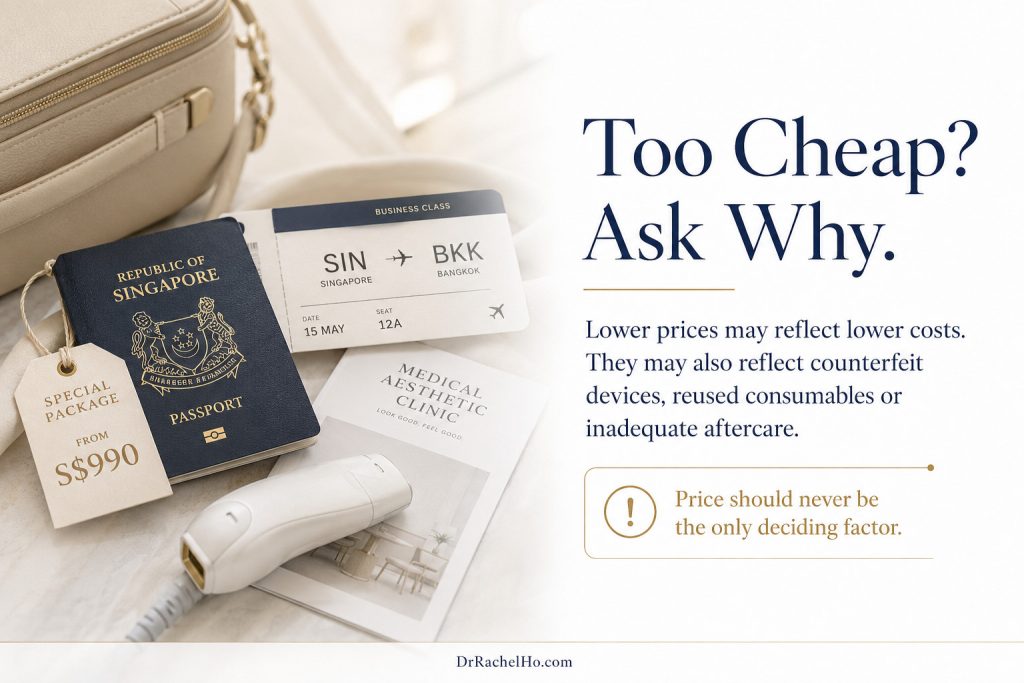
A very low treatment price may reflect lower costs, but it may also reflect counterfeit devices, reused consumables or poor aftercare.
For Patients in Singapore: Price Shopping and Overseas Aesthetic Treatments
Singapore patients are well informed, mobile and price conscious (who isn’t, afterall?). Many patients compare treatment prices across Singapore, and other destinations like Thailand and South Korea. Some overseas clinics are reputable and well regulated, and many doctors practise to high standards. The risks begin when the patient cannot verify the device, consumables, doctor credentials, complication support or regulatory oversight.
I understand why patients shop for the lowest prices and best deals for their aesthetic treatments in Singapore and overseas. For clinics, the costs of purchasing authentic devices authorised consumables through legitimate distribution channels, servicing, training, licensing, insurance and medical manpower all add to the cost of treatment. When a treatment is priced suspiciously low, patients should ask whether the clinic is using an authentic device, authorised transducers or original consumables.
Cheaper treatment may come from factors such as lower rental and lower labour costs, especially overseas. However, lower costs may also be due to counterfeit devices, reused consumables, refurbished parts, non authorised supplies, inexperienced operators or inadequate aftercare. For tourists who are not familiar with the medical systems overseas, navigating the local scene can be challenging to determine the reputation of clinics, authenticity of devices and qualifications of the doctors.
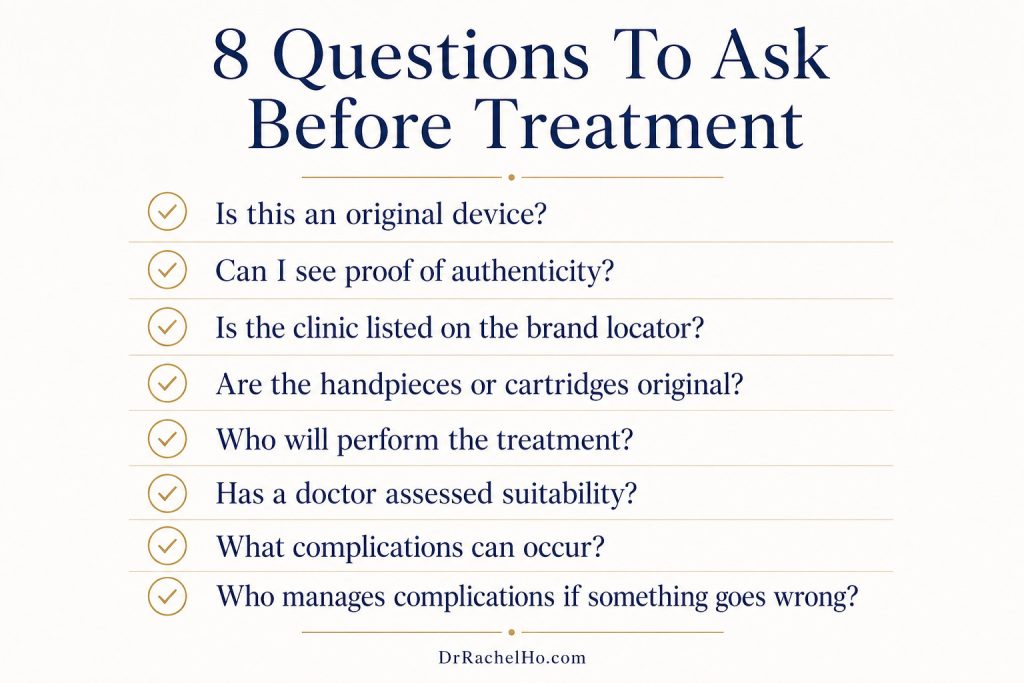
Eight questions to ask aesthetic clinics and doctors before aesthetic treatments in Singapore
Questions Patients Should Ask Before Aesthetic Treatments
If prices of treatments cheaper than expected, ask the clinic these questions:
- Is this an original medical device?
- Can I see proof of authenticity or the device certificate?
- Is the clinic listed on the brand’s official clinic locator?
- Are the handpieces, cartridges or consumables original?
- Who will perform the treatment?
- Has a doctor assessed whether I am suitable?
- What complications can occur, and who manages them?
- What should I do if I develop blisters, burns, numbness or peeling?
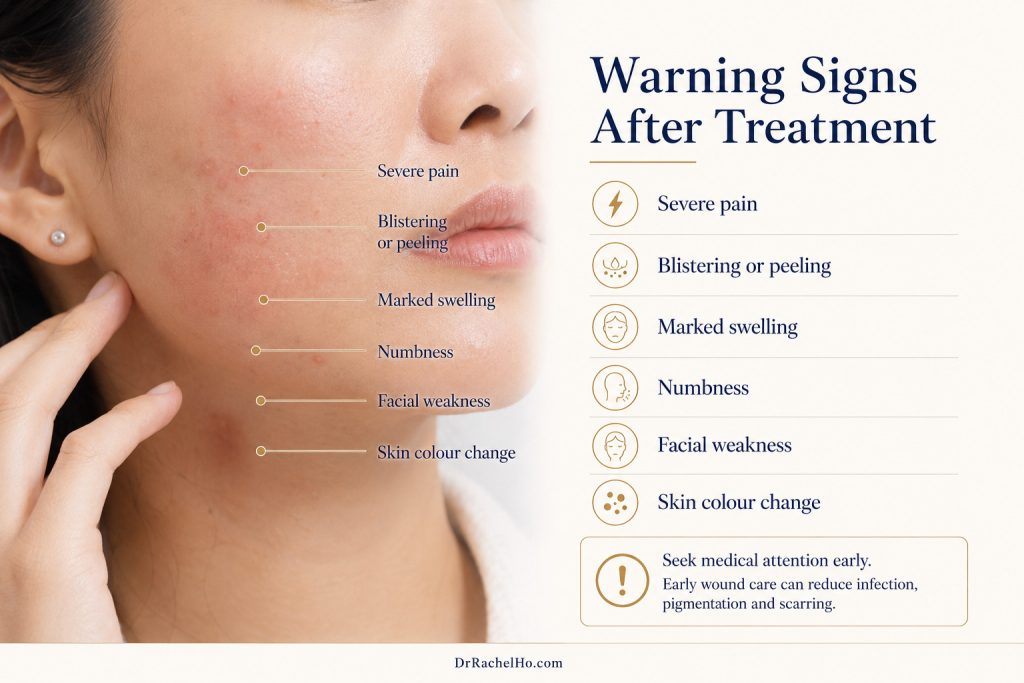
Severe pain, blistering, peeling, marked swelling, numbness, facial weakness or skin colour change after treatment should be reviewed early.
What To Do If You Have Complications or Suspect a Fake Ultherapy Prime or Aesthetic Treatment Was Performed
If you develop severe pain, blistering, peeling, burns, marked swelling, numbness, facial weakness or skin colour change after a treatment, seek medical attention early. These are signs of facial burns that can lead to infection, hyperpigmentation and scarring.
For burns, early wound care is important. Once the skin has healed, treatments for hyperpigmentation or scarring can commence.
Dr Rachel Ho’s Takeaway on Fake Ultherapy Prime and Counterfeit Aesthetic Treatments
Counterfeit aesthetic medical devices compromise patient safety and can lead to complications such as burns. For Singapore patients considering aesthetic treatments locally or overseas, price considerations, while important, should not be the only deciding factor. Ask about the device, the doctor, the consumables, the complication plan and the clinic’s regulatory standards.
References
- The Star. Counterfeit aesthetic device raises concerns over patient safety. 12 June 2026.
- Haykal D, Sattler S, et al. A Systematic Review of High Intensity Focused Ultrasound in Facial Rejuvenation. Aesthetic Surgery Journal. 2025.
- Friedmann DP, Bourgeois GP, Chan HHL, Zedlitz AC, Butterwick KJ. Complications from microfocused transcutaneous ultrasound: Case series and review of the literature. Lasers in Surgery and Medicine. 2018.
- Park JY, Lin F, Suwanchinda A, et al. Customized treatment using microfocused ultrasound with visualization for optimized patient outcomes: A review of skin tightening energy technologies and a Pan Asian adaptation of the expert panel’s gold standard consensus. Journal of Clinical and Aesthetic Dermatology. 2021.
- Wang JV, Hattier G, Rohrer T, Zachary CB, Saedi N. Experiences with counterfeit aesthetic medical devices and injectables: A national survey. Dermatologic Surgery. 2020.

No Comments