


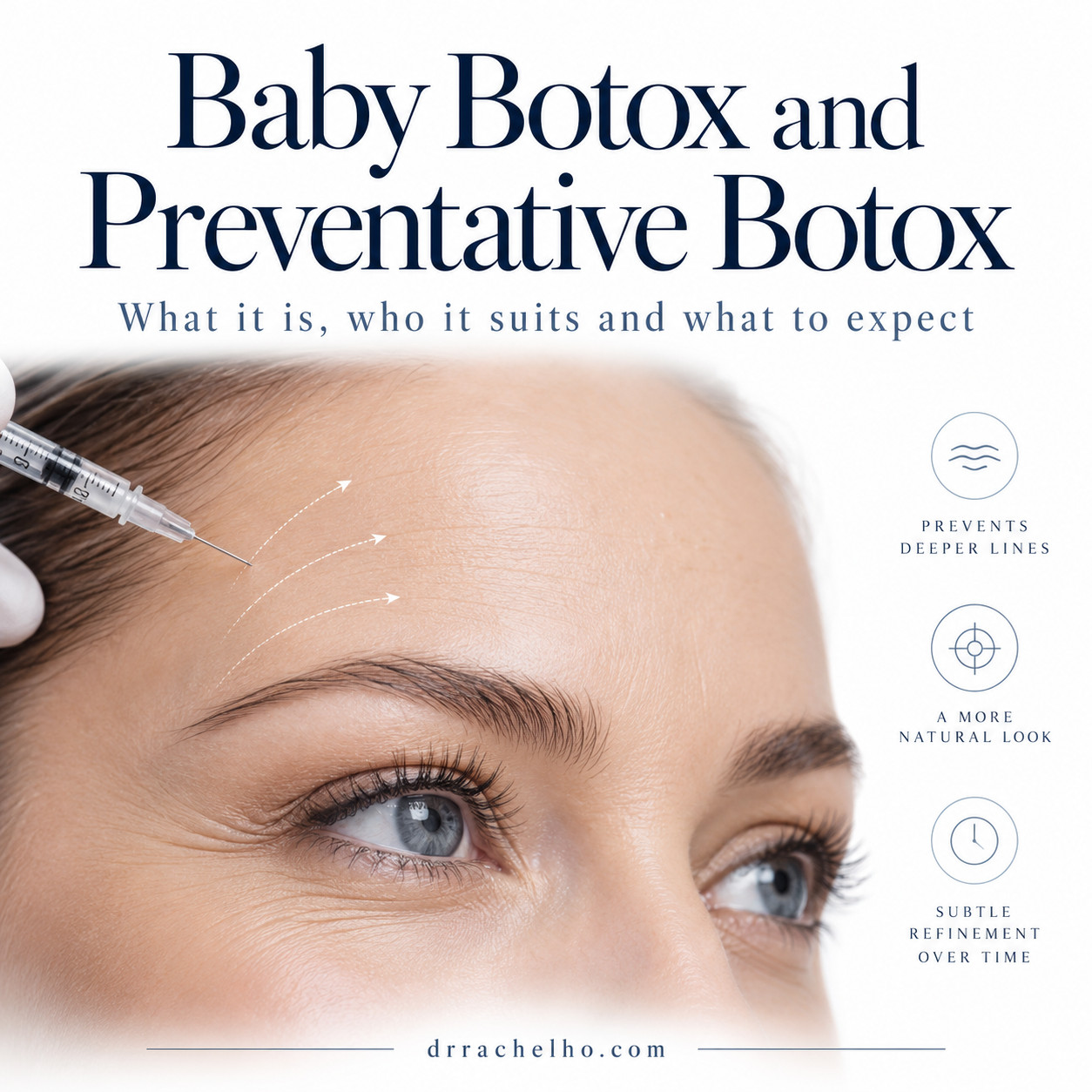
19 May Preventative Botulinum toxin and Baby Botulinum toxin in Your 20’s Is Real
By Dr Rachel Ho, MBBS (NUS), MMed. Aesthetic doctor and founder of The Skin Longevity Clinic | Updated October 2026
“Baby BTX” and “Preventative BTX” may seem like the preventive anti-wrinkle treatment that everyone’s doing, especially if you’re in your 20s or 30s. Despite how they sound, neither treatments are new. Baby BTX and Preventive BTX simply describe how we use botulinum toxin to treat wrinkles: “Baby BTX” refers to the dose, and “Preventative BTX” refers to the goal.
Here is a breakdown of what these terms actually mean for your face, and how these baby doses of botulinum toxin injections differ from conventional anti-wrinkle treatments. For treatment areas, suitability and general safety, start with the botulinum toxin guide for Singapore. For more about BTX safety, please refer to Is Botulinum Toxin Deadly and What are the effects of long term Botulinum toxin injections?

Meghan Markle has been widely speculated to have undergone very minor ‘tweakments’ and Baby Botulinum toxin to enhance their looks without drastic changes. Kim Kardashian’s looks, on the other hand, have changed dramatically over the years.
What exactly is Baby BTX?
Baby BTX an informal, catchy term for using smaller, conservative amounts of botulinum toxin to soften expression lines while intentionally leaving you with some natural movement. We usually talk about it in the context of the forehead, frown lines, and crow’s feet.
But, there is no universal “baby” dose that suits every face¹. What softens lines beautifully on one person might completely freeze another, depending on their gender, individual anatomy and wrinkling habits. A smaller dose also does not necessarily equate to a natural-looking result, which boils down precise placement and understanding your unique facial anatomy.
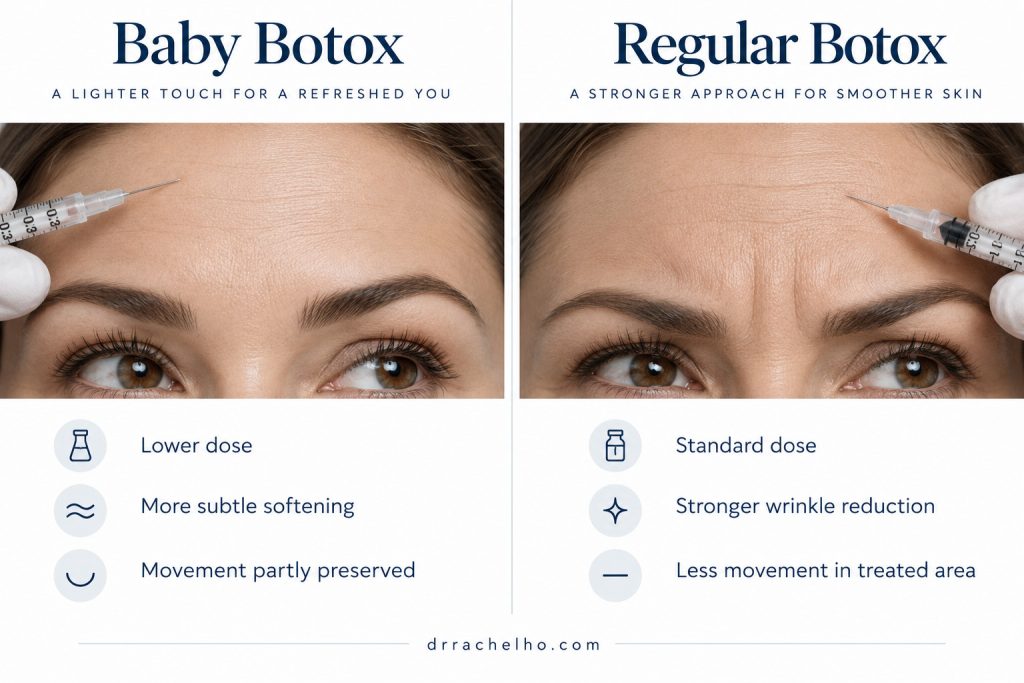
Baby Botulinum toxin and conventional treatment use the same type of medicine, with dosing adjusted to the person. Lower doses may provide less line reduction or a shorter effect; natural facial expression also depends on treatment planning and placement.
How does Baby botulinum toxin compare to a standard anti-wrinkle BTX treatment?
Although the same drug, botulinum toxin, is used for both instances, the differences lie in the treatment plan, as the dose and placement should be chosen for the specific muscles being treated and to retain a precise amount of dynamic movement¹.
Types of botulinum toxin treatments in Singapore
| Term | What it describes |
|---|---|
| Baby botulinum toxin | A lower-dose approach with precise placement to retain dynamic muscle movement |
| Preventative botulinum toxin | A treatment goal focused on limiting persistent expression lines |
| Conventional botulinum toxin treatment | An individual treatment plan, which may itself use a conservative dose |
There is a trade-off to the “baby” approach to botulinum toxin: lower doses mean less wrinkle reduction and a shorter lifespan. A randomised study on frown lines confirmed what we see in the clinic: patients receiving the lowest doses simply had a less durable response, meaning there is no universally established dose or duration for “baby botulinum toxin treamtents”². For more about timelines for botulinum toxin results, please refer to my clinic’s guide to how long botulinum toxin lasts.
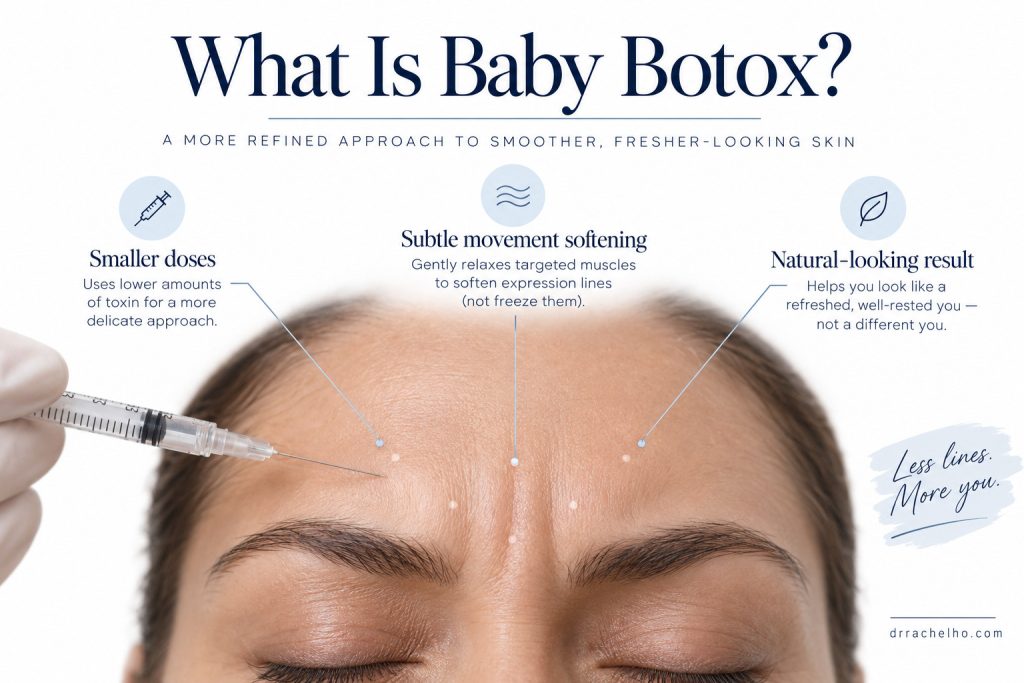
Baby BTX uses smaller amounts of botulinum toxin to soften selected expression lines while aiming to retain movement. The dose and injection plan should reflect the individual’s facial muscles and treatment goals.
Does baby botulinum toxin injections require more frequent treatments?
Baby BTX injections often wears off quicker. However, seeing a little movement returning doesn’t mean the treatment has failed, particularly if preserving movement was our agreed goal¹,². For my patients, I always discuss the goals and expected timelines before embarking on anti-wrinkle treatments to avoid misunderstanding from the shorter lasting results of baby botulinum toxin injections.
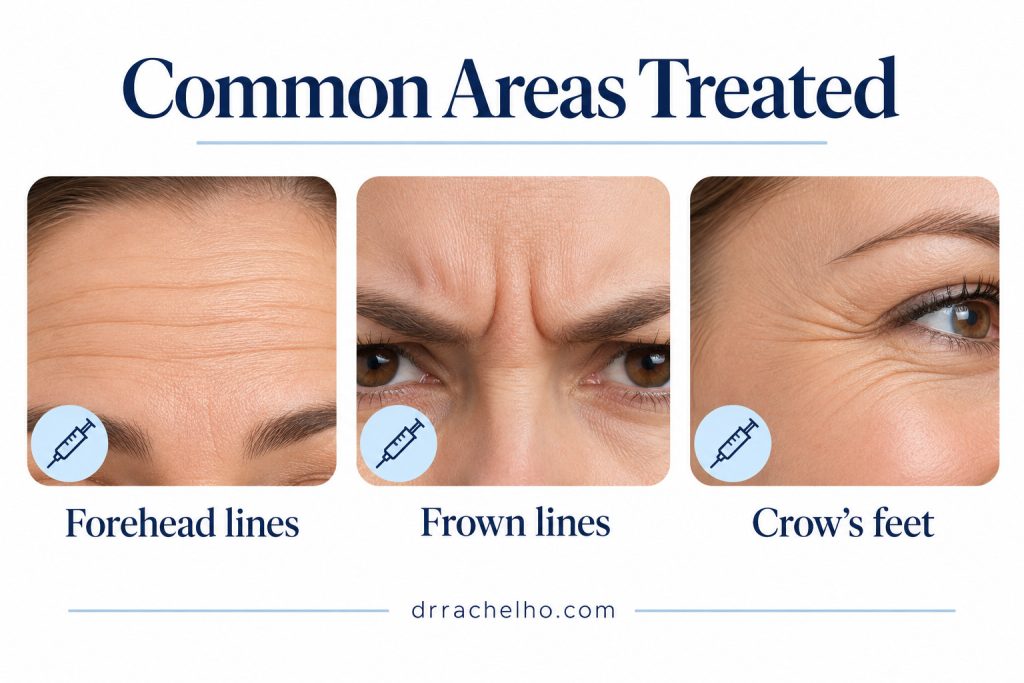
The forehead, area between the eyebrows and outer eye corners are commonly assessed for baby botulinum toxin. Treatment planning considers the muscles creating the lines and the degree of softening the person would like to achieve.
The “preventative” -promise and the evidence of botulinum toxin
Preventative botulinum toxin aims to relax the muscles that cause repetitive skin folding, stopping dynamic lines (the ones you see when you frown) from turning into static lines (the ones that stick around when your face is at rest).

Does starting botulinum toxin injections early actually prevent aging? You’ve likely heard of the famous identical twin study picture above: one twin had regular botulinum toxin treatments over 13 years (right photo), and the other had it only twice (photo on the left). Unsurprisingly, the regularly treated twin had significantly fewer etched lines.
Is preventative Botulinum toxin suitable for me?
Although the patients seeking preventative Botulinum toxin are younger- namely their 20’s and early 30’s; there is no minimum or maximum age limit for preventive Botulinum toxin. It all depends when you get the first signs of wrinkles or furrows on your face. Without treatment, all wrinkles and lines deepen with age. For more severe cases, the wrinkles can change from dynamic wrinkles to static wrinkles and this ends up requiring more than 1 modality of treatment. So by getting treatment early, the worsening of wrinkles and aging can be delayed or even prevented.
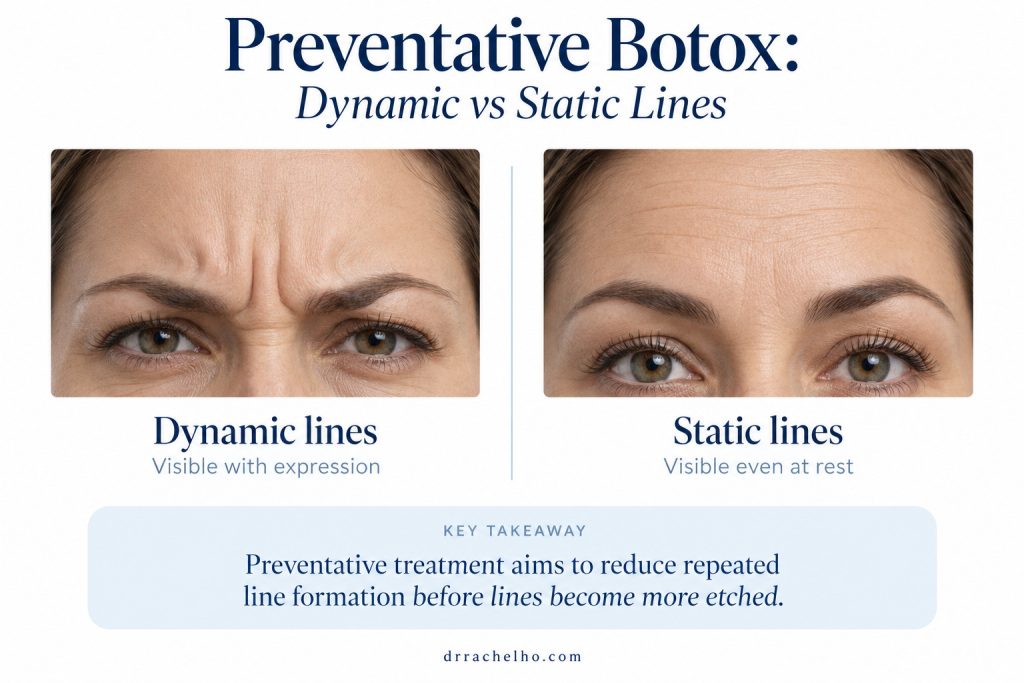
Dynamic lines appear with facial movement, while static lines remain visible at rest.
Dynamic vs. Static Wrinkles
Wrinkles are an inevitable part of aging and they appear most commonly on the upper half of the face- the outer corners of the eyes (“crows’ feet”); the glabella (“number 11” between the brows”) and the forehead. All wrinkles begin as dynamic wrinkles- this means that these wrinkles are only apparent when we use our muscles of facial expression to smile, laugh or frown. When our facial muscles are at rest and we do not display any facial expressions; these wrinkles are not seen.
Wrinkles appear as we age due to a variety of reasons-
1. Repeated facial expressions (the more you frown and the more you smile- the earlier the onset of your wrinkles). The muscles of the face pull the overlying skin to create groove under the surface of the skin.
2. Aging– our skin loses collagen and elasticity with age. Skin also becomes drier and thinner over time. This leads to wrinkles and lines looking deeper and more obvious with age.
3. Lifestyle related– Other external factors- namely sun exposure and smoking- that accelerate the rate of collagen loss in our skin also cause the formation of wrinkles.
Dynamic wrinkles evolve to become deeper and involve larger areas of the face as we age if these wrinkles are not treated. Over time, dynamic wrinkles turn static. This means that even at rest, without using the muscles of facial expression; these wrinkles are seen, making you look older and possibly, angrier than you would think. Years of untreated dynamic wrinkles have caused the skin above the dynamic wrinkles to form grooves and so the wrinkles have turned static.
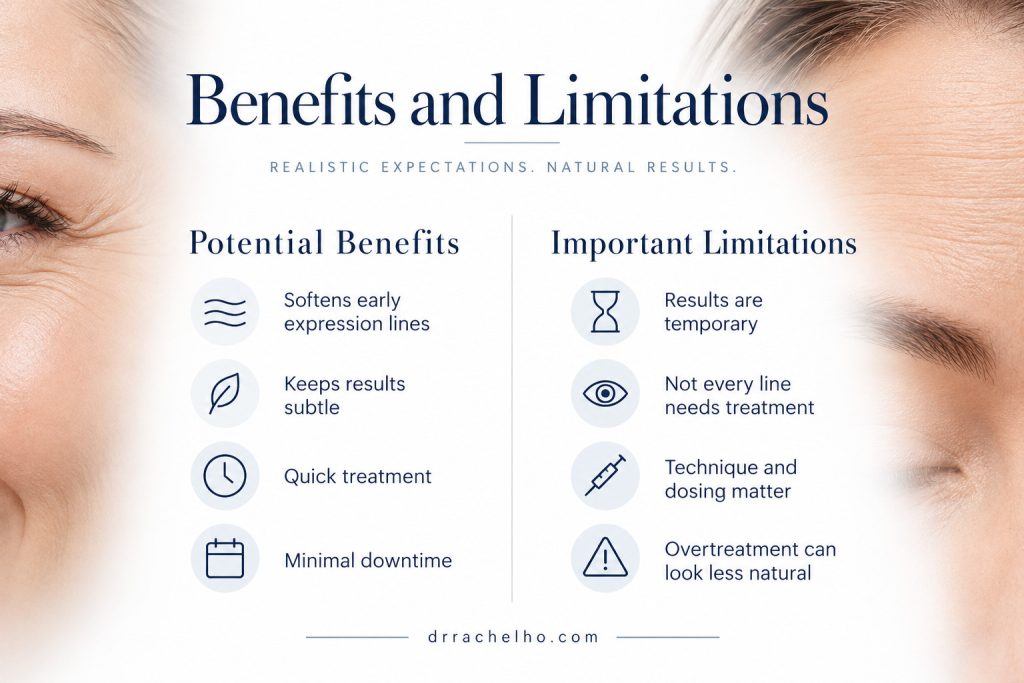
Baby botulinum toxin may soften expression lines while leaving some movement. Results are temporary, and smaller doses can provide less correction or wear off sooner, making realistic expectations and an individualised treatment plan important.
Can Botulinum toxin be used to treat dynamic and static wrinkles?
Botulinum toxin workson dynamic wrinkles by relaxing the underlying muscle activity that contributes to these lines⁴. However with static wrinkles; both the muscles (causing the facial expression) and the skin have to be treated too. Botulinum toxin can reduce the severity of static wrinkles by reducing the dynamic component of the wrinkles. The overlying grooves of the static wrinkles can be treated with collagen building treatments for the skin like ECM skin boosters and radiofrequency microneedling.
Should you start botulinum toxin injections for wrinkles in your 20s or 30s?
Turning 25 or 30 is not a medical indication for injections. Your suitability for wrinkle treatments should be based on your anatomy and personal choice. In my clinic, these are the issues that I assess for patients seeing BTX treatments:
- Are your lines visible only when you express, or are they already etched in at rest?
- How much natural movement do you want to keep?
- Are you okay with a softer result that won’t last quite as long?
- What could simple observation and good skincare (like daily sunscreen) achieve for you right now?
If you don’t have a specific concern you want to address, you don’t need to start injections just because of your age.
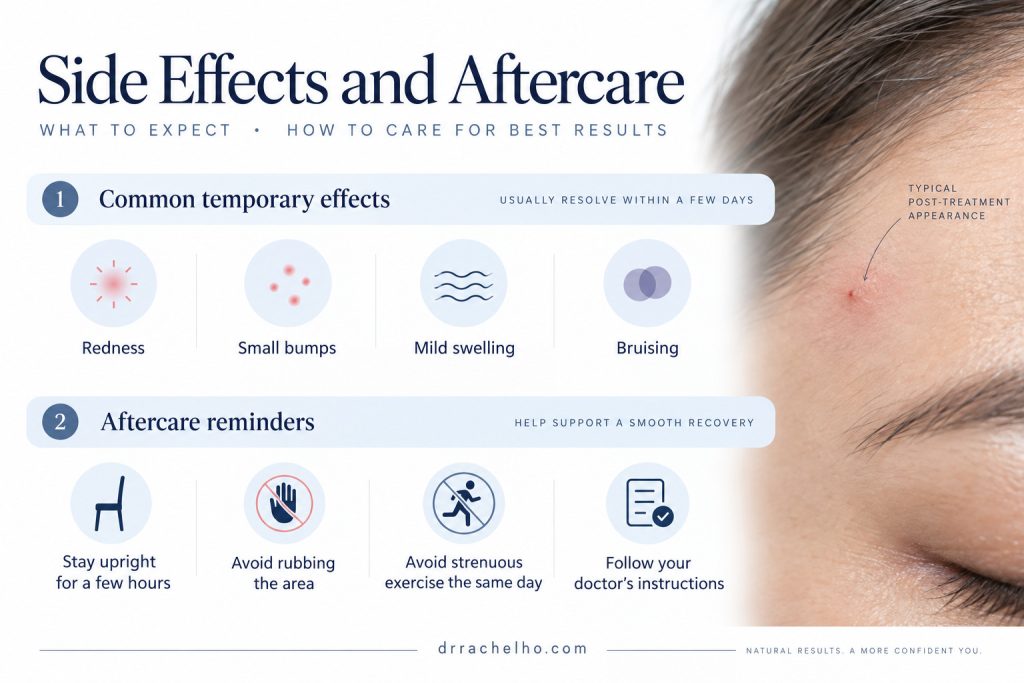
Temporary redness, swelling or bruising may follow baby botulinum toxin injections. Avoid rubbing the treated area, follow your doctor’s aftercare advice and contact the clinic about unexpected or worsening symptoms.
Safety and results timeline of baby BTX or preventive botulinum toxin treatments in Singapore
Whether it’s “Baby” or standard dose, botulinum toxin takes a few days to kick in, with full results usually assessed around the two-week mark. Because baby BTX typically uses a lower-doseo of botulinum toxin, this treatment should not be assumed to last as long as a higher-dose treatment⁴,².
And let’s be clear that although “Baby botulinum toxin” might sound cute or trendy, this treatment is still not risk-free. Botulinum toxin injections are still medical procedures with risks that should be taken seriously by your doctor.
References
- Sezgin B. Tailored indications for different neurotoxins. Plastic and Reconstructive Surgery Global Open. 2023;11.
- Carruthers A, Carruthers J, Said S. Dose-ranging study of botulinum toxin type A in the treatment of glabellar rhytids in females. Dermatologic Surgery. 2005;31:414-422.
- Binder WJ. Long-term effects of botulinum toxin type A on facial lines: a comparison in identical twins. Archives of Facial Plastic Surgery. 2006;8:426-431.
- National Skin Centre, Singapore. Botulinum toxin patient information. Revised August 2018; printed May 2019.
- Hughes MC, Williams GM, Baker P, Green AC. Sunscreen and prevention of skin aging: a randomized trial. Annals of Internal Medicine. 2013;158:781-790.
- Centers for Disease Control and Prevention. Botulinum to

No Comments