


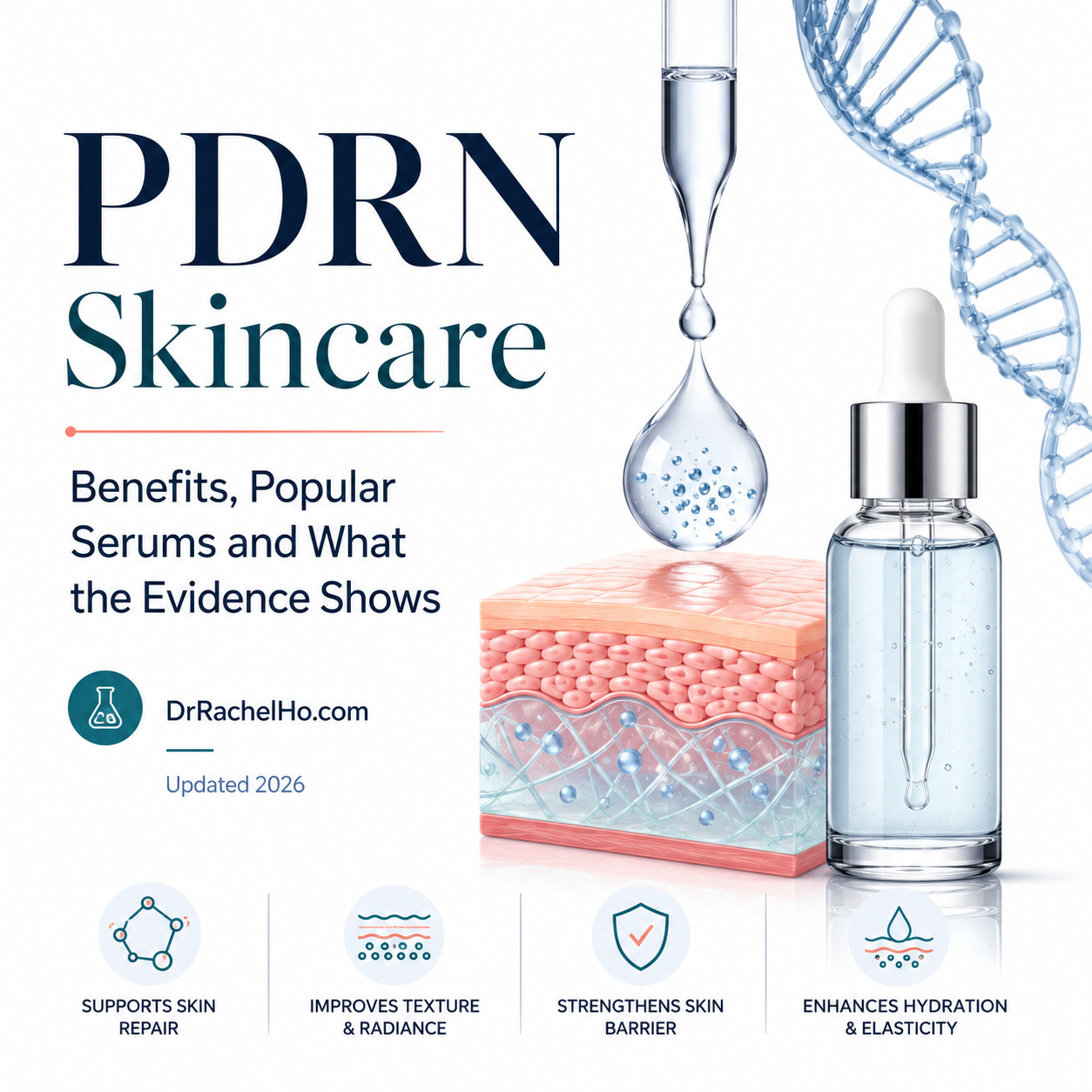
19 May PDRN Skincare: Benefits, Evidence and Popular Serums
PDRN Skincare: Benefits, Popular Serums and What the Evidence Shows
By Dr Rachel Ho | Updated August 2026
PDRN has exploded in popularity in aesthetic clinics and beauty products as the ultimate skin-repair miracle since 2014. Before you add another viral PDRN serum to your cart or embark on another polynucleotide skin booster, let’s unpack the actual molecular science behind PDRN, what topical products can and cannot achieve, and how injectable PDRN skin boosters compare to PDRN skincare.
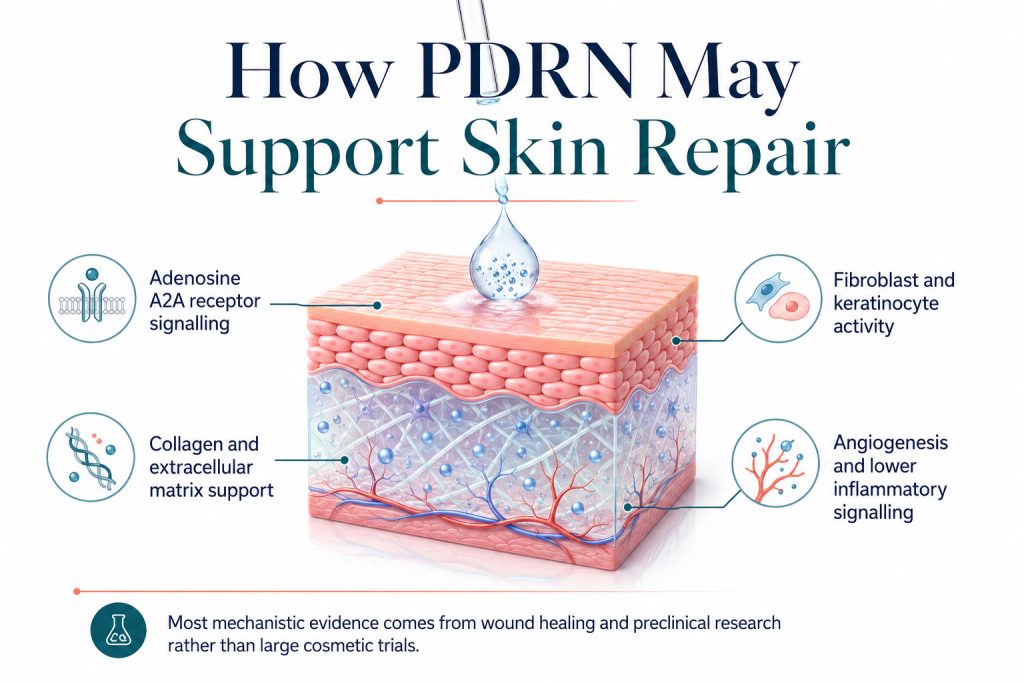
What does the evidence say about PDRN skincare. This guide summarises the current research, potential benefits and important limitations.
What is PDRN?
PDRN is short for polydeoxyribonucleotides. PDRN skincare typically contains a mixture of purified DNA fragments. These DNA fragments are usually obtained from salmon or trout.
Injectable PDRN skin boosters and related polynucleotide treatments are popular in Singapore and Asia. These treatments are evidence based for skin rejuvenation, repair and recovery. PDRN serums, creams and masks on the other hand, vary in their composition and formulation. The results of PDRN serums and skincare depend heavily on molecular size, formulation, stability and skin penetration.
Topical PDRN now has early human evidence for photoaged skin, but it is difficult to extrapolate results from the trial of specific products for all other PDRN serums. Often, we also see visible results from other skincare ingredients in a PDRN skincare product such as hyaluronic acid, niacinamide, retinoids, peptides and moisturising ingredients within the same formula.
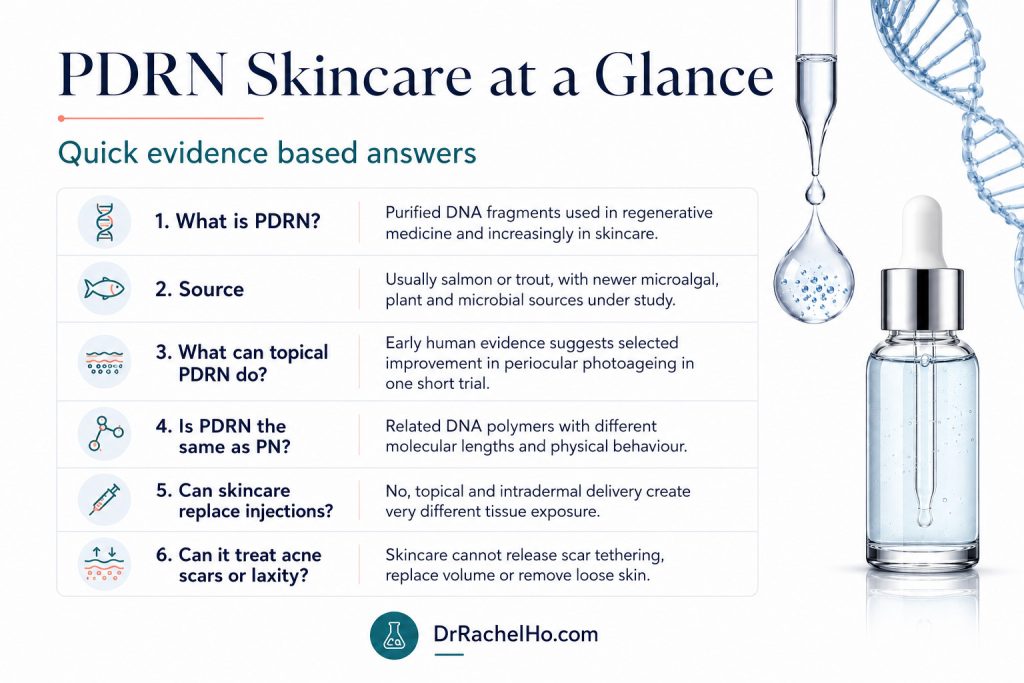
What does the evidence say about PDRN skincare. This guide summarises the current research, potential benefits and important limitations.
PDRN skincare at a glance
FAQ about PDRN skincare
| Question about PDRN skincare | Evidence based answer |
|---|---|
| What is PDRN? | Purified DNA fragments used in regenerative medicine and increasingly in skincare |
| Where does PDRN come from? | Usually salmon or trout, with newer microalgal, plant and microbial sources are emerging |
| What can topical PDRN do? | One 0.1% medium length PDRN eye cream improved selected periocular measurements over 28 days |
| Is PDRN the same as PN? | They are related DNA polymers with different molecular lengths and physical behaviour |
| Can PDRN skincare replace injections? | Topical and intradermal delivery create very different tissue exposure |
| Can PDRN serums or creams treat acne scars or laxity? | Skincare cannot release scar tethering, replace volume or remove loose skin |
What is PDRN and how does it work?
PDRN is an abbreviation for polydeoxyribonucleotide. It consists of chains of deoxyribonucleotides, the building blocks of DNA, and most established medical preparations are purified from salmon or trout reproductive tissue as opposed to plant derived PDRN products.
Related blogposts:
Is Vegan or Plant PDRN as effective as Salmon PDRN?
Medicube Sudan Red Scandal: What Happened to the PDRN Pink Collagen Capsule Cream?
PDRN is proposed to support repair through adenosine A2A receptor signalling and the salvage pathway, which recycles nucleotides during DNA synthesis. Laboratory and animal studies describe increased fibroblast and keratinocyte activity, collagen production, angiogenesis and wound closure, together with reduced inflammatory signalling for wound healing1,2.
Most of this premise for PDRN’s wound healing and skin repair properties actually comes from impaired wound healing rather than aesthetic and anti-aging trials. Preclinical work on animal wound models used concentrations up to 100 μg/mL in cell systems and doses around 8 mg/kg, which are not the typical amounts found in cosmetic serum percentages or human injection protocols1,2.
Newer PDRN sources from vegan or botanical sources (aka phyto-PDRN) like plants and microorganisms have emerged as an alternative to animal sources of PDRN. However, there is currently insufficient evidence to equate the mechanisms or benefits of phyto-PDRN with salmon or trout PDRN. For an indepth look at phyto-PDRN please read Is Vegan or Plant PDRN as effective as Salmon PDRN?
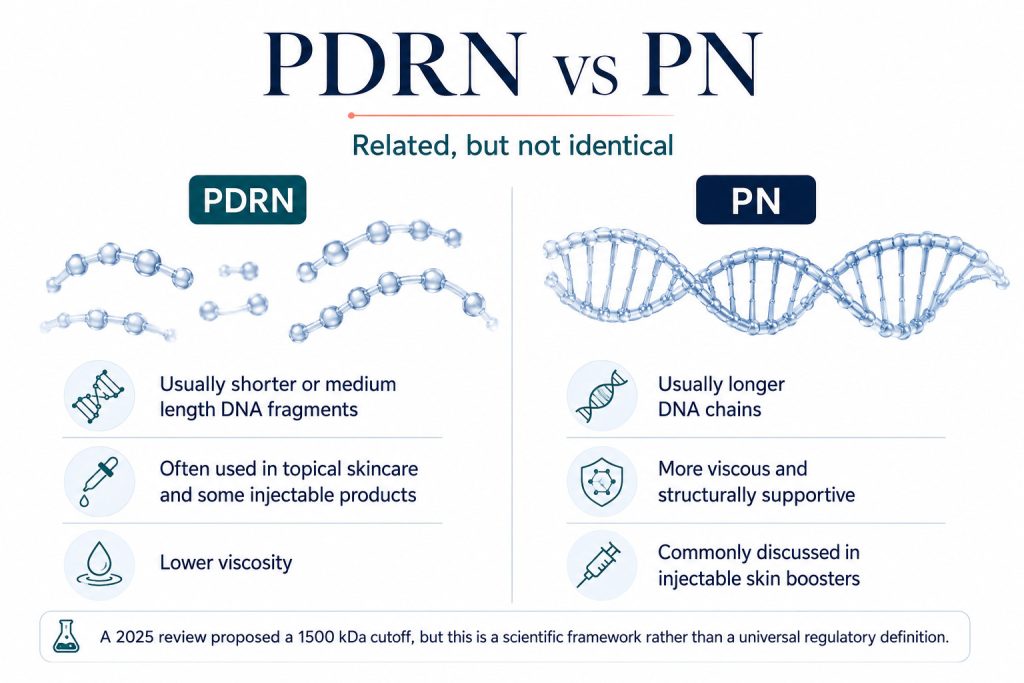
PDRN vs PN explained. This graphic helps readers understand the terminology, molecular size differences and why product labels can be confusing.
PDRN versus PN
PDRN and PN are often used interchangeably in beauty marketing. However, PDRN and PN are not the same at all. Generally, PDRN refers to shorter or medium length DNA fragments, while PN usually refers to longer chains with greater viscosity and different structural behaviour.
A 2025 review proposed a molecular weight cutoff of 1500 kDa, with PDRN below that point and PN at or above it6.
This distinction between PDRN versus PN is relevant when comparing PDRN skincare, vs PDRN skin boosters. Most skincare products often label their products as containing PDRN when it really is a mixture of PN, PDRN or another related DNA polymer, so the actual ingredient and molecular specifications are more informative than the category name.
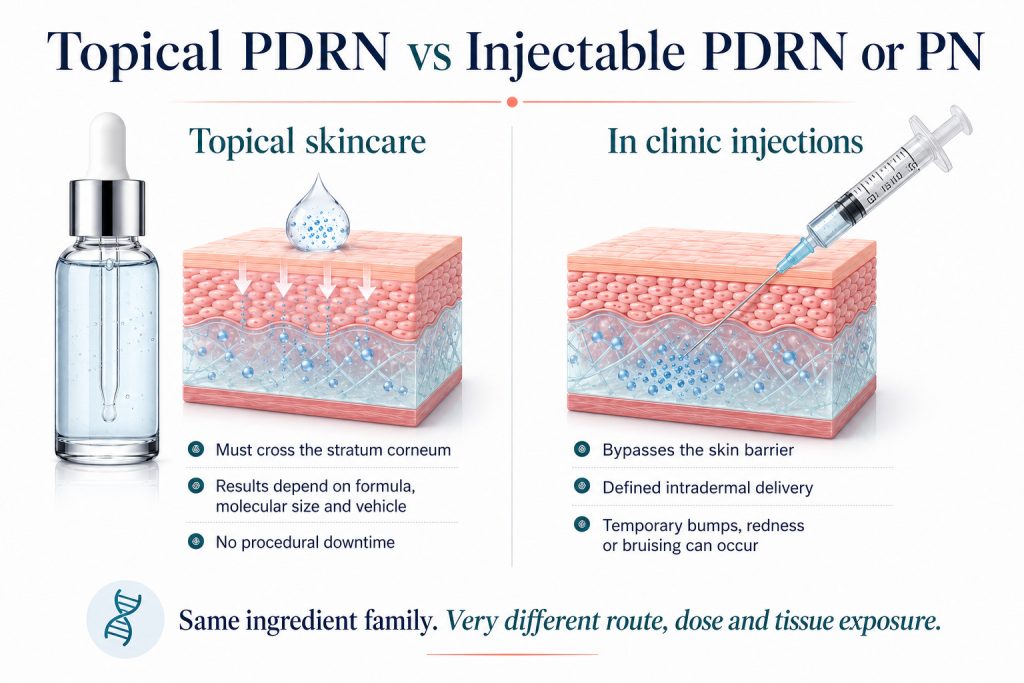
Topical vs injectable PDRN. A practical comparison of skincare products and in clinic PDRN treatments for readers deciding what each approach can realistically
Does topical PDRN skincare work?
A 2026 randomised, double blind, split face study involved 31 Chinese women aged 35 to 55. Participants applied a 0.1% medium length salmon PDRN eye cream to one side and an identically based 0.1% retinol cream to the other twice daily for 28 days7.
The PDRN side showed roughly twice the improvement in several periocular wrinkles, dermal thickness, density and eye bag measurements. Raman imaging and skin models also detected PDRN associated signals within viable epidermal regions, with porcine skin experiments showing deeper time dependent distribution7.1
Although this study on PDRN eye cream involved human subjects, it was over a relatively short duration and it did not establish that PDRN was superior to retinoids for long term photoageing7,8.
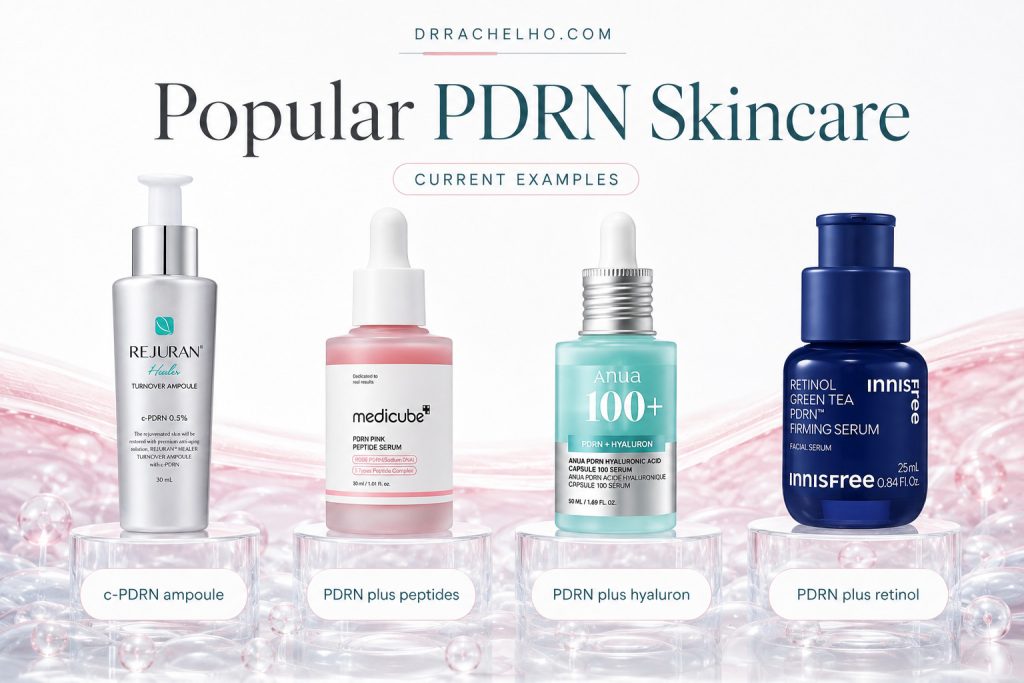
Popular PDRN skincare products in 2026. An educational look at current skincare examples often searched by readers in Singapore.
Popular PDRN skincare in 2026
Popular PDRN skincare 2026
| PDRN Product | Key ingredients | What this means |
|---|---|---|
| Rejuran Dual Effect Ampoule | Contains 5,000 ppm, equivalent to 0.5%, c PDRN | cPDRN refers to cosmetic Polydeoxyribonucleotide, a proprietary innovation from Pharma Research |
| Medicube PDRN Pink Peptide Serum | Salmon DNA PDRN with peptides and brightening ingredients, without a prominently disclosed PDRN percentage | Hydration, glow and tone changes cannot be assigned to PDRN alone. This is distinct from the Pink Collagen Capsule Cream |
| Anua PDRN Hyaluronic Acid Capsule 100 Serum | PDRN with multiple hyaluronic acid forms and collagen | Humectants can account for part of the early plumping and luminosity |
| Innisfree Retinol Green Tea PDRN Firming Serum | 56% Green Tea PDRN complex with a 1% triple retinol complex | The 56% refers to a proprietary complex, while retinoids can contribute to texture and fine line changes |
| Genabelle PDRN 3% Hyper Boost Ampoule | 3%, or 30,000 ppm, salmon DNA with a dual molecular system | One of the higher disclosed amounts, but finished product evidence remains mainly brand led |
| IOPE XMD Stem III Clinical Recovery Serum | 92.3% PDRN HA liposome complex | The figure describes the wider complex, rather than 92.3% pure PDRN |
These are some examples of popular PDRN skincare. I’ve broken down the ingredient list and formula to illustrate why we cannot take PDRN at face value without looking at the other proprietary complexes, supporting active ingredients and delivery systems differ in each of these PDRN serums.
Details were checked against official brand or Singapore retailer pages in August 2026.
Medik8 Exo PDRN Prismatic+ is another current example, combining engineered vegan PDRN with an exosome complex and signalling proteins. Its penetration comparisons are based mainly on brand laboratory studies rather than independent human head to head trials.
Topical PDRN versus injectable PDRN or PN
Topical skincare must cross the stratum corneum before reaching viable skin. Injections can overcome this barrier directly; and allows for a precise amount within the dermis, producing a very different effective dose and distribution. In my practice, I administer PDRN skin boosters from trout or salmon via manual injectors and injector devices. For a more in-depth read of PDRN treatments please see PDRN Skin Boosters in Singapore.
Clinical reviews of injectable PN and PDRN describe improvements in hydration, texture, elasticity and wrinkles, but studies vary in product, molecular weight, injection depth and outcome measures9,10. Many are small or lack strong controls, while the strongest PDRN literature still comes from wound repair rather than facial rejuvenation, which has become one of the most popular indications as PDRN skin boosters11.
Most clinical studies also report good tolerability of PDRN skin boosters. Expected side effects of PDRN skin boosters include temporary bumps, redness, swelling, bruising and tenderness.
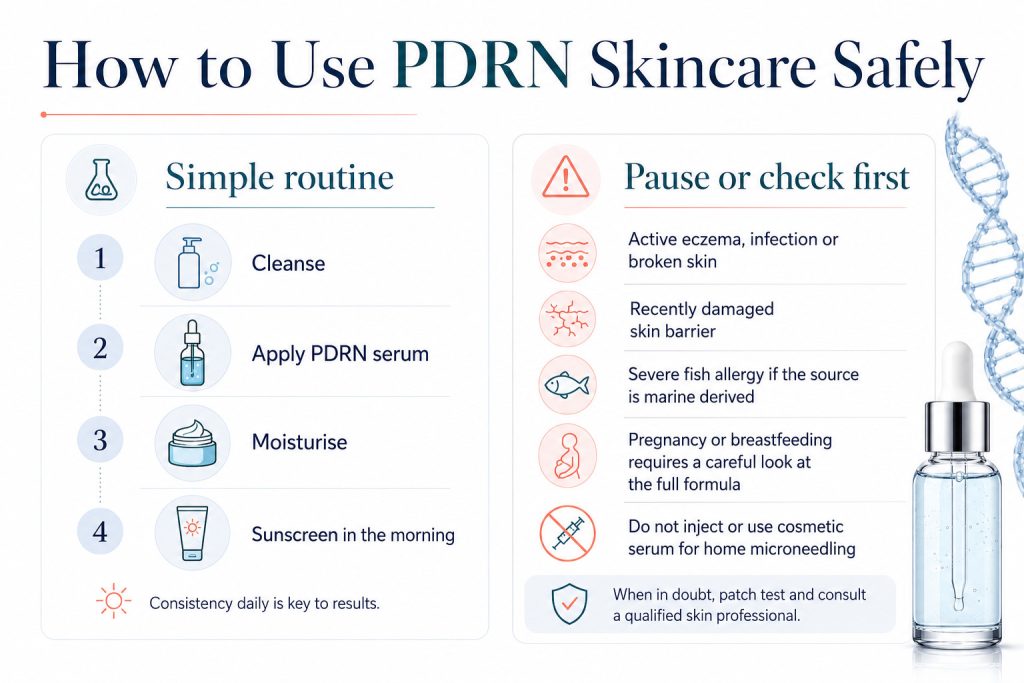
How to use PDRN skincare safely. A practical routine guide covering product use, sensible expectations and who should take extra care.
How to use PDRN skincare
Apply PDRN serum after cleansing and before moisturiser, once or twice daily according to the product instructions. Daily sunscreen remains essential because PDRN does not filter ultraviolet radiation or prevent photoageing by itself.
PDRN can be layered with niacinamide, hyaluronic acid and peptides. Formulas containing retinol, acids or spicules should be used with caution as they may cause irritation to the skin.
Related blogposts:
How to Layer Skincare Products in the Correct Order
Niacinamide for Skin: Benefits, Side Effects and How to Use It
Everything You Need to Know About Hyaluronic Acid
Peptides for Skin: Benefits, Types and Serum Guide
Note that cosmetic PDRN serum and skincare should never be injected or used with home microneedling or used on wounds because serums or cosmetics are not manufactured as sterile procedural product.
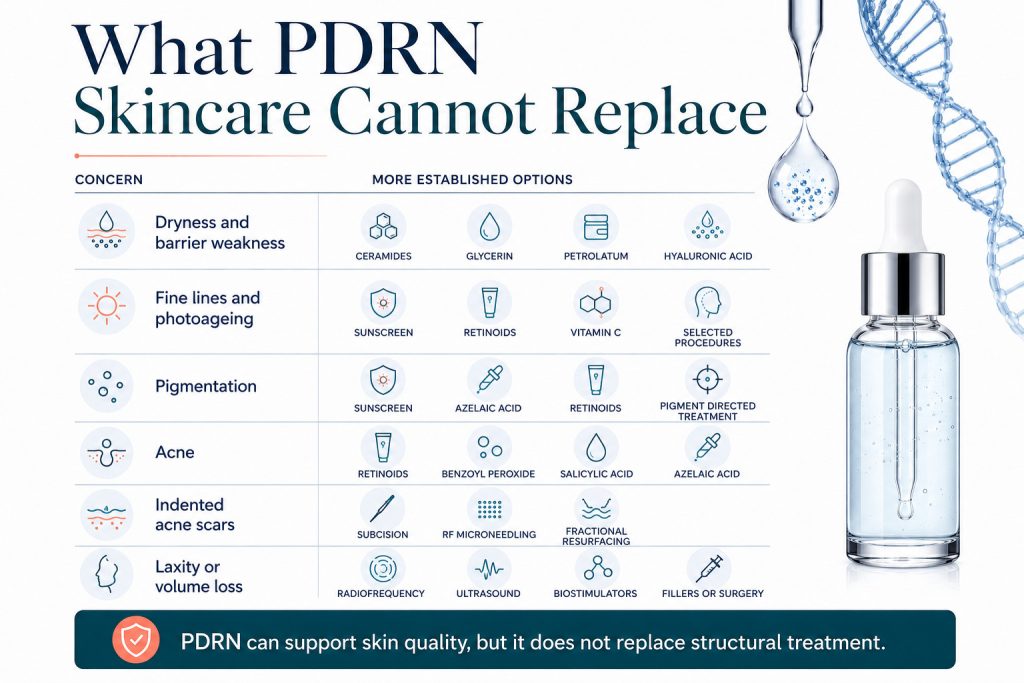
What PDRN skincare cannot replace. A useful reminder that skincare has limits and does not do the same job as injectables or energy based treatments.
Side effects and who should avoid PDRN skincare
Topical PDRN products can cause stinging, redness, itching, breakouts or contact dermatitis because of the complete formulation. If you have any active eczema, infection, broken skin and a recently damaged barrier- please hold off using PDRN.
People with severe fish allergy should check whether the source is marine derived and discuss the uncertainty with a doctor. Purification reduces residual proteins, but direct cosmetic safety data involving fish allergic users remain limited.
Safety of PDRN skincare during pregnancy and breastfeeding is unclear as studies are limited. Nonetheless, I always advise my patients to read the full ingredient list of their skincare due to the presence of other ingredients such as retinoids.
Injectable PDRN or PN skin boosters treatment requires an individual medical assessment and evaluation for the suitability and safety of patients.
Which PDRN claims are overhyped?
PDRN does not rewrite human DNA, replace damaged genes or turn directly into collagen. The proposed effects of PDRN involve receptor signalling, nucleotide recycling and support of repair pathways.
Topical PDRN serums and skincare also cannot be assumed to perform like an injectable PDRN skin boosters or in-clinic treatments. PDRN skincare cannot release rolling acne scars, close ice pick scars, replace facial volume, relax muscle driven wrinkles or lift substantial loose skin.
Claims for melasma, active acne, rosacea, eczema and hair loss remain ahead of direct finished product evidence.
Alternatives to PDRN skincare
Alternatives to PDRN skincare
| Main concern | More established skincare options | In clinic or medical options |
|---|---|---|
| Dryness and barrier weakness | Ceramides, glycerin, petrolatum and hyaluronic acid | Assessment for dermatitis or a hyaluronic acid or extracellular (ECM) skin booster |
| Fine lines and photoageing | Sunscreen, retinoids and vitamin C | Fractional laser, RF microneedling or collagen biostimulators |
| Pigmentation | Sunscreen, azelaic acid, vitamin C, retinoids and tranexamic acid | Pico lasers, PRX Plus, chemical peels, microneedling radiofrequency |
| Acne | Retinoids, benzoyl peroxide, salicylic acid and azelaic acid | Chemical peels, Q-switched laser, LED light, selective sebaceous gland ablation |
| Depressed acne scars | Skincare cannot rebuild lost dermal structure | Subcision, RF microneedling, fractional CO2 lasers, ECM skin boosters, collagen biostimulators |
| Laxity or volume loss | Sunscreen and retinoids support skin quality | XERF, collagen biostimulators or fillers |
For an in-depth guide to these in-clinic treatments, please refer to the guides from my clinic, The Skin Longevity Clinic:
- Pico laser
- Chemical peels
- PRX Plus
- RF microneedling
- Selective sebaceous gland ablation
- XERF
- Collagen biostimulators
- ECM skin boosters
- Hyaluronic acid skin boosters
- Fractional CO2 laser
- LED light
Dr Rachel Ho’s takeaway on PDRN skincare
PDRN has credible regenerative biology and a long history in wound research. Evidence for topical PDRN skincare however, remains early, product specific and less robust than the evidence for established active ingredients like sunscreen, retinoids or established procedures.
The results of a PDRN product is determined by its source, molecular characteristics, concentration, vehicle, supporting ingredients and finished formula evidence. The PDRN label alone tells us very little about what a serum will achieve.
Frequently asked questions
Is PDRN really made from salmon sperm?
Traditional PDRN is commonly purified from salmon or trout reproductive tissue. Newer microalgal, plant and microbial sources are being developed, but their evidence and molecular characteristics differ.
Can PDRN skincare replace injections?
Topical PDRN skincare cannot replace injections. Skin penetration, dose and tissue distribution differ substantially between surface application and intradermal delivery.
Is PDRN better than retinol?
One 28 day eye cream trial favoured a defined 0.1% PDRN formulation over 0.1% retinol on selected measurements7. That study does not establish PDRN as superior to retinoids for acne or long term photoageing.
References
- Galeano M, et al. Polydeoxyribonucleotide: A Promising Biological Platform to Accelerate Impaired Skin Wound Healing. Pharmaceuticals. 2021. PMID 34832885.
- Squadrito F, et al. Pharmacological Activity and Clinical Use of PDRN. Frontiers in Pharmacology. 2017.
- Park JM, et al. Effects of Chlorella protothecoides Derived PDRN on Skin Regeneration and Wound Healing. Archives of Dermatological Research. 2025. PMID 39994014.
- Kim E, et al. Wound Healing Effect of PDRN Derived From Hibiscus sabdariffa Callus. Biochemical and Biophysical Research Communications. 2024. PMID 38996695.
- Chae D, et al. First Report on Microbial Derived PDRN. 2025. PMID 39852156.
- Marques C, et al. From PDRNs to PNs: Scientific Definitions, Molecular Insights and Clinical Applications. Biomolecules. 2025. PMID 39858543.
- Ye R, et al. Topical Medium Length PDRN Enhances Dermal Extracellular Matrix Repair in Photodamaged Skin. PLOS One. 2026.
- Kafi R, et al. Improvement of Naturally Aged Skin With Vitamin A Retinol. Archives of Dermatology. 2007. PMID 17515510.
- Lampridou S, et al. The Effectiveness of Polynucleotides in Esthetic Medicine. 2025. PMID 39645667.
- Lee KWA, et al. Polynucleotides in Aesthetic Medicine. International Journal of Molecular Sciences. 2024. PMID 39125793.
- Colangelo MT, et al. The Effects of PDRN on Wound Healing and Tissue Regeneration. Regenerative Medicine. 2020. PMID 32757710.

No Comments